
Pellet Stoves Are Rare in Carolina Forest—But Not Unheard Of.
With winter lows averaging 34°F and only about 2,670 heating degree days a year, most Carolina Forest homes get by on gas or electric heat. A small number of homeowners still want a pellet stove—and we can point you to a dealer who can actually get one installed.
Every Project Starts From One of These Five Situations
A Mild Coastal Climate Leaves Little Need for Pellet Heat.
Carolina Forest sits at just 27 feet of elevation along South Carolina's Grand Strand, in climate zone 3A, where winter lows average a mild 34°F and the heating season is short. With only around 2,670 heating degree days a year—a fraction of what a cold-climate market like Duluth, MN or Burlington, VT sees—most homes here are built and equipped around cooling, not heating. Gas and electric appliances handle the occasional cold snap just fine, which is why pellet stoves (and wood stoves, for that matter) never became a standard part of the local hearth market.
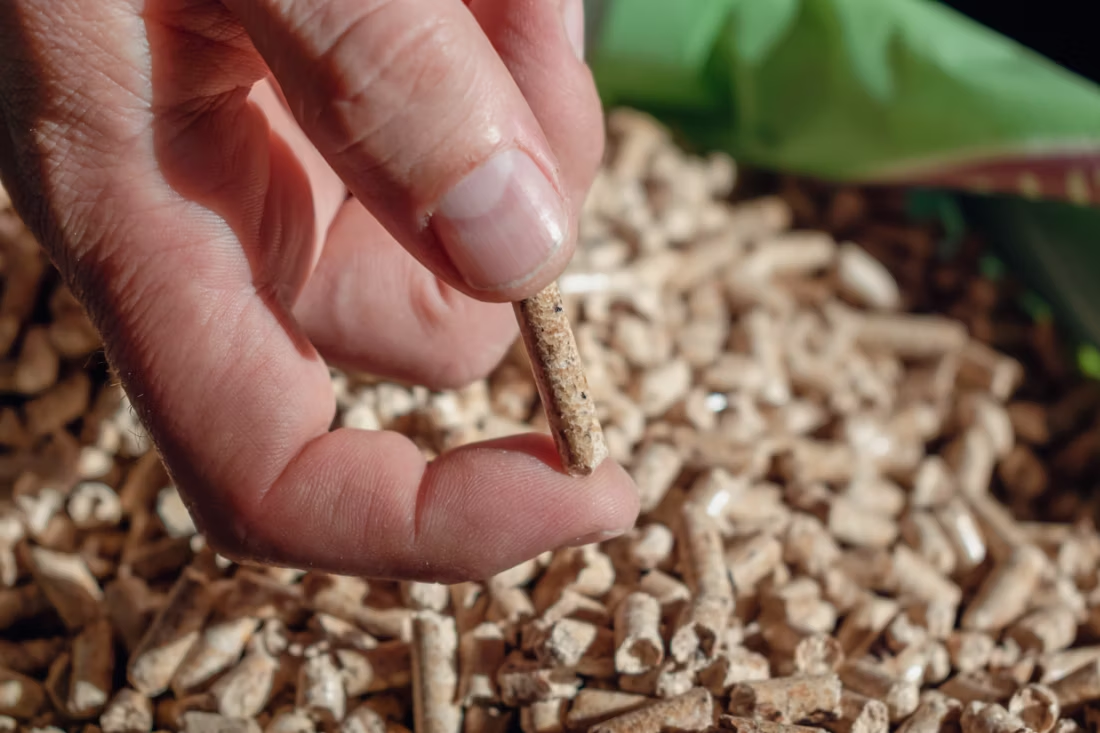
There are practical reasons beyond climate, too. Horry County's humidity makes bagged pellets tricky to store—wood pellets absorb moisture and swell or crumble if kept anywhere but a sealed, dry space, which is a bigger chore here than it is inland. And because pellet stoves rely on an electric auger and blower to run, they go dark during the power outages that hurricane season reliably brings to Duke Energy Progress and Santee Cooper (South Carolina Public Service Authority) territory—the same storms that make a wood-burning or battery-backed gas unit more appealing as backup heat. None of that means pellet heat is off the table. Brands like Lignetics, Hamer Pellet Fuel, and Greenway Renewable Energy are sold regionally, and a handful of Carolina Forest homeowners install pellet stoves for ambiance, a vacation property up in the mountains, or supplemental warmth during a rare hard freeze.
Three steps. No salesperson until you're ready.
Tell us about your project
Your zip code, your situation, and the fuel you're leaning toward—or let the answers point you to one.
See what's actually available
The brands dealers within 100 miles genuinely carry—real options, never a catalog mirage.
Get your dealer & Project Guide
A trusted local dealer, plus the free Project Guide & Parts List that names every component of the job.
Frequently Asked Questions
Are pellet stoves actually available in Carolina Forest?
They're available, but uncommon. Most Carolina Forest hearth dealers focus their inventory on gas fireplaces, gas logs, and electric units because that's what the market demands in a climate zone 3A coastal town with a 34°F average winter low. If you want a pellet stove, plan on working with a dealer who special-orders it—often the same shops that handle gas and electric installs in Horry County—rather than walking into a store with pellet units on the showroom floor.
What does a pellet stove installation cost in Carolina Forest?
Nationally, a pellet stove installation typically runs $3,000 to $6,000 depending on the unit and venting needs, and Carolina Forest generally falls in that range. Because local demand is low, expect the quote to include a slightly higher labor or special-order line item than you'd see in a cold-climate pellet market like Bozeman, MT, where installers do this work every week. Get a firm, in-home quote from a local dealer before assuming a number—venting through an exterior wall versus an existing masonry chimney changes the price significantly.
Where can I buy pellet fuel near Carolina Forest?
Bagged pellets from regional brands like Lignetics, Hamer Pellet Fuel, and Greenway Renewable Energy show up at farm supply and home improvement stores throughout Horry County, even though pellet stoves themselves are uncommon. Because turnover is lower than in a heavy pellet-burning region, it's worth calling ahead in fall to confirm stock, and buying enough for the season early rather than assuming you can restock mid-winter.
Will a pellet stove work during a hurricane-season power outage?
Not without backup power. Pellet stoves depend on an electric auger to feed fuel and a blower to distribute heat, so when Duke Energy Progress or Santee Cooper service drops during a tropical storm, the stove goes dark along with everything else. If backup heat during an outage is your main goal, a battery-backed gas fireplace or a generator-fed pellet setup is a more realistic plan than relying on the pellet stove alone. Most Carolina Forest homeowners who add a pellet stove do it for supplemental warmth or ambiance, not storm resilience.
Should I get a pellet stove or a gas fireplace in Carolina Forest?
For most homes here, gas is the better fit. Natural gas and propane fireplaces light instantly, need no fuel storage, and many models include battery-backup ignition that keeps working in a power outage—a real advantage during hurricane season. Pellet stoves offer a more traditional flame and the option to burn a renewable fuel, but they need electricity to run and pellets need dry, protected storage in a humid coastal climate. If you specifically want the pellet-burning experience—for a converted sunroom, a cabin retreat, or just personal preference—it's still doable, just less turnkey than gas here.
How should I store pellets in a humid coastal climate like Carolina Forest?
Keep bags off the garage floor, elevated on a pallet, and inside a dry space with airflow—a closed garage or shed works better than an open carport given Horry County's humidity. Once a bag is opened, use it within a season if possible; pellets that absorb moisture will swell, crumble, and burn poorly or clog the auger. Buying only what you'll burn in a year, rather than stockpiling multiple seasons like a homeowner in a colder climate might, is the more practical approach here.
Who installs pellet stoves near Carolina Forest?
Because pellet-specific installers are scarce this close to Myrtle Beach, most installations are handled by general hearth and HVAC dealers who also do gas and electric work and can special-order a pellet unit and venting kit. Ask specifically about pellet experience when you call—a dealer who mostly installs gas logs and direct-vent gas fireplaces may only have installed a handful of pellet stoves, so it's worth confirming they've handled the venting and hearth pad clearances correctly before you commit.
Do I need a permit to install a pellet stove in Carolina Forest?
Yes—any new solid-fuel or vented heating appliance install typically requires a building permit through Horry County Building Codes Enforcement, which covers unincorporated Carolina Forest. Your installer should pull this as part of the job and make sure the unit meets current EPA emissions standards. Since air quality isn't a local concern here—Carolina Forest has no burn bans or non-attainment designations—the permit process is mostly about structural and venting safety rather than emissions restrictions.
When does a pellet stove actually make sense in Carolina Forest?
The homeowners who go this route are usually adding supplemental heat to a converted space like a sunroom or detached office, want the ambiance of a real flame without the wood handling and chimney upkeep a masonry fireplace requires, or are outfitting a second property somewhere colder—a mountain cabin, for instance—and want the same brand experience at home. For year-round primary heat in a climate zone 3A coastal home with a 2,670 HDD heating season, gas or electric will almost always be the more practical and better-supported choice.
What's the difference between an insert and a zero-clearance fireplace?
An insert is a fireplace that slides into a pre-existing wood-burning fireplace—if you don't have one, there's nothing to insert it into. A zero-clearance fireplace is built into a framed wall, which makes it the answer for remodels and new construction. Simple test: existing masonry fireplace means insert; blank or framed wall means zero-clearance.
How often does a pellet stove need cleaning?
A clean pellet stove is a happy pellet stove. Plan on cleaning the burn pot about once a week when you're burning regularly—ash and clinkers gum up the air holes just like a pellet barbecue. Most pellet stove problems trace back to skipped cleaning that nobody explained up front. Some designs make it easy with a trapdoor burn pot: pull a lever and the gunk drops into the ash pan.
Does a fireplace add value to my home?
On average, a fireplace adds back to the home about the same amount you spent installing it. Add the monthly savings from heating the rooms you actually use instead of the whole house—often hundreds of dollars a year—and the value case is strong before you even count what a fire does for how your family uses the room.
How much should I budget for a fireplace?
For an average home—covering the fireplace, the vent pipe, and basic installation—a budget between $3,900 and $5,500 gives you a lot of options across wood, gas, and pellet. By the time you add finish work, gas line, and electrical, the average complete installation lands between $5,000 and $12,000 all-in. In a remodel or new build, a good rule is to put about 2.5% of the total project cost toward the fireplace.
Nearby Dealers
Hearth shops serving Carolina Forest and the surrounding area.
Tropicasual Furniture Warehouse - North Myrtle Beach
Pellet Brands Stocked Around Carolina Forest
Manufacturers will point you to the nearest stocking dealer.
Find Your Pellet Stove Option in Carolina Forest.
Tell us about your home and we'll match you with a local dealer who can source and install a pellet stove—or point you toward the gas or electric setup that fits Carolina Forest's mild coastal climate better. Either way, you'll get a free Project Guide & Parts List with the exact parts, including the vent kit, and a recommended local dealer.
Find Your Fireplace →