
Clean, consistent heat for Anderson County winters.
Anderson County winters rarely demand a wood-splitting habit—but a pellet stove still earns its keep with steady, thermostat-controlled heat and a backup plan for ice-storm power outages. Find the right unit and connect with a trusted local dealer.
Every Project Starts From One of These Five Situations
Efficient heat that fits mild Upstate winters.
Anderson County sits in South Carolina's Upstate, in climate zone 3A, with a modest, mild winter heating season and an average winter low around 32°F. That's a fraction of the heating load carried by a place like Bozeman or Duluth—this is a climate where central HVAC handles most of the season without strain. So pellet heat here isn't about survival heat; it's about efficiency and comfort in a specific room, a hedge against the ice storms that periodically roll through the Piedmont and knock out power for days, and a cleaner alternative to the open masonry fireplaces common in older Anderson County homes.
There's no air quality nonattainment designation in Anderson County, so pellet stoves here aren't a regulatory workaround the way they are in smoke-restricted basins out West—they're a choice homeowners make for convenience. Regional suppliers including Lignetics, Hamer Pellet Fuel, and Greenway Renewable Energy manufacture pellets from Southeastern pine and hardwood mill residue, which lines up with the oak, pine, and hickory that dominate local forests. A pellet stove or insert gives you set-it-and-forget-it heat without the cutting, splitting, and stacking that traditional wood burning around here still requires.
Three steps. No salesperson until you're ready.
Tell us about your project
Your zip code, your situation, and the fuel you're leaning toward—or let the answers point you to one.
See what's actually available
The brands dealers within 100 miles genuinely carry—real options, never a catalog mirage.
Get your dealer & Project Guide
A trusted local dealer, plus the free Project Guide & Parts List that names every component of the job.
Frequently Asked Questions
How much does a pellet stove installation cost in Anderson County?
Pellet stove installation costs vary by unit and whether you're installing a freestanding stove or converting an existing masonry fireplace to a pellet insert. Because pellet units vent through a smaller-diameter pipe than wood stoves and don't require a full masonry chimney, installs are often simpler and less expensive than a comparable wood stove project—but you do need a dedicated electrical outlet nearby to power the auger and blower. Local Anderson County dealers can walk through a firm quote after seeing your fireplace or the room where the stove will go; ask about hearth pad requirements and whether your existing chimney (if any) can be lined for the insert.
What size pellet stove do I need for my Anderson County home?
Given the mild climate here—a light winter heating load compared to most of the country—most Anderson County homes do fine with a small-to-medium pellet stove sized for supplemental or zone heat rather than whole-house primary heat. A unit rated for 1,000 to 1,800 square feet typically covers a great room or open living area comfortably, even on the rare nights that dip toward the low 20s. If you're heating a whole ranch home or want the stove to carry the load during an extended winter power outage, a local dealer can size up based on your square footage and insulation.
Does a pellet stove work during a power outage?
Not without backup power. Pellet stoves rely on an electric auger to feed fuel and a blower to distribute heat, so a standard unit shuts down the moment the power goes out—which matters in Anderson County given how ice storms periodically take down power lines across the Upstate. Some homeowners pair a pellet stove with a small battery backup or generator specifically for this reason. If uninterrupted heat during outages is the priority, a wood stove is the more resilient option; ask your local dealer about both when weighing the choice.
What's the difference between a pellet stove and a pellet insert?
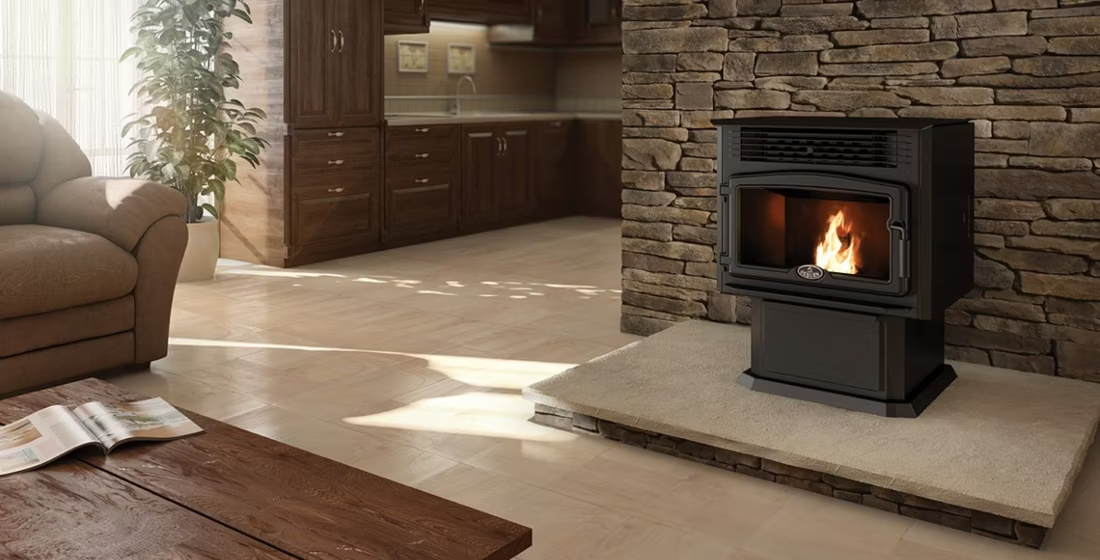
A pellet stove is a freestanding unit that sits on a hearth pad and vents through a wall or existing chimney chase—it can go almost anywhere with a nearby outlet. A pellet insert is built to slide into an existing masonry fireplace opening, which is a common upgrade for older Anderson County homes with a traditional open hearth that's inefficient and drafty. The insert uses your existing fireplace surround and often the existing chimney for venting (with a liner), while dramatically improving how much usable heat you actually get from the fireplace opening you already have.
Do I need a permit to install a pellet stove in Anderson County?
Yes—new pellet stove and insert installations typically require a building permit through Anderson County's building permitting office, covering the venting and any electrical work for the dedicated outlet. Most established local dealers handle the permit application as part of the installation, so it's worth confirming that's included in your quote before hiring anyone. Because there's no air quality nonattainment issue in Anderson County, you won't run into the burn-curtailment rules that some Western counties impose—this is purely a building-code matter here.
What's the best pellet stove for Anderson County's climate?
Because Anderson County's heating load is light—mild winters, an average low around 32°F—you generally don't need a high-output stove built for sub-zero endurance burns the way a Rocky Mountain or Upper Midwest home would. Mid-size stoves from mainstream pellet-appliance brands work well as zone heaters for a living room or den, and they pair naturally with locally available pellets from Hamer Pellet Fuel and Greenway Renewable Energy, both regional Southeastern producers. A local dealer can match a specific model to your room size and how much of the season you plan to run it.
How much maintenance does a pellet stove need?
Pellet stoves need more frequent light maintenance than wood stoves but far less heavy cleaning. Expect to empty the ash pan every few days to weekly depending on use, clean the burn pot and glass regularly to keep combustion efficient, and vacuum the hopper and auger area periodically to prevent jams. An annual professional service—checking the blower, gaskets, and venting—is recommended before each heating season. Because Anderson County's mild winters mean lighter overall run time than colder climates, most homeowners here find the maintenance burden manageable even with a stove running most nights of the season.
Where can I buy pellet fuel in Anderson County?
Regional producers including Lignetics, Hamer Pellet Fuel, and Greenway Renewable Energy supply pellets throughout the Upstate, and local hearth retailers and hardware stores in Anderson County typically stock bags or can order pallets. Pricing shifts seasonally and by brand, so it's worth checking current per-ton pricing directly with a local supplier rather than assuming a flat rate. Buying pellets by the pallet ahead of the winter season, rather than by the bag as needed, is generally the more economical approach.
Pellet stove vs. wood stove—which is right for my Anderson County home?
Wood stoves burn oak, pine, and hickory—all common locally—and some Anderson County residents cut their own on national forest land through the Nantahala-Pisgah permit system for about $20 per cord during the May-to-October season. Wood also keeps working without electricity, which matters during ice-storm outages. Pellet stoves trade that self-sufficiency for convenience: no cutting or splitting, more consistent heat output, cleaner burning, and thermostat control—but they need power to run the auger and blower. Given Anderson County's mild heating load, either fuel works fine for supplemental heat; the decision usually comes down to whether you value the hands-off convenience of pellets or the self-sufficiency and outage resilience of wood.
How often does a pellet stove need cleaning?
A clean pellet stove is a happy pellet stove. Plan on cleaning the burn pot about once a week when you're burning regularly—ash and clinkers gum up the air holes just like a pellet barbecue. Most pellet stove problems trace back to skipped cleaning that nobody explained up front. Some designs make it easy with a trapdoor burn pot: pull a lever and the gunk drops into the ash pan.
Why is a fireplace insert so efficient?
An insert does two things: it seals the chimney completely, so you stop losing air you already paid to heat, and it radiates warmth into the room through the firebox and glass. Most add a heat-exchange fan that pulls cool room air underneath, wraps it around the hot firebox, and pushes it back out warm. Your home is more efficient before you've even lit the first fire.
How much should I budget for a fireplace?
For an average home—covering the fireplace, the vent pipe, and basic installation—a budget between $3,900 and $5,500 gives you a lot of options across wood, gas, and pellet. By the time you add finish work, gas line, and electrical, the average complete installation lands between $5,000 and $12,000 all-in. In a remodel or new build, a good rule is to put about 2.5% of the total project cost toward the fireplace.
Does a fireplace add value to my home?
On average, a fireplace adds back to the home about the same amount you spent installing it. Add the monthly savings from heating the rooms you actually use instead of the whole house—often hundreds of dollars a year—and the value case is strong before you even count what a fire does for how your family uses the room.
Stove and Fireplace Dealers in Anderson County
Listings include WhyFire partner dealers, dealers we have verified as authorized for the brands we recommend, and established local businesses that carry hearth products. Every listing shows which one it is. The ones marked Preferred run on WhyFire's software, so they can show you real pricing and book your appointment right here. No manufacturer pays for placement. How we verify dealers →
Carolina Elite Fire
White Jones Ace Hardware
Blossman Gas - Anderson
Viridien Patio + Fireplace
Yoder Building Supply
Pellet Brands Stocked Around Anderson County
Manufacturers will point you to the nearest stocking dealer.
Find your pellet stove in Anderson County.
Tell us a bit about your home and we'll match you with a trusted local dealer and send over a free Project Guide & Parts List—the exact parts, including your vent kit, for a pellet stove or insert project in Anderson County.
Find Your Fireplace →