
Instant heat engineered for prairie winters that hit minus 20.
Regina's winter lows average -20.1°C over a long, severe heating season, and SaskEnergy's natural gas network reaches most of the city. I'll match you with a trusted local dealer who knows the venting, the gas line work, and what's actually installable on your street.
Every Project Starts From One of These Five Situations
Reliable heat without splitting a woodpile.
Regina sits in climate zone 7B at 577 metres, and the numbers explain the city's long relationship with gas heat: average winter lows of -20.1°C, a heating season that stretches from October well into April, and cold snaps that rival Winnipeg for how long they hang on. Wood stoves burning trembling aspen, paper birch, jack pine, and white spruce still have a place here, particularly as backup heat, but a gas fireplace that fires on demand with no chimney to feed is what most Regina homeowners want running in the main living space through a prairie winter this long.
SaskEnergy's distribution network covers the city thoroughly, which is a real advantage over parts of the province where natural gas service is spottier. That reach means most Regina addresses can add a direct-vent gas fireplace or insert without the propane tank and delivery logistics that rural Saskatchewan homeowners have to plan around. The other draw is resilience during the outages that come with prairie ice storms and deep cold snaps: a gas unit with the right ignition system keeps producing heat even when the power's out, which matters more here than in milder parts of the country.
Three steps. No salesperson until you're ready.
Tell us about your project
Your postal code, your situation, and the fuel you're leaning toward—or let the answers point you to one.
See what's actually available
The brands dealers within 100 miles genuinely carry—real options, never a catalog mirage.
Get your dealer & Project Guide
A trusted local dealer, plus the free Project Guide & Parts List that names every component of the job.
Frequently Asked Questions
How much does a gas fireplace installation cost in Regina?
Most installs in Regina run $6,000-$15,000 CAD. A direct-vent insert going into an existing masonry firebox with a SaskEnergy line already nearby sits toward the low end. A new built-in unit for a renovation or addition, with fresh gas line runs and full venting through a wall or roof, lands toward the top of that range. Homes on the edge of the city or just outside SaskEnergy's service area that need a propane tank set instead should budget a bit more on top of the install itself.
Can I convert an existing wood fireplace to gas in Regina?
Yes, and it's a common upgrade in Regina's older neighbourhoods like Cathedral and Lakeview, where many homes still have the original masonry firebox built decades ago for burning aspen or spruce. A gas insert with a stainless liner typically slides into that existing chimney chase, generally landing in the $6,000-$9,500 range depending on line length and whether you're on SaskEnergy or propane. It's also a straightforward way to retire an old, non-WETT-compliant wood setup that would otherwise complicate a home sale or insurance renewal.
Do I need SaskEnergy service, or is propane an option?
SaskEnergy's natural gas network reaches most of Regina, so if your furnace or water heater is already on gas, tying in a fireplace is usually a simple add. Homes on newer subdivision edges or acreages just outside city limits sometimes fall outside that service footprint and run on propane instead, with a tank set on the property. Either fuel works fine for the fireplace itself; your local dealer will size the line or tank to whatever unit you choose.
Will a gas fireplace keep working if the power goes out?
Most will, and that matters in Regina where winter storms and extreme cold snaps periodically knock out power across the city and surrounding grid. Units with intermittent pilot ignition run on AA battery backup that kicks in automatically. Valor models skip the battery altogether since their pilot's thermocouple generates its own current. If backup heat during an outage is a priority for you, ask your dealer which ignition system is on the model you're considering before you commit.
What's the difference between a gas fireplace, insert, and stove?
A gas fireplace is a built-in unit framed into a wall, common in Regina's newer builds in neighbourhoods like Harbour Landing. A gas insert fits into an existing masonry firebox, which is the typical retrofit in older character homes downtown or in the Crescents that were originally built around a wood-burning fireplace. A gas stove is freestanding on a hearth pad, similar footprint to a wood stove but running off a gas line or propane tank instead of cordwood. For most existing Regina homes, an insert is the least disruptive way to upgrade.
Do I need a permit to install a gas fireplace in Regina?
Yes. You'll need a permit through the municipal building department, and the gas line work itself has to be done by a licensed gas fitter under the applicable code. CSA B365 governs the installation standard for the appliance, and most Regina dealers who handle these projects regularly manage both the permit and final inspection as part of the job, so you're not coordinating separate trades and paperwork yourself.
Vented vs. vent-free gas fireplaces—which is right for a Regina home?
Direct-vent units draw combustion air from outside and exhaust it back outside through sealed venting, which is the standard and safer choice for daily use, especially through a heating season as long as Regina's. Vent-free units burn into the room and technically meet code with proper room sizing, but with a heating season that keeps windows closed for six months straight, most local dealers steer Regina homeowners toward direct-vent so indoor air quality doesn't take a hit exactly when the fireplace is running every day.
How often does a gas fireplace need servicing in Regina?
Plan on an annual check, ideally in September before the first hard freeze rather than January when technicians are booked solid across the city. A technician checks the burner, pilot assembly, gas connections, and venting, and cleans the glass. It's a lighter job than a wood chimney sweep, but skipping it on a unit that runs daily through Regina's long, severe heating season is how a pilot or ignition problem shows up on the coldest night of the year. Budget roughly $150-$250 CAD for a standard visit.
Gas vs. wood—which makes more sense for a Regina home?
Wood, often trembling aspen or jack pine cut for free as dead-and-down timber under a Saskatchewan Ministry of Environment permit, still wins on fuel cost and keeps producing heat with zero electricity needed. Gas wins on convenience: no splitting, stacking, or WETT inspection to satisfy your insurer, and no chimney to clean each fall. A lot of Regina households run gas in the main living space for day-to-day heat and comfort, then keep a WETT-inspected wood stove or insert elsewhere in the house as backup for extended prairie outages.
Can a gas fireplace run on a thermostat?
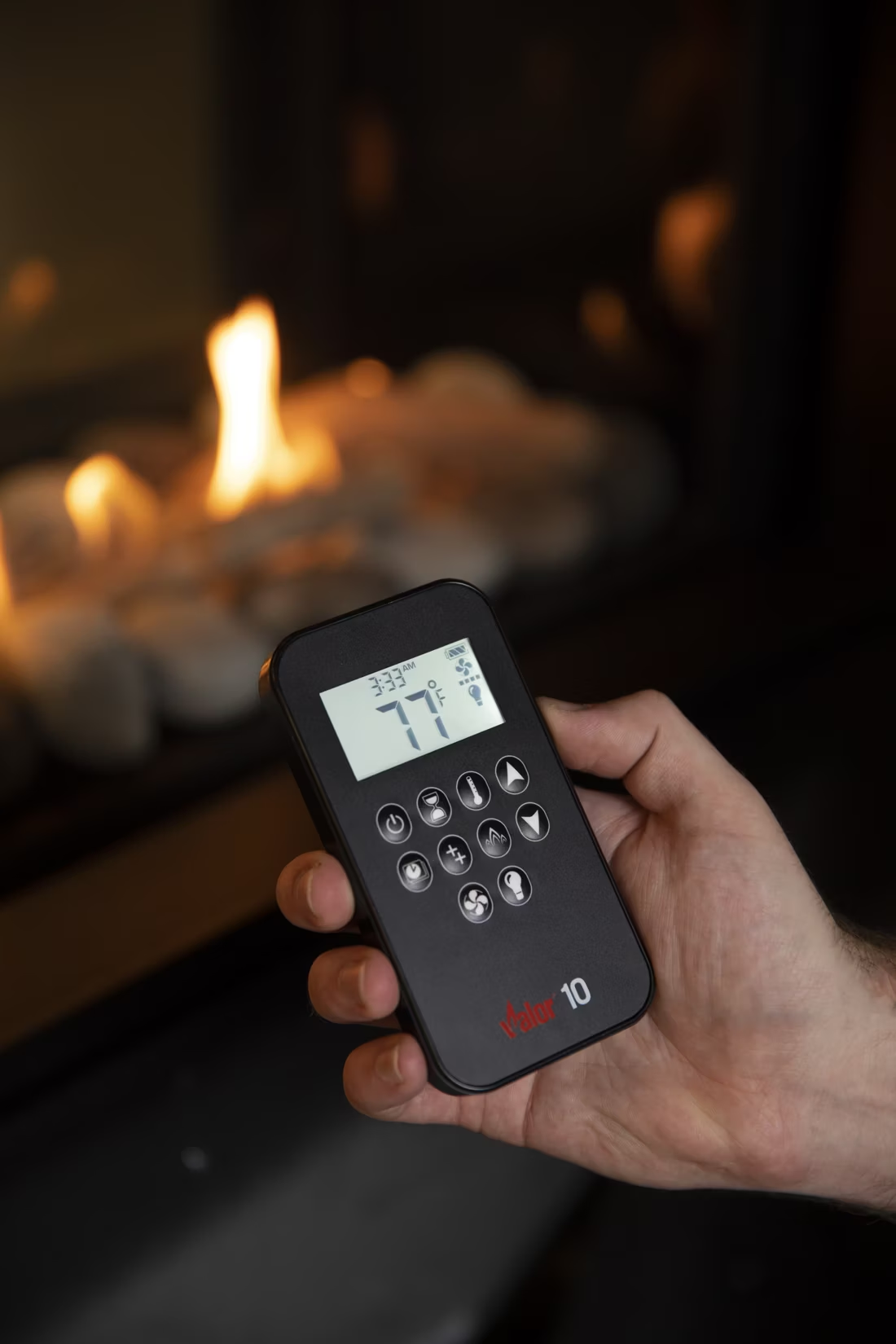
Most modern gas fireplaces can—turn it on and off from the couch with a remote, or set a room temperature and let the fireplace hold the comfort zone for you. If low maintenance matters to your family, this is the feature set that makes gas the convenience pick over wood and pellet.
Why do fireplace quotes vary so much?
Because a fireplace is an iceberg—there's more behind the wall than in front of it. A low quote often covers only the unit; the full scope includes vent pipe, gas line or electrical, framing, and the tile or stone that has to come off and go back on. Make every bidder price the whole job. If a dealer can't speak to the full scope with confidence, that's your signal to keep looking.
What do I measure to size a fireplace insert?
Four numbers tell you what fits: the front width, the front height, the back width, and the overall depth of your existing fireplace opening. Grab a tape measure, jot those down, and snap a photo of the wall—those two things do more to move your project forward than anything else you can do today.
What's the difference between radiant and convective fireplace heat?
Most fireplaces are a thin metal box—they heat fine, but you rely on the fan to move the warmth into the room. Radiant models use a thick cast-ceramic firebox, about an inch and a quarter thick, that soaks up the fire's heat and radiates roughly 25–30% more warmth into the room with no fan running. If you watch TV in the same room or want heat in a power outage, radiant is worth asking about.
Nearby Dealers
Hearth shops serving Regina and the surrounding area. Every listing shows whether it is a WhyFire partner, a dealer we have verified as authorized for the brands we recommend, or a local business carrying hearth products. No manufacturer pays for placement. How we verify dealers →
Timberstone Distribution Regina
Universal Plumbing & Heating Inc
Aquifer Distributing
Natural Gas Service in Regina
Confirm service at your address before planning a gas fireplace—a quick call settles it.
SaskEnergy
Get your free Project Guide & Parts List for a Regina gas fireplace.
Tell me about your home and whether you're on SaskEnergy or propane, and I'll match you with a trusted local dealer and send a free Project Guide & Parts List with the exact vent kit and parts your project needs.
Find Your Fireplace →