
Steady, automated heat through winters that hold below minus 20.
From La Ronge to Île-à-la-Crosse to Creighton, a pellet stove holds a thermostatically controlled burn through the region's long, severe winters without the daily splitting and stacking of cordwood. I match you with a trusted local dealer who knows the venting, the permits, and where to actually buy pellets up here.
Every Project Starts From One of These Five Situations
Automated heat for a region where hauling firewood every day isn't always realistic.
Northern Saskatchewan covers an enormous stretch of boreal forest and Canadian Shield country, home to just over 52,000 people spread across communities like La Ronge, Creighton, Buffalo Narrows, Stony Rapids, and Île-à-la-Crosse. It's Climate Zone 7B territory, with winter lows that average -23.1°C and a heating season that runs from early October through April in most years, closer in length and severity to Whitehorse, YT than to anywhere in southern Saskatchewan. Trembling aspen, paper birch, jack pine, and white spruce cover the landscape, and cutting your own firewood is a real tradition here—the Saskatchewan Ministry of Environment's Forest Service Branch issues free, year-round permits for dead-and-down wood for personal use. But not every household wants to spend a January weekend bucking logs, and that's where pellet heat earns its place.
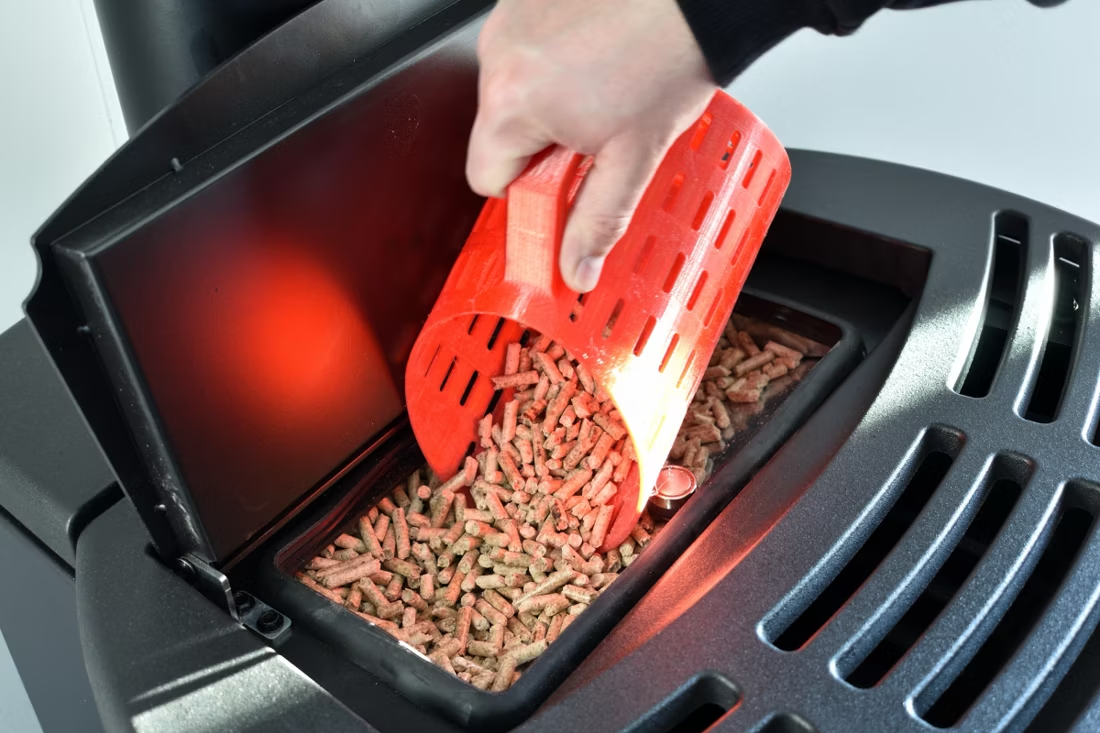
A pellet stove or insert loads from a hopper and burns down automatically on a thermostat, which matters when a heating season runs six or seven months straight. Regional brands like La Crete Sawmills and Pinnacle Premium supply most of the pellets sold through western Canadian dealers, typically running $400 to $575 per tonne, and in a region this remote it pays to order a season's worth before freeze-up rather than chase supply mid-winter. The tradeoff worth being honest about: pellet appliances need electricity to run the auger and combustion blower, so in communities where winter storms can knock out power for a stretch, many households keep a wood stove as backup rather than relying on pellet alone. Installations still have to meet CSA B365 code and go through the municipal building department, and a WETT inspection is commonly required before an insurer will sign off on the appliance.
Three steps. No salesperson until you're ready.
Tell us about your project
Your postal code, your situation, and the fuel you're leaning toward—or let the answers point you to one.
See what's actually available
The brands dealers within 100 miles genuinely carry—real options, never a catalog mirage.
Get your dealer & Project Guide
A trusted local dealer, plus the free Project Guide & Parts List that names every component of the job.
Frequently Asked Questions
How much does a pellet stove installation cost in Northern Saskatchewan?
Most pellet stove and insert projects across the region run $6,000 to $10,000 CAD, covering the appliance, venting, and hearth pad work needed to meet clearance requirements. A straightforward freestanding stove near an exterior wall for direct venting sits at the lower end; a masonry insert conversion or a job in a community far from a Prince Albert or La Ronge-based dealer can push toward the top of that range once freight and travel time are factored in. If you're in a more remote community like Stony Rapids or Pinehouse, ask your dealer up front what delivery and a service call add to the total.
What size pellet stove do I need for a home in Northern Saskatchewan?
With winter lows averaging -23.1°C and holding there for weeks at a stretch, most homes in the region need a stove rated for the higher end of its output range, not the middle. A well-insulated 1,200 to 1,800 square foot home typically calls for a mid-to-large pellet stove running near its top hopper capacity on the coldest nights, while an older, less-insulated home of the same size may need supplemental heat regardless of stove size. A local dealer who has actually sized appliances for La Ronge or Île-à-la-Crosse winters will work this out from your home's construction, not a generic chart.
Do I need a permit to install a pellet stove in Northern Saskatchewan?
Yes. Projects go through your municipal building department, and the work has to meet CSA B365 installation code regardless of which community you're in. Most local dealers pull the permit and coordinate the inspection as part of the job. Separately, plan on a WETT inspection once the appliance is in place; insurers in the region commonly require one for any solid-fuel appliance, pellet included, before they'll extend or renew a homeowner's policy.
Where do I actually buy pellets in Northern Saskatchewan, and what do they cost?
Regional supply mostly comes through La Crete Sawmills and Pinnacle Premium, distributed by dealers and hardware suppliers across the region, typically $400 to $575 per tonne depending on how far the load has to travel. Because winter roads and freight schedules can get unpredictable once the season sets in, most people who heat primarily with pellet buy a full season's supply, often a skid or two, in September or early October rather than restocking through the winter. Your dealer can usually help coordinate delivery timing alongside the project.
What happens to my pellet stove during a power outage?
It stops. A pellet stove's auger and combustion blower both run on household electricity, so without power the hopper won't feed and the fire won't hold. That's a real consideration in a region where winter storms can take down lines for a day or more in communities like Buffalo Narrows or Creighton. Some households add a small battery backup or inverter sized for the stove's low draw, but the more common approach up here is keeping a wood stove or fireplace as a second heat source, since wood needs no electricity to burn; many homes in the region run both.
If I can cut my own firewood for free, why would I choose pellet instead of wood?
Cutting your own is genuinely free here; the Saskatchewan Ministry of Environment's Forest Service Branch issues no-cost, year-round permits for dead-and-down trembling aspen, paper birch, jack pine, and white spruce for personal use. Plenty of households still do it. Pellet appliances trade that free fuel for convenience: no splitting, no stacking, no daily reloading, and a cleaner, more consistent burn that a thermostat manages on its own. For a household without the time, equipment, or storage space for a winter's worth of cordwood, or for an older homeowner who no longer wants to handle a wood stove, pellet is usually the better fit, as long as the power stays on.
How much maintenance does a pellet stove need?
Plan on emptying the ash pan every few days during steady winter use and a full cleaning of the burn pot, hopper, and venting system at least once a season, ideally before the heating season starts in early fall. Given how many months a pellet stove runs continuously through a Northern Saskatchewan winter, some households find twice-a-season cleanings worth it to keep efficiency up and avoid a mid-January service call. Your dealer can walk you through the schedule when the appliance goes in.
Why do I need a WETT inspection if I'm burning pellets, not cordwood?
WETT (Wood Energy Technology Transfer) inspections cover solid-fuel appliances broadly, and most insurers in the region treat pellet stoves the same as wood stoves for this purpose. A WETT-certified inspector confirms the setup meets CSA B365 clearances and venting requirements, which is usually what an insurer wants on file before they'll cover the home or renew a policy that already lists a solid-fuel appliance. It's a straightforward step most local dealers coordinate as part of the project rather than something you have to chase down separately.
Pellet vs. gas vs. wood—what actually makes sense in Northern Saskatchewan?
Where natural gas service reaches, mostly the region's larger communities, a gas fireplace or insert offers instant, thermostat-controlled heat with no fuel to store, running $6,000 to $15,000 CAD. Wood remains the fallback fuel of choice through the region because it needs no power and pairs with free cutting permits for aspen, birch, jack pine, and spruce, with projects running $6,000 to $12,000. Pellet sits in between: cleaner and more automated than wood, less dependent on gas infrastructure that doesn't reach every community, but it does need reliable power and a planned pellet supply. For a primary residence with steady electricity and a dealer nearby to keep pellets stocked, it's a strong fit for the region's long winters; for an off-grid cabin or a community with frequent outages, wood is still the safer primary choice.
Why do fireplace quotes vary so much?
Because a fireplace is an iceberg—there's more behind the wall than in front of it. A low quote often covers only the unit; the full scope includes vent pipe, gas line or electrical, framing, and the tile or stone that has to come off and go back on. Make every bidder price the whole job. If a dealer can't speak to the full scope with confidence, that's your signal to keep looking.
Is it worth replacing an old fireplace that still sort of works?
Ask three questions: Is it ugly? Is it drafty? Does it actually work? Most old fireplaces fail at least two. Beyond looks, an old unit leaks air around the damper year-round and—if it's gas with a standing pilot—quietly burns a couple hundred dollars a year. A modern replacement seals the wall, heats the room, and changes how the whole space gets used.
Are pellet stoves loud?
They make some noise—there are two fans running plus an auger motor that turns as it feeds pellets. But there's a real range: premium models are engineered quiet, and the best offer a whisper-quiet mode you can comfortably watch TV next to. If noise matters in your room, ask to hear a stove running before you buy—it's a five-minute test that saves years of annoyance.
Can a pellet stove heat a whole house?
It genuinely can. I burned a pellet stove as my only heat source for years after a furnace died, and it kept the entire house warm. Pellets feed automatically from a hopper, so you get wood-heat economics with thermostat-style control. Two honest caveats: it needs weekly cleaning during the season, and most models need electricity to run—ask about battery backup if outages are a concern.
Stove and Fireplace Dealers in Northern Saskatchewan
Listings include WhyFire partner dealers, dealers we have verified as authorized for the brands we recommend, and established local businesses that carry hearth products. Every listing shows which one it is. The ones marked Preferred run on WhyFire's software, so they can show you real pricing and book your appointment right here. No manufacturer pays for placement. How we verify dealers →
J.t. PLumbing & Heating
Pellet Brands Stocked Around Northern Saskatchewan
Typical price runs $400-$575 per ton—buy early-season for the best rates. Manufacturers will point you to the nearest stocking dealer.
La Crete Sawmills
Pinnacle Premium
Get your free Project Guide & Parts List for a pellet stove in Northern Saskatchewan.
Tell me about your home, your community, and how you plan to use the stove, and I'll match you with a trusted local dealer and send a free Project Guide & Parts List, the exact parts including the vent kit, plus a supply plan for getting pellets before the roads and freight get tight.
Find Your Fireplace →