
Steady heat for a boreal winter that doesn't let up.
With winter lows averaging -23.1°C and a heating season that stretches well past six months, Northern Saskatchewan households want heat that comes on at the flip of a switch. I match you with a trusted local dealer who knows which communities sit on SaskEnergy's mains and which run on propane, so your gas fireplace project starts with the right fuel plan, not a guess.
Every Project Starts From One of These Five Situations
Instant heat where SaskEnergy service ends and propane picks up.
Northern Saskatchewan is a vast stretch of boreal forest fringe, home to roughly 52,382 people spread across communities like La Ronge, Creighton, Buffalo Narrows, and Île-à-la-Crosse. In climate zone 7B, with an average winter low of -23.1°C, the heating season here runs long and hard, closer to a Whitehorse YT winter than anything in southern Saskatchewan. Wood has deep roots in the region, cut as trembling aspen, paper birch, jack pine, and white spruce under free, year-round dead-and-down permits from the Saskatchewan Ministry of Environment, Forest Service Branch. But for daily heat in a home with kids, elders, or anyone who doesn't want to tend a fire through a February cold snap, a thermostatically controlled gas fireplace is often what people actually want running in the main living space.
SaskEnergy's natural gas mains reach La Ronge, Air Ronge, and several of the larger service corridor communities, so if your home already has a gas furnace or water heater, adding a fireplace on that line is usually straightforward. Push further north or off the main highway corridor, and most homes run on propane delivered by truck, or by winter road and barge in more remote settlements, since there's no gas main to tie into. Either fuel path gets you the same result: a direct-vent gas fireplace that keeps producing real heat during a storm-related power outage, doesn't need ash hauled out, and clears inspection through the municipal building department without the added insurance step a wood appliance requires.
Three steps. No salesperson until you're ready.
Tell us about your project
Your postal code, your situation, and the fuel you're leaning toward—or let the answers point you to one.
See what's actually available
The brands dealers within 100 miles genuinely carry—real options, never a catalog mirage.
Get your dealer & Project Guide
A trusted local dealer, plus the free Project Guide & Parts List that names every component of the job.
Frequently Asked Questions
How much does a gas fireplace installation cost in Northern Saskatchewan?
Installed gas fireplace projects across the region typically run $6,000 to $15,000 CAD. A direct-vent insert going into an existing masonry fireplace on a home already tied into SaskEnergy service lands toward the lower end. New construction, a fresh gas line run, or a full propane tank set for a home off the mains corridor pushes toward the top. Communities reached only by winter road or seasonal barge, such as some settlements north of Île-à-la-Crosse, can see additional freight cost folded into the propane tank setup, so ask your local dealer to break that out separately.
Can I convert an existing wood fireplace to gas?
Yes, and it's a common upgrade in older homes around La Ronge and Creighton that still have an original masonry firebox. A gas insert drops into that opening and vents through a stainless liner run up the existing chimney, so you keep the fireplace but gain thermostatic, on-demand heat. Expect somewhere in the $6,000 to $12,000 range depending on whether you're tying into SaskEnergy or setting up on propane, and whether new gas line work is needed to reach the hearth.
Do I need natural gas service, or does propane work for a gas fireplace?
Both work, and most fireplace models can be configured for either fuel with the correct orifice and regulator. SaskEnergy's mains reach La Ronge, Air Ronge, and a handful of other corridor communities, so a gas line tie-in is realistic there if you already have gas service to the home. Outside that footprint, which describes most of Northern Saskatchewan's geography, propane from a local supplier is the standard fuel, run off a tank set on your property and filled by scheduled or on-call delivery.
Will a gas fireplace still work if the power goes out?
Most direct-vent gas fireplaces with intermittent pilot ignition carry a battery backup that kicks in automatically when the power drops, so the unit still lights and runs on demand. Some models, including Valor's lineup, generate their own electricity through the pilot's thermocouple and don't rely on batteries at all. That distinction matters here, since a winter storm knocking out power in a remote community can mean a longer wait for a repair crew than it would in a city. Ask your local dealer which ignition system a model uses, and keep spare batteries on hand regardless.
What's the difference between a gas fireplace, a gas insert, and a gas stove?
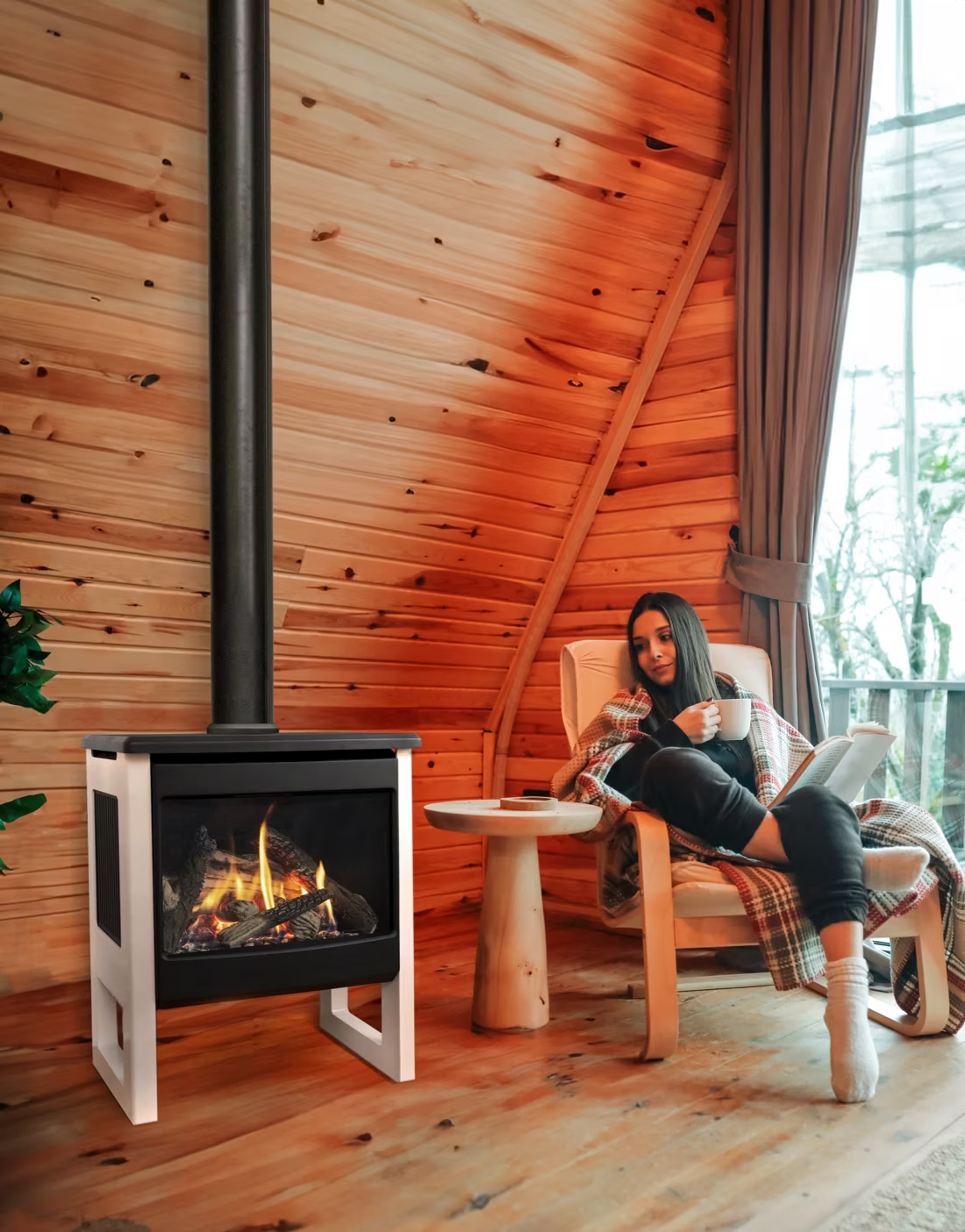
A gas fireplace is a fully framed-in unit, the right choice for new construction or a major renovation. A gas insert fits into an existing masonry firebox and uses the current chimney as its vent path, which suits most older homes around Northern Saskatchewan looking to upgrade from wood. A gas stove is a freestanding cabinet unit that sits on the floor, useful in a room with no existing chimney or in a smaller cabin-style home. A local dealer can walk your space and tell you which configuration actually fits the wall, the venting run, and your fuel source.
Do I need a permit to install a gas fireplace in Northern Saskatchewan?
Yes. Installations go through the municipal building department, and the gas line and appliance connection must be done under the CSA B149 installation code by a licensed gas fitter, whether you're on SaskEnergy service or propane. A full-service local dealer typically coordinates the gas work, venting, and inspection sign-off as one job, which is worth it in a region where finding a second licensed trade to fix a missed step isn't always quick.
Should I choose a vented or vent-free gas fireplace?
Direct-vent units pull combustion air from outside and exhaust it back outside through a sealed pipe, keeping the appliance completely separate from your indoor air. Vent-free models burn into the room and carry strict room-sizing limits. Given how tightly built and well-sealed homes need to be to handle a -23.1°C average winter low, most local dealers in Northern Saskatchewan steer homeowners toward direct-vent fireplaces, since they don't add any moisture or combustion byproducts to a home that's already working hard to hold heat.
How often does a gas fireplace need to be serviced?
Plan on an annual service call, ideally before the heating season sets in around late September. A technician checks the burner, pilot assembly, gas connections, and venting, and cleans the glass. A standard visit runs roughly $150 to $250 CAD. For a fireplace that's running daily through a Northern Saskatchewan winter, that annual check is what keeps the ignition system and venting reliable when you need it most.
Gas or wood—which makes more sense for a home in Northern Saskatchewan?
Wood, cut as trembling aspen, paper birch, jack pine, or white spruce under a free, year-round dead-and-down permit from the Forest Service Branch, offers the lowest fuel cost and heat that keeps working with no electricity at all, which matters when a storm knocks out power to a remote community. Gas offers instant, thermostat-controlled heat with none of the cutting, hauling, or ash cleanup, and it's what most households want running daily in the main living space. Plenty of homes in the region run both: gas for everyday convenience, wood as backup and tradition. If your priority is low-maintenance heat that runs itself through a long winter, gas is the better starting point.
Can a gas fireplace run on a thermostat?
Most modern gas fireplaces can—turn it on and off from the couch with a remote, or set a room temperature and let the fireplace hold the comfort zone for you. If low maintenance matters to your family, this is the feature set that makes gas the convenience pick over wood and pellet.
Why do fireplace quotes vary so much?
Because a fireplace is an iceberg—there's more behind the wall than in front of it. A low quote often covers only the unit; the full scope includes vent pipe, gas line or electrical, framing, and the tile or stone that has to come off and go back on. Make every bidder price the whole job. If a dealer can't speak to the full scope with confidence, that's your signal to keep looking.
Louvered or clean face—which fireplace front is better?
Louvered fronts have grill work above and below the glass for airflow, move heat a little better with a fan, and suit traditional mantels. Clean face designs drop the louvers entirely so finish work runs to the fire's edge—they fit both modern and traditional rooms. When we did our own home we chose clean face: a big viewing area beat a little extra airflow. It depends on your room, not on a rulebook.
Is it worth replacing an old fireplace that still sort of works?
Ask three questions: Is it ugly? Is it drafty? Does it actually work? Most old fireplaces fail at least two. Beyond looks, an old unit leaks air around the damper year-round and—if it's gas with a standing pilot—quietly burns a couple hundred dollars a year. A modern replacement seals the wall, heats the room, and changes how the whole space gets used.
Stove and Fireplace Dealers in Northern Saskatchewan
Listings include WhyFire partner dealers, dealers we have verified as authorized for the brands we recommend, and established local businesses that carry hearth products. Every listing shows which one it is. The ones marked Preferred run on WhyFire's software, so they can show you real pricing and book your appointment right here. No manufacturer pays for placement. How we verify dealers →
J.t. PLumbing & Heating
Natural Gas Service in Northern Saskatchewan
Confirm service at your address before planning a gas fireplace—a quick call settles it.
SaskEnergy
Get your free Project Guide & Parts List for a gas fireplace in Northern Saskatchewan.
Tell me about your home, whether you're on SaskEnergy service or propane, and how you want to use the fireplace, and I'll match you with a trusted local dealer and send a free Project Guide & Parts List—the exact equipment, vent kit, and recommended dealer for your gas project.
Find Your Fireplace →