
Sit near a fire on a cold night and something interesting happens. The air in the room might still be cool, but your face and hands are warm. Walk into the next room an hour later, and the air there feels warmer too, even though you can't see the fire at all.
Those are two different kinds of heat. Understanding them answers one of the questions we hear most: Should I run the fan?
Radiant Heat Warms Things
Radiant heat travels the way sunlight does. It goes straight out from the fire in every direction it can "see," and it warms whatever it lands on—you, your couch, the floor, and the walls.
You already know how it feels. It's standing in the sun on a cold, clear day, when the air is chilly but you feel warm. It's sitting by a campfire with your front toasty and your back cold. It's a stone wall that soaked up sun all afternoon and gives it back after dark.
In your home, that means you feel warm quickly, even before the thermostat moves. The objects radiant heat touches become warm themselves, so a warmed floor, hearth, or wall keeps giving off heat after the fire dies down. It works in a line of sight, so the closer you sit and the more directly you face the fire, the more you feel it. And it's completely silent. Nothing moves, and nothing needs power.
Convection Heat Warms the Air
Convection heat warms the air around the fire instead. Warm air rises, spreads across the ceiling, cools, sinks, and gets pulled back toward the fire to warm up again. That loop steadily lifts the temperature of the whole room.
Convection moves fast. Moving air fills a space much more quickly than radiant heat can warm it, and it reaches the corners and far sides of the room that the fire can't see. It's what actually raises the number on your thermostat, and it can carry heat into nearby spaces like a hallway or an open kitchen.
It has two weaknesses. Warm air collects up high, so in rooms with tall ceilings, a lot of it ends up where nobody's sitting. And because the heat lives in the air, drafts steal it. Leaky doors and windows pull convection heat right out of the room, while radiant heat that's soaked into your floor, walls, and furniture stays put.
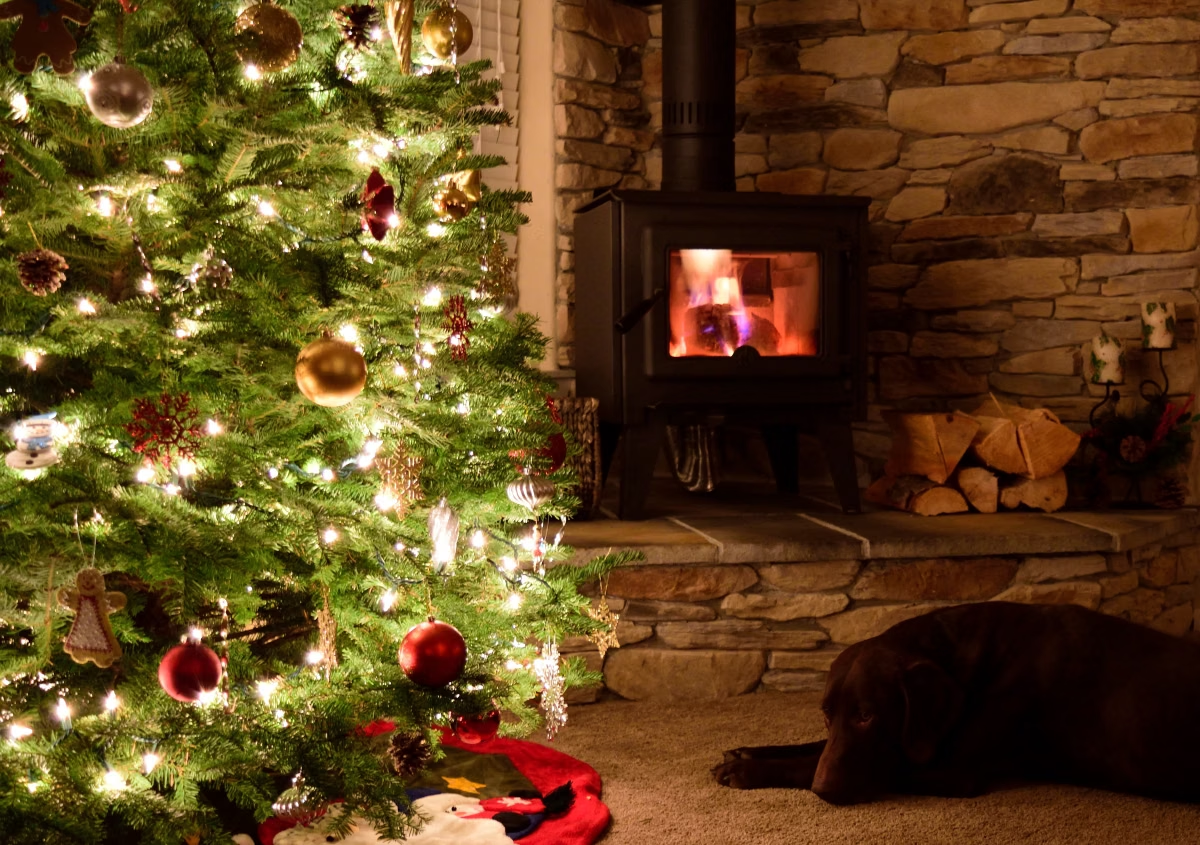
Most Fireplaces Do Both (Pellet Stoves Don't)
Almost every fireplace and stove puts out some radiant heat through its glass and body, and some convection heat as air moves across its hot surfaces. What changes from product to product is the balance.
The big exception is the pellet stove. A pellet stove's heat is virtually all convection—its fan blows warm air into the room. That's a real strength, because it fills a space quickly and pushes heat around corners. The trade-off is that the heat is only as good as the room's ability to hold it. In a drafty room with leaky doors or windows, a lot of that warm air slips away. If you're considering a pellet stove, sealing up the worst drafts first makes a noticeable difference.
For everything else, the balance is where the fan comes in.
So, Should You Run the Fan?
Most fireplaces and inserts come with a fan, often called a blower, or offer one as an option. The fan pulls room air across the hot parts of the fireplace and pushes it back out warmer. In other words, the fan turns up the convection side.
Turn the fan on when heating the space is the goal. On the coldest nights, it moves far more of the fire's heat into the room instead of letting it sit near the fireplace. It also earns its keep in big, open rooms, in rooms with high ceilings where it mixes the air so less heat pools at the top, and anytime you want warmth to reach a nearby room. Moving air carries heat around corners. Radiant heat can't.
Turn the fan off when you want quiet. Fans are designed to be quiet, but you can still hear them, and some evenings you want nothing but the sound of the fire—a movie, a book, a long conversation. Turn it off when you're sitting close, too, because right in front of the fire, the radiant heat alone feels wonderful. And during a power outage, the fan won't run anyway. You're left with radiant heat and natural convection, which for many fireplaces is still a good amount of warmth.
Many fans have more than one speed, so it isn't all or nothing. A low setting often moves a good share of the heat with much less noise.
A Tip for Tall Ceilings
If you have a ceiling fan, set it to spin clockwise at low speed in winter. That gently pushes the warm air collecting up high back down to where you're sitting, without creating a breeze.
The Question to Ask When You Shop
When you're comparing fireplaces, ask the dealer one thing: How much heat will I get with the fan off? Then listen to the fan running before you buy. If you'll mostly use your fireplace on quiet evenings, how it performs without the fan matters as much as how it performs with it.
How a stove holds and releases heat matters too. If you're choosing a wood stove, start with stovetop or crock pot?
See the fireplaces, stoves & inserts trusted local dealers carry near you—plus the free Project Guide & Parts List.
Enter your postal code