
Most people picture "converting to gas" as a single thing you buy. It's really a fork in the road with three very different paths, and picking the right one is most of the decision. Here's the honest version.
Path 1: A gas log set
This is the simplest change. A set of gas burners and ceramic logs drops into your existing masonry firebox, and you keep the open fireplace you already have. It's the least expensive path and it looks great.
The tradeoff is heat. A vented log set sends most of its warmth up the chimney, same as a wood fire did. So if your goal is ambiance and getting rid of hauling wood, a log set is a clean answer. If your goal is heat, keep reading.
Path 2: A gas insert
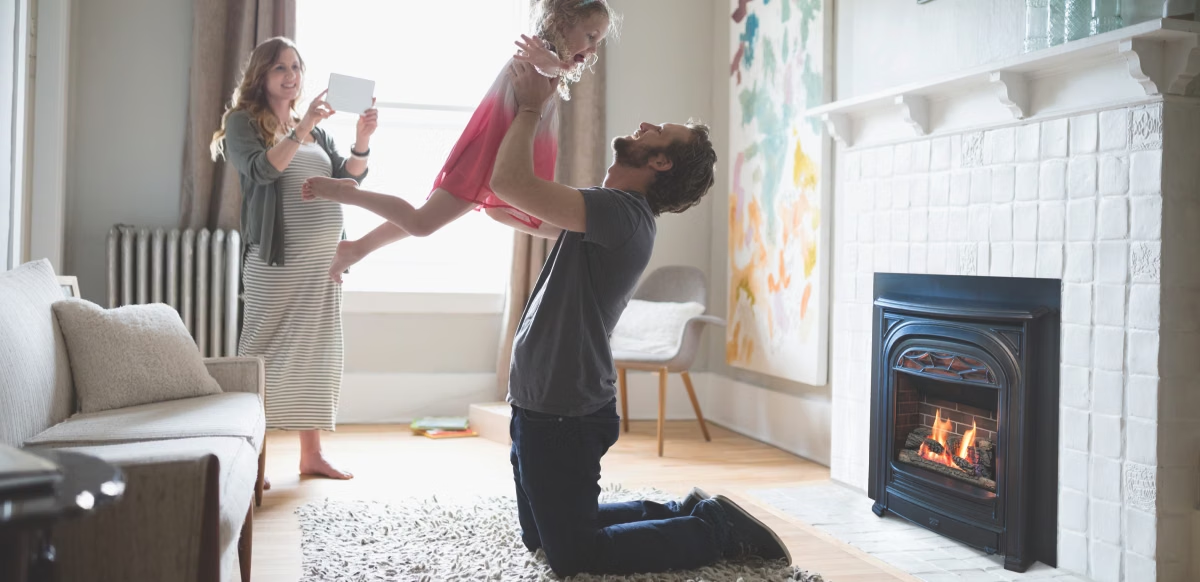
An insert is a sealed gas unit that slides into the opening and turns your drafty firebox into a real heater. This is the path most people actually want and don't know to ask for. Because it's sealed and vented properly, an insert can put the majority of its energy into the room instead of the sky, and it'll run on a thermostat or a remote.
It costs more than a log set because it's a real appliance with real output. It's also the upgrade that changes how a room feels in winter.
Path 3: A full replacement
If your firebox is a builder-grade metal unit rather than solid masonry, or it's cracked or undersized, the right move may be pulling it and installing a new built-in. More work, more cost, but you end up with exactly the size, style, and heat you want instead of working around what's there.
What decides it (and what it costs)
Three things drive both feasibility and price: whether a gas line already reaches the fireplace, whether the venting can be reused or needs running, and what your existing firebox actually is. That's why an honest cost has to come from someone standing in your living room, not from an article. Anyone quoting you a firm number sight-unseen is guessing.
One thing that isn't optional: this is licensed work. Gas connections and venting aren't a weekend project. The right question isn't "can I do it myself," it's "who's doing it, and are they pulling a permit."
The move
Figure out which path you're on before you shop, because it changes everything downstream. If you want looks, you're looking at a log set. If you want winter heat, you want an insert. And if your firebox can't support either well, a replacement gets you there clean.
Tell us your zip code and what you've got, and we'll show you the gas units local dealers can actually install, plus a free Project Guide you can hand them to get a real quote.
See the gas units trusted local dealers can actually install near you—plus the free Project Guide & Parts List.
Enter your postal code