
Ambiance heat built for Val-d'Or's -24°C nights and Hydro-Québec's low rates.
Val-d'Or sits at 338 metres in climate zone 7A, where winter lows average -24.3°C. I'll match you with a trusted local dealer who knows what actually runs well on Hydro-Québec's grid and can size the right unit for your room.
Every Project Starts From One of These Five Situations
The cheapest kilowatt-hour in the country meets some of the coldest nights in Quebec.
Val-d'Or sits at 338 metres in climate zone 7A, on the same rough cold-climate footing as Thunder Bay or northern Saskatchewan. Winter lows average -24.3°C, and the heating season stretches from October well into April. That's a climate where a heat source needs to be dependable and cheap to run every single night, not just decorative on the odd chilly evening.
Most homes here already heat with electric baseboards off Hydro-Québec, and at $0.078 per kWh the residential rate is among the lowest in the country, which is a big part of why electric fireplaces and inserts sell well in Val-d'Or. Wood remains a genuine backup or primary option too, split from sugar maple, yellow birch, American beech, and red oak cut under Ministère des Ressources naturelles et des Forêts permits, and pellet stoves have a following as well. Gas is the outlier: Énergir's distribution network barely reaches this far north into Abitibi-Témiscamingue, so a gas fireplace here almost always means a propane setup rather than a simple utility hookup, and most homeowners skip that step in favour of electric.
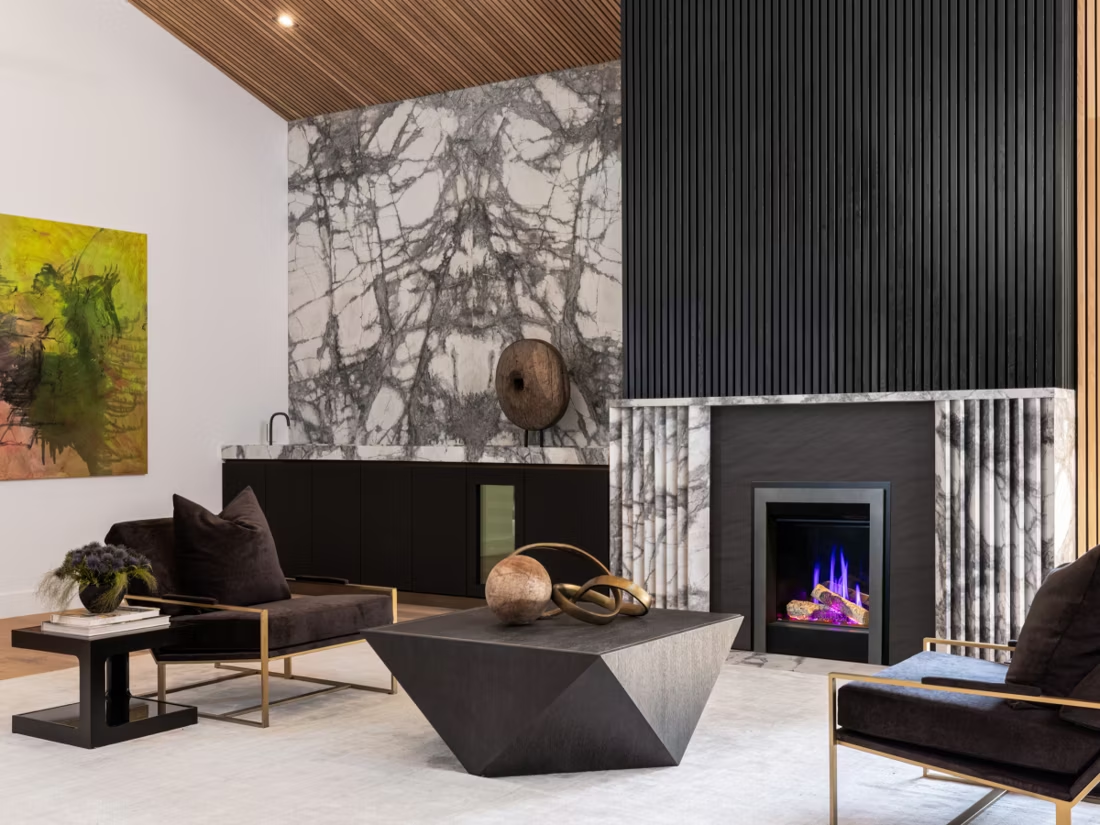
Three steps. No salesperson until you're ready.
Tell us about your project
Your postal code, your situation, and the fuel you're leaning toward—or let the answers point you to one.
See what's actually available
The brands dealers within 100 miles genuinely carry—real options, never a catalog mirage.
Get your dealer & Project Guide
A trusted local dealer, plus the free Project Guide & Parts List that names every component of the job.
Frequently Asked Questions
How much does an electric fireplace installation cost in Val-d'Or?
Most electric fireplace installs in Val-d'Or run $500-$1,600 CAD. A plug-in insert or mantel-style unit that runs off a standard 120V outlet sits at the low end. A built-in wall unit or larger insert needing a dedicated 240V circuit pulled by a licensed electrician pushes toward the top of that range, especially in older homes where the panel needs a bit of upgrading to add the circuit. Either way it's a fraction of the $6,000-$12,000 CAD a wood installation runs here, since there's no chimney, no venting, and no solid-fuel inspection involved.
Why do so many Val-d'Or homeowners choose electric fireplaces?
With winter lows averaging -24.3°C and a heating season about as long as Thunder Bay's, Val-d'Or homes need dependable heat that doesn't cost a fortune to run. Most houses here already heat with electric baseboards on Hydro-Québec's grid, so adding an electric fireplace or insert plugs into the same low-cost system rather than requiring a new fuel source. At $0.078 per kWh, that rate is among the cheapest in the country, which makes running an electric unit for ambiance or supplemental warmth in a den or bedroom genuinely inexpensive.
Do I need a permit to install an electric fireplace in Val-d'Or?
Yes, but it's simpler than for wood or gas. Electric installs go through the municipal building department for an electrical permit, and any new dedicated circuit needs to be pulled by a licensed electrician. There's no CSA B365 solid-fuel inspection and no WETT inspection to schedule, since those apply to wood-burning appliances, which is one reason electric units move faster from purchase to running than a wood stove does.
Electric vs. wood—which makes more sense for a Val-d'Or home?
Wood remains a real primary or backup heat source across Abitibi-Témiscamingue. Sugar maple, yellow birch, American beech, and red oak all grow locally, and cutting permits through the Ministère des Ressources naturelles et des Forêts run about $1.85 per cubic metre plus taxes up to 22.5 m3, valid April 1 to March 31. A wood install here typically runs $6,000-$12,000 CAD, well above electric's $500-$1,600 CAD. Electric skips the splitting, the chimney, and the WETT inspection insurers ask for on solid-fuel appliances, but it won't hold a room warm during a Hydro-Québec outage the way a wood stove will, so some households keep wood for resilience and add electric elsewhere for easy supplemental heat.
Why isn't gas a bigger option for fireplaces in Val-d'Or?
Énergir's distribution network covers parts of Quebec, mostly corridors around greater Montréal and the south shore, but it doesn't extend service this far north into Abitibi-Témiscamingue. A gas fireplace in Val-d'Or would mean a propane tank and delivery, which pushes install costs toward $6,000-$15,000 CAD and adds ongoing fuel logistics. Electric plugs into the Hydro-Québec service every home already has, which is why most Val-d'Or homeowners looking for push-button convenience land on electric rather than chasing a propane setup.
What does it actually cost to run an electric fireplace here?
At Hydro-Québec's residential rate of $0.078 per kWh, a typical 1,500-watt electric fireplace running on its heat setting for eight hours costs roughly $0.94 CAD. Most owners run the flame effect without heat most evenings for ambiance and switch the heater on only in a closed-off den or bedroom during the coldest stretches, which keeps monthly costs modest even through a long Abitibi winter.
Insert, wall-mount, or mantel style—what fits my house?
Electric inserts slide into an existing masonry firebox, which suits older Val-d'Or homes with a fireplace opening but no interest in burning wood in it. Wall-mounted and mantel-style units suit newer builds or basements without an existing chimney chase—just a wall, an outlet or a new circuit, and clearance from the electrical panel. Either style works in an addition, a rec room, or a bedroom since there's no venting to route through a roof or wall cavity.
What size electric fireplace do I need given how cold it gets here?
With lows averaging -24.3°C, an electric fireplace in Val-d'Or is best planned as supplemental or zone heat rather than a home's primary heat source—most houses already run baseboard or forced-air electric heat for that job. A 1,500-watt unit comfortably takes the chill off a room in the 200-400 sq ft range, like a den or finished basement, but it won't carry a whole main floor through a January cold snap on its own. A local dealer sizes the unit against the specific room rather than the whole house.
How much maintenance does an electric fireplace need?
Very little compared to a wood or gas unit—no chimney sweep, no annual gas line check. Wiping the glass front and vacuuming the vent grille a couple of times a season, plus checking the LED or halogen flame bulbs periodically, covers most of it. Because there's no combustion, there's also no CSA B365 inspection cycle or WETT recertification to track, which simplifies things for insurance purposes.
How much does an electric fireplace cost to run?
With the heater on, a typical unit draws about 1,500 watts—at average electric rates that's roughly 20 cents an hour. Run the flame effect alone and it costs pennies; the flames are LED-driven and use about as much power as a light bulb. There's no pilot light, no fuel delivery, and essentially no maintenance.
What fireplace styles should I know before shopping?
Four cover most of the market: screen-front traditional (mesh front, open feel, fits craftsman homes), traditional door set (the classic look you grew up with), modern linear (wide, low, the statement piece for entertaining), and clean face contemporary (no trim—your tile or stone runs right to the fire's edge). Walk in knowing those four terms and you're ahead of most buyers.
Can I put a TV above my fireplace?
Yes—with an asterisk. Fireplaces are hot and TVs don't like heat. Either put a mantel between them to deflect rising warmth, or choose a fireplace with heat-management technology that creates a cool zone on the wall above—the wall stays around 125 degrees, barely warm, while the room still gets full heat. If you like clean lines and don't want a mantel, heat management is the answer.
Do electric fireplaces actually produce heat?
Yes—most put out around 4,800–5,000 BTUs from a standard outlet, which comfortably warms a bedroom, office, or den as a comfort-zone heater. What they won't do is carry a whole house the way wood, gas, or pellet can. Think of electric as ambiance-first with honest supplemental heat: flames on with no heat in July, flames plus warmth in January.
Nearby Dealers
Hearth shops serving Val-d'Or and the surrounding area. Every listing shows whether it is a WhyFire partner, a dealer we have verified as authorized for the brands we recommend, or a local business carrying hearth products. No manufacturer pays for placement. How we verify dealers →
Materiaux Paradis Et Fils Inc.
Centre De Rénovation Senneterre
Breton Thibault Ltee Home Hardware
Electric Service in Val-d'Or
An electric fireplace's heater draws about 1,500 watts—pennies per hour at local rates.
Hydro-Québec
Get your free Project Guide & Parts List for a Val-d'Or electric fireplace.
Tell me about your home and the room you want to warm, and I'll match you with a trusted local dealer and send a free Project Guide & Parts List—sized for your space and ready for Hydro-Québec's grid, no chimney or gas line required.
Find Your Fireplace →