
Find your fireplace in Abitibi-Témiscamingue.
Wood, pellet, gas, and electric fireplace resources for the whole region—from Rouyn-Noranda and Val-d'Or through Amos, La Sarre, and Ville-Marie. Pick a fuel and get matched with a local dealer who actually installs it before the deep cold sets in.
Every Project Starts From One of These Five Situations
Boreal winters, -24.3°C lows, and a region built on wood heat.
Abitibi-Témiscamingue stretches across northwestern Quebec along the Ontario border, a climate zone 7A region where towns like Rouyn-Noranda, Val-d'Or, Amos, La Sarre, and Ville-Marie see average winter lows near -24.3°C—cold enough to sit alongside Fort McMurray, Alberta, in overnight severity. The heating season here runs long, typically September through May, and the mixed hardwood forests that ring the clay belt around Lac Abitibi and Lac Témiscamingue supply the sugar maple, yellow birch, American beech, and red oak that most households still burn. Cutting permits for wood harvested on public land go through the Ministère des Ressources naturelles et des Forêts, and a well-loaded catalytic stove burning seasoned maple or oak can hold a fire through the coldest overnight stretches without a reload.
The fuel mix here reflects both geography and infrastructure. Wood remains the backbone heat source in rural parts of the region, with municipal building departments requiring permits under the CSA B365 installation code and most insurers asking for a WETT inspection before they'll cover a new wood appliance. Pellet stoves have a solid foothold too, helped by Quebec-manufactured brands like Granules LG, Energex, and Trebio being widely stocked at regional dealers. Electric fireplaces and inserts are a genuinely strong option in this region specifically because Hydro-Québec's rates are among the lowest in the country, making electric heat far more practical here than in most of Canada. Gas is the outlier: Énergir's distribution network doesn't reach this far northwest, so a gas fireplace in Abitibi-Témiscamingue almost always means a propane conversion rather than a mains hookup. This hub rolls up retailers, service technicians, and fuel suppliers across the whole region—pick your fuel below for local dealers, install costs, and unit recommendations specific to your town.
Four fuels. One honest answer for Abitibi-Témiscamingue.
Wood
66 models available near Abitibi-Témiscamingue.
Find your wood stove →Gas
24 models available near Abitibi-Témiscamingue.
Find your gas fireplace →Pellet
See what's available near Abitibi-Témiscamingue.
Find your pellet stove →Electric
See what's available near Abitibi-Témiscamingue.
Find your electric fireplace →Three steps. No salesperson until you're ready.
Tell us about your project
Your postal code, your situation, and the fuel you're leaning toward—or let the answers point you to one.
See what's actually available
The brands dealers within 100 miles genuinely carry—real options, never a catalog mirage.
Get your dealer & Project Guide
A trusted local dealer, plus the free Project Guide & Parts List that names every component of the job.
Frequently Asked Questions
Which fireplace fuel makes the most sense in Abitibi-Témiscamingue?
All four fuels show up here, but wood and pellet do most of the heavy lifting. Wood remains the backbone fuel in rural parts of the region—sugar maple, yellow birch, American beech, and red oak are the species most households burn, much of it cut under Ministère des Ressources naturelles et des Forêts permits, and a catalytic stove loaded with seasoned hardwood will hold overnight through -24.3°C lows. Pellet stoves have real traction too, helped by Quebec-made brands like Granules LG, Energex, and Trebio being easy to source locally. Electric fireplaces and inserts are a stronger option here than in most of Canada, simply because Hydro-Québec's electricity rates are so low that electric heat is genuinely affordable as a supplemental or even primary source in a well-insulated home. Gas is the exception—Énergir's pipeline network doesn't reach this far northwest, so a gas fireplace here almost always means a propane appliance rather than a mains gas hookup.
Do I need a permit to install a wood stove in Abitibi-Témiscamingue?
Yes. New installations go through your municipal building department, and the work has to follow the CSA B365 installation code for clearances, venting, and hearth protection. Most home insurers in the region also require a WETT inspection before they'll add a new wood-burning appliance to your policy, and many ask for a follow-up inspection every few years after that. Pellet stove installs follow a similar municipal permitting path. Propane-fired gas units need a licensed gas fitter for the connection in addition to the building permit. Electric fireplaces usually skip the permit process unless you're hardwiring a built-in unit that needs a new circuit. The local dealers we match homeowners with typically handle the permitting and WETT paperwork as part of the project.
Is natural gas actually available for a gas fireplace here?
For most of the region, no. Énergir's distribution network is concentrated around greater Montréal, the south shore, and a handful of urban corridors—it doesn't extend into Abitibi-Témiscamingue at all. So when a homeowner here asks about a gas fireplace, what they're usually looking at is a propane unit, fed by a bottled or bulk tank rather than a buried gas line. Propane fireplaces and inserts work fine in this climate and install much like a natural gas unit would, but the ongoing fuel cost and delivery logistics are worth discussing with a local dealer before you commit to that route over wood, pellet, or electric.
Are there rules here about certified low-emission wood stoves, like Montreal's bylaw?
Montreal's requirement that wood appliances be registered and certified to emit no more than 2.5 grams of fine particles per hour is specific to the island, and it doesn't apply out here. That said, it's part of a broader provincial direction, and several Abitibi-Témiscamingue municipalities are moving toward similar registration expectations for new installations. Regardless of local bylaw specifics, every new wood stove or insert installed here still has to meet the CSA B365 installation code, and most dealers default to EPA/CSA-certified units anyway because they burn cleaner, hold a fire longer on a load of maple or oak, and satisfy insurers doing a WETT inspection. It's a normal planning step, not a hurdle—your local dealer handles it as a matter of course.
What does a fireplace installation typically cost in Abitibi-Témiscamingue?
Costs shift with fuel type and how much venting work is involved. Wood stove or insert installs typically run $3,500-$8,500 CAD, with a full masonry chimney for new construction pushing higher. Pellet stove or insert installs generally land at $4,000-$7,000 CAD. Propane fireplaces or inserts—the region's stand-in for gas—usually run $5,000-$10,000 CAD once you factor in the tank setup and gas-fitter labour. Electric fireplaces are the most affordable entry point: $300-$3,500 CAD for the unit itself, plus $500-$1,500 CAD in labour for anything beyond a plug-and-play placement. The region and fuel pages above break these numbers down further with local dealer pricing.
How does installation and service work across such a spread-out region?
Dealers and service techs are concentrated around Rouyn-Noranda and Val-d'Or but regularly travel out to Amos, La Sarre, Ville-Marie, and Témiscaming, so expect a modest trip charge the farther you are from those hubs. Scheduling tightens considerably once temperatures start dropping toward that -24.3°C average low, so booking your WETT inspection, chimney sweep, or new install in late summer or early fall puts you ahead of the rush. For properties well outside the main centres, it's worth asking your dealer about spare parts on hand locally, since a winter storm can delay a return visit by a few days on the region's longer rural routes.
How many BTUs do I need in a fireplace?
Wrong question—and the industry's favorite way to confuse you. More BTUs isn't better if the fireplace cooks you out of the room you spent thousands to enjoy. Think in terms you can verify: how many square feet the unit heats, whether it's primary or backup heat, and whether you want it running overnight. Those three answers size a fireplace correctly every time.
Will we actually use a fireplace once we have one?
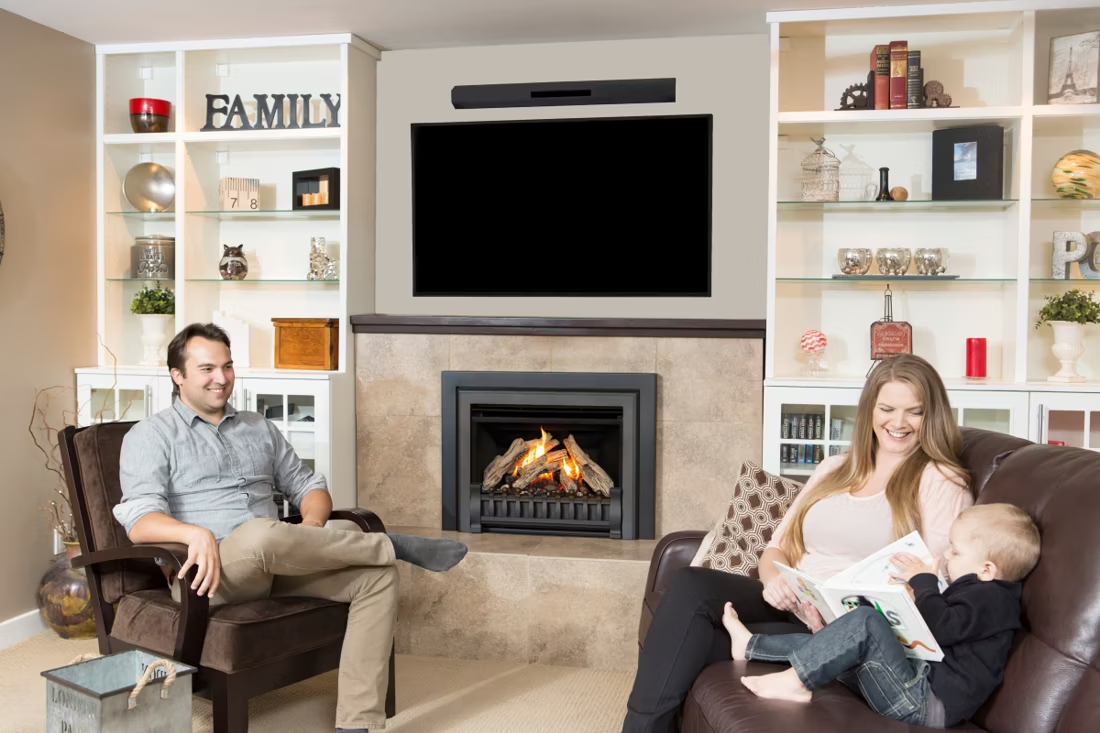
In my own home, the room with the fireplace has never been the same—it became the social hub. Game nights, holidays, date nights after the kids are down: the fire is where the house gathers. There's a reason people in this industry joke that we're really in the romance and entertainment business. You won't wonder whether you'll use it; you'll wonder how the room worked before.
I know I want a fireplace—where do I actually start?
Do two things today: snap a photo of the wall or fireplace you want to transform, and take a tape measure to the space—width, height, depth. Those two artifacts answer most of a hearth professional's first questions. Then settle fuel (wood, gas, pellet, or electric) and set a realistic budget: $3,900–$5,500 covers fireplace, vent, and basic install for most homes.
How much should I budget for a fireplace?
For an average home—covering the fireplace, the vent pipe, and basic installation—a budget between $3,900 and $5,500 gives you a lot of options across wood, gas, and pellet. By the time you add finish work, gas line, and electrical, the average complete installation lands between $5,000 and $12,000 all-in. In a remodel or new build, a good rule is to put about 2.5% of the total project cost toward the fireplace.
Stove and Fireplace Dealers in Abitibi-Témiscamingue
Listings include WhyFire partner dealers, dealers we have verified as authorized for the brands we recommend, and established local businesses that carry hearth products. Every listing shows which one it is. The ones marked Preferred run on WhyFire's software, so they can show you real pricing and book your appointment right here. No manufacturer pays for placement. How we verify dealers →
Breton Thibault Ltee Home Hardware
Materiaux Paradis Et Fils Inc.
Centre De Rénovation Senneterre
Get matched with a local Abitibi-Témiscamingue dealer.
Pick your fuel below and we'll put together a free Project Guide & Parts List—the right unit, the vent kit it needs, and the local dealer we recommend for your project.
Find Your Fireplace →