
Steady heat for winters that hold at minus 24.
Nights in Rouyn-Noranda, Val-d'Or, and La Sarre routinely settle near -24.3°C, and Hydro-Québec's low electricity rates make an electric fireplace one of the most practical ways to add real, on-demand warmth to a room without a chimney, a gas line, or a cord of wood to manage. I'll match you with a local dealer who can tell you exactly what fits your space.
Every Project Starts From One of These Five Situations
Hydro-Québec power turns electric heat into a practical choice.
Abitibi-Témiscamingue covers a vast stretch of northwestern Quebec's mixed and boreal forest, from Rouyn-Noranda and Val-d'Or through Ville-Marie, La Sarre, and Témiscaming. Classified climate zone 7A, the region sees winter lows averaging -24.3°C and a heating season that runs from October well into April. Natural gas service reaches only a partial footprint of the region, mostly a few urban corridors, so most homes here heat with electricity, wood, or pellets rather than gas. Sugar maple, yellow birch, American beech, and red oak are the wood species most commonly split and burned locally, but not every household wants the cutting, hauling, and chimney upkeep that wood demands.
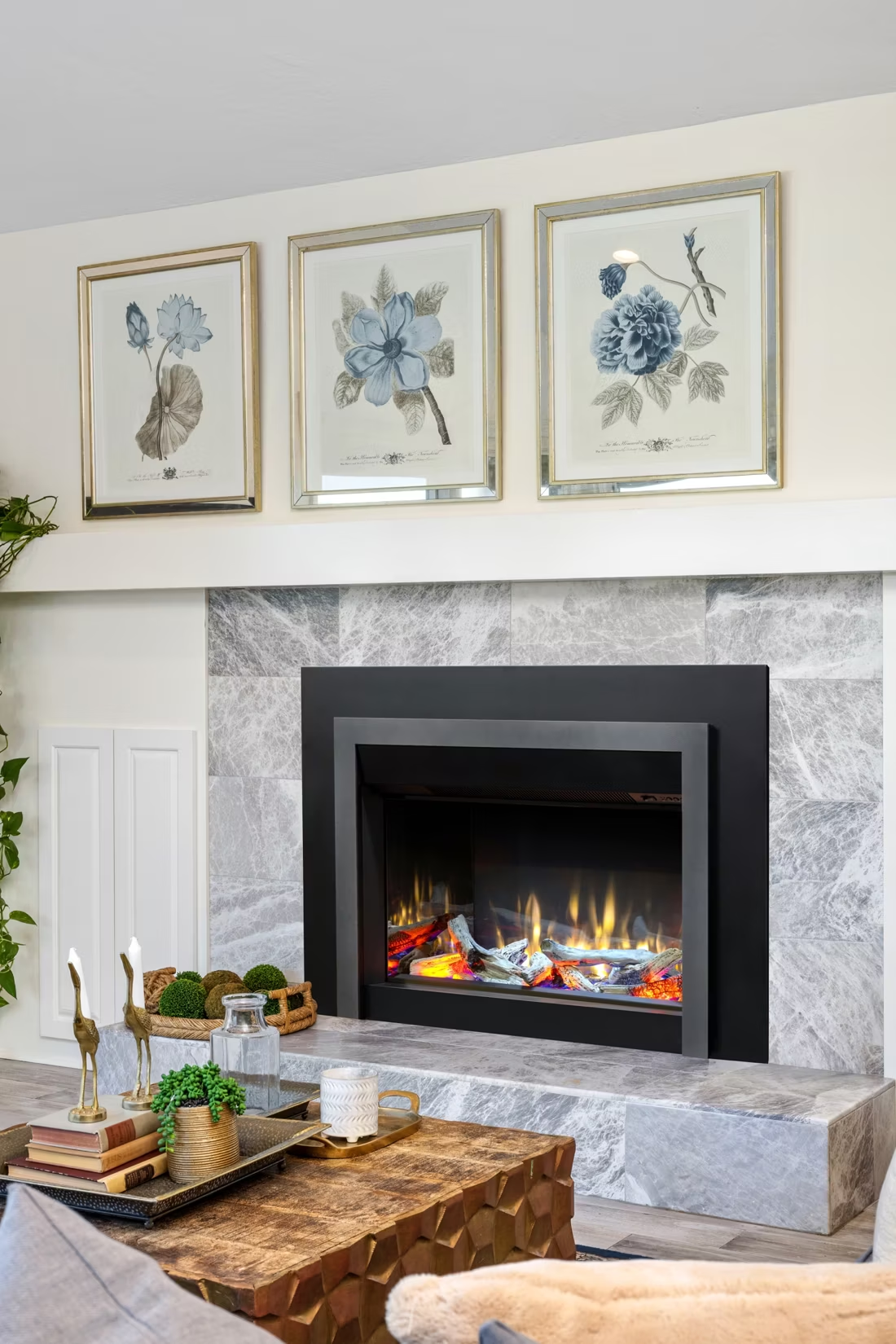
That's where electric fireplaces fit. Hydro-Québec's rates are among the lowest in North America, so running an electric insert or built-in unit here costs a fraction of what the same appliance would cost to operate in Ontario or the Maritimes. Installed cost typically runs $500-$1,600 CAD, since most units plug into an existing outlet or need only a simple circuit run by a licensed electrician—no chimney, no venting, no combustion air intake required. For homes already heated with electric baseboards or a heat pump, an electric fireplace adds visual warmth and supplemental zone heat to a living room or bedroom without changing how the rest of the house is heated.
Three steps. No salesperson until you're ready.
Tell us about your project
Your postal code, your situation, and the fuel you're leaning toward—or let the answers point you to one.
See what's actually available
The brands dealers within 100 miles genuinely carry—real options, never a catalog mirage.
Get your dealer & Project Guide
A trusted local dealer, plus the free Project Guide & Parts List that names every component of the job.
Frequently Asked Questions
How much does an electric fireplace installation cost in Abitibi-Témiscamingue?
Most installations run $500-$1,600 CAD. A freestanding or wall-mounted unit that plugs into an existing outlet sits at the low end of that range—you're really only paying for the appliance and a mount. A built-in electric fireplace or insert wired into its own circuit costs more, since it needs a licensed electrician and sometimes a small amount of framing or trim work. Homes in Rouyn-Noranda or Val-d'Or with newer electrical panels usually have an easier, cheaper hookup than older rural properties around Témiscaming or La Sarre that may need panel upgrades first.
Do I need a permit to install an electric fireplace?
It depends on the unit. A plug-in freestanding or mantel-style electric fireplace generally doesn't require a permit since it uses a standard outlet like any other appliance. A built-in unit wired directly into a new dedicated circuit typically does need an electrical permit from your municipal building department, and the wiring has to be done by a licensed electrician regardless of whether a permit is pulled. Unlike wood or gas appliances, there's no CSA B365 venting inspection or WETT inspection involved here, since there's no combustion and nothing to vent.
Why is electric heat so common here compared to other provinces?
Hydro-Québec's electricity is priced well below the North American average, which changes the math on electric heat entirely. In much of Canada, running electric resistance heat costs more than gas or wood; in Abitibi-Témiscamingue, it's often the cheapest option available, especially with natural gas reaching only a partial footprint of the region. Many area homes already run on electric baseboards or a heat pump as primary heat, so adding an electric fireplace for a living room or bedroom is a low-cost way to get supplemental warmth and ambiance without touching the main heating system.
Will an electric fireplace actually keep a room warm at -24°C?
A quality electric insert with a real heating element, not just a decorative flame, can genuinely heat a small to medium room—most units are rated for 1,000 to 1,500 square feet under good insulation. But with winter lows averaging -24.3°C, an electric fireplace is best treated as supplemental heat for the room it's in, not a replacement for your home's primary heating system. Pair it with electric baseboards, a heat pump, or a wood or pellet stove elsewhere in the house, and let the fireplace take the edge off a specific room without running the whole-home system harder.
Is natural gas a realistic alternative to electric here?
Not for most of Abitibi-Témiscamingue. Natural gas service only reaches a partial footprint of the region, generally limited pockets around larger centres, so most households don't have a gas line to tap into. Where gas isn't available, a gas fireplace usually means a propane conversion with a tank on the property, which adds ongoing delivery costs. Given Hydro-Québec's low rates, electric ends up being the more straightforward and often cheaper option for homes outside those limited gas corridors.
How much maintenance does an electric fireplace need?
Very little compared to wood or gas. There's no chimney to sweep, no venting to inspect, and no combustion byproducts to manage. Basic upkeep is dusting the unit, occasionally cleaning the fan or blower intake so it doesn't clog with household dust, and replacing an LED module or bulb set after years of use—most run for a decade or more before that's needed. That low-maintenance profile is part of why electric units are a popular secondary heat source in bedrooms, basements, and cottages across the region.
Are there rebates available for switching to electric heat in Quebec?
Quebec's Chauffez vert program offers financial support to households converting from oil heating to electric heat, and Hydro-Québec periodically runs efficiency incentives tied to insulation and heating upgrades. An electric fireplace alone, used as a supplemental appliance, usually doesn't qualify on its own, but if you're planning a broader heating conversion in an older Témiscamingue or Abitibi home still running on oil, it's worth asking your local dealer whether the timing lines up with an active program.
What size electric fireplace do I need?
Size by the room, not the whole house. A 30 to 40 inch insert or wall unit typically covers a standard living room in a Rouyn-Noranda or Val-d'Or home, while a smaller 26 to 30 inch unit suits a bedroom or den. Because most electric fireplaces heat a single room rather than a whole floor, oversizing doesn't add real benefit the way it might with a wood stove—the flame width and finish look matter more to most homeowners here than raw output once you're past a comfortable fit for the space.
What happens to my electric fireplace during a power outage?
It stops working entirely, which is worth planning around given how many winter storms move through Abitibi-Témiscamingue between November and March. If backup heat during an outage matters to your household, a wood stove elsewhere in the home is the more resilient choice, since it keeps working without power (pellet stoves still need electricity for the auger and blower, so wood is the most outage-proof option). Plenty of local households run an electric fireplace for everyday convenience and keep a wood stove or fireplace as the storm backup.
How much does an electric fireplace cost to run?
With the heater on, a typical unit draws about 1,500 watts—at average electric rates that's roughly 20 cents an hour. Run the flame effect alone and it costs pennies; the flames are LED-driven and use about as much power as a light bulb. There's no pilot light, no fuel delivery, and essentially no maintenance.
What fireplace styles should I know before shopping?
Four cover most of the market: screen-front traditional (mesh front, open feel, fits craftsman homes), traditional door set (the classic look you grew up with), modern linear (wide, low, the statement piece for entertaining), and clean face contemporary (no trim—your tile or stone runs right to the fire's edge). Walk in knowing those four terms and you're ahead of most buyers.
Does an electric fireplace need a vent or chimney?
No—that's its superpower. An electric fireplace needs a wall and an outlet, period. No vent pipe, no gas line, no clearances to design around, which is why it works in bedrooms, offices, apartments, and walls where venting a gas or wood unit would be impractical or impossible. Installation is typically the simplest and least expensive of any fireplace type.
Can I put a TV above my fireplace?
Yes—with an asterisk. Fireplaces are hot and TVs don't like heat. Either put a mantel between them to deflect rising warmth, or choose a fireplace with heat-management technology that creates a cool zone on the wall above—the wall stays around 125 degrees, barely warm, while the room still gets full heat. If you like clean lines and don't want a mantel, heat management is the answer.
Stove and Fireplace Dealers in Abitibi-Témiscamingue
Listings include WhyFire partner dealers, dealers we have verified as authorized for the brands we recommend, and established local businesses that carry hearth products. Every listing shows which one it is. The ones marked Preferred run on WhyFire's software, so they can show you real pricing and book your appointment right here. No manufacturer pays for placement. How we verify dealers →
Breton Thibault Ltee Home Hardware
Materiaux Paradis Et Fils Inc.
Centre De Rénovation Senneterre
Electric Service in Abitibi-Témiscamingue
An electric fireplace's heater draws about 1,500 watts—pennies per hour at local rates.
Hydro-Québec
Get your free Project Guide & Parts List for an electric fireplace in Abitibi-Témiscamingue.
Tell me about your home and the room you want to heat, and I'll match you with a local Abitibi-Témiscamingue dealer and send over a free Project Guide & Parts List—the exact unit, mounting or circuit needs, and recommended dealer for your electric fireplace project.
Find Your Fireplace →