
Built for Lanaudière winters that average -17.9°C.
Sainte-Julienne sits in a climate zone that keeps furnaces running from October into April. I'll match you with a trusted local dealer who knows Granules LG, Energex, and Trebio supply, and send a free planning packet sized to your home.
Every Project Starts From One of These Five Situations
Consistent heat without splitting cordwood every fall.
Sainte-Julienne sits at 116 metres in Lanaudière, roughly an hour north of Montréal, in a climate zone (7A) that runs colder than most people assume from a town this close to the St. Lawrence lowlands. Winter lows average -17.9°C, and the heating season stretches over five months, putting Sainte-Julienne in similar territory to Sudbury or Ottawa for how long the cold actually sits. That's a season that rewards a heat source you can load and walk away from, not just a mantel piece.
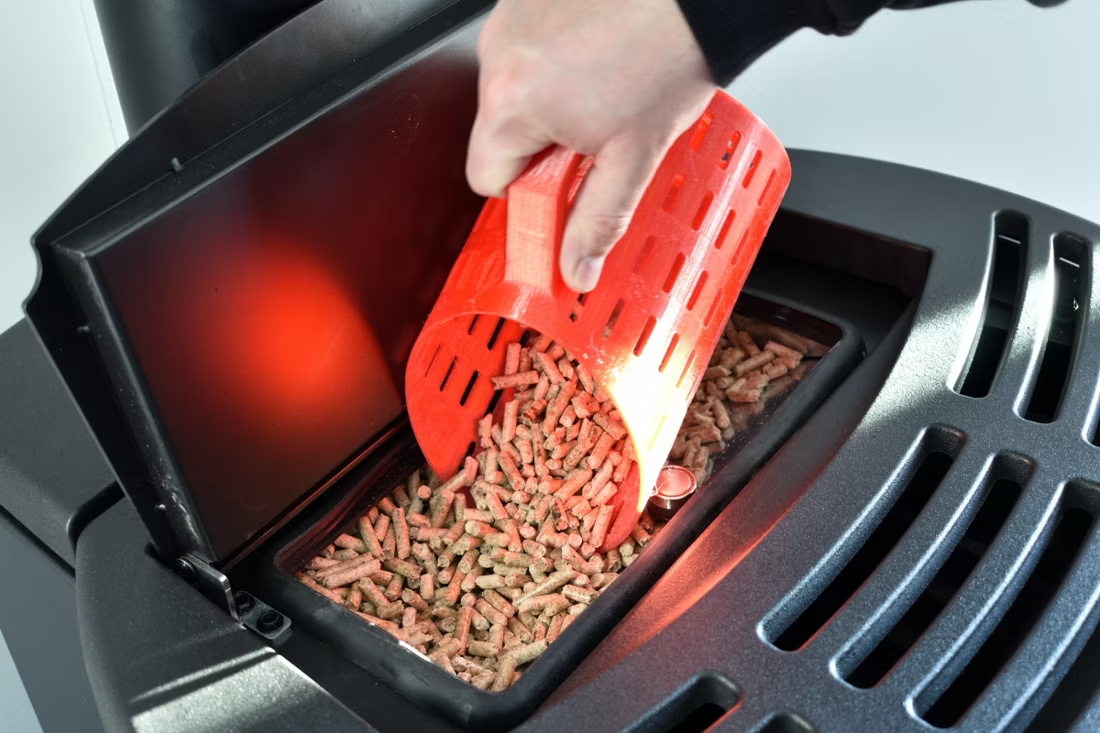
Sugar maple, yellow birch, American beech, and red oak are the hardwoods most local burners already know from cutting under an MRNF permit, but a growing number of Sainte-Julienne households run a pellet stove instead of, or alongside, a wood setup. Granules LG, Energex, and Trebio are the Quebec-made brands stocked by hearth dealers across the region, typically $400-$575 a tonne, and they trade the splitting, stacking, and multi-year seasoning that oak demands for a hopper you fill every day or two. With Hydro-Québec's residential rate sitting at roughly 7.8 cents per kWh, the electricity a pellet stove's auger and blower draw costs next to nothing here, which is part of why the fuel has caught on as a practical, lower-labour alternative to wood.
Three steps. No salesperson until you're ready.
Tell us about your project
Your postal code, your situation, and the fuel you're leaning toward—or let the answers point you to one.
See what's actually available
The brands dealers within 100 miles genuinely carry—real options, never a catalog mirage.
Get your dealer & Project Guide
A trusted local dealer, plus the free Project Guide & Parts List that names every component of the job.
Frequently Asked Questions
How much does a pellet stove installation cost in Sainte-Julienne?
Most pellet installs here run $6,000-$10,000 CAD, close to but generally a bit less than a comparable wood stove project at $6,000-$12,000. The spread depends mainly on venting: a straightforward through-wall vent kit into an existing hearth area sits toward the low end, while a new install needing a dedicated electrical outlet for the auger and blower, plus longer venting runs through a second-storey wall, pushes toward the top. Your municipal building department permit is generally folded into the dealer's quote.
Do I need a permit to install a pellet stove in Sainte-Julienne?
Yes. New installations go through the municipal building department, and the work has to meet the CSA B365 installation code regardless of fuel type. Insurers commonly ask for a WETT inspection on solid-fuel appliances before they'll cover the home, and even though pellet stoves burn considerably cleaner than an open wood fireplace, most local dealers still arrange the inspection since it confirms clearances and venting were done to code.
What size pellet stove do I need for a home in Sainte-Julienne?
With winter lows averaging -17.9°C and stretches that drop well past that during a hard cold snap, a small unit meant for a single room won't keep pace as primary heat. Most Sainte-Julienne homes do better with a mid-to-large pellet stove sized for the main living area plus adjoining rooms, with a hopper large enough to burn overnight without a 2 a.m. refill. A local dealer will size it against your actual floor plan and insulation rather than square footage alone.
Where do I buy pellets locally, and what do they cost?
Granules LG, Energex, and Trebio are the three brands most hearth dealers across Lanaudière keep in stock, and pricing this season runs about $400-$575 a tonne depending on bag quality and how early you buy. Ordering in late summer, before the fall rush, is the standard advice from local dealers since supply tightens once temperatures drop and everyone remembers they need fuel at the same time.
Is cutting my own wood cheaper than running a pellet stove here?
On paper, yes: an MRNF permit lets you cut sugar maple, yellow birch, beech, or red oak on public land for about $1.85 per cubic metre up to a 22.5 cubic metre cap, valid April 1 through March 31. But that cost doesn't include the splitting, stacking, and year-or-more of seasoning that dense hardwoods like oak and beech actually need before they burn clean. A pellet stove trades that labour and lead time for a bagged fuel you can buy in October and burn in November, which is why plenty of Sainte-Julienne households keep a wood stove for backup and run pellet as the day-to-day heat source.
Why isn't gas more common for fireplaces in Sainte-Julienne?
Énergir's natural gas network reaches only part of the region, and Sainte-Julienne sits mostly outside those corridors, so a gas fireplace here usually means a propane setup rather than a mains hookup. That's a real option, but it's not the default the way it is in parts of greater Montréal. Pellet appliances sidestep the question entirely since they don't depend on any gas line, which is a big part of why pellet has become the more standard choice for homeowners in this area who want clean, controllable heat.
Will a pellet stove keep working if the power goes out?
No—the auger and blower both need electricity, which matters in Lanaudière given the freezing rain events that periodically knock out Hydro-Québec service for a day or more. Because of that, a fair number of Sainte-Julienne homes pair a pellet stove for everyday heat with a wood stove or fireplace kept ready as backup for extended outages. If outage resilience is your top priority, that's worth discussing with your dealer before you commit to pellet as your only heat source.
How much maintenance does a pellet stove need?
Plan on emptying the ash pan every week or so during heavy winter use, cleaning the burn pot regularly to keep the flame steady, and a full professional service once a year, ideally in September before the cold sets in. Ash content varies a bit between Granules LG, Energex, and Trebio fuel, so a local dealer who sells whichever brand you're burning can tell you if your cleaning schedule needs adjusting.
Pellet vs. electric heat—which makes more sense with Hydro-Québec's rates?
Hydro-Québec's residential rate of about 7.8 cents per kWh makes electric fireplaces cheap to run, and installs cost just $500-$1,600 versus $6,000-$10,000 for a typical pellet setup. But electric units are mostly ambiance and supplemental warmth, while a pellet stove puts out real, sustained heat that can carry a living area through a -17.9°C night. A common pattern in Sainte-Julienne is electric baseboard or a small electric unit for background heat, with a pellet stove doing the heavy lifting in the main room.
Why do fireplace quotes vary so much?
Because a fireplace is an iceberg—there's more behind the wall than in front of it. A low quote often covers only the unit; the full scope includes vent pipe, gas line or electrical, framing, and the tile or stone that has to come off and go back on. Make every bidder price the whole job. If a dealer can't speak to the full scope with confidence, that's your signal to keep looking.
Is it worth replacing an old fireplace that still sort of works?
Ask three questions: Is it ugly? Is it drafty? Does it actually work? Most old fireplaces fail at least two. Beyond looks, an old unit leaks air around the damper year-round and—if it's gas with a standing pilot—quietly burns a couple hundred dollars a year. A modern replacement seals the wall, heats the room, and changes how the whole space gets used.
Why is my open fireplace making my house colder?
Open fireplaces suck—literally. As the fire burns, it consumes air your furnace already paid to heat and pulls it out through the chimney, so the house is actually colder after the fire goes out than before you lit it. An insert fixes this: it seals the chimney, puts fixed glass across the front, and turns that hole in your house into a real heat source.
What's the difference between an insert and a zero-clearance fireplace?
An insert is a fireplace that slides into a pre-existing wood-burning fireplace—if you don't have one, there's nothing to insert it into. A zero-clearance fireplace is built into a framed wall, which makes it the answer for remodels and new construction. Simple test: existing masonry fireplace means insert; blank or framed wall means zero-clearance.
Nearby Dealers
Hearth shops serving Sainte-Julienne and the surrounding area. Every listing shows whether it is a WhyFire partner, a dealer we have verified as authorized for the brands we recommend, or a local business carrying hearth products. No manufacturer pays for placement. How we verify dealers →
Le Ramoneur Du Foyer
Cheminées Sam-Alex Inc.
Décor Chaleur Laurentides Inc
Noeea Foyers Rive-Nord
Boutique Poêles & Foyers Rive-Nord
Poeles Et Foyers Saint-Sauveur
Arta Boutik
Propane Plus Inc
Pro Du Foyer
Finition Belle-Flammes
Foyers Braizo
Pellet Brands Stocked Around Sainte-Julienne
Typical price runs $400-$575 per ton—buy early-season for the best rates. Manufacturers will point you to the nearest stocking dealer.
Granules Lg
Trebio
Get your free Project Guide & Parts List for a Sainte-Julienne pellet project.
Tell me about your home and I'll match you with a trusted local dealer who knows the Granules LG, Energex, and Trebio supply chain and the CSA B365 requirements, then send a free Project Guide & Parts List with the vent kit and parts your project needs.
Find Your Fireplace →