
Automated heat built for Lanaudière's long winters.
With winter lows averaging -15.9°C across Lanaudière and a heating season that runs from October into April, a pellet stove gives you thermostat-controlled heat without splitting and stacking cordwood every day. I match you with a trusted local dealer who knows which brands are actually stocked nearby and what your home needs to run one safely.
Every Project Starts From One of These Five Situations
Thermostat-controlled heat for a five-month heating season.
Lanaudière stretches from the St. Lawrence lowlands around L'Assomption and Repentigny north into the Laurentian foothills toward Saint-Michel-des-Saints, covering farmland, maple sugar bush, and dense mixed forest. Sugar maple, yellow birch, American beech, and red oak dominate the woodlots here, and wood heat has deep roots in the region. But winters averaging -15.9°C at night, with a climate closer to Québec City's than to the milder river-valley pockets near Montréal, put real value on an appliance that holds a steady setpoint through a long, cold season without someone tending it every few hours.
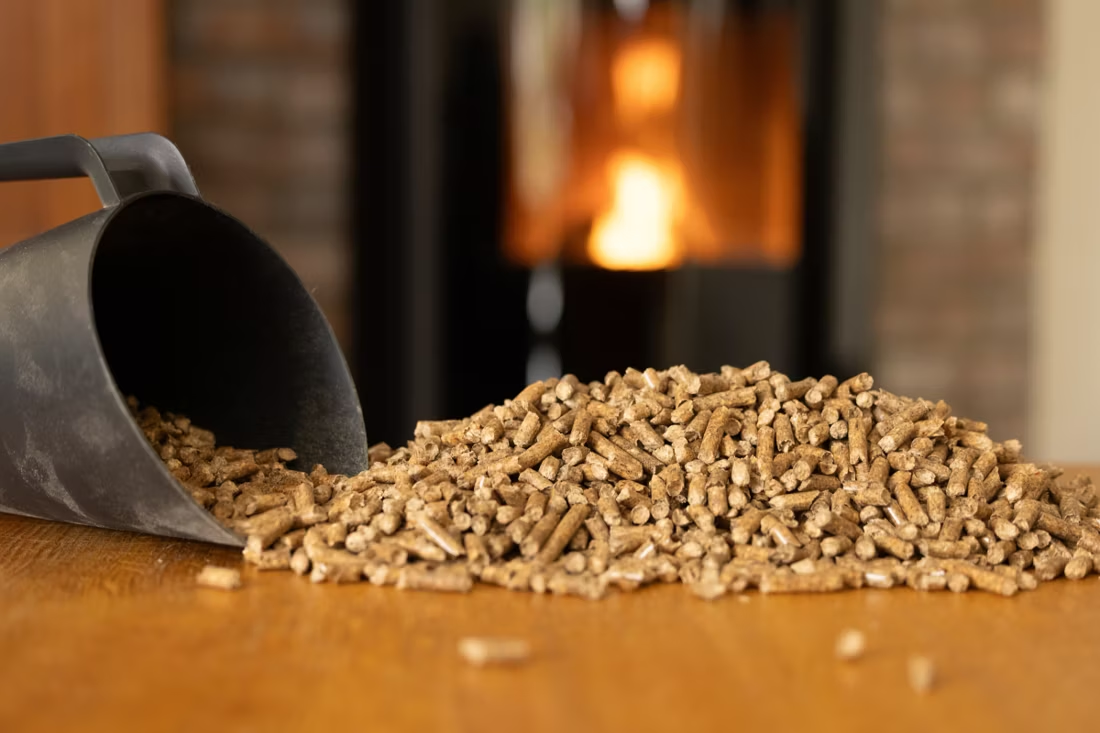
That's where pellet stoves earn their keep. Regional brands like Granules LG, Energex, and Trebio are milled and distributed across Quebec, and locally the going rate runs $400-$575 per ton—a hopper and auger take care of the rest, feeding a consistent burn you can dial in and leave overnight. It also sidesteps a compliance question that trips up a lot of wood-heat homeowners: municipalities near Montréal require wood-burning appliances to be registered and certified under a 2.5 g/h fine-particle limit, and a good local dealer handles that paperwork routinely—but pellet stoves generally clear that bar without the same scrutiny, making them an easier add for a household in southern Lanaudière that already leans on wood or electric baseboard heat.
Three steps. No salesperson until you're ready.
Tell us about your project
Your postal code, your situation, and the fuel you're leaning toward—or let the answers point you to one.
See what's actually available
The brands dealers within 100 miles genuinely carry—real options, never a catalog mirage.
Get your dealer & Project Guide
A trusted local dealer, plus the free Project Guide & Parts List that names every component of the job.
Frequently Asked Questions
How much does a pellet stove installation cost in Lanaudière?
Most installations across Lanaudière run $6,000 to $10,000 CAD. A freestanding pellet stove venting straight through an exterior wall with a short horizontal run sits at the lower end; a pellet insert going into an existing masonry fireplace, or a home needing a new hearth pad and floor protection to meet clearance rules, lands higher. Homes farther north toward Saint-Michel-des-Saints or Saint-Côme, where a dealer may need to factor in travel time from Joliette or Terrebonne, can see a modest add to that range.
Which pellet brands are actually available near me in Lanaudière?
Granules LG, Energex, and Trebio are the three brands you'll see stocked most consistently at hearth dealers and building suppliers across the region, and all three are milled within the province, so supply doesn't depend on cross-border trucking during a tight winter. Expect to pay roughly $400 to $575 CAD per ton depending on the retailer and whether you buy by the pallet or ton bag. A local dealer can tell you which brand burns cleanest in the specific stove model you're considering—ash content varies enough between brands to matter for how often you're cleaning the burn pot.
Do I need a permit to install a pellet stove in Lanaudière?
Yes. New installations go through your municipal building department, and the work has to follow the CSA B365 installation code for solid-fuel appliances. Most established dealers pull this permit as part of the job rather than leaving it to the homeowner. It's also worth arranging a WETT inspection once the stove is in—insurers across Quebec commonly ask for one on solid-fuel appliances, including pellet units, before they'll issue or renew a homeowner's policy.
What size pellet stove do I need for my home?
It depends on where in Lanaudière you're located and how the home is built. Around L'Assomption, Joliette, and Repentigny, a stove rated for 1,200-2,000 sq ft comfortably handles an average main living space with typical insulation. Farther north toward Rawdon, Saint-Donat, or Saint-Michel-des-Saints, where nights routinely drop past -20°C in January and February, the same square footage often calls for the next size up, or supplemental heat in an open-concept layout. An undersized stove runs at full output constantly and still falls short on the coldest nights; an oversized one cycles on and off more than it should. A dealer visiting the home will size it against your actual floor plan rather than a generic chart.
Pellet stove or wood stove—which makes more sense in Lanaudière?
Wood is the lower-cost fuel if you're willing to cut and season it yourself—a Ministère des Ressources naturelles et des Forêts permit runs about $1.85 per cubic metre plus taxes, up to 22.5 m3 a year, and sugar maple or yellow birch off a Lanaudière woodlot burns well once properly dried. Pellet trades that manual work for convenience: load a hopper, set a thermostat, and the stove feeds itself for a day or more depending on the model and setting. Pellet also tends to be the simpler path for a household in a municipality with wood-burning registration rules, since pellet appliances rarely trigger the same certification scrutiny. If you're away often or want heat you don't have to think about, pellet is usually the better fit; if you already have a wood supply and enjoy tending a fire, wood remains cheaper per BTU.
How do I store pellets, and how much will I go through in a season?
A typical Lanaudière home heating primarily with pellets burns through 2 to 4 tons over a full season, more if you're in a colder pocket up toward Sainte-Émélie-de-l'Énergie or relying on the stove as your only heat source. Pellets need to stay dry—a garage, basement, or shed works, but bags sitting on a damp concrete floor or exposed to a leaky roof will swell and jam an auger fast. Buying by the ton or pallet ahead of the coldest months, rather than bag by bag through January, is the standard approach most local dealers recommend, both for price and to make sure Granules LG, Energex, or Trebio supply doesn't tighten up mid-winter.
Does Lanaudière's proximity to Montréal mean I need to register a pellet stove?
Several southern Lanaudière municipalities near the Montréal border follow rules similar to the island's bylaw, which requires wood-burning appliances to be registered and certified to a 2.5 g/h fine-particle limit. Pellet stoves burn cleaner than almost any solid-fuel option on the market and typically meet that standard without issue, but the registration step itself still varies by municipality, so it's worth a quick check with your local building department before you install. A dealer who works regularly in the region will already know which towns require the paperwork and can fold it into the project.
Will my pellet stove work during a winter power outage?
Not on its own. Pellet stoves rely on an electric auger and blower to feed fuel and circulate heat, so a Lanaudière power outage—not uncommon during an ice storm or a heavy system off the St. Lawrence—will shut the stove down along with everything else unless you've got a battery backup or a small generator sized to run it. That's worth weighing if you're comparing pellet against wood for a rural property; a wood stove keeps working with no power at all, while pellet needs that fallback plan built in from the start.
Is a gas fireplace a realistic alternative to pellet in Lanaudière?
Not really, for most of the region. Natural gas service through Énergir reaches only limited corridors of Quebec, generally closer to greater Montréal, and most Lanaudière households outside those served streets heat with electricity or wood rather than mains gas. A gas fireplace here usually means a propane setup rather than a natural gas hookup, which changes the cost and supply picture considerably. If steady, hands-off heat is the goal, pellet is the more realistic comparison for most homes in the region—gas is worth asking your dealer about only if you already know your street has service.
Why do fireplace quotes vary so much?
Because a fireplace is an iceberg—there's more behind the wall than in front of it. A low quote often covers only the unit; the full scope includes vent pipe, gas line or electrical, framing, and the tile or stone that has to come off and go back on. Make every bidder price the whole job. If a dealer can't speak to the full scope with confidence, that's your signal to keep looking.
Is it worth replacing an old fireplace that still sort of works?
Ask three questions: Is it ugly? Is it drafty? Does it actually work? Most old fireplaces fail at least two. Beyond looks, an old unit leaks air around the damper year-round and—if it's gas with a standing pilot—quietly burns a couple hundred dollars a year. A modern replacement seals the wall, heats the room, and changes how the whole space gets used.
What does it take to replace an existing fireplace?
Fireplaces are like icebergs—bigger behind the wall than in front of it. Replacement means removing the surrounding tile or stone (the finish material laps onto the fireplace face), pulling the old unit, setting the new one in the same enclosure, and re-finishing the wall. A hearth professional can determine what's behind your wall without demolition during an in-home preview.
Why is my open fireplace making my house colder?
Open fireplaces suck—literally. As the fire burns, it consumes air your furnace already paid to heat and pulls it out through the chimney, so the house is actually colder after the fire goes out than before you lit it. An insert fixes this: it seals the chimney, puts fixed glass across the front, and turns that hole in your house into a real heat source.
Stove and Fireplace Dealers in Lanaudière
Listings include WhyFire partner dealers, dealers we have verified as authorized for the brands we recommend, and established local businesses that carry hearth products. Every listing shows which one it is. The ones marked Preferred run on WhyFire's software, so they can show you real pricing and book your appointment right here. No manufacturer pays for placement. How we verify dealers →
Cheminées Sam-Alex Inc.
Le Ramoneur Du Foyer
Noeea Foyers Rive-Nord
Arta Boutik
Propane Plus Inc
Pellet Brands Stocked Around Lanaudière
Typical price runs $400-$575 per ton—buy early-season for the best rates. Manufacturers will point you to the nearest stocking dealer.
Granules Lg
Trebio
Get your free pellet heat Project Guide & Parts List for Lanaudière.
Tell me about your home and how you plan to use the stove, and I'll match you with a trusted local Lanaudière dealer and send a free Project Guide & Parts List—the exact parts, including the vent kit, for your pellet project.
Find Your Fireplace →