
Every fuel, matched to a trusted dealer across Lanaudière.
From the north-shore suburbs of Terrebonne and Repentigny up into the sugar bush around Rawdon and Saint-Donat, this hub covers wood, pellet, electric, and (where the gas lines actually reach) gas fireplace resources for the whole region. Pick a fuel and we'll match you with a local dealer who knows what's real to install near you.
Every Project Starts From One of These Five Situations
Maple country winters that push past six months of heating season across Lanaudière.
Lanaudière stretches from the flat, fast-growing suburbs of Terrebonne, Repentigny, and L'Assomption near Montréal's north shore up into the Laurentian foothills around Rawdon, Saint-Donat, and Sainte-Émélie-de-l'Énergie. Roughly 533,796 people live across that whole span, from subdivision streets to sugar-bush country. Climate zone 6A and an average winter low near -15.9°C put the region's heating load in roughly the same territory as Ottawa's—a season that often runs five or six months from first frost to the last cold snap. The hardwood forests covering much of the region—sugar maple, yellow birch, American beech, red oak—are the same stands behind Lanaudière's cabanes à sucre, and self-cut firewood permits through the Ministère des Ressources naturelles et des Forêts (MRNF) keep wood heat a practical, low-cost option on the region's public woodlots.
The fuel mix here looks different from a lot of Canada because Hydro-Québec's electricity rates are so low: a large share of Lanaudière homes already run electric baseboard as their primary heat, which makes an electric fireplace an easy, low-complexity add rather than a stretch. Wood stays standard given the hardwood supply and the region's rural character outside the Montréal-adjacent municipalities, though any new wood appliance needs a CSA B365-compliant install and, in most cases, a WETT inspection before an insurer signs off—and municipalities on Lanaudière's southern edge, closer to the Montréal metropolitan community, may also require the appliance be registered and certified low-emission, a normal step a good local dealer handles routinely. Natural gas is genuinely rare here—Énergir's distribution network only reaches a handful of corridors in the region's southernmost municipalities, so most gas fireplace inquiries start with a simple question about whether the street is even served. Pellet stoves fill a lot of the remaining gap, helped by three Quebec-made brands—Granules LG, Energex, and Trebio—sold through dealers across the region. This hub rolls up retailers, technicians, and fuel suppliers from Joliette out to the Laurentian foothills; pick a fuel below for local dealers, install notes, and costs specific to your town.
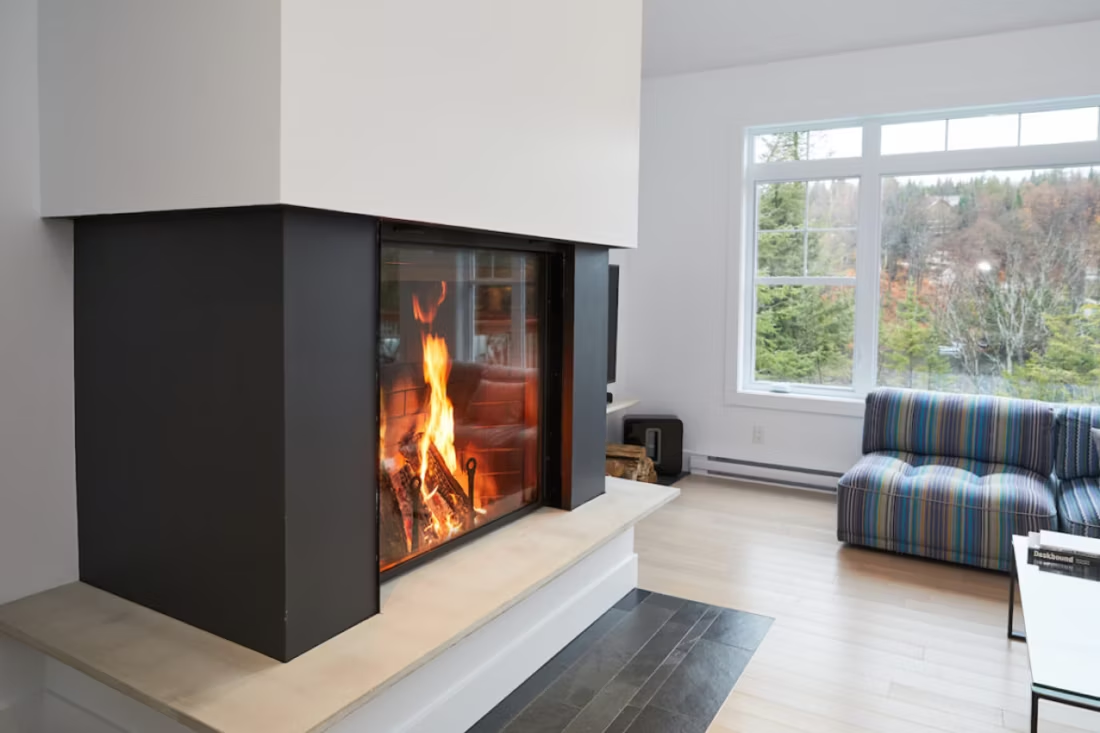
Four fuels. One honest answer for Lanaudière.
Three steps. No salesperson until you're ready.
Tell us about your project
Your postal code, your situation, and the fuel you're leaning toward—or let the answers point you to one.
See what's actually available
The brands dealers within 100 miles genuinely carry—real options, never a catalog mirage.
Get your dealer & Project Guide
A trusted local dealer, plus the free Project Guide & Parts List that names every component of the job.
Frequently Asked Questions
Which fireplace fuel actually makes sense for a home in Lanaudière?
It depends heavily on where in the region you sit. Wood is a genuine standard here—sugar maple, yellow birch, American beech, and red oak grow across the region's forests, MRNF permits make self-cut firewood affordable, and a good catalytic stove will hold overnight through a -15.9°C low without trouble. Pellet stoves have real traction too, helped by three Quebec-made brands—Granules LG, Energex, and Trebio—that dealers across the region stock regularly, and pellet is often the easier retrofit in a subdivision home without a masonry chimney. Electric fireplaces fit naturally in Lanaudière specifically because so many homes already run electric baseboard heat off Hydro-Québec's low rates, so adding one is more about ambiance than heat load. Gas is the outlier: Énergir's mains network only reaches a handful of corridors in the region's southernmost municipalities, so a gas fireplace here usually starts with checking whether your street is actually served, not assuming it is.
Do I need a permit to install a wood stove in Lanaudière?
Yes. Installations go through your municipal building department and must follow the CSA B365 installation code, and most insurers will require a WETT inspection before they'll cover a new or existing wood appliance. If your home sits in one of Lanaudière's southern municipalities near the Montréal metropolitan community, you may also need the appliance registered as a certified low-emission unit—a step that mirrors the rules on the island of Montréal itself. None of this is unusual paperwork; it's a routine part of any legitimate wood stove or insert installation, and the local dealers we match homeowners with handle the permit and inspection scheduling as a normal part of the project rather than leaving it to you.
Is natural gas actually available for a gas fireplace in Lanaudière?
Only in parts of the region. Énergir's distribution network covers select corridors closer to Montréal's north shore—sections of Terrebonne, Repentigny, and Mascouche among them—but most of Lanaudière, especially north into Rawdon, Saint-Donat, and the Laurentian foothills, has no mains gas at all. That's why gas fireplace projects here often turn into propane conversions instead, or get shelved in favor of pellet or electric once a homeowner learns their street isn't served. It's worth confirming availability with your municipality or Énergir directly before falling in love with a gas display model at a showroom.
What firewood works best for a wood stove or insert in this region?
Sugar maple, yellow birch, American beech, and red oak are the four species most Lanaudière households burn, and all four are dense hardwoods that put out strong, long-lasting heat—useful given how far winter lows here can drop. Much of this wood comes off private sugar bush lots or public woodlots accessed through MRNF cutting permits, which keeps costs down for anyone willing to cut and season their own supply a year ahead. A modern EPA/CSA-certified stove burning well-seasoned maple or oak will comfortably hold a fire overnight through the coldest stretches of the season.
What does a fireplace installation typically cost in Lanaudière?
Costs vary by fuel and by how much venting or gas-line work is involved. Wood stove or insert installations typically run $3,500-$8,000 CAD, more if new masonry chimney work or a full liner replacement is needed. Pellet stove or insert installs generally land around $3,500-$6,500 CAD. Electric fireplace inserts run roughly $1,500-$4,000 CAD depending on whether it's a simple retrofit or a built-in unit needing a dedicated circuit. Gas is the least predictable because so few streets have Énergir service—where mains gas is available, expect $4,000-$9,000 CAD including the gas-line hookup by a licensed technician; propane conversions can run higher once tank installation is factored in.
When should I book my annual chimney sweep or WETT inspection?
Late summer or early fall, well before the first cold snap. Chimney sweeps and WETT-certified inspectors across Lanaudière get booked solid once temperatures start dropping toward that -15.9°C average low, and insurers often want a current WETT report on file before renewing coverage on a home with a wood appliance. Getting the sweep and inspection done in September or early October also gives you time to address anything that comes up—a cracked liner, a damaged cap, clearance issues—before you actually need the stove running.
How many BTUs do I need in a fireplace?
Wrong question—and the industry's favorite way to confuse you. More BTUs isn't better if the fireplace cooks you out of the room you spent thousands to enjoy. Think in terms you can verify: how many square feet the unit heats, whether it's primary or backup heat, and whether you want it running overnight. Those three answers size a fireplace correctly every time.
Will we actually use a fireplace once we have one?
In my own home, the room with the fireplace has never been the same—it became the social hub. Game nights, holidays, date nights after the kids are down: the fire is where the house gathers. There's a reason people in this industry joke that we're really in the romance and entertainment business. You won't wonder whether you'll use it; you'll wonder how the room worked before.
How much should I budget for a fireplace?
For an average home—covering the fireplace, the vent pipe, and basic installation—a budget between $3,900 and $5,500 gives you a lot of options across wood, gas, and pellet. By the time you add finish work, gas line, and electrical, the average complete installation lands between $5,000 and $12,000 all-in. In a remodel or new build, a good rule is to put about 2.5% of the total project cost toward the fireplace.
Can a fireplace actually lower my heating bill?
Yes—by creating a comfort zone. A furnace heats every square foot of the house just to warm the one room you're in; a gas fireplace on low burns roughly a sixth of the gas a typical furnace does. Set the furnace around 55–60 degrees as a baseline, then heat the rooms your family actually uses. Families who heat this way commonly save $20–$60 a month.
Stove and Fireplace Dealers in Lanaudière
Listings include WhyFire partner dealers, dealers we have verified as authorized for the brands we recommend, and established local businesses that carry hearth products. Every listing shows which one it is. The ones marked Preferred run on WhyFire's software, so they can show you real pricing and book your appointment right here. No manufacturer pays for placement. How we verify dealers →
Cheminées Sam-Alex Inc.
Le Ramoneur Du Foyer
Noeea Foyers Rive-Nord
Arta Boutik
Propane Plus Inc
Get matched with a trusted local dealer across Lanaudière.
Tell us your fuel and your town and we'll put together a free Project Guide & Parts List—the right unit, the vent kit it needs, and the local dealer we recommend for your project in Lanaudière.
Find Your Fireplace →