
Automated heat built for Laurentides winters that drop to -17.9°C.
Whether you're heating a full-time home or a weekend chalet near Mont Saint-Sauveur, a thermostat-controlled pellet stove keeps running while you're away. I'll match you with a trusted local dealer who knows what's installable on your street.
Every Project Starts From One of These Five Situations
Heat that keeps running while you're back in Montréal.
Saint-Sauveur sits at 254 metres in the Laurentides, close enough to Mont Saint-Sauveur that a large share of the housing stock here is weekend and vacation property for Montréal skiers. Winters average a low of -17.9°C, cold enough to rival Québec City or Ottawa for stretches in January, and the heating season runs long. For a home that's occupied five days out of seven, or a chalet that sits empty from Monday to Thursday, a heat source that needs someone to load a firebox every few hours is impractical. A pellet stove or insert with an automated hopper and thermostat control keeps the place at temperature on its own, which is a big part of why pellet appliances have found real traction in this specific market.
Sugar maple, yellow birch, American beech, and red oak all grow in the surrounding forest and support a strong wood-burning tradition regionally, but municipalities across Québec—including bylaws on the island of Montréal requiring registered, certified appliances emitting no more than 2.5 g/h of fine particles—have been tightening rules on wood smoke. Pellet appliances are certified low-emission out of the box, which sidesteps most of that scrutiny. Natural gas from Énergir reaches only part of the region, so most Saint-Sauveur homes heat with electric baseboard from Hydro-Québec, a comparatively cheap $0.078 per kWh, or wood. Pellet fits neatly between the two, offering more heat output and control than baseboard with far less daily labour than a wood stove.
Three steps. No salesperson until you're ready.
Tell us about your project
Your postal code, your situation, and the fuel you're leaning toward—or let the answers point you to one.
See what's actually available
The brands dealers within 100 miles genuinely carry—real options, never a catalog mirage.
Get your dealer & Project Guide
A trusted local dealer, plus the free Project Guide & Parts List that names every component of the job.
Frequently Asked Questions
How much does a pellet stove installation cost in Saint-Sauveur?
Most installations run $6,000 to $10,000 CAD. A freestanding pellet stove venting straight out an exterior wall, common in the chalets and split-levels around Mont Saint-Sauveur, sits toward the lower end. A pellet insert dropping into an existing masonry fireplace, more typical of the older homes in the village core, costs more once the liner and hearth work are factored in. Your municipal building department requires a permit either way, and most dealers include that in their quote.
Where do I buy pellets in Saint-Sauveur, and what's the going rate?
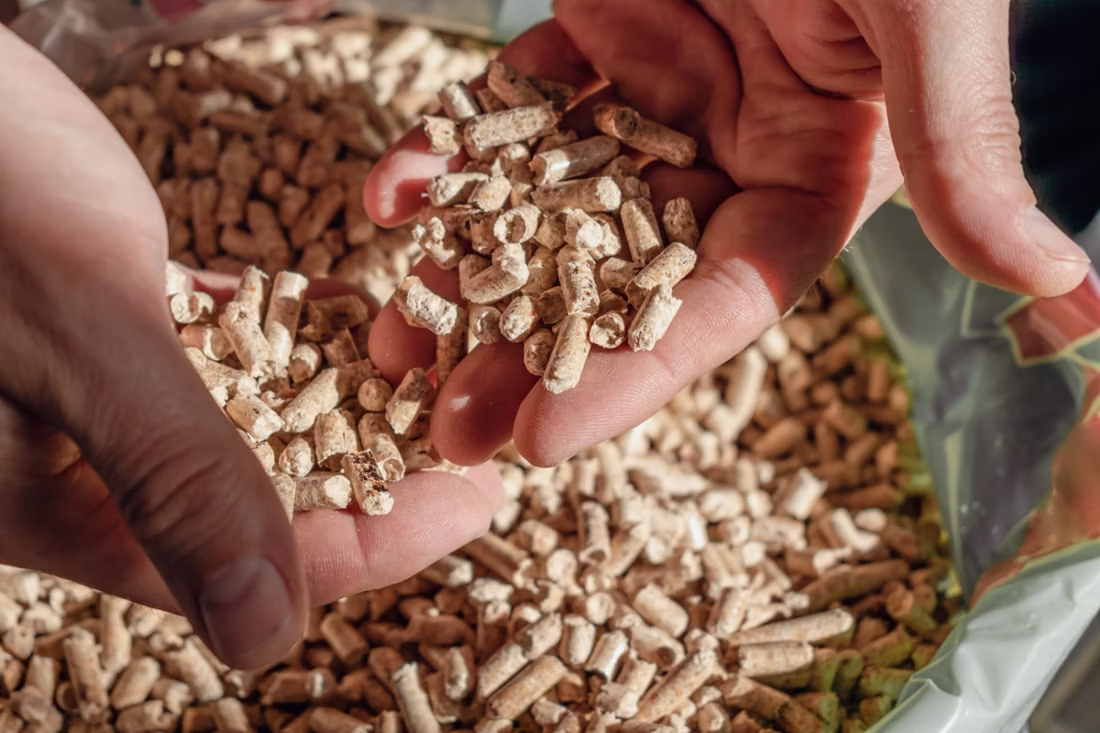
Regional brands like Granules LG, Energex, and Trebio are the ones local dealers and hardware suppliers in the Laurentides stock, and pricing typically runs $400 to $575 CAD a tonne depending on the season and whether you buy early or wait until cold weather pushes demand up. Buying a season's supply in late summer, before the pre-winter rush, is the standard way locals keep costs toward the lower end of that range.
Do I need a permit or inspection for a pellet stove in Saint-Sauveur?
Yes. A building permit through the municipal building department is required, and the installation has to meet the CSA B365 code. Even though pellet appliances burn cleaner and cooler than an open wood fire, most insurers still ask for a WETT inspection before they'll cover it, so budget for that step rather than treating it as optional paperwork.
Is a pellet stove a good fit for a chalet I only use on weekends?
It's one of the best matches for that exact situation. A pellet stove's auger-fed hopper and thermostat mean it can hold a set temperature unattended for days, which suits a Laurentides chalet sitting empty Monday through Thursday during a stretch of -17.9°C nights. Set the thermostat low for the empty week and let it ramp up before you arrive Friday, rather than heating an empty building at full cost the whole time or arriving to frozen pipes.
Wood or pellet—which makes more sense for a Saint-Sauveur property?
Sugar maple and yellow birch are locally abundant and cheap to source through an MRNF cutting permit if you're near Crown land, so wood still wins on raw fuel cost for anyone willing to split and stack it. Pellet wins on convenience and on emissions—Québec municipalities have been tightening wood-smoke bylaws, including certified-appliance rules on the island of Montréal, and pellet appliances already meet that bar without extra paperwork. For a part-time chalet especially, most owners here choose pellet so the appliance can run itself between visits.
Will my pellet stove keep running during a winter power outage?
Not without a backup plan. The auger and combustion blower both need electricity, so a pellet stove goes cold in an outage the same way a furnace does. Given how storms in the Laurentides can knock out power for a day or more in a hard winter, some homeowners pair a pellet stove with a small battery backup or generator, or keep a wood stove or electric baseboard from Hydro-Québec as the outage fallback.
What size pellet stove do I need for a home near Mont Saint-Sauveur?
With winter lows averaging -17.9°C, most full-time homes in the area do well with a mid-size unit rated for 1,200 to 2,000 square feet as a primary or near-primary heat source. Smaller chalets or homes leaning on the stove as a supplement to electric baseboard can size down. A local dealer will factor in your insulation and how the home is laid out, since an open-concept chalet heats differently than an older, room-divided house in the village.
How is a pellet stove vented, and does it need a chimney?
Most pellet stoves vent through a small-diameter pipe straight out an exterior wall rather than up a full chimney, which is one reason they suit chalets and homes without existing masonry flues. A pellet insert going into an existing wood fireplace instead uses a liner run up through that chimney. Either way, the venting has to meet CSA B365 and your municipal building department's requirements, and a trusted local dealer will size the vent kit to the specific model.
Is natural gas an option instead of pellet for a Saint-Sauveur fireplace?
Not really, for most addresses. Énergir's natural gas network reaches only part of the Laurentides region, and Saint-Sauveur is largely outside it, so a gas fireplace here usually means a propane conversion rather than a mains hookup. That's part of why pellet and wood carry more weight locally—they don't depend on a gas line showing up on your street. If you want to explore gas anyway, checking availability at your specific address is the first step before comparing it against a pellet install.
Why do fireplace quotes vary so much?
Because a fireplace is an iceberg—there's more behind the wall than in front of it. A low quote often covers only the unit; the full scope includes vent pipe, gas line or electrical, framing, and the tile or stone that has to come off and go back on. Make every bidder price the whole job. If a dealer can't speak to the full scope with confidence, that's your signal to keep looking.
Is it worth replacing an old fireplace that still sort of works?
Ask three questions: Is it ugly? Is it drafty? Does it actually work? Most old fireplaces fail at least two. Beyond looks, an old unit leaks air around the damper year-round and—if it's gas with a standing pilot—quietly burns a couple hundred dollars a year. A modern replacement seals the wall, heats the room, and changes how the whole space gets used.
Why is my open fireplace making my house colder?
Open fireplaces suck—literally. As the fire burns, it consumes air your furnace already paid to heat and pulls it out through the chimney, so the house is actually colder after the fire goes out than before you lit it. An insert fixes this: it seals the chimney, puts fixed glass across the front, and turns that hole in your house into a real heat source.
What's the difference between an insert and a zero-clearance fireplace?
An insert is a fireplace that slides into a pre-existing wood-burning fireplace—if you don't have one, there's nothing to insert it into. A zero-clearance fireplace is built into a framed wall, which makes it the answer for remodels and new construction. Simple test: existing masonry fireplace means insert; blank or framed wall means zero-clearance.
Nearby Dealers
Hearth shops serving Saint-Sauveur and the surrounding area. Every listing shows whether it is a WhyFire partner, a dealer we have verified as authorized for the brands we recommend, or a local business carrying hearth products. No manufacturer pays for placement. How we verify dealers →
Poeles Et Foyers Saint-Sauveur
Foyers Braizo
Décor Chaleur Laurentides Inc
Boutique Poêles & Foyers Rive-Nord
Le Ramoneur Du Foyer
Max Oxygene Pur
Les Foyer Mirabel A.m.f.
Pellet Brands Stocked Around Saint-Sauveur
Typical price runs $400-$575 per ton—buy early-season for the best rates. Manufacturers will point you to the nearest stocking dealer.
Granules Lg
Trebio
Get your free Project Guide & Parts List for a Saint-Sauveur pellet stove.
Tell me about your home or chalet and how often it's occupied, and I'll match you with a trusted local dealer and send a free Project Guide & Parts List with the exact vent kit and parts your project needs.
Find Your Fireplace →