
Find your fireplace across the Laurentides Region.
Wood, pellet, electric, and select gas fireplace resources from the lowlands near Saint-Jérôme up into the ski country around Mont-Tremblant. Pick a fuel and get matched with a local dealer who knows what actually works at your address.
Every Project Starts From One of These Five Situations
Sugar maple country, long cold winters, and a region built on wood heat.
The Laurentides Region climbs from the St. Lawrence lowlands into the Laurentian foothills, with towns like Mont-Tremblant and Rivière-Rouge sitting well up in elevation compared to Saint-Jérôme closer to Montréal. Average winter lows near -16.5°C put this region in territory not unlike Québec City or Sudbury for heating demand—long, sub-zero stretches from November through March, with a heating season that starts early and holds on through spring thaw. Sugar maple, yellow birch, American beech, and red oak dominate the local woodlots, and a lot of that wood is cut and split within a short drive of where it's burned, which keeps wood heat both affordable and deeply rooted in how people here manage winter.
Natural gas service reaches only part of the region, concentrated closer to the Montréal-adjacent municipalities in the south; further north toward Tremblant and Rivière-Rouge, gas fireplaces are uncommon and usually mean a propane setup rather than a mains hookup. That's a real difference from wood and pellet, which both work everywhere in the region regardless of utility service. If you're inside Montréal-area municipal boundaries, wood-burning appliances need to be registered and certified to emit no more than 2.5 g/h of fine particles—a bylaw a good local installer handles as routine paperwork, not a hurdle. This hub rolls up hearth retailers, service technicians, and fuel suppliers across the whole region, from the Saint-Jérôme corridor north through Sainte-Adèle and Mont-Tremblant to Rivière-Rouge. Pick your fuel below for local dealers, install costs, and recommendations specific to your town.
Four fuels. One honest answer for Laurentides Region.
Wood
81 models available near Laurentides Region.
Find your wood stove →Gas
365 models available near Laurentides Region.
Find your gas fireplace →Pellet
See what's available near Laurentides Region.
Find your pellet stove →Electric
11 models available near Laurentides Region.
Find your electric fireplace →Three steps. No salesperson until you're ready.
Tell us about your project
Your postal code, your situation, and the fuel you're leaning toward—or let the answers point you to one.
See what's actually available
The brands dealers within 100 miles genuinely carry—real options, never a catalog mirage.
Get your dealer & Project Guide
A trusted local dealer, plus the free Project Guide & Parts List that names every component of the job.
Frequently Asked Questions
Which fireplace fuel actually makes sense in the Laurentides Region?
Wood and pellet are the two fuels that work reliably everywhere in the region, and both have deep local roots. A cast-iron or catalytic wood stove burning sugar maple or red oak will hold a fire through a -16.5°C overnight without trouble, and firewood is easy to source locally given how much of the region is still working woodlot. Pellet stoves are a strong option for anyone who wants set-and-forget heat without hauling wood—Granules LG, Energex, and Trebio are all distributed regionally, so supply isn't an issue. Gas is the outlier here: mains service only reaches the southern part of the region near Saint-Jérôme, so further north a gas fireplace usually means a propane conversion rather than a utility hookup. Electric fireplaces work anywhere there's a plug or circuit, but they're supplemental heat, not something sized to carry a home through a full Laurentian winter.
Do I need a permit to install a wood stove in the Laurentides Region?
Yes. Installations go through your municipal building department and must follow the CSA B365 installation code, which governs clearances, venting, and hearth protection regardless of which town you're in. If your property falls within Montréal-area municipal boundaries, the wood-burning appliance also needs to be registered and certified to the 2.5 g/h fine-particle limit—a step your installer handles as part of a normal install, not an extra hurdle. Most insurers also want a WETT inspection on file before they'll cover a wood appliance, so it's worth booking that at the same time as your installation rather than after the fact.
Is gas a realistic option if I live near Mont-Tremblant or Rivière-Rouge?
It's possible, but it's not the mainstream choice the way it is closer to Montréal. Natural gas distribution in the Laurentides Region is partial and concentrated toward the southern, more urbanized municipalities—by the time you're up around Tremblant or Rivière-Rouge, you're almost always looking at a propane-fed unit rather than a mains connection. That's a legitimate way to get a gas fireplace's convenience and clean glass-front look, but it comes with propane delivery and storage to plan for, which a local dealer can walk through with you before you commit to a unit.
What wood species should I expect to burn here, and does it matter?
Sugar maple, yellow birch, American beech, and red oak are the woods most local suppliers sell, and they're all solid, dense hardwoods that burn hot and long—good news for a region with winters like this. A well-seasoned load of maple or oak in a catalytic stove can hold a fire well past the eight-hour mark on a cold night, which matters when overnight lows regularly sit near -16.5°C. Species matters less for heat output between these four—they're all comparable—and more for availability and price locally, so ask your firewood supplier what's actually seasoned and ready rather than green-cut.
How does scheduling and service work for towns further from Saint-Jérôme?
Retailers and technicians are concentrated along the Route 117 and Autoroute 15 corridor around Saint-Jérôme and Sainte-Adèle, but most run regular routes north into Mont-Tremblant, Rivière-Rouge, and the smaller municipalities in between. Expect a modest travel charge for the farthest calls, and expect the calendar to fill up fast once the first real cold snap hits—booking your annual chimney sweep or WETT inspection in late summer or early fall keeps you ahead of the winter rush and any curtailed availability that comes with it.
What does a fireplace installation typically cost in the Laurentides Region?
Costs depend on fuel and how much venting or chimney work is involved. Wood stove or insert installs typically run $4,500-$9,500 CAD, with new chimney construction pushing toward $13,000-$15,000 for larger homes. Pellet stove or insert installs generally land at $4,500-$7,500. Gas installations, where mains service or propane infrastructure already exists, run roughly $5,000-$11,000 depending on venting and line work; further north where propane tanks need to be added, costs run higher. Electric fireplaces are the low end—$200-$3,000 CAD for the unit, plus $400-$1,200 in labour for anything beyond a plug-and-play placement. The region and fuel pages above break these numbers down further with local retailer pricing.
How many BTUs do I need in a fireplace?
Wrong question—and the industry's favorite way to confuse you. More BTUs isn't better if the fireplace cooks you out of the room you spent thousands to enjoy. Think in terms you can verify: how many square feet the unit heats, whether it's primary or backup heat, and whether you want it running overnight. Those three answers size a fireplace correctly every time.
Will we actually use a fireplace once we have one?
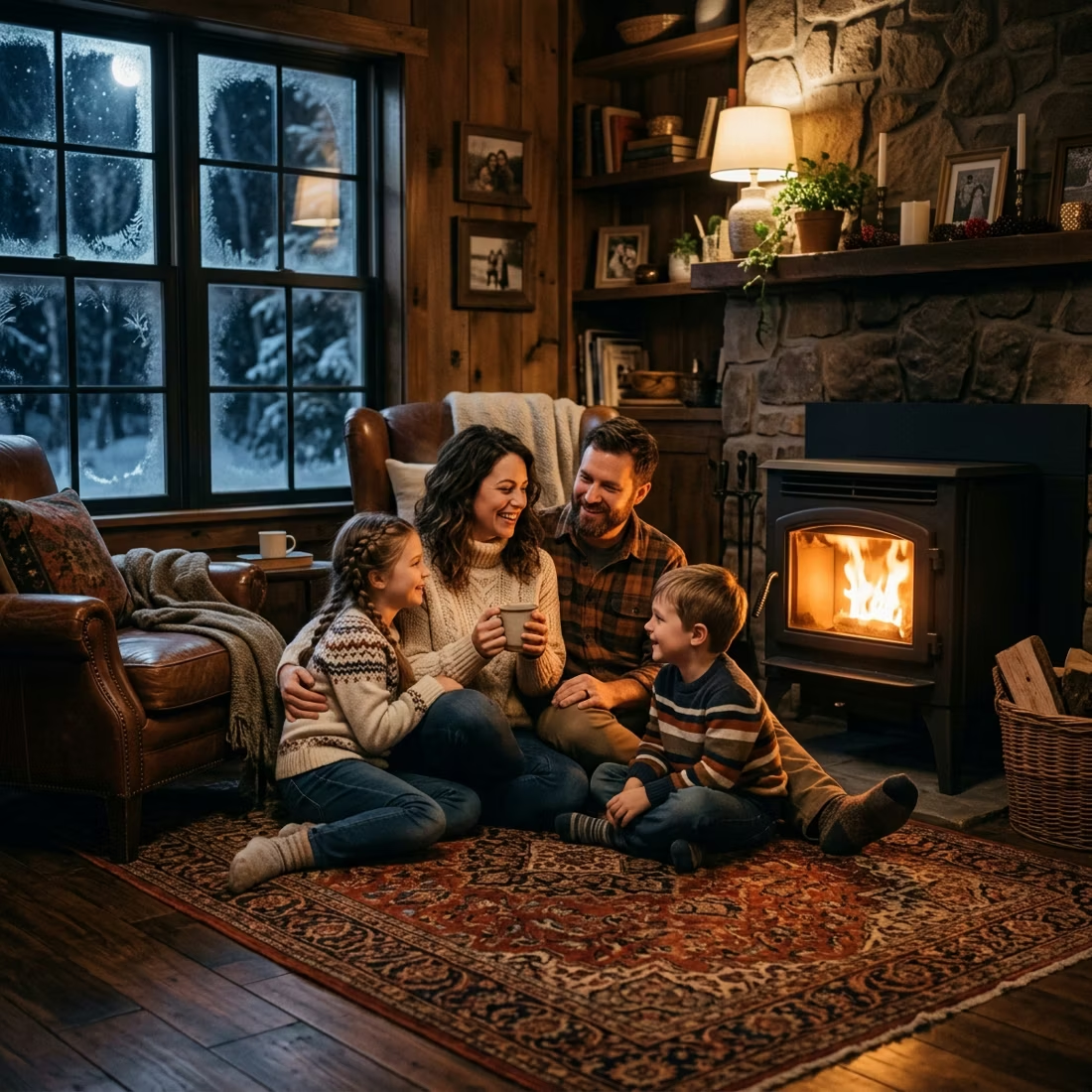
In my own home, the room with the fireplace has never been the same—it became the social hub. Game nights, holidays, date nights after the kids are down: the fire is where the house gathers. There's a reason people in this industry joke that we're really in the romance and entertainment business. You won't wonder whether you'll use it; you'll wonder how the room worked before.
Can a fireplace actually lower my heating bill?
Yes—by creating a comfort zone. A furnace heats every square foot of the house just to warm the one room you're in; a gas fireplace on low burns roughly a sixth of the gas a typical furnace does. Set the furnace around 55–60 degrees as a baseline, then heat the rooms your family actually uses. Families who heat this way commonly save $20–$60 a month.
Does a fireplace add value to my home?
On average, a fireplace adds back to the home about the same amount you spent installing it. Add the monthly savings from heating the rooms you actually use instead of the whole house—often hundreds of dollars a year—and the value case is strong before you even count what a fire does for how your family uses the room.
Stove and Fireplace Dealers in Laurentides Region
Listings include WhyFire partner dealers, dealers we have verified as authorized for the brands we recommend, and established local businesses that carry hearth products. Every listing shows which one it is. The ones marked Preferred run on WhyFire's software, so they can show you real pricing and book your appointment right here. No manufacturer pays for placement. How we verify dealers →
Poeles Et Foyers Saint-Sauveur
Décor Chaleur Laurentides Inc
Foyers Braizo
Boutique Poêles & Foyers Rive-Nord
Max Oxygene Pur
Les Foyer Mirabel A.m.f.
Le Ramoneur Du Foyer
Finition Belle-Flammes
Get matched with a local Laurentides Region dealer.
Pick your fuel below and we'll put together a free Project Guide & Parts List—the right unit, the vent kit it needs, and the local dealer we recommend for your project.
Find Your Fireplace →