
Automated warmth for winter lows near -20°C.
At 405 metres in the Appalachian foothills of Chaudière-Appalaches, Saint-Pamphile sits close enough to the Maine border to feel every inch of a zone 7A winter. I'm a neutral matchmaker, not a manufacturer or a store—I connect homeowners here with a trusted local dealer who can source pellet stoves and inserts from brands like Granules LG, Energex, and Trebio and size the venting correctly for this climate.
Every Project Starts From One of These Five Situations
A stove built for real Appalachian winters.
Saint-Pamphile sits in climate zone 7A, one of the coldest zones in the province, with winter lows averaging -19.9°C and a heating season that runs from October well into April—a stretch of cold comparable to what Thunder Bay, Ontario sees most winters. At 405 metres of elevation in the Appalachian foothills near the Maine border, this is a town where a fireplace or stove is genuinely part of how a house stays warm, not a weekend accent piece.
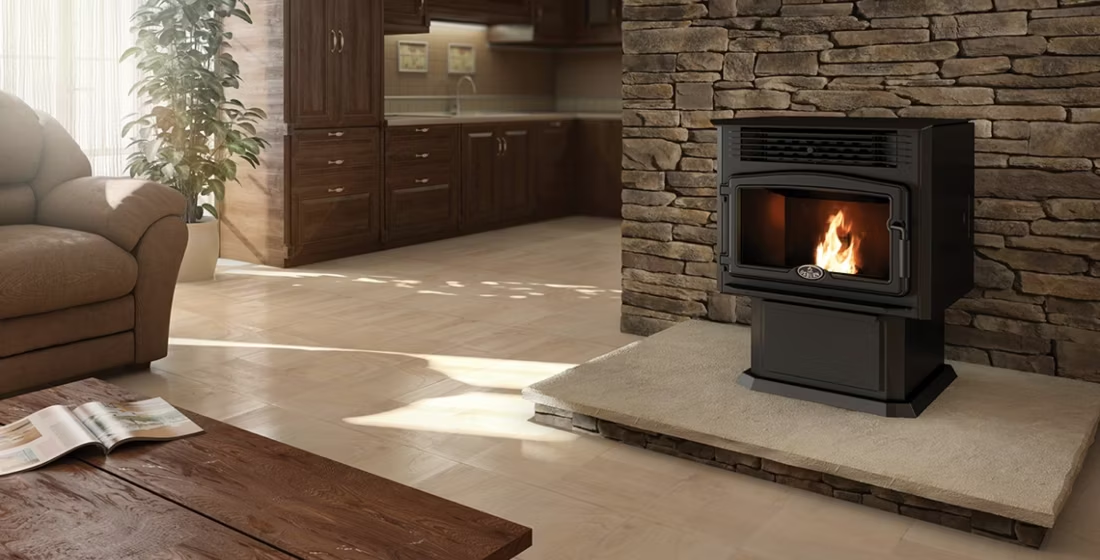
Natural gas barely reaches this part of Chaudière-Appalaches. Énergir's distribution network is partial at best across Quebec and doesn't extend into a rural community like Saint-Pamphile in any practical sense, which is why gas fireplaces here are rare and usually mean a propane conversion rather than a mains hookup. Pellet fills that gap well: an automated hopper and thermostat control give you wood-stove-level heat output without splitting sugar maple or yellow birch yourself, and regional brands like Granules LG, Energex, and Trebio keep pellets reasonably accessible at $400 to $575 a tonne, even with Hydro-Québec's residential rate sitting near 7.8 cents a kWh making straight electric heat hard to beat on cost alone.
Three steps. No salesperson until you're ready.
Tell us about your project
Your postal code, your situation, and the fuel you're leaning toward—or let the answers point you to one.
See what's actually available
The brands dealers within 100 miles genuinely carry—real options, never a catalog mirage.
Get your dealer & Project Guide
A trusted local dealer, plus the free Project Guide & Parts List that names every component of the job.
Frequently Asked Questions
How much does a pellet stove installation cost in Saint-Pamphile?
Most pellet installs here run $6,000 to $10,000 CAD. An insert that reuses an existing masonry chimney, common in older homes around the village core, tends to land at the lower end, while a freestanding stove in a newer build that needs fresh wall venting and a hearth pad pushes toward the top. Either way, a permit through the municipal building department is required, and most dealers who work this corner of Chaudière-Appalaches include that paperwork in the quote.
Does a pellet stove still work if the power goes out?
No, not without help. The auger that feeds pellets and the blower that pushes combustion air both run on household electricity, so a pellet stove goes cold within minutes of an outage. That matters in a rural stretch of Chaudière-Appalaches where ice storms and high winds can take lines down for a day or more some winters. Homeowners who want a true no-power backup often keep a small battery or inverter setup for the stove's electronics, or a wood stove elsewhere in the house that needs no power at all.
Why choose pellet heat when Hydro-Québec electricity is so cheap here?
At roughly 7.8 cents a kWh, Hydro-Québec's residential rate is genuinely hard to beat, and it's a fair question. Most Saint-Pamphile households running pellet aren't doing it to save money over baseboards, they're doing it for the radiant heat and comfort of a visible flame, and for a secondary heat source that doesn't lean on the grid during a cold snap when demand, and the risk of local outages, both climb. At $400 to $575 a tonne for brands like Granules LG or Energex, pellet is more of a comfort-and-resilience choice here than a pure cost play.
What size pellet stove do I need for a Saint-Pamphile home?
With winter lows averaging -19.9°C and a heating season that runs six months or more, undersizing is the bigger risk. A small unit under 1,000 square feet suits a camp or a supplemental setup, but most full-time living areas in this zone 7A climate do better with a mid-size stove rated for 1,500 to 2,000 square feet so it can hold a long, steady burn on the coldest nights without maxing out the hopper. A local dealer will size it against your actual insulation and ceiling height, not just the floor plan.
Where do I buy pellets near Saint-Pamphile, and how much should I stock up?
Regional brands like Granules LG, Energex, and Trebio are the ones most dealers in Chaudière-Appalaches carry, typically running $400 to $575 a tonne. Most full-time pellet households here buy three to four tonnes ahead of the season—often in September or October, before demand and price both tighten up once the cold sets in—and store them in a dry garage or basement space, since Quebec's snow load and humidity swings make damp pellets a real problem if they're left somewhere exposed.
Do I need a permit to install a pellet stove in Saint-Pamphile?
Yes. The municipal building department issues the permit, and the installation itself has to follow the CSA B365 code. Even though pellet stoves are engineered, listed appliances rather than open wood burners, most home insurers in Quebec still ask for a certified installation inspection—similar in spirit to a WETT inspection required on wood appliances—before they'll add the stove to a policy, so it's worth asking your dealer for that documentation up front.
Is a gas fireplace an option in Saint-Pamphile?
Not really, and it's worth being upfront about that. Énergir's natural gas network only reaches parts of Quebec, mostly around greater Montréal and a few urban corridors, and it doesn't extend out to a rural community like Saint-Pamphile. A gas fireplace here would mean a propane conversion with tank delivery rather than a mains hookup, and given propane's cost in a remote area like this, most homeowners end up choosing pellet or wood instead. If gas is genuinely what you want, a local dealer can confirm what's realistic for your address before you commit to anything.
Pellet stove or wood stove—which fits better with local hardwood access?
If you or a neighbour have access to a woodlot, wood is hard to beat on raw fuel cost. A Ministère des Ressources naturelles et des Forêts permit runs about $1.85 per cubic metre plus tax, up to 22.5 cubic metres a year, and sugar maple, yellow birch, American beech, and red oak are all common on regional stands. Pellet trades that cutting-splitting-stacking cycle for a hopper you fill every day or two and a thermostat that holds a set temperature overnight. A fair number of households in this region end up with both, wood in the main stove for cost, pellet in a second room for convenience.
How often does a pellet stove need to be serviced in Saint-Pamphile?
Plan on a full cleaning once a year, the burn pot, auger, hopper, and exhaust venting all need attention, and it's best done in September or early October, ahead of a heating season that often stretches into April here. Households running the stove daily through a long zone 7A winter should also check the ash pan and glass more often than the manual suggests; a stove burning six-plus months a year works harder than the same unit in a milder part of the region.
Why do fireplace quotes vary so much?
Because a fireplace is an iceberg—there's more behind the wall than in front of it. A low quote often covers only the unit; the full scope includes vent pipe, gas line or electrical, framing, and the tile or stone that has to come off and go back on. Make every bidder price the whole job. If a dealer can't speak to the full scope with confidence, that's your signal to keep looking.
Is it worth replacing an old fireplace that still sort of works?
Ask three questions: Is it ugly? Is it drafty? Does it actually work? Most old fireplaces fail at least two. Beyond looks, an old unit leaks air around the damper year-round and—if it's gas with a standing pilot—quietly burns a couple hundred dollars a year. A modern replacement seals the wall, heats the room, and changes how the whole space gets used.
Why is a fireplace insert so efficient?
An insert does two things: it seals the chimney completely, so you stop losing air you already paid to heat, and it radiates warmth into the room through the firebox and glass. Most add a heat-exchange fan that pulls cool room air underneath, wraps it around the hot firebox, and pushes it back out warm. Your home is more efficient before you've even lit the first fire.
What should I look for in pellet stove design?
Three things separate the field: how easy the burn pot is to clean (trapdoor designs let the ash drop straight into the pan), how the auger moves pellets (top-mounted augers that pull instead of push jam less and wear slower), and diagnostics (self-diagnosing control boards tell you exactly which part needs attention instead of leaving you guessing). Heat output is table stakes—livability is in these details.
Nearby Dealers
Hearth shops serving Saint-Pamphile and the surrounding area. Every listing shows whether it is a WhyFire partner, a dealer we have verified as authorized for the brands we recommend, or a local business carrying hearth products. No manufacturer pays for placement. How we verify dealers →
A. Tremblay Et Frères
Magasin H. Letourneau Inc.
Grossiste Mr Boucher Inc
Propane Multi-Service Inc
Maçonnex (Saint-Isidore)
Boutique Joli-Feu
Mission Ventilation K.g. Inc
Pellet Brands Stocked Around Saint-Pamphile
Typical price runs $400-$575 per ton—buy early-season for the best rates. Manufacturers will point you to the nearest stocking dealer.
Granules Lg
Trebio
Get your free Project Guide & Parts List for a Saint-Pamphile pellet stove.
Tell me about your home and I'll match you with a trusted local dealer and send a free Project Guide & Parts List—sized for a zone 7A winter, with the vent kit and parts specified so there's no guesswork once the snow flies.
Find Your Fireplace →