
Find your fireplace in Chaudière-Appalaches.
Wood, pellet, gas, and electric fireplace resources for the whole region—from Lévis on the St. Lawrence down through the Beauce toward the Maine border. Pick a fuel and get matched with a local dealer who actually installs it here.
Every Project Starts From One of These Five Situations
Maple country, -16.7°C winters, and a region built on wood heat.
Chaudière-Appalaches stretches from Lévis, across the St. Lawrence from Québec City, south through the Beauce and the Appalachian foothills to the Maine border, home to roughly 304,500 people spread across small cities and tight-knit rural municipalities. Winters here average lows near -16.7°C—similar in severity to what Sudbury, Ontario sees most years—with a heating season that runs from October well into April. The same sugar maple stands that make the Beauce one of the world's great maple syrup regions also supply the dense, high-BTU firewood most local households burn, alongside yellow birch, American beech, and red oak. Cutting on public land runs through the Ministère des Ressources naturelles et des Forêts, and plenty of households still draw on a family woodlot.
Regulation here runs through each municipality rather than one centralized region office: Lévis, Thetford Mines, Saint-Georges, and the smaller Beauce towns each administer their own building permits, and any wood or pellet installation needs to meet the CSA B365 code, with a WETT inspection commonly required before an insurer will write a policy on the appliance. Chaudière-Appalaches doesn't fall under Montréal's stricter downtown bylaw on certified low-emission appliances, but a modern EPA/CSA-certified stove is standard practice here anyway, and a good local dealer builds the permit and inspection steps into the project without you having to chase them down. Natural gas is the outlier fuel in this region: Énergir's network reaches Lévis and a few corridors near the river, but most of the Beauce and the rural municipalities have no mains service at all, so a gas appliance here usually means a propane installation. Pick your fuel below for local dealers, install costs, and unit recommendations specific to your town.
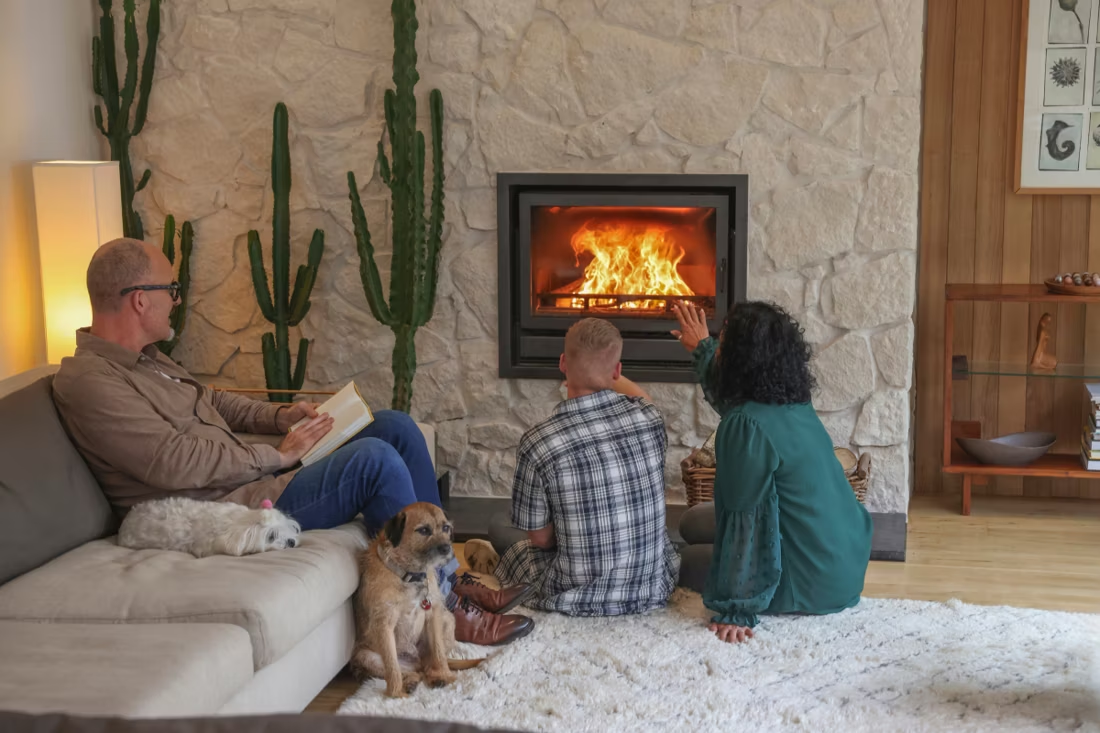
Four fuels. One honest answer for Chaudière-Appalaches.
Wood
69 models available near Chaudière-Appalaches.
Find your wood stove →Gas
104 models available near Chaudière-Appalaches.
Find your gas fireplace →Pellet
See what's available near Chaudière-Appalaches.
Find your pellet stove →Electric
See what's available near Chaudière-Appalaches.
Find your electric fireplace →Three steps. No salesperson until you're ready.
Tell us about your project
Your postal code, your situation, and the fuel you're leaning toward—or let the answers point you to one.
See what's actually available
The brands dealers within 100 miles genuinely carry—real options, never a catalog mirage.
Get your dealer & Project Guide
A trusted local dealer, plus the free Project Guide & Parts List that names every component of the job.
Frequently Asked Questions
Which fireplace fuel makes the most sense in Chaudière-Appalaches?
Wood is the backbone fuel across the Beauce and the rural municipalities—sugar maple, yellow birch, American beech, and red oak are all cut locally under Ministère des Ressources naturelles et des Forêts permits or off a family woodlot, and a modern catalytic or non-catalytic stove burning dense maple will hold a fire through a -16.7°C night without much trouble. Pellet stoves have a strong following too, helped by the fact that Granules LG, Energex, and Trebio are all made right here in Québec, which keeps supply steady and local. Gas is genuinely rare in this region: Énergir's distribution network reaches Lévis and a few pockets along the river, but most of the Beauce and the Thetford Mines area has no mains gas at all, so a gas fireplace here almost always means a propane installation. Electric is a solid supplemental choice everywhere—it's not built to carry a Chaudière-Appalaches winter on its own, but it's a simple option for a bedroom, basement, or second hearth in a home already heated by wood or pellet.
Do I need a permit to install a wood stove or fireplace in Chaudière-Appalaches?
Yes, in nearly every case, and the paperwork runs through your municipal building department rather than one centralized region office—Lévis, Thetford Mines, Saint-Georges, and the smaller Beauce municipalities each issue their own permits. Wood and pellet installations need to meet the CSA B365 installation code, and most insurers won't write or renew a policy on a wood-burning appliance without a WETT inspection on file, so that's worth budgeting for as part of the project rather than treating it as an afterthought. Gas installations, where the Énergir network actually reaches, need a licensed gas fitter and a separate gas-line permit. Electric fireplaces usually skip the permit process entirely unless you're wiring in a new circuit for a built-in unit. Most local dealers we match homeowners with handle this paperwork directly as part of the project.
Is natural gas actually available in Chaudière-Appalaches?
Only in patches. Énergir's mains network reaches into Lévis and a handful of built-up corridors near the St. Lawrence, but once you're into the Beauce, Thetford Mines, or the more rural municipalities toward the Maine border, there's often no gas main on the street at all. That's a real contrast with parts of greater Montréal, where gas service is common—here it's the exception rather than the rule. Homeowners who want the convenience of a gas appliance in an unserved area typically install a propane fireplace instead, which a local dealer sizes and vents the same way as a natural gas unit. Before settling on a specific gas insert, it's worth checking with your municipality or Énergir directly on whether your street is actually served.
Can I find a retailer that carries more than one fuel type?
Most hearth retailers in Chaudière-Appalaches carry two or three fuel types rather than specializing in one, which fits how households here actually heat—wood or pellet as the primary source, with a propane or electric unit somewhere else in the house. A multi-fuel dealer lets you compare a maple-fed wood insert against a Granules LG-fed pellet stove side by side and talk through which one actually suits your woodlot access, your chimney, and your budget. We match you with the retailer whose lineup and service area fits your project, not whoever has the biggest showroom.
How does installation and service work outside Lévis and Thetford Mines?
Installation and service crews are concentrated around Lévis and Thetford Mines but regularly travel out through the Beauce towns—Saint-Georges, Sainte-Marie, Beauceville—and down toward Montmagny and the river municipalities. Expect a modest travel charge on the farthest calls, and expect scheduling to tighten up once the first real cold snap hits in November; booking your annual sweep or WETT inspection in late summer gets you ahead of that rush. For rural properties well off the main routes, it's worth asking your installer about parts availability for gas or pellet ignition components, since a winter storm can push a return visit back several days.
What does a fireplace installation typically cost in Chaudière-Appalaches?
Costs vary by fuel and by how much venting or gas-line work the project needs. Wood stove or insert installations typically run $4,500-$9,500 CAD, with a full new chimney for new construction pushing toward $13,000. Pellet stove or insert installs generally land at $4,500-$7,500 CAD. Propane fireplaces and inserts—the common substitute where mains gas isn't available—run roughly $5,000-$11,000 CAD depending on tank setup and venting. Electric fireplaces are the outlier: $200-$3,000 CAD for the unit itself, plus $400-$1,200 CAD in labour for anything beyond a plug-and-play placement. The region and fuel pages above break these numbers down further with local retailer pricing.
How many BTUs do I need in a fireplace?
Wrong question—and the industry's favorite way to confuse you. More BTUs isn't better if the fireplace cooks you out of the room you spent thousands to enjoy. Think in terms you can verify: how many square feet the unit heats, whether it's primary or backup heat, and whether you want it running overnight. Those three answers size a fireplace correctly every time.
Will we actually use a fireplace once we have one?
In my own home, the room with the fireplace has never been the same—it became the social hub. Game nights, holidays, date nights after the kids are down: the fire is where the house gathers. There's a reason people in this industry joke that we're really in the romance and entertainment business. You won't wonder whether you'll use it; you'll wonder how the room worked before.
Can a fireplace actually lower my heating bill?
Yes—by creating a comfort zone. A furnace heats every square foot of the house just to warm the one room you're in; a gas fireplace on low burns roughly a sixth of the gas a typical furnace does. Set the furnace around 55–60 degrees as a baseline, then heat the rooms your family actually uses. Families who heat this way commonly save $20–$60 a month.
Does a fireplace add value to my home?
On average, a fireplace adds back to the home about the same amount you spent installing it. Add the monthly savings from heating the rooms you actually use instead of the whole house—often hundreds of dollars a year—and the value case is strong before you even count what a fire does for how your family uses the room.
Stove and Fireplace Dealers in Chaudière-Appalaches
Listings include WhyFire partner dealers, dealers we have verified as authorized for the brands we recommend, and established local businesses that carry hearth products. Every listing shows which one it is. The ones marked Preferred run on WhyFire's software, so they can show you real pricing and book your appointment right here. No manufacturer pays for placement. How we verify dealers →
Magasin H. Letourneau Inc.
Maçonnex (Saint-Isidore)
Propane Multi-Service Inc
Boutique Joli-Feu
Mission Ventilation K.g. Inc
Get matched with a local Chaudière-Appalaches dealer.
Pick your fuel below and we'll put together a free Project Guide & Parts List—the right unit, the vent kit it needs, and the local dealer we recommend for your project.
Find Your Fireplace →