
Built for Chaudière-Appalaches winters that dip to -16.7°C.
From Lévis to Thetford Mines to the upper Beauce, winters here settle in for months at a time. I match homeowners across Chaudière-Appalaches with a trusted local dealer who knows which pellet stove actually holds a steady burn through a -16.7°C night, and what permits and inspections your municipality will ask for.
Every Project Starts From One of These Five Situations
Consistent heat from a region built on sugar maple and yellow birch.
Chaudière-Appalaches stretches from the shores of the St. Lawrence near Lévis south through the Beauce and Appalachian foothills toward the US border, taking in Thetford Mines, Saint-Georges, Montmagny, and dozens of smaller municipalities in between. It's home to roughly 304,500 people, and with a climate zone of 7A and winter lows averaging -16.7°C, the heating season runs long—October through April is typical, with the coldest stretches settling into the Appalachian valleys around Thetford Mines and the upper Beauce. The region's maple stands, among the densest sugar maple and yellow birch forests in the province, also support a strong forestry and sawmill economy, feeding sawdust and shavings straight into the pellet mills that supply local stoves.
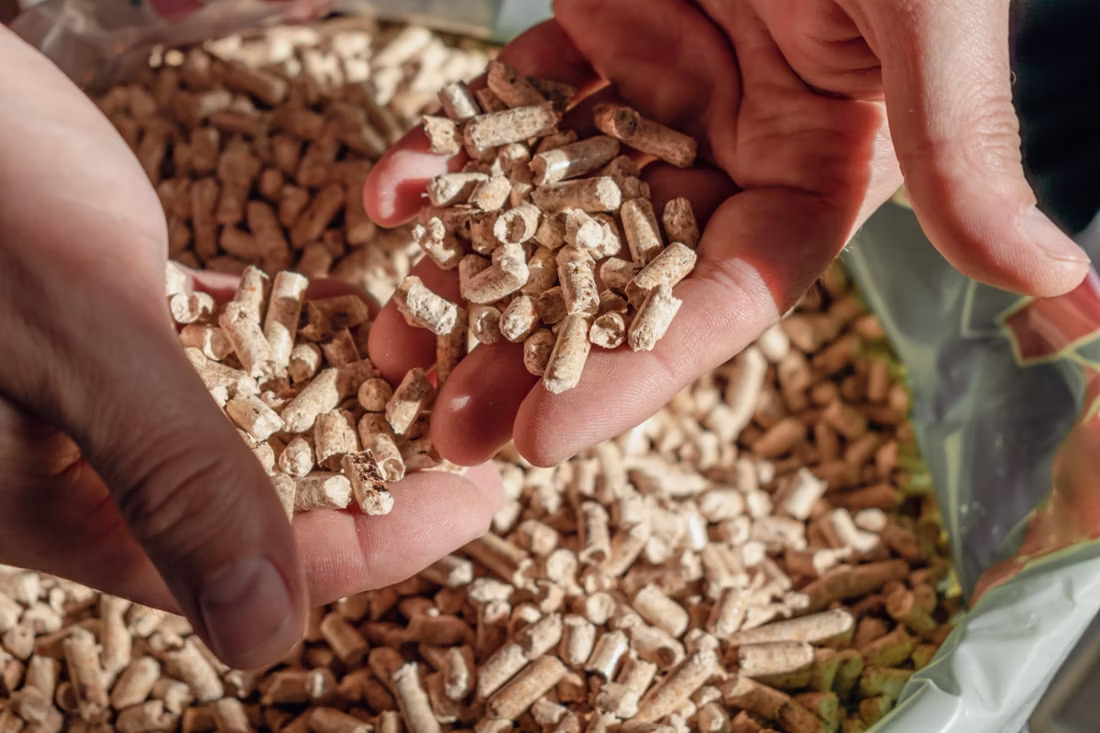
Natural gas service through Énergir reaches only a narrow corridor near Lévis and a handful of connected streets along the St. Lawrence, so most homes across the rest of Chaudière-Appalaches heat with a mix of Hydro-Québec electric baseboards and wood or pellet appliances. Pellet stoves fit that pattern well: they deliver steady, thermostatically controlled heat without the splitting and stacking that wood demands, and regional brands like Granules LG, Energex, and Trebio—all milled within a couple of hours of the region from local hardwood by-products—keep pellets at $400 to $575 per tonne without a long supply chain. Any new install still has to meet the CSA B365 installation code, and most home insurers here ask for a WETT inspection on file before they'll write a policy, so it's worth having a local dealer handle the appliance and the paperwork together.
Three steps. No salesperson until you're ready.
Tell us about your project
Your postal code, your situation, and the fuel you're leaning toward—or let the answers point you to one.
See what's actually available
The brands dealers within 100 miles genuinely carry—real options, never a catalog mirage.
Get your dealer & Project Guide
A trusted local dealer, plus the free Project Guide & Parts List that names every component of the job.
Frequently Asked Questions
How much does a pellet stove installation cost in Chaudière-Appalaches?
Across the region, pellet stove and insert installations typically run $6,000 to $10,000 CAD. A freestanding stove venting through an existing chimney chase in a Lévis or Montmagny home sits toward the lower end; a full insert conversion with new venting, hearth pad work, and an added electrical circuit for the auger and blower—common in older Thetford Mines or Saint-Georges homes without a dedicated outlet near the fireplace—lands closer to the top. Homes further out, toward the upper Beauce or Bellechasse, may see a modest travel charge added to the quote.
Do I need a permit to install a pellet stove in Chaudière-Appalaches?
Yes. Installations go through your municipal building department, and the appliance and venting need to meet the CSA B365 installation code no matter which municipality you're in—Lévis, Saint-Georges, and Thetford Mines each run their own permit process but apply the same code. Most home insurers in the region also want a WETT inspection on file before they'll cover a wood-burning or pellet appliance, so budget that in alongside the building permit. A local dealer who does this work regularly typically coordinates both steps as part of the project.
What size pellet stove do I need for my home?
It depends on where in the region you are as much as square footage. Homes along the St. Lawrence near Lévis or Montmagny see relatively moderate winters for the area, while houses at higher elevation in the Appalachian foothills around Thetford Mines or up toward the height of land in the Beauce sit through longer, harder cold snaps, with lows averaging -16.7°C region-wide. A stove sized right for a 1,200 sq ft main floor in Lévis might need bumping up a size for the same square footage in Saint-Georges. A local dealer sizing the appliance in person, rather than off a generic chart, is the more reliable route.
Where do the pellets sold in Chaudière-Appalaches actually come from?
Most of what's on shelves locally comes from mills within a few hours' drive—Granules LG, Energex, and Trebio all operate in the broader Eastern Townships and Chaudière-Appalaches sawmill belt, turning sugar maple, yellow birch, American beech, and red oak sawdust into hardwood pellets. That regional supply is a big part of why pellets here run a fairly steady $400 to $575 per tonne rather than swinging with a long-haul trucking market. Buying a season's worth in fall, before the first cold snap drives up demand, is the usual local strategy.
Pellet stove or wood stove—which makes more sense here?
Both fuels are well suited to the region, and the choice usually comes down to how hands-on you want to be. Wood is essentially free if you're cutting your own—the Ministère des Ressources naturelles et des Forêts issues personal cutting permits for about $1.85 per cubic metre plus taxes, up to a maximum of 22.5 m3, valid April 1 to March 31—and sugar maple, yellow birch, and beech from local stands burn hot and long. Pellet stoves trade that low fuel cost for convenience: an automatic auger feeds the fire, output is thermostatically controlled, and there's no splitting, stacking, or year-long seasoning before you can burn it. For a household without the storage space or time for a woodpile, pellet is usually the easier fit; for a rural property with wooded acreage, wood can still be the cheaper long-term choice.
Is natural gas a realistic alternative to pellet in this region?
Not for most of Chaudière-Appalaches. Énergir's natural gas network reaches a narrow corridor near Lévis and a handful of connected streets along the St. Lawrence, but the majority of the region—Thetford Mines, Saint-Georges, Montmagny, and most of the Beauce—has no gas main at all. That's why gas fireplaces stay a rare, largely urban-corridor option here, while pellet and wood remain the mainstream choices alongside Hydro-Québec electric heat. If you're not sure whether your street has gas service, that's worth confirming before you plan a project around it.
Will my pellet stove still work during a winter power outage?
It's a fair question in a region that lived through the 1998 ice storm, when large parts of the Beauce and Chaudière-Appalaches lost power for days. Pellet stoves need electricity to run the auger, igniter, and combustion blower, so a standard unit goes cold in an outage unless you've added backup. Many local dealers recommend pairing a pellet stove with a small battery backup unit or a generator sized to carry its low draw, precisely because ice and windstorms remain a real risk here. If reliable off-grid heat during an outage is your top priority, a wood stove is worth discussing as a complement rather than a replacement.
How much maintenance does a pellet stove need?
Plan on emptying the ash pan every few days during steady winter use and doing a full burn-pot and venting cleaning every one to two months, depending on how many hours a day the stove runs. A full annual service, typically done before the season starts in September or October, covers the hopper, auger, gaskets, and venting, and doubles as the inspection most insurers want on file for a WETT record. Pellets from mills like Granules LG and Trebio tend to burn cleaner with less ash than lower-grade imported pellets, which cuts down on how often the burn pot needs attention.
Are there rebates available for switching to a pellet stove in Quebec?
Quebec's Rénoclimat program can apply to a pellet stove installation as part of a broader home energy evaluation, and it's worth asking a local dealer whether your project qualifies before you book the work, since the paperwork is easier to handle upfront than after the fact. Programs and eligibility shift from year to year, so a dealer who installs pellet appliances across Chaudière-Appalaches regularly will usually know what's currently available and whether your municipality adds anything on top of the provincial offer.
Why do fireplace quotes vary so much?
Because a fireplace is an iceberg—there's more behind the wall than in front of it. A low quote often covers only the unit; the full scope includes vent pipe, gas line or electrical, framing, and the tile or stone that has to come off and go back on. Make every bidder price the whole job. If a dealer can't speak to the full scope with confidence, that's your signal to keep looking.
Is it worth replacing an old fireplace that still sort of works?
Ask three questions: Is it ugly? Is it drafty? Does it actually work? Most old fireplaces fail at least two. Beyond looks, an old unit leaks air around the damper year-round and—if it's gas with a standing pilot—quietly burns a couple hundred dollars a year. A modern replacement seals the wall, heats the room, and changes how the whole space gets used.
How often does a pellet stove need cleaning?
A clean pellet stove is a happy pellet stove. Plan on cleaning the burn pot about once a week when you're burning regularly—ash and clinkers gum up the air holes just like a pellet barbecue. Most pellet stove problems trace back to skipped cleaning that nobody explained up front. Some designs make it easy with a trapdoor burn pot: pull a lever and the gunk drops into the ash pan.
Why is a fireplace insert so efficient?
An insert does two things: it seals the chimney completely, so you stop losing air you already paid to heat, and it radiates warmth into the room through the firebox and glass. Most add a heat-exchange fan that pulls cool room air underneath, wraps it around the hot firebox, and pushes it back out warm. Your home is more efficient before you've even lit the first fire.
Stove and Fireplace Dealers in Chaudière-Appalaches
Listings include WhyFire partner dealers, dealers we have verified as authorized for the brands we recommend, and established local businesses that carry hearth products. Every listing shows which one it is. The ones marked Preferred run on WhyFire's software, so they can show you real pricing and book your appointment right here. No manufacturer pays for placement. How we verify dealers →
Magasin H. Letourneau Inc.
Maçonnex (Saint-Isidore)
Propane Multi-Service Inc
Boutique Joli-Feu
Mission Ventilation K.g. Inc
Pellet Brands Stocked Around Chaudière-Appalaches
Typical price runs $400-$575 per ton—buy early-season for the best rates. Manufacturers will point you to the nearest stocking dealer.
Granules Lg
Trebio
Get your free Chaudière-Appalaches pellet stove Project Guide & Parts List.
Tell me about your home, your municipality, and how you plan to use the stove, and I'll match you with a trusted local Chaudière-Appalaches dealer and send a free Project Guide & Parts List—the exact parts, including the vent kit, for your pellet project.
Find Your Fireplace →