
Automated heat for long St. Lawrence winters, without the woodpile.
Saint-Antoine-de-Tilly sits on the south shore of the St. Lawrence in Chaudière-Appalaches, where winter lows average -17.9°C and the heating season runs six months or more. I'll match you with a trusted local dealer who knows what's actually installable in one of this village's heritage stone homes or a newer build on the ridge.
Every Project Starts From One of These Five Situations
Quebec makes the pellets that heat this village.
Saint-Antoine-de-Tilly is registered among Quebec's official Plus Beaux Villages, with grand 18th- and 19th-century stone houses lining the river bluff and orchards running back from the water. Winters here are long and genuinely cold—an average low of -17.9°C, in a climate zone (7A) that puts this stretch of the south shore in the same category as much of interior Quebec. Sugar maple, yellow birch, American beech, and red oak fill the surrounding forests, and plenty of households still split and burn cordwood, but pellet appliances have earned a real foothold for homeowners who want that same steady radiant heat without the stacking, splitting, and daily tending a wood stove demands.
Natural gas barely factors into the picture here—Énergir's distribution network reaches only limited corridors around greater Montréal and a few urban spines, and Saint-Antoine-de-Tilly isn't one of them, so a gas fireplace here would mean a propane conversion rather than a mains hookup. Electricity through Hydro-Québec is inexpensive by national standards, at roughly 7.8 cents a kilowatt-hour, which is why many homes here run electric baseboard as primary heat. Pellet stoves fit neatly alongside that setup: Quebec is a major pellet producer, and brands like Granules LG, Energex, and Trebio are milled within the province, so a full ton at $400-$575 doesn't have to travel far to reach a woodshed in Saint-Antoine-de-Tilly.
Three steps. No salesperson until you're ready.
Tell us about your project
Your postal code, your situation, and the fuel you're leaning toward—or let the answers point you to one.
See what's actually available
The brands dealers within 100 miles genuinely carry—real options, never a catalog mirage.
Get your dealer & Project Guide
A trusted local dealer, plus the free Project Guide & Parts List that names every component of the job.
Frequently Asked Questions
How much does a pellet stove or insert cost to install in Saint-Antoine-de-Tilly?
Most pellet installs in the village run $6,000 to $10,000 CAD. A freestanding stove venting through an exterior wall with a short horizontal run tends to land at the lower end, while a pellet insert dropped into one of the deep stone fireplaces common in the older homes along the river road—with a full liner run up an existing masonry flue—pushes toward the top of that range. Your local dealer typically handles the permit application through the municipal building department as part of the quote, so that cost is usually already folded in.
What size pellet stove do I need for a home here?
With winter lows averaging -17.9°C and a heating season that stretches from October into April, undersizing is the risk to watch for. A stove rated for 1,200-1,800 square feet handles most of the newer homes on the ridge above the village comfortably, but the older stone houses along the river—thick-walled but often less insulated behind the plaster than they look—sometimes need the next size up to keep the main floor even through a stretch of -25°C nights. A dealer will size it to your actual floor plan and insulation, not just the square footage.
Where do the pellets sold locally actually come from?
Quebec is one of the larger pellet-producing provinces in the country, and the brands most dealers around Chaudière-Appalaches carry—Granules LG, Energex, and Trebio—are all milled within the province rather than trucked in from Ontario or the US. Expect to pay $400 to $575 a ton depending on the brand and whether you buy by the pallet or a full winter's supply at once. Buying early, before the first cold snap in October, avoids the supply squeeze that can hit pellet retailers province-wide once everyone's stove is running at the same time.
Do I need a permit to install a pellet appliance in Saint-Antoine-de-Tilly?
Yes. The installation has to meet the CSA B365 installation code, and you'll need a permit through the municipal building department before the work is done. Most insurers in Quebec also expect a WETT inspection on file for wood-burning and pellet appliances before they'll write or renew a homeowner's policy, so it's worth asking your dealer to arrange that inspection at the same time as the install rather than as an afterthought.
I already have cheap Hydro-Québec electricity—why would I add a pellet stove?
Hydro-Québec's residential rate, around 7.8 cents a kilowatt-hour, is genuinely inexpensive, and it's why electric baseboard heat is so common in and around Saint-Antoine-de-Tilly. But a pellet stove gives you a second, independent heat source in a room, which matters during an ice storm or an extended outage on the rural feeder lines that serve this stretch of the south shore—though it's worth knowing a pellet stove still needs electricity to run its auger and blower, so a small battery backup or generator is what actually keeps it lit when the grid goes down, not the pellets themselves.
What's the difference between a pellet stove and a pellet insert?
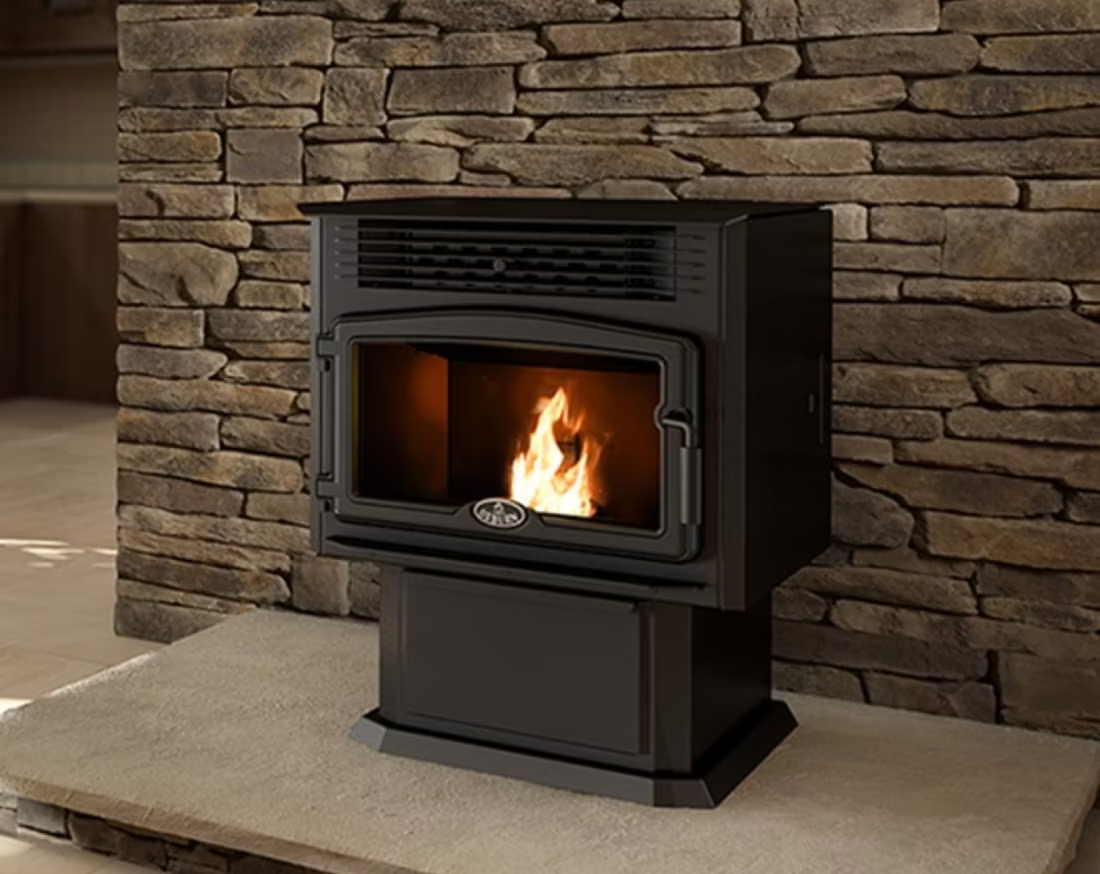
A pellet stove is a freestanding unit on its own hearth pad, vented through a wall or a short vertical run—the more common choice in a newer home without an existing fireplace. A pellet insert is built to slide into an existing masonry firebox, which is the natural fit for the stone houses along the river in Saint-Antoine-de-Tilly that already have a working chimney chase from decades of wood-burning. Inserts generally land at the lower end of the $6,000-$10,000 range since the masonry structure is already in place.
Is natural gas an option for a fireplace here instead?
Not really, at least not on the mains. Énergir's gas network covers pockets around greater Montréal and a handful of other urban corridors, but Saint-Antoine-de-Tilly and the surrounding stretch of Chaudière-Appalaches aren't served. A gas fireplace here would run on a propane tank rather than a gas line, which is a workable but different project with its own cost structure—most homeowners looking at automated, low-maintenance heat end up comparing pellet against propane rather than against mains gas.
How much maintenance does a pellet stove need through a Quebec winter?
Less than a wood stove, but not none. Plan on emptying the ash pan every few days during steady use, a full glass and burn-pot cleaning every one to two weeks, and a professional service visit once a year—ideally in September before the first pellets go in the hopper—to check the auger, exhaust fan, and venting. Given how many months of the year a stove here actually runs, from fall through a Chaudière-Appalaches spring that can still see frost in April, skipping that yearly service is the most common reason a stove starts running rough by January.
Wood or pellet—which makes more sense for a Saint-Antoine-de-Tilly home?
Cordwood is cheap and abundant if you're willing to do the work—a Ministère des Ressources naturelles et des Forêts permit runs about $1.85 per cubic metre up to 22.5 cubic metres, and sugar maple, yellow birch, and red oak from the surrounding forests all burn hot and long. Pellet costs more per season, typically $400 to $575 a ton depending on brand, but it lights automatically, holds a steady temperature overnight without reloading, and doesn't demand a woodshed or a splitting maul. Many households here end up choosing based on how much physical wood-handling they actually want to do each winter rather than on cost alone.
Why do fireplace quotes vary so much?
Because a fireplace is an iceberg—there's more behind the wall than in front of it. A low quote often covers only the unit; the full scope includes vent pipe, gas line or electrical, framing, and the tile or stone that has to come off and go back on. Make every bidder price the whole job. If a dealer can't speak to the full scope with confidence, that's your signal to keep looking.
Is it worth replacing an old fireplace that still sort of works?
Ask three questions: Is it ugly? Is it drafty? Does it actually work? Most old fireplaces fail at least two. Beyond looks, an old unit leaks air around the damper year-round and—if it's gas with a standing pilot—quietly burns a couple hundred dollars a year. A modern replacement seals the wall, heats the room, and changes how the whole space gets used.
Can a pellet stove heat a whole house?
It genuinely can. I burned a pellet stove as my only heat source for years after a furnace died, and it kept the entire house warm. Pellets feed automatically from a hopper, so you get wood-heat economics with thermostat-style control. Two honest caveats: it needs weekly cleaning during the season, and most models need electricity to run—ask about battery backup if outages are a concern.
What does it take to replace an existing fireplace?
Fireplaces are like icebergs—bigger behind the wall than in front of it. Replacement means removing the surrounding tile or stone (the finish material laps onto the fireplace face), pulling the old unit, setting the new one in the same enclosure, and re-finishing the wall. A hearth professional can determine what's behind your wall without demolition during an in-home preview.
Nearby Dealers
Hearth shops serving Saint-Antoine-de-Tilly and the surrounding area. Every listing shows whether it is a WhyFire partner, a dealer we have verified as authorized for the brands we recommend, or a local business carrying hearth products. No manufacturer pays for placement. How we verify dealers →
Services Propane Inc.
Foyer Québec
Chemine, Poeles Et Foyer Quebec
Les Cheminées Gamelin
Hubert's Fireplace Consultation + Design
Nova Energie Inc
Maçonnex (Québec)
Propane Multi-Service Inc
Gespro Poêles Et Foyers
Maçonnex (Saint-Isidore)
Magasin H. Letourneau Inc.
Boutique Joli-Feu
Mission Ventilation K.g. Inc
Pellet Brands Stocked Around Saint-Antoine-de-Tilly
Typical price runs $400-$575 per ton—buy early-season for the best rates. Manufacturers will point you to the nearest stocking dealer.
Granules Lg
Trebio
Get your free Project Guide & Parts List for a Saint-Antoine-de-Tilly pellet project.
Tell me about your home, whether it's one of the village's stone heritage houses or a newer build on the ridge, and I'll match you with a trusted local dealer and send a free Project Guide & Parts List with the vent kit and parts sized for a Chaudière-Appalaches winter.
Find Your Fireplace →