
Steady, thermostat-controlled heat for North Shore winters that hit -20.8°C.
Port-Cartier sits in climate zone 7A on the Côte-Nord shore of the St. Lawrence, where winters run long and the cold settles in hard. I'll match you with a trusted local dealer and send a free plan for your pellet project, sized for this stretch of coast.
Every Project Starts From One of These Five Situations
Convenience built for a six-month heating season.
Port-Cartier is a working port and aluminum town on the Côte-Nord, and its climate doesn't do things by half measures. Winter lows here average -20.8°C, placing the town in climate zone 7A alongside communities like Fort McMurray and Thunder Bay for sheer duration of cold. The heating season stretches close to six months, and homeowners here have long treated a supplemental heat source as a practical necessity rather than a luxury add-on.
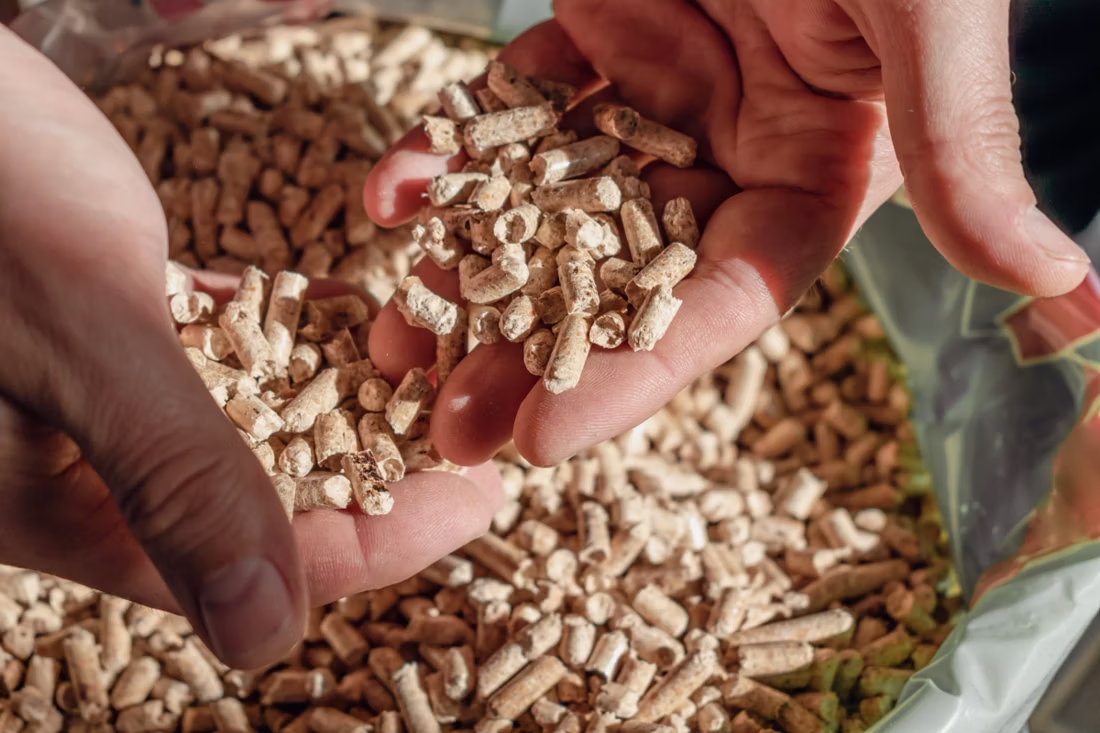
Pellet stoves fit that need without the splitting, stacking, and daily tending that wood demands. Regional bags from Granules LG, Energex, and Trebio run about $400-$575 a ton and are sold through hardware and building-supply outlets along Route 138, though it pays to lay in a season's supply early given how trucking schedules along the North Shore can tighten in winter. Hydro-Québec's residential rate of roughly 7.8 cents per kWh means plenty of Port-Cartier homes still lean on electric baseboards for base heat, but a pellet stove adds a real, radiant point of warmth in the main living space and takes some load off the electrical system during the coldest snaps.
Three steps. No salesperson until you're ready.
Tell us about your project
Your postal code, your situation, and the fuel you're leaning toward—or let the answers point you to one.
See what's actually available
The brands dealers within 100 miles genuinely carry—real options, never a catalog mirage.
Get your dealer & Project Guide
A trusted local dealer, plus the free Project Guide & Parts List that names every component of the job.
Frequently Asked Questions
How much does a pellet stove installation cost in Port-Cartier?
Most pellet stove installs here run $6,000 to $10,000 CAD. A unit venting straight through an exterior wall with a short PL-vent run, common in the newer bungalows near the port and smelter, sits toward the lower end. Homes needing a longer vent run, a new hearth pad, or a dedicated electrical circuit for the auger and blower push toward the top of that range. Your municipal building department issues the permit, and most installers who work this stretch of the Côte-Nord fold that step into the quote.
What size pellet stove do I need for a Port-Cartier home?
With average winter lows of -20.8°C and a heating season that runs close to six months, undersizing shows up fast here. A stove rated for 2,000 to 2,800 square feet handles most Port-Cartier main living areas as a genuine supplemental heat source, while a smaller unit is fine if you're pairing it with existing Hydro-Québec electric baseboards for backup warmth rather than full-time heat. A local dealer will size it against your actual insulation and ceiling height, not just square footage.
Do I need a permit to install a pellet stove in Port-Cartier?
Yes. Installation runs through your municipal building department, and the work has to meet the CSA B365 installation code. Insurers on the North Shore commonly ask for a WETT inspection before they'll write or renew a policy on a home with a wood-burning or pellet-burning appliance, so it's worth booking that inspection as part of the install rather than after the fact.
What happens to a pellet stove during a power outage?
It stops working. The auger that feeds pellets and the blower that pushes heat into the room both need electricity, and Côte-Nord does see outages during winter storms off the Gulf of St. Lawrence. Some homeowners run a small battery backup or generator specifically to keep the stove going through a multi-hour outage. If outage resilience matters more than convenience for your household, that's the one real advantage a wood stove holds over a pellet unit in this climate.
Where do I buy pellets near Port-Cartier?
Granules LG, Energex, and Trebio are the regional brands most commonly stocked at building-supply and hardware outlets serving the Côte-Nord, generally running $400 to $575 a ton. Because trucking up Route 138 can slow down once winter sets in, most local burners buy their season's supply in fall rather than restocking bag by bag through January and February. Store pellets somewhere dry—a damp garage or unheated shed on this coast will break down bags faster than you'd expect.
Pellet stove vs. wood stove—which makes more sense in Port-Cartier?
Wood keeps working without electricity, which matters given the storm-related outages this coast sees, and species like sugar maple, yellow birch, American beech, and red oak are available through MRNF cutting permits at about $1.85 per cubic metre up to a 22.5 cubic metre maximum. But that means splitting, seasoning, and hauling wood, plus a WETT inspection and CSA B365 compliance either way. Pellet stoves trade that labour for a thermostatically controlled, cleaner-burning unit that needs power to run. A lot of Port-Cartier households land on pellet for daily convenience and keep an eye on backup power for the handful of outage days each winter.
Is pellet heat cheaper than electric baseboard heat here?
Not necessarily. Hydro-Québec's residential rate of about 7.8 cents per kWh is among the lowest in the country, so straight electric baseboard heat is hard to beat on raw cost. Pellets at $400 to $575 a ton can run comparable or slightly higher per unit of heat during a deep cold snap. Most homeowners here choose pellet less for savings and more for the radiant, point-source warmth in the main room and the option of running it if the grid goes down with a battery backup in place.
Can I get a gas fireplace instead of pellet in Port-Cartier?
It's uncommon this far up the Côte-Nord. Énergir's natural gas network is only partial across Quebec and doesn't reach most of Port-Cartier, so a gas fireplace here usually means a propane conversion rather than a mains hookup. Between that limitation and the reliable local supply of pellets and electricity, most homeowners choose pellet or electric units instead of chasing gas service that simply isn't run to their street.
How much maintenance does a pellet stove need in Port-Cartier?
Plan on emptying the ash pan every few days during the heart of a six-month burning season, plus a full professional cleaning of the exhaust venting and auger system once a year, ideally in late summer before the first cold snap. Glass cleaning and a check of the door gasket round out routine upkeep. Skipping the annual service on a stove running daily through a Côte-Nord winter is the most common reason a unit starts feeding unevenly by February.
Why do fireplace quotes vary so much?
Because a fireplace is an iceberg—there's more behind the wall than in front of it. A low quote often covers only the unit; the full scope includes vent pipe, gas line or electrical, framing, and the tile or stone that has to come off and go back on. Make every bidder price the whole job. If a dealer can't speak to the full scope with confidence, that's your signal to keep looking.
Is it worth replacing an old fireplace that still sort of works?
Ask three questions: Is it ugly? Is it drafty? Does it actually work? Most old fireplaces fail at least two. Beyond looks, an old unit leaks air around the damper year-round and—if it's gas with a standing pilot—quietly burns a couple hundred dollars a year. A modern replacement seals the wall, heats the room, and changes how the whole space gets used.
What does it take to replace an existing fireplace?
Fireplaces are like icebergs—bigger behind the wall than in front of it. Replacement means removing the surrounding tile or stone (the finish material laps onto the fireplace face), pulling the old unit, setting the new one in the same enclosure, and re-finishing the wall. A hearth professional can determine what's behind your wall without demolition during an in-home preview.
Why is my open fireplace making my house colder?
Open fireplaces suck—literally. As the fire burns, it consumes air your furnace already paid to heat and pulls it out through the chimney, so the house is actually colder after the fire goes out than before you lit it. An insert fixes this: it seals the chimney, puts fixed glass across the front, and turns that hole in your house into a real heat source.
Nearby Dealers
Hearth shops serving Port-Cartier and the surrounding area. Every listing shows whether it is a WhyFire partner, a dealer we have verified as authorized for the brands we recommend, or a local business carrying hearth products. No manufacturer pays for placement. How we verify dealers →
Propane Nord Cotier
Propane Lavoie Inc
Plomberie G.d. Gauthier - Chauffage C.g.
Lamarre Gaz Industriel Inc
Benoit Vigneault
Pellet Brands Stocked Around Port-Cartier
Typical price runs $400-$575 per ton—buy early-season for the best rates. Manufacturers will point you to the nearest stocking dealer.
Granules Lg
Trebio
Get your free Project Guide & Parts List for a Port-Cartier pellet stove.
Tell me about your home and I'll match you with a trusted local dealer and send a free Project Guide & Parts List—sized for -20.8°C winters, with the vent kit and parts specified.
Find Your Fireplace →