
Steady heat for Montréal winters, without the woodpile.
Montréal sits in climate zone 6A with winter lows averaging -15.1°C and months of sustained cold. I'll match you with a trusted local dealer who knows the island's bylaw, the venting, and what's genuinely installable in your borough.
Every Project Starts From One of These Five Situations
Convenience heat for a city that already knows cold.
Montréal sits in climate zone 6A, with an average winter low around -15.1°C and a heating season that runs from November well into March. It's not as severe as Québec City or Winnipeg, but the cold is sustained, and much of the city's housing stock—the classic Montréal duplex and triplex, plus older brick low-rises across boroughs like Rosemont–La Petite-Patrie and Villeray—predates modern insulation standards, so a reliable supplementary heat source matters more than it might in newer construction.
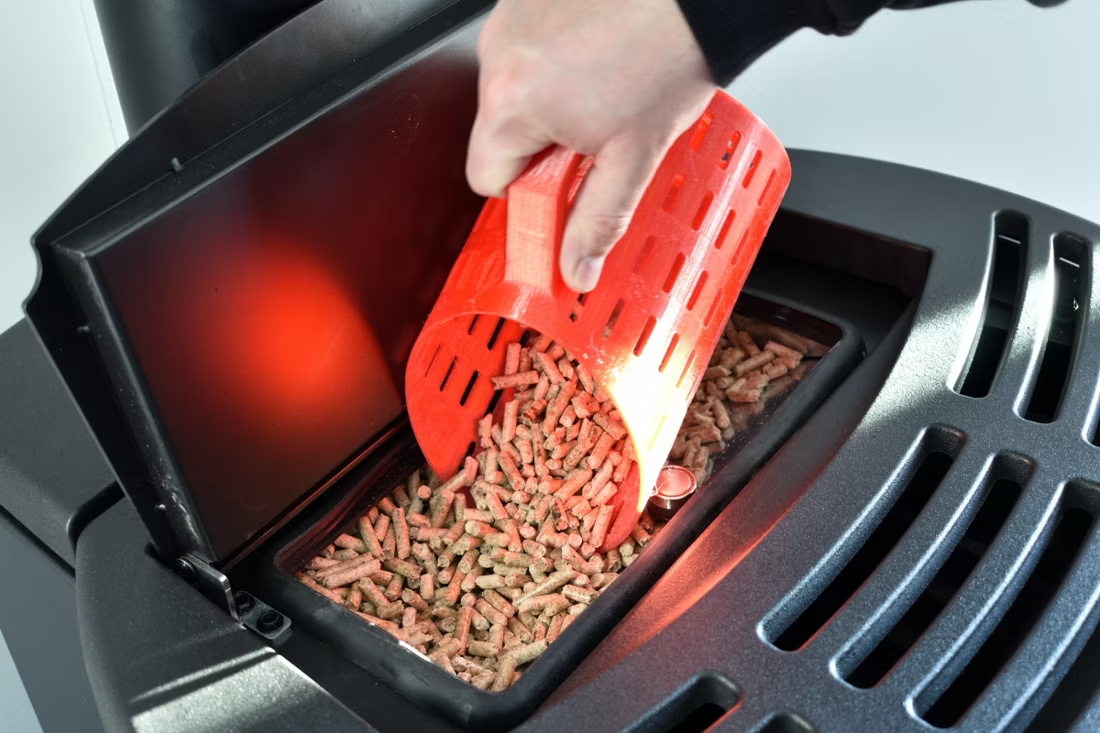
The island's bylaw requiring registered, certified wood-burning appliances emitting no more than 2.5 grams of fine particles per hour has pushed a lot of homeowners toward pellet stoves and inserts, which generally burn clean enough to meet that limit without much fuss—a real advantage over an old open masonry fireplace or an uncertified wood stove. Regional brands like Granules LG, Energex, and Trebio mill hardwood pellets from the same sugar maple, yellow birch, and beech found across the Laurentians and Eastern Townships, typically running $400 to $575 a tonne and widely stocked at hearth shops and building-supply retailers around the region. The one thing pellet stoves lack is total independence from the grid, worth weighing given Montréal's history with ice storms and winter outages, but day to day they deliver steady, low-maintenance heat that fits naturally into a city that already relies heavily on Hydro-Québec's inexpensive electricity for most home heating.
Three steps. No salesperson until you're ready.
Tell us about your project
Your postal code, your situation, and the fuel you're leaning toward—or let the answers point you to one.
See what's actually available
The brands dealers within 100 miles genuinely carry—real options, never a catalog mirage.
Get your dealer & Project Guide
A trusted local dealer, plus the free Project Guide & Parts List that names every component of the job.
Frequently Asked Questions
How much does a pellet stove installation cost in Montréal?
Most pellet stove and insert projects in the Montréal region run $6,000 to $10,000 CAD. An insert dropping into an existing masonry fireplace—common in older plexes around Le Plateau or Villeray—tends to land toward the lower end, since the chimney chase is already there. A freestanding stove needing new venting through an exterior wall, or a project in a newer condo with no existing flue, pushes toward the higher end. Either way, your municipal building department will require a permit, and most dealers who work on pellet projects in the city fold that step into their quote.
Does a pellet stove meet Montréal's wood-burning appliance bylaw?
In most cases, yes, and more easily than an old wood stove or open fireplace does. The island's bylaw caps fine-particle emissions at 2.5 grams per hour for any wood-burning appliance, and modern CSA-certified pellet stoves typically burn well under that threshold because the auger-fed, thermostatically controlled fire is far more complete than a hand-fed wood fire. You'll still need to register the appliance through your borough's building department as part of the permit—a normal step a dealer who works on pellet projects across the city handles as a matter of course, not a hurdle to dread.
Pellet stove or wood stove—which makes more sense for a Montréal home?
If you already have access to seasoned sugar maple, yellow birch, or red oak and don't mind stacking and hauling wood, a wood stove can cost less to run season to season. But a pellet stove sidesteps the fine-particle bylaw more comfortably, skips the need for a Ministère des Ressources naturelles et des Forêts cutting permit and a woodshed, and holds a steady, programmable heat overnight—genuinely useful in a rowhouse or duplex where stacking four cords in a Plateau backyard isn't realistic. Most homeowners without an existing wood supply end up choosing pellet for exactly that reason.
Does a pellet stove make sense given how cheap Hydro-Québec electricity is?
It's a fair question, since Hydro-Québec's residential rate—around 7.8 cents a kilowatt-hour—is among the lowest in the country, and it's a big reason so many Montréal homes already heat primarily with electric baseboards. Where a pellet stove still earns its place is as backup and single-room heat: it delivers real, radiant warmth during the ice storms and grid outages the region has seen before, and it heats one space efficiently without running whole-house electric heat at full tilt. The tradeoff is that pellet stoves need a modest amount of electricity themselves for the auger and blower, so a battery backup is worth planning for if outage resilience is the main draw.
Do I need a WETT inspection for a pellet stove in Montréal?
Many home insurers in Quebec ask for a WETT inspection or equivalent certification on any solid-fuel appliance, including pellet stoves, before issuing or renewing a policy, even though pellet units burn cleaner than cordwood. Installation work needs to follow the CSA B365 code, and a municipal building department permit is required regardless of insurance. It's worth asking your dealer upfront whether they arrange the WETT inspection or point you to a certified inspector, since insurers can be specific about who they'll accept.
What size pellet stove do I need for a Montréal home?
With winter lows averaging -15.1°C and many older Montréal plexes and duplexes under-insulated compared to newer construction, a mid-size pellet stove in the 40,000 to 60,000 BTU range comfortably heats a single floor of a typical rowhouse. A smaller unit works fine for a condo or as supplemental heat in one room. A local dealer will size it against your actual square footage, ceiling height, and floor plan—a narrow, railroad-style Montréal duplex heats differently than an open-concept newer build even at the same square footage.
Where do I buy pellets in the Montréal region, and what do they cost?
Regional brands like Granules LG, Energex, and Trebio are what most Montréal-area burners stock up on, typically running $400 to $575 a tonne depending on the season and how early you buy. They're sold at hearth shops, Réno-Dépôt, Canadian Tire, and other building-supply retailers across the region, and buying a season's supply in late summer, before the fall rush, usually lands you toward the better end of that range. Plan for storage too: a tonne of bagged pellets takes up real space, so a dry basement or garage corner is worth clearing before delivery.
How much maintenance does a pellet stove need in Montréal?
Day to day, expect to empty the ash pan every few days and clean the burn pot weekly during steady winter use—pellet ash is fine and light, easier to manage than cordwood ash but it does build up. A professional service visit once a year, ideally in September before the heating season ramps up, should cover the auger, exhaust blower, and venting. Given how many hours a pellet stove runs through a Montréal winter stretching from November into March, skipping that annual check is how a jammed auger shows up on the coldest week of January.
Should I consider gas instead of pellet in Montréal?
For most Montréal homeowners, gas isn't really on the table the way it might be elsewhere in Canada. Énergir's natural gas network reaches only parts of the region, and Quebec homes overwhelmingly heat with electricity or wood rather than gas. A pellet stove fills a gap gas can't easily fill here: it's a genuine backup heat source that doesn't depend on a gas line reaching your street, and it meets the island's fine-particle bylaw more comfortably than an open wood fireplace would.
Why do fireplace quotes vary so much?
Because a fireplace is an iceberg—there's more behind the wall than in front of it. A low quote often covers only the unit; the full scope includes vent pipe, gas line or electrical, framing, and the tile or stone that has to come off and go back on. Make every bidder price the whole job. If a dealer can't speak to the full scope with confidence, that's your signal to keep looking.
Is it worth replacing an old fireplace that still sort of works?
Ask three questions: Is it ugly? Is it drafty? Does it actually work? Most old fireplaces fail at least two. Beyond looks, an old unit leaks air around the damper year-round and—if it's gas with a standing pilot—quietly burns a couple hundred dollars a year. A modern replacement seals the wall, heats the room, and changes how the whole space gets used.
What does it take to replace an existing fireplace?
Fireplaces are like icebergs—bigger behind the wall than in front of it. Replacement means removing the surrounding tile or stone (the finish material laps onto the fireplace face), pulling the old unit, setting the new one in the same enclosure, and re-finishing the wall. A hearth professional can determine what's behind your wall without demolition during an in-home preview.
Why is my open fireplace making my house colder?
Open fireplaces suck—literally. As the fire burns, it consumes air your furnace already paid to heat and pulls it out through the chimney, so the house is actually colder after the fire goes out than before you lit it. An insert fixes this: it seals the chimney, puts fixed glass across the front, and turns that hole in your house into a real heat source.
Nearby Dealers
Hearth shops serving Montréal and the surrounding area. Every listing shows whether it is a WhyFire partner, a dealer we have verified as authorized for the brands we recommend, or a local business carrying hearth products. No manufacturer pays for placement. How we verify dealers →
Confort Elite
Foyer Universel Montreal Inc. (A.m.f.)
Nergiflex
Noréa Foyers Montréal
Pro Du Foyer
Propane Plus Inc
Arta Boutik
Napert Signature
Décor Chaleur Châteauguay
Thermopompes N & R Sol
Finition Belle-Flammes
Alternatives
Noeea Foyers Rive-Nord
Les Foyer Mirabel A.m.f.
Pellet Brands Stocked Around Montréal
Typical price runs $400-$575 per ton—buy early-season for the best rates. Manufacturers will point you to the nearest stocking dealer.
Granules Lg
Trebio
Get your free Project Guide & Parts List for a Montréal pellet project.
Tell me about your home and your borough, and I'll match you with a trusted local dealer and send a free Project Guide & Parts List—sized for Montréal winters, with the vent kit and parts specified, and the bylaw registration step already accounted for.
Find Your Fireplace →