
Find your fireplace, anywhere in the Montréal Region.
Wood, gas, pellet, and electric fireplace options across the island, Laval, the South Shore, and the North Shore—matched to what a trusted local dealer can actually source, permit, and vent correctly for your municipality. Pick a fuel below and we'll point you toward who's real near you.
Every Project Starts From One of These Five Situations
Long, humid winters, -15.1°C nights, and a hearth culture built on maple and birch.
The Montréal Region is home to roughly 2.15 million people spread across the island of Montréal, Laval, Longueuil, and the surrounding North and South Shore municipalities, all sitting in climate zone 6A. Winter lows average around -15.1°C on the coldest nights—not as severe as Winnipeg or Thunder Bay, but persistent and humid enough to demand a real heating plan from November through March, a load closer to what homes deal with in Ottawa just up the river. Sugar maple, yellow birch, American beech, and red oak are the species most local wood burners split and season, much of it sourced through licensed firewood dealers or cutting permits issued by the Ministère des Ressources naturelles et des Forêts.
Gas is the fuel that needs the most honest framing here: Énergir's natural gas distribution network reaches only limited corridors—parts of greater Montréal, the South Shore, and a handful of urban spines—so a gas fireplace project usually starts with confirming your street is actually served, or planning around propane instead. Wood and pellet stoves, by contrast, are genuinely mainstream, though the island of Montréal and several surrounding municipalities require any wood-burning appliance to be registered and certified to emit no more than 2.5 grams of fine particles per hour—a routine step a good local dealer walks you through as part of the sale, not an obstacle. Electric fireplaces round things out as a supplemental, no-venting option that works well in condos and townhouses where a chimney isn't practical. This hub rolls up hearth retailers, service technicians, and fuel suppliers across the whole region, from downtown apartments to the wood-heavy suburbs off the island. Pick your fuel below for local dealers, install costs, and recommendations specific to your municipality.
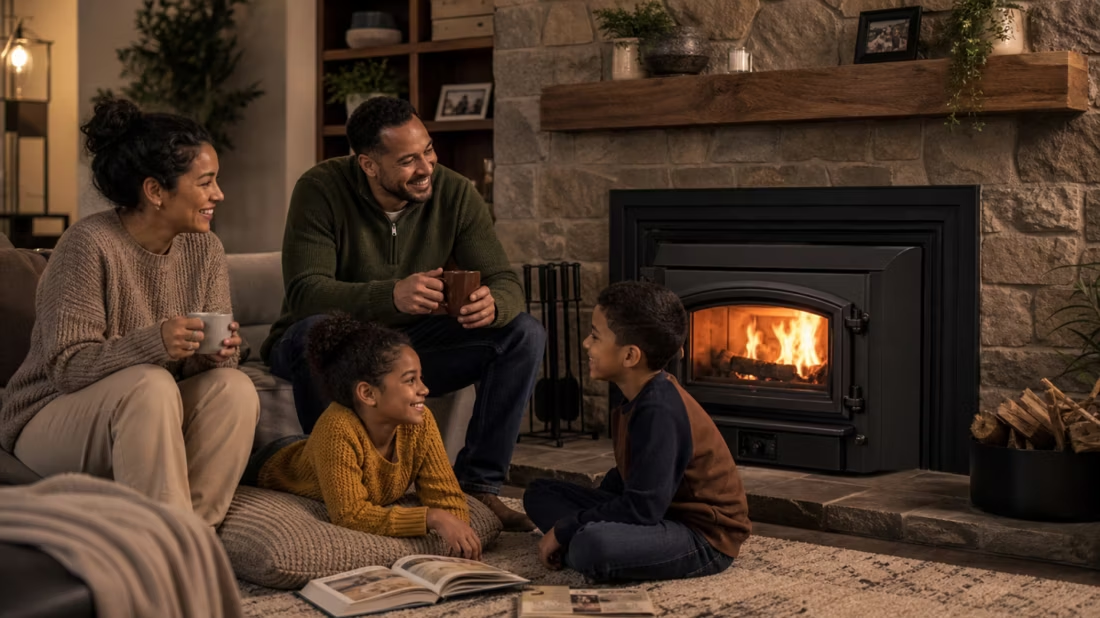
Four fuels. One honest answer for Montréal Region.
Three steps. No salesperson until you're ready.
Tell us about your project
Your postal code, your situation, and the fuel you're leaning toward—or let the answers point you to one.
See what's actually available
The brands dealers within 100 miles genuinely carry—real options, never a catalog mirage.
Get your dealer & Project Guide
A trusted local dealer, plus the free Project Guide & Parts List that names every component of the job.
Frequently Asked Questions
Which fireplace fuel actually makes sense in the Montréal Region?
Wood and pellet stoves are the two fuels with genuinely deep roots here—sugar maple, yellow birch, American beech, and red oak are widely available and burn well through the region's long, humid winter, and pellet brands like Granules LG, Energex, and Trebio are stocked regionally. Electric fireplaces are common and practical, especially in condos and townhouses on the island where running a chimney isn't realistic. Gas is the outlier: Énergir's distribution network only reaches limited corridors of greater Montréal and the South Shore, so a gas fireplace here is worth checking for availability before you fall in love with a model, and propane is often the fallback where mains gas doesn't reach.
Do I need to register a wood stove if I live on the island of Montréal?
Yes. Montréal and several surrounding municipalities require wood-burning appliances to be registered with the municipal building department and certified to emit no more than 2.5 grams of fine particles per hour, which effectively means a modern EPA or CSA-certified stove or insert rather than an old uncertified unit. This isn't unusual paperwork—it's a routine step trusted local dealers handle for customers every week, and it's worth confirming before you buy rather than after installation. Older, uncertified stoves generally can't be installed or reinstalled under the current bylaw.
Is natural gas realistically available for a gas fireplace in this region?
Sometimes, but not everywhere, so it's worth checking early. Énergir's natural gas network covers parts of greater Montréal, the South Shore, and a few urban spines, but plenty of streets—especially in older neighborhoods and off-island municipalities—simply aren't served. If your address isn't on Énergir's network, a gas fireplace project usually shifts to a propane tank setup instead, which changes both the install cost and the fuel-supply logistics. A local dealer can tell you within minutes whether your street is served before you spend time picking out a unit.
What permits and inspections apply to a wood stove or insert installation here?
Installation has to follow the CSA B365 code, and you'll need a permit from your municipal building department regardless of which municipality you're in across the region. Most insurance companies also require a WETT inspection on wood-burning appliances before they'll issue or renew a policy, so budget for that as part of the project rather than an afterthought. If you're planning to cut your own firewood rather than buy it, a permit through the Ministère des Ressources naturelles et des Forêts covers cutting on public land. A good local dealer typically walks you through all three—municipal permit, WETT inspection, and bylaw registration if you're on the island—as part of a normal install.
What does a fireplace installation typically cost in the Montréal Region?
Costs shift with fuel type and how much venting or gas-line work is involved. Wood stove or insert installs typically run $4,500-$9,000 CAD, with a full new chimney pushing toward $14,000. Gas fireplaces, where Énergir service or propane is available, generally run $4,500-$11,000 depending on line work. Pellet stove or insert installs usually land around $4,500-$7,500. Electric fireplaces are the budget option at $200-$3,000 for the unit, plus $400-$1,200 in labor for anything beyond a simple plug-and-play placement. The region + fuel pages above break these numbers down further with local retailer pricing.
How does maintenance and seasonal timing work for wood and pellet stoves in a humid Montréal winter?
Sugar maple, yellow birch, American beech, and red oak all need proper seasoning—six months to a year split and stacked under cover—before they'll burn clean enough to meet the region's particulate limits, so buying or cutting wood in spring for the following winter is the smart move. Annual chimney sweeps and WETT inspections are best booked in late summer or early fall, before the first cold snap sends every sweep's calendar into overdrive. Pellet stoves need their hopper and venting cleaned on a regular schedule through the burning season, since a long Montréal winter means a pellet stove might run nearly continuously from November through March.
How many BTUs do I need in a fireplace?
Wrong question—and the industry's favorite way to confuse you. More BTUs isn't better if the fireplace cooks you out of the room you spent thousands to enjoy. Think in terms you can verify: how many square feet the unit heats, whether it's primary or backup heat, and whether you want it running overnight. Those three answers size a fireplace correctly every time.
Will we actually use a fireplace once we have one?
In my own home, the room with the fireplace has never been the same—it became the social hub. Game nights, holidays, date nights after the kids are down: the fire is where the house gathers. There's a reason people in this industry joke that we're really in the romance and entertainment business. You won't wonder whether you'll use it; you'll wonder how the room worked before.
What's the best fireplace for power outages?
Wood wins outright—no electricity, no moving parts, just fuel and a match, and a radiant stove keeps heating with the grid down for weeks. Gas is a close second: battery-backup ignition runs the fireplace fine without power (the blower stops, but radiant heat keeps coming). Pellet is the one to check carefully—most models need electricity for the auger and fans, so ask about battery backup.
What does it take to replace an existing fireplace?
Fireplaces are like icebergs—bigger behind the wall than in front of it. Replacement means removing the surrounding tile or stone (the finish material laps onto the fireplace face), pulling the old unit, setting the new one in the same enclosure, and re-finishing the wall. A hearth professional can determine what's behind your wall without demolition during an in-home preview.
Stove and Fireplace Dealers in Montréal Region
Listings include WhyFire partner dealers, dealers we have verified as authorized for the brands we recommend, and established local businesses that carry hearth products. Every listing shows which one it is. The ones marked Preferred run on WhyFire's software, so they can show you real pricing and book your appointment right here. No manufacturer pays for placement. How we verify dealers →
Nergiflex
Noréa Foyers Montréal
Foyer Universel Montreal Inc. (A.m.f.)
Alternatives
Confort Elite
Décor Chaleur Châteauguay
Thermopompes N & R Sol
Finition Belle-Flammes
Pro Du Foyer
Les Foyer Mirabel A.m.f.
Propane Plus Inc
Arta Boutik
Foyer-Gaz
Noeea Foyers Rive-Nord
Boutique Poêles & Foyers Rive-Nord
Napert Signature
Get matched with a trusted local dealer in the Montréal Region.
Pick your fuel below and we'll put together a free Project Guide & Parts List—the right unit, the vent kit it needs, and the local dealer we recommend for your project.
Find Your Fireplace →