
Built for Laurentian winters that drop to -19°C.
Mont-Tremblant sits at 257 metres in the Laurentides, where chalets and condos need heat that runs itself through long ski seasons. I'll match you with a trusted local dealer who knows what pellet appliances are actually available and installable near you, plus a free planning packet.
Every Project Starts From One of These Five Situations
Consistent heat without daily wood-stacking.
At 257 metres in the Laurentides, Mont-Tremblant runs a genuinely cold, long winter—average lows near -19°C put it in the same range as Québec City, and the heating season here stretches from October through April in most years. A lot of the housing stock is seasonal or semi-seasonal: ski condos, chalets, and cottages that sit empty for stretches during the week, which makes a heat source that can hold a steady temperature without a homeowner physically feeding a firebox every few hours genuinely useful, not just convenient.
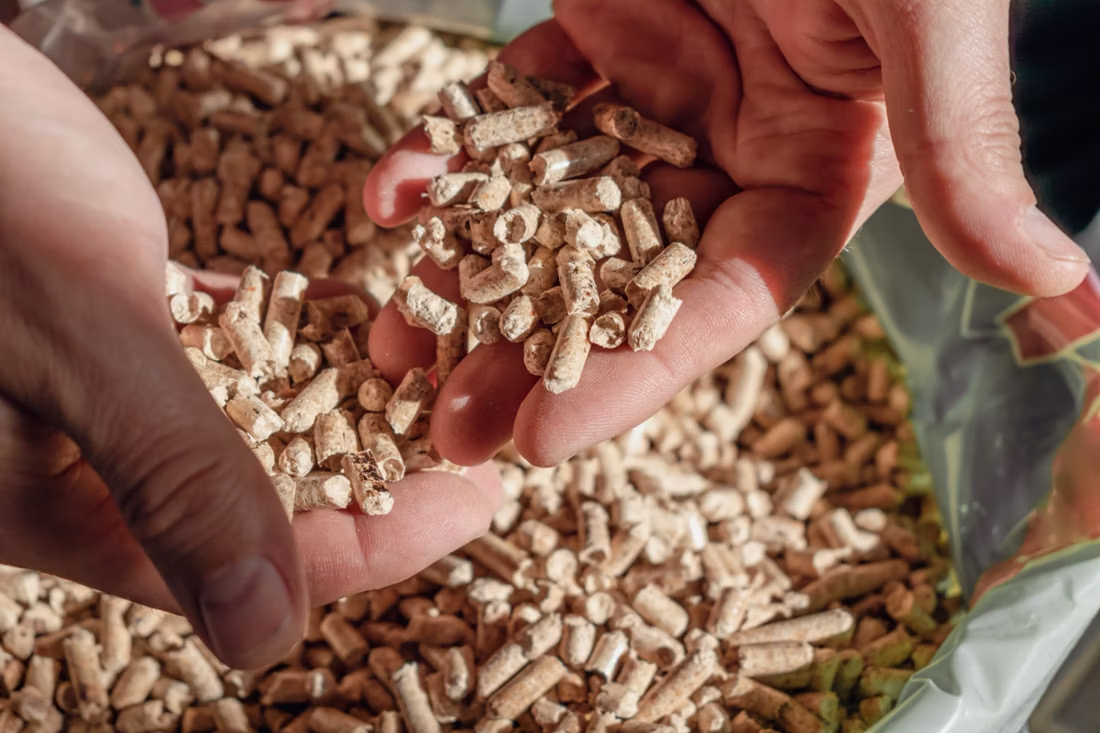
Pellet appliances fit that role well. Quebec is home to major pellet producers—Granules LG, Energex, and Trebio all supply the regional market—so fuel typically runs $400-$575 a ton and is easier to source locally than in provinces without domestic manufacturing. Natural gas through Énergir only reaches parts of the Laurentides corridor and rarely extends to Mont-Tremblant's more spread-out resort neighborhoods, so gas fireplaces are a rare fit here; pellet stoves and inserts end up filling the set-and-forget niche that gas handles in cities with fuller Énergir coverage.
Three steps. No salesperson until you're ready.
Tell us about your project
Your postal code, your situation, and the fuel you're leaning toward—or let the answers point you to one.
See what's actually available
The brands dealers within 100 miles genuinely carry—real options, never a catalog mirage.
Get your dealer & Project Guide
A trusted local dealer, plus the free Project Guide & Parts List that names every component of the job.
Frequently Asked Questions
How much does a pellet stove or insert cost to install in Mont-Tremblant?
Most installs here run $6,000 to $10,000. A freestanding pellet stove venting through an exterior wall on a hearth pad tends to land at the lower end, while a pellet insert replacing an existing wood-burning fireplace—common in the older chalets around the resort and the Village—costs more because of liner work and clearance checks. Homes needing a new electrical circuit for the auger and blower, or longer vent runs through thick log-home walls, should budget toward the top of that range.
What size pellet stove do I need for a chalet in Mont-Tremblant?
With winter lows averaging -19°C and Mont-Tremblant sitting in climate zone 7A, undersizing is the more common mistake. A stove rated for 1,000 to 1,500 square feet suits a smaller condo or secondary suite, but a full chalet or a home used as a primary residence usually needs a unit in the 1,800 to 2,500 square foot range to keep pace through a stretch of deep cold. A local dealer will size it against your actual ceiling height and how much of the home you're heating, not just the total square footage on the listing.
Do I need a permit to install a pellet stove in Mont-Tremblant?
Yes. Installation runs through the municipal building department and must meet the CSA B365 installation code. Most insurers in Quebec also want a WETT inspection completed before they'll cover a new solid-fuel appliance, pellet included, so it's worth booking that inspection as part of the same project rather than as an afterthought once your policy renewal comes up.
Where do I buy pellets in the Mont-Tremblant area?
Granules LG, Energex, and Trebio are the three brands most commonly stocked by hearth and hardware retailers across the Laurentides, typically running $400 to $575 a ton depending on the season and how early you order. Buying a season's supply in late summer, before the resort's autumn traffic picks up, usually gets better pricing and guarantees delivery before the roads get difficult. Plan on dry, covered storage—a garage or shed works, but a damp cellar will degrade pellets fast.
Should I get a pellet stove or a wood stove instead?
Sugar maple, yellow birch, American beech, and red oak are the wood species most local burners split, and permits through the Ministère des Ressources naturelles et des Forêts run about $1.85 per cubic metre up to a 22.5 cubic metre cap—cheap if you're willing to cut, split, and stack it yourself. A pellet stove skips all of that: no chainsaw, no wood shed, and a hopper that can run 24 to 40 hours on a fill, which matters if your Mont-Tremblant property sits empty during the week. The tradeoff is that pellet appliances need electricity to run the auger and blower, while a wood stove keeps working straight through a power outage.
Does it make more sense to just heat with electricity here?
Hydro-Québec's residential rate is genuinely cheap at about 7.8 cents a kWh, which is part of why baseboard heat and heat pumps are common as a home's primary system in the Laurentides. Where a pellet stove earns its keep is as a zone heater for the main living area or as backup during an outage—ski-season storms do knock out power in this region—provided you pair it with a battery backup for the igniter, auger, and blower, since a pellet unit won't run on its own during a blackout the way a wood stove will.
How much maintenance does a pellet stove need?
Plan on daily ash removal if you're running it hard through a Laurentian winter, a weekly cleaning of the burn pot and glass, and a full professional service once a year—ideally in September before ski season traffic makes it harder to book a technician. Neglecting the hopper and auger is the most common cause of mid-winter service calls, and a stove that quits during a -19°C cold snap in a seasonal chalet is a much bigger problem than one in a home someone checks on daily.
I only use my Mont-Tremblant property part-time—does a pellet stove still make sense?
It's one of the more common reasons owners choose pellet over wood here. Thermostatically controlled pellet stoves can hold a set temperature on their own, which matters for a chalet that sits unattended mid-week through a stretch of -19°C nights, protecting pipes and finishes without anyone splitting or feeding wood. Some models pair with remote monitoring so you can check hopper level and status before you drive up. The one thing to plan around is a power outage while the unit is unattended, which is why several owners add a small backup power source alongside it.
Why don't more homes in Mont-Tremblant use gas fireplaces?
Énergir's natural gas network only reaches parts of the Laurentides corridor, and it doesn't extend to most of Mont-Tremblant's resort neighborhoods and surrounding chalets, so gas is a genuinely rare fit here—not the default it is in cities on Énergir's main lines. Propane is the fallback for homeowners who specifically want a gas appliance, but it adds tank costs and delivery logistics. Pellet ends up being the more practical route to the same low-maintenance, thermostat-controlled heat that gas offers elsewhere in the province.
Why do fireplace quotes vary so much?
Because a fireplace is an iceberg—there's more behind the wall than in front of it. A low quote often covers only the unit; the full scope includes vent pipe, gas line or electrical, framing, and the tile or stone that has to come off and go back on. Make every bidder price the whole job. If a dealer can't speak to the full scope with confidence, that's your signal to keep looking.
Is it worth replacing an old fireplace that still sort of works?
Ask three questions: Is it ugly? Is it drafty? Does it actually work? Most old fireplaces fail at least two. Beyond looks, an old unit leaks air around the damper year-round and—if it's gas with a standing pilot—quietly burns a couple hundred dollars a year. A modern replacement seals the wall, heats the room, and changes how the whole space gets used.
What's the difference between an insert and a zero-clearance fireplace?
An insert is a fireplace that slides into a pre-existing wood-burning fireplace—if you don't have one, there's nothing to insert it into. A zero-clearance fireplace is built into a framed wall, which makes it the answer for remodels and new construction. Simple test: existing masonry fireplace means insert; blank or framed wall means zero-clearance.
How often does a pellet stove need cleaning?
A clean pellet stove is a happy pellet stove. Plan on cleaning the burn pot about once a week when you're burning regularly—ash and clinkers gum up the air holes just like a pellet barbecue. Most pellet stove problems trace back to skipped cleaning that nobody explained up front. Some designs make it easy with a trapdoor burn pot: pull a lever and the gunk drops into the ash pan.
Nearby Dealers
Hearth shops serving Mont-Tremblant and the surrounding area. Every listing shows whether it is a WhyFire partner, a dealer we have verified as authorized for the brands we recommend, or a local business carrying hearth products. No manufacturer pays for placement. How we verify dealers →
Foyers Braizo
Poeles Et Foyers Saint-Sauveur
Boutique Poêles & Foyers Rive-Nord
Les Foyer Mirabel A.m.f.
Pellet Brands Stocked Around Mont-Tremblant
Typical price runs $400-$575 per ton—buy early-season for the best rates. Manufacturers will point you to the nearest stocking dealer.
Granules Lg
Trebio
Get your free Project Guide & Parts List for a Mont-Tremblant pellet project.
Tell me about your chalet or home and how often you're on-site, and I'll match you with a trusted local dealer and send a free Project Guide & Parts List—sized for Laurentian winters, with the vent kit and parts specified.
Find Your Fireplace →