
Steady, thermostat-style heat for winters that settle in at -15.9°C.
Lorraine sits in Lanaudière at 64 metres elevation, where a five-month heating season and Hydro-Québec's low electricity rates shape how homes stay warm. I'll match you with a trusted local dealer who knows what's actually installable on your street, and send a free planning packet.
Every Project Starts From One of These Five Situations
Consistent heat without the splitting and stacking.
Lorraine falls in climate zone 6A, with winter lows averaging -15.9°C and a heating season that runs a solid five months—not the brutal stretch you'd find in Saguenay or Val-d'Or, but still enough cold to make a hands-off heat source worth having. Sugar maple, yellow birch, American beech, and red oak are the hardwoods that have heated Lanaudière homes for generations, and plenty of Lorraine households still split and stack for a wood stove. But a growing number are switching to pellet for the same warmth without the wood lot, the chainsaw, or the annual trip to an MRNF cutting permit office.
Quebec-made pellets from Granules LG, Energex, and Trebio typically run $400 to $575 a ton and are widely stocked at hearth and hardware retailers across the region, so fuel supply isn't the issue it can be with cordwood. The bigger local calculus is electricity: Hydro-Québec's residential rate of about 7.8 cents per kWh is among the lowest in North America, which is why so many Lorraine homes run electric baseboard as their primary heat and add a pellet stove for the ambiance, the even room-to-room warmth, and a hedge against the kind of prolonged outage this region remembers well from the 1998 ice storm. Natural gas through Énergir reaches part of the area, but pellet remains the more common wood-adjacent choice for homeowners who want real heat output without a chimney full of cordwood.
Three steps. No salesperson until you're ready.
Tell us about your project
Your postal code, your situation, and the fuel you're leaning toward—or let the answers point you to one.
See what's actually available
The brands dealers within 100 miles genuinely carry—real options, never a catalog mirage.
Get your dealer & Project Guide
A trusted local dealer, plus the free Project Guide & Parts List that names every component of the job.
Frequently Asked Questions
How much does a pellet stove installation cost in Lorraine?
Most installations run $6,000 to $10,000, which covers the stove or insert, the vent kit, and the labour to run it through an exterior wall or existing chimney chase. A freestanding pellet stove venting through a wall in a home without a chimney tends to land in the middle of that range. An insert dropping into an existing masonry fireplace—common in Lorraine's older bungalows and split-levels—can come in lighter since the chimney chase already exists. Your municipal building department will require a permit either way, and most dealers handling Lorraine projects fold that into the quote.
Pellet stove or wood stove—which makes more sense for a Lorraine home?
Both work here, but they suit different households. A wood stove burning sugar maple or yellow birch cut under an MRNF permit (about $1.85 per cubic metre, capped at 22.5 cubic metres) costs less to fuel long-term and needs no electricity to run—a real advantage if Hydro-Québec goes down in an ice storm. A pellet stove trades that fuel-cost edge for a cleaner burn, a thermostat you can actually set and walk away from, and no splitting or stacking. If you already have a wood lot or don't mind hauling cordwood, wood wins on cost. If convenience and consistent heat matter more, pellet is the easier fit for most Lorraine lots, which tend to be smaller than the rural properties where wood heat is most practical.
What permits or inspections does a pellet stove need in Lorraine?
You'll need a permit from the municipal building department before installation, and the work itself needs to meet the CSA B365 installation code. Insurers commonly ask for a WETT inspection on solid-fuel appliances, including pellet stoves, before they'll add the unit to your homeowner's policy—it's worth booking that inspection as soon as the project wraps up rather than waiting for your renewal to come up and finding out you need one.
Will a pellet stove still work if the power goes out?
Not without backup. Pellet stoves rely on an electric auger to feed fuel and a blower to distribute heat, so a Hydro-Québec outage shuts them down unless you've got a battery backup or a small generator wired in—a real consideration in a region that still remembers how long the lights stayed off during the 1998 ice storm. If outage resilience is the priority, a wood stove burning local sugar maple or beech is the more storm-proof choice; if it's daily convenience and clean, adjustable heat, pellet is hard to beat and a battery backup closes most of the gap.
What pellet brands are actually available near Lorraine?
Granules LG, Energex, and Trebio are the three brands you'll see stocked most consistently at hearth shops and hardware retailers across Lanaudière, typically priced $400 to $575 a ton. All three are made in Quebec, which keeps supply reliable even during the high-demand stretch from December through February. Buying a few tons early in the fall, before the coldest weeks hit and prices tend to firm up, is standard practice for a lot of Lorraine households.
What size pellet stove do I need for a Lorraine home?
With winter lows averaging -15.9°C and a heating season that runs from roughly late October to March, most Lorraine main living areas do well with a pellet stove rated for 1,500 to 2,000 square feet, which covers an open-concept main floor without overheating it on milder days. Smaller units under 1,000 square feet suit a bungalow living room or a supplemental setup where electric baseboard is still doing most of the work. A local dealer will size it against your actual layout and insulation rather than square footage alone, since an older Lorraine home behaves differently than new construction.
Is a pellet stove cheaper to run than electric baseboard heat?
It depends on the winter and the price of pellets that year. Hydro-Québec's residential rate of roughly 7.8 cents per kWh is genuinely inexpensive by Canadian standards, so electric baseboard isn't the budget-killer it is in other provinces. Pellet, at $400 to $575 a ton, tends to win on cost when you're heating a specific zone hard—a main living area, say—rather than an entire home evenly. Most Lorraine homeowners we hear from run pellet as a zone heater for the rooms they live in most and let baseboard handle the rest, rather than trying to replace whole-home electric heat outright.
Do pellet stoves have to meet the same emission rules as wood stoves in this area?
Several municipalities in the greater Montreal region, following the City of Montreal's lead, now require wood-burning appliances to be registered and certified to emit no more than 2.5 grams of fine particles per hour. Pellet stoves are inherently low-emission and virtually always meet that bar without modification, so this is more of a paperwork step than a design constraint—a good local dealer handles the registration as a routine part of the project rather than something you need to chase down yourself.
How much maintenance does a pellet stove need?
Plan on emptying the ash pan every few days during heavy use and a deeper clean of the burn pot, hopper, and exhaust vent every one to two weeks depending on pellet quality. A full annual service, checking the auger motor, blower, and venting, is worth scheduling in early fall before the season's first cold snap, since fall is also when Lorraine dealers are least backed up. Sticking with a quality Quebec pellet like Granules LG or Energex, rather than a cheaper import with more ash content, cuts down on how often you're cleaning.
Why do fireplace quotes vary so much?
Because a fireplace is an iceberg—there's more behind the wall than in front of it. A low quote often covers only the unit; the full scope includes vent pipe, gas line or electrical, framing, and the tile or stone that has to come off and go back on. Make every bidder price the whole job. If a dealer can't speak to the full scope with confidence, that's your signal to keep looking.
Is it worth replacing an old fireplace that still sort of works?
Ask three questions: Is it ugly? Is it drafty? Does it actually work? Most old fireplaces fail at least two. Beyond looks, an old unit leaks air around the damper year-round and—if it's gas with a standing pilot—quietly burns a couple hundred dollars a year. A modern replacement seals the wall, heats the room, and changes how the whole space gets used.
Are pellet stoves loud?
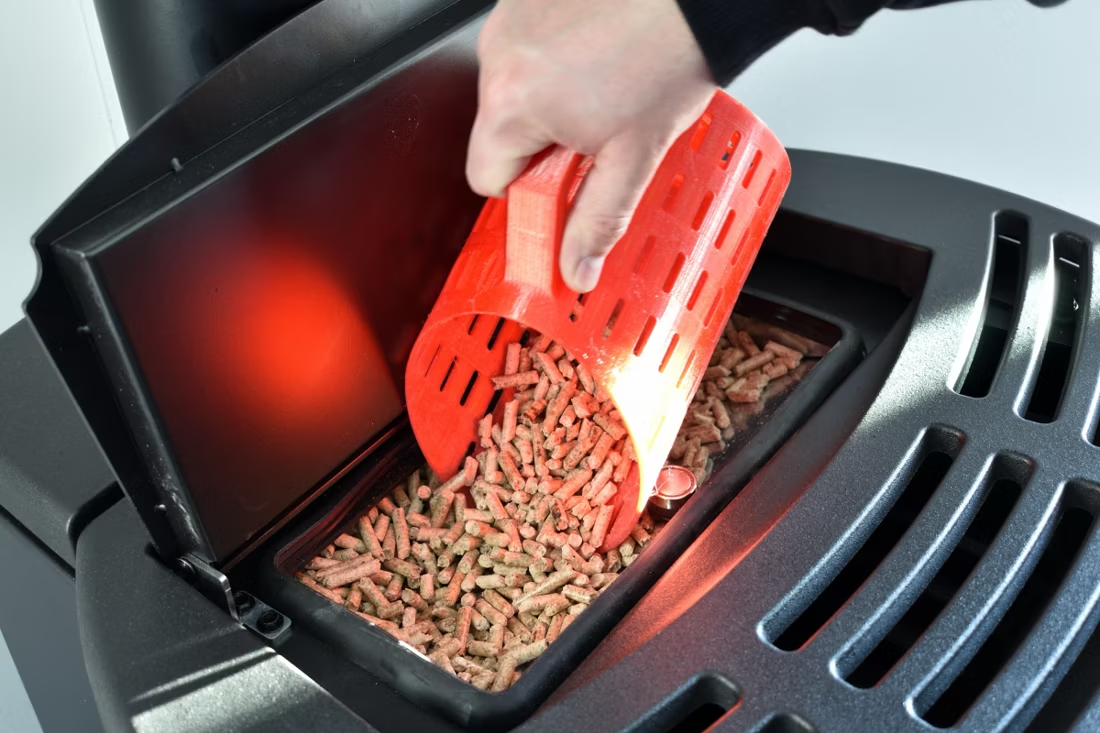
They make some noise—there are two fans running plus an auger motor that turns as it feeds pellets. But there's a real range: premium models are engineered quiet, and the best offer a whisper-quiet mode you can comfortably watch TV next to. If noise matters in your room, ask to hear a stove running before you buy—it's a five-minute test that saves years of annoyance.
Can a pellet stove heat a whole house?
It genuinely can. I burned a pellet stove as my only heat source for years after a furnace died, and it kept the entire house warm. Pellets feed automatically from a hopper, so you get wood-heat economics with thermostat-style control. Two honest caveats: it needs weekly cleaning during the season, and most models need electricity to run—ask about battery backup if outages are a concern.
Nearby Dealers
Hearth shops serving Lorraine and the surrounding area. Every listing shows whether it is a WhyFire partner, a dealer we have verified as authorized for the brands we recommend, or a local business carrying hearth products. No manufacturer pays for placement. How we verify dealers →
Finition Belle-Flammes
Boutique Poêles & Foyers Rive-Nord
Noeea Foyers Rive-Nord
Pro Du Foyer
Les Foyer Mirabel A.m.f.
Arta Boutik
Propane Plus Inc
Foyer Universel Montreal Inc. (A.m.f.)
Le Ramoneur Du Foyer
Décor Chaleur Laurentides Inc
Noréa Foyers Montréal
Nergiflex
Confort Elite
Alternatives
Cheminées Sam-Alex Inc.
Pellet Brands Stocked Around Lorraine
Typical price runs $400-$575 per ton—buy early-season for the best rates. Manufacturers will point you to the nearest stocking dealer.
Granules Lg
Trebio
Get your free Project Guide & Parts List for a Lorraine pellet stove.
Tell me about your home and how you currently heat it, and I'll match you with a trusted local dealer and send a free Project Guide & Parts List with the exact vent kit and parts your project needs.
Find Your Fireplace →