
Steady pellet heat on a remote stretch of the North Shore.
Havre-Saint-Pierre sits on the Côte-Nord at just 12 metres above sea level, where winter lows average -18.8°C and the heating season runs close to seven months. Énergir's gas lines don't reach this far up the coast, so I'll match you with a trusted local dealer who knows what pellet equipment actually gets delivered, serviced, and kept running out here.
Every Project Starts From One of These Five Situations
A coastal village that runs on electricity, wood, and pellets—not gas.
Havre-Saint-Pierre is a village of about 3,460 people strung along the Gulf of St. Lawrence, far enough up Côte-Nord that Énergir's natural gas network—which barely extends past greater Montréal and a few served corridors on the south shore—never gets close. That leaves this stretch of coast running almost entirely on Hydro-Québec electricity and solid fuel. At an average winter low of -18.8°C and a heating season stretching close to seven months, the climate here plays more like Thunder Bay or Winnipeg than like southern Quebec, and the wind off the Gulf makes the cold cut harder than the thermometer alone suggests.
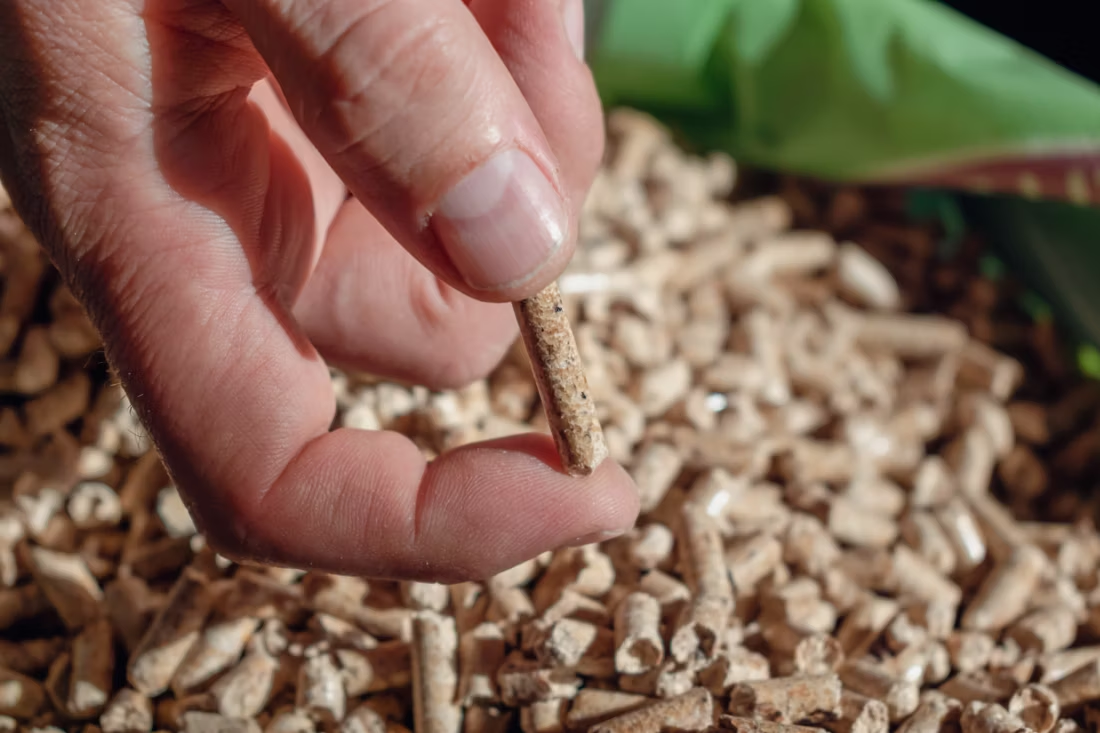
Pellet stoves have become the practical middle ground between electric baseboards and a full wood-burning setup here. Regional brands like Granules LG, Energex, and Trebio run $400-$575 CAD a ton, and freight up the North Shore tends to push a Havre-Saint-Pierre household toward the top of that range, which is why most local burners order their season's supply early rather than risk a winter delivery gap. Compared to cutting wood under a Ministère des Ressources naturelles et des Forêts permit—about $1.85 per cubic metre up to 22.5 m3—a pellet stove trades the splitting, stacking, and hauling for a hopper you fill every day or two, which matters in a village where households are often older or juggling long work rotations. Hydro-Québec's residential rate of about 7.8 cents a kilowatt-hour keeps straight electric heat cheap here, but a pellet stove still earns its keep as backup heat and real ambient warmth on the nights a Gulf storm knocks the power out.
Three steps. No salesperson until you're ready.
Tell us about your project
Your postal code, your situation, and the fuel you're leaning toward—or let the answers point you to one.
See what's actually available
The brands dealers within 100 miles genuinely carry—real options, never a catalog mirage.
Get your dealer & Project Guide
A trusted local dealer, plus the free Project Guide & Parts List that names every component of the job.
Frequently Asked Questions
How much does a pellet stove installation cost in Havre-Saint-Pierre?
Most installs here run $6,000 to $10,000 CAD. Because most homes on this stretch of Côte-Nord heat with electric baseboards rather than an existing masonry fireplace, a lot of installs need a full through-wall vent kit and a new hearth pad, which lands toward the middle to upper end of that range. A freestanding unit going into a home that already has a suitable hearth location costs less; a first-time install in a home built entirely around electric heat, with wiring and structural work to sort out, runs higher.
Do I need a permit to install a pellet stove in Havre-Saint-Pierre?
Yes. The municipal building department handles the building permit, and the installation has to follow the CSA B365 code, same as any solid-fuel appliance in Quebec. Most insurers here also want a WETT-certified inspection on file before they'll cover a pellet stove, even though pellets burn cleaner than cordwood—it's worth asking your dealer to arrange the inspection as part of the install rather than chasing it down afterward.
Where do I actually buy pellets in Havre-Saint-Pierre?
Granules LG, Energex, and Trebio are the three brands that circulate most widely across Quebec, and they're what local dealers typically stock or can order in. Given how far freight has to travel up the North Shore, expect pricing toward the top of the $400-$575 CAD per ton range rather than the provincial low end, and plan to order your season's supply in September or October—waiting until January to restock is a real risk here if a storm disrupts deliveries along Route 138.
Will a pellet stove still heat my home if the power goes out?
Not on its own—pellet stoves need electricity to run the auger and combustion blower, which is a real consideration on a coastline that loses power during Gulf storms more often than the rest of the province. Some models accept a small battery backup or generator connection that can carry the stove through a short outage; ask your dealer about this specifically if outages are a concern. Households here who want heat that works with zero electricity typically keep a wood stove or fireplace as the true backup and use pellets for daily convenience.
Pellet stove or wood stove—which makes more sense here?
Wood is the more traditional choice on this coast, and species like sugar maple, yellow birch, and red oak burn well, with cutting permits available through the Ministère des Ressources naturelles et des Forêts for about $1.85 per cubic metre up to 22.5 m3 a year. But it means splitting, stacking, and hauling wood through a heating season that runs nearly seven months. A pellet stove skips that labour, feeds itself automatically, and burns cleaner, which is why a lot of households moving away from purely electric heat choose pellets first and add a wood appliance later, if at all.
What size pellet stove do I need for a Havre-Saint-Pierre home?
With winter lows averaging -18.8°C and cold snaps that go well past that once the wind off the Gulf is factored in, most main living areas here call for a mid-size to large pellet stove in the 1,800 to 2,800 square foot rating rather than a small supplemental unit. Homes relying on electric baseboards as primary heat and hoping the pellet stove meaningfully cuts their Hydro-Québec bill during the coldest stretch of winter should size toward the top of that range rather than the bottom.
How often does a pellet stove need cleaning and servicing here?
Given how many months of the year a pellet stove runs in this climate, plan on cleaning the burn pot and glass weekly during peak winter and scheduling a full professional service—hopper, auger, venting, and exhaust fan—once a year, ideally before the season starts in September or October rather than after the first cold snap when local technicians are hardest to reach on short notice.
Is natural gas an option for a fireplace in Havre-Saint-Pierre?
Realistically, no. Énergir's distribution network is concentrated around greater Montréal and a handful of served corridors elsewhere in the province, and it doesn't extend up the Côte-Nord to Havre-Saint-Pierre. Propane is technically an alternative fuel path for a gas-style fireplace, but it has to be trucked in and stored locally, which adds cost and complexity most homeowners here decide isn't worth it compared to a pellet stove running on fuel that's already being shipped up the coast for other households.
Are there rebates for switching from electric baseboard to a pellet stove?
Provincial and Hydro-Québec efficiency programs periodically offer incentives for heating upgrades, though availability and terms change year to year, so it's worth asking your local dealer what's currently active before you buy. Because Hydro-Québec's residential rate here is only about 7.8 cents a kilowatt-hour, the financial case for switching is less about cutting your power bill and more about backup heat and comfort during the coldest, windiest stretches of the Côte-Nord winter.
Why do fireplace quotes vary so much?
Because a fireplace is an iceberg—there's more behind the wall than in front of it. A low quote often covers only the unit; the full scope includes vent pipe, gas line or electrical, framing, and the tile or stone that has to come off and go back on. Make every bidder price the whole job. If a dealer can't speak to the full scope with confidence, that's your signal to keep looking.
Is it worth replacing an old fireplace that still sort of works?
Ask three questions: Is it ugly? Is it drafty? Does it actually work? Most old fireplaces fail at least two. Beyond looks, an old unit leaks air around the damper year-round and—if it's gas with a standing pilot—quietly burns a couple hundred dollars a year. A modern replacement seals the wall, heats the room, and changes how the whole space gets used.
What does it take to replace an existing fireplace?
Fireplaces are like icebergs—bigger behind the wall than in front of it. Replacement means removing the surrounding tile or stone (the finish material laps onto the fireplace face), pulling the old unit, setting the new one in the same enclosure, and re-finishing the wall. A hearth professional can determine what's behind your wall without demolition during an in-home preview.
Why is my open fireplace making my house colder?
Open fireplaces suck—literally. As the fire burns, it consumes air your furnace already paid to heat and pulls it out through the chimney, so the house is actually colder after the fire goes out than before you lit it. An insert fixes this: it seals the chimney, puts fixed glass across the front, and turns that hole in your house into a real heat source.
Nearby Dealers
Hearth shops serving Havre-Saint-Pierre and the surrounding area. Every listing shows whether it is a WhyFire partner, a dealer we have verified as authorized for the brands we recommend, or a local business carrying hearth products. No manufacturer pays for placement. How we verify dealers →
Benoit Vigneault
Propane Lavoie Inc
Pellet Brands Stocked Around Havre-Saint-Pierre
Typical price runs $400-$575 per ton—buy early-season for the best rates. Manufacturers will point you to the nearest stocking dealer.
Granules Lg
Trebio
Get your free Project Guide & Parts List for a Havre-Saint-Pierre pellet stove.
Tell me about your home and your current heat source, and I'll match you with a trusted local dealer who can help with your pellet project—sized right for the Côte-Nord's long winters, with the vent kit and parts specified and freight timing worked out in advance.
Find Your Fireplace →