
Automated heat built for Laurentides winters that fall past -21°C.
Ferme-Neuve sits at 219 metres in the Laurentides, where winter lows average -21.1°C across a heating season that runs six months or more. I'll match you with a trusted local dealer who knows what pellet hardware and venting actually work on your street.
Every Project Starts From One of These Five Situations
Heat that loads itself through a long Laurentides winter.
Ferme-Neuve is a small, rural municipality in the Laurentides region, climate zone 7A, with an average winter low of -21.1°C and a heating season that stretches from October well into April—comparable to what Saguenay or Val-d'Or households manage most winters. At just over 2,100 residents spread across a wide rural footprint, mains natural gas from Énergir does not reach this far north; Énergir's Quebec network is concentrated around greater Montréal and a few urban corridors, so for a town like Ferme-Neuve, gas is essentially off the table and the real choice is between wood, pellet, and electric baseboard heat.
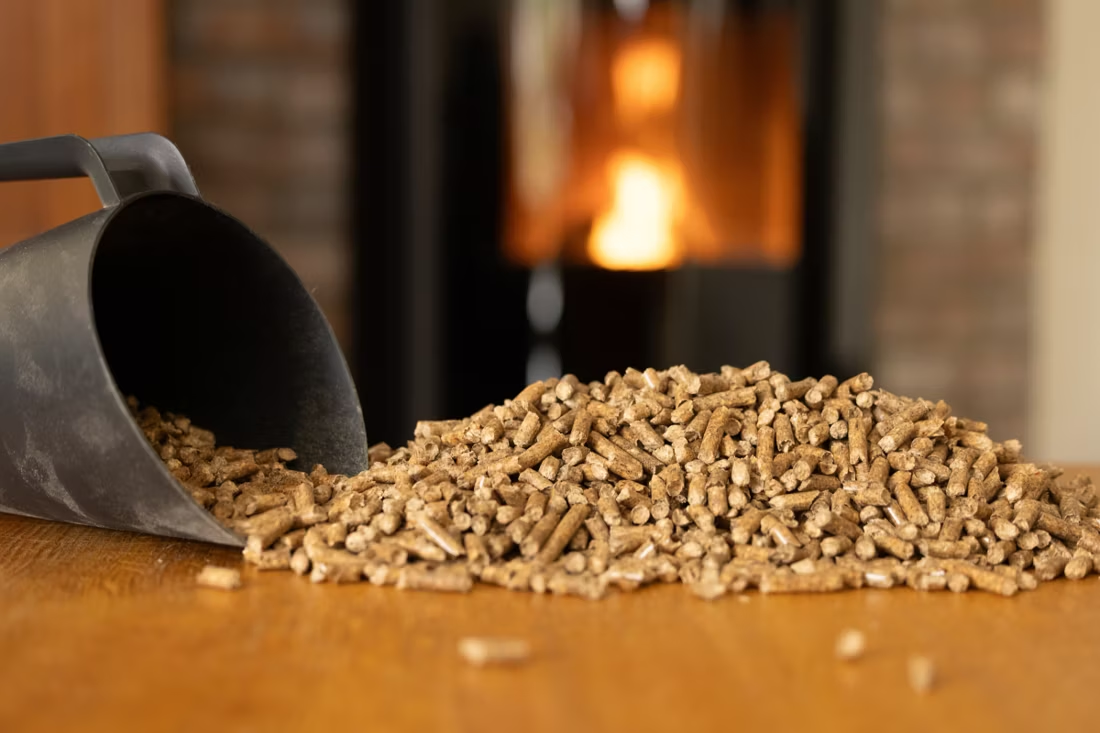
Sugar maple, yellow birch, American beech, and red oak all grow locally and are cut under Ministère des Ressources naturelles et des Forêts (MRNF) permits for about $1.85 per cubic metre plus taxes, up to 22.5 m3 a season—plenty of wood-burning households here split their own. Pellet appliances offer the same steady heat without the splitting, stacking, or daily reloading: Granules LG, Energex, and Trebio are all Quebec-made pellet brands sold within reach of the Laurentides, typically running $400 to $575 a tonne. With Hydro-Québec electricity priced around 7.8 cents a kilowatt-hour, plenty of Ferme-Neuve homes already run baseboard heat as a backbone—a pellet stove or insert works well alongside that as a lower-cost, lower-effort supplement to the wood-burning traditions many households already keep.
Three steps. No salesperson until you're ready.
Tell us about your project
Your postal code, your situation, and the fuel you're leaning toward—or let the answers point you to one.
See what's actually available
The brands dealers within 100 miles genuinely carry—real options, never a catalog mirage.
Get your dealer & Project Guide
A trusted local dealer, plus the free Project Guide & Parts List that names every component of the job.
Frequently Asked Questions
How much does a pellet stove installation cost in Ferme-Neuve?
Most pellet installs here run $6,000 to $10,000 CAD, with the spread coming down to venting. A pellet insert dropping into an existing masonry firebox—common in older Ferme-Neuve homes built with a wood fireplace as the original heat source—sits toward the low end. A freestanding pellet stove in a new location, needing fresh wall or roof venting and a hearth pad built from scratch, lands closer to the top. Your municipal building department will want a permit either way, and most dealers who help with projects this far into the Laurentides fold that into the quote.
What size pellet stove do I need for a Ferme-Neuve home?
With winter lows averaging -21.1°C and stretches that go colder during a hard January system off the Laurentian highlands, undersizing is the mistake to avoid. A stove rated for 1,200-1,800 square feet suits most Ferme-Neuve homes as a supplemental heat source alongside electric baseboards; if you're planning to lean on it as a primary heat source through the coldest months, size up toward the 2,000+ square foot rating so it can run a long, steady burn without emptying the hopper twice a day. A local dealer will check your actual insulation and ceiling height rather than going off square footage alone.
Do I need a permit to install a pellet stove in Ferme-Neuve?
Yes. New installations go through your municipal building department, and the work itself has to meet the CSA B365 code. Most insurers in Quebec also want a WETT inspection on file before they'll cover a new wood or pellet appliance, so it's worth booking one as part of the project rather than after the fact—a dealer who regularly helps with pellet installs in the Laurentides will usually know which inspectors serve this area.
Where do I buy pellets near Ferme-Neuve?
Granules LG, Energex, and Trebio are the three brands most commonly stocked by dealers and hardware suppliers serving the Laurentides, and all three are manufactured in Quebec, so supply doesn't depend on trucking fuel in from Ontario or further. Expect to pay roughly $400 to $575 CAD a tonne depending on the season and how early you buy—like most of rural Quebec, prices firm up as fall approaches, so buying your season's supply in late summer is the common local habit.
Pellet stove or wood stove—which makes more sense in Ferme-Neuve?
Wood is the traditional choice here, and it's a practical one: sugar maple, yellow birch, and red oak are all cut locally under Ministère des Ressources naturelles et des Forêts (MRNF) permits for around $1.85 per cubic metre, and a well-seasoned load costs less than a season of pellets. But wood means splitting, stacking, and feeding a firebox by hand through a long Laurentides winter. A pellet stove automates that—load the hopper every day or two instead of every few hours—at the cost of needing electricity to run the auger and blower. Plenty of Ferme-Neuve households end up keeping a wood stove for outage backup and adding a pellet unit for daily convenience.
I already have electric baseboard heat. Why add a pellet stove?
Hydro-Québec's residential rate, around 7.8 cents a kilowatt-hour, makes electric baseboard heat genuinely affordable compared to most of the country, and a lot of Ferme-Neuve homes run on it as their main system. A pellet stove doesn't replace that so much as concentrate heat where you actually live—most households add one in the main living area to take the edge off during the coldest stretches and keep the baseboards from running flat out, which can meaningfully soften a winter hydro bill even at Quebec's low rates.
Will my pellet stove still work during a power outage?
Not without a battery backup—the auger, igniter, and blower on a pellet stove all run on household current, which is a real consideration in a rural part of the Laurentides where ice storms and wind events do knock out power some winters. Many dealers can spec a battery backup unit that runs a pellet stove for several hours during an outage, but if outage resilience matters more than convenience, a wood stove that needs no electricity at all is worth keeping as a second heat source—a common setup in Ferme-Neuve homes that take winter power reliability seriously.
How much maintenance does a pellet stove need?
Plan on emptying the ash pan every few days during steady winter use and a full burn-pot and venting cleaning every one to two weeks depending on how many hours a day it runs. A professional service visit once a year, ideally before the season starts in September or October, checks the auger, gaskets, and exhaust fan—a lighter job than a wood chimney sweep, but skipping it is how a jammed auger or a dirty igniter shows up on the coldest night of the year.
Is natural gas an option for a fireplace in Ferme-Neuve instead of pellet?
Realistically, no. Énergir's natural gas network covers parts of greater Montréal and a handful of other urban corridors in Quebec, and Ferme-Neuve, well north into the Laurentides, isn't served. A gas fireplace here would mean a propane conversion with a tank on the property, which is a workable but different project with its own cost profile. For most Ferme-Neuve homes, pellet, wood, and electric are the three fuels that are actually installable, and pellet tends to win out for households that want automated heat without a mains gas line to depend on.
Why do fireplace quotes vary so much?
Because a fireplace is an iceberg—there's more behind the wall than in front of it. A low quote often covers only the unit; the full scope includes vent pipe, gas line or electrical, framing, and the tile or stone that has to come off and go back on. Make every bidder price the whole job. If a dealer can't speak to the full scope with confidence, that's your signal to keep looking.
Is it worth replacing an old fireplace that still sort of works?
Ask three questions: Is it ugly? Is it drafty? Does it actually work? Most old fireplaces fail at least two. Beyond looks, an old unit leaks air around the damper year-round and—if it's gas with a standing pilot—quietly burns a couple hundred dollars a year. A modern replacement seals the wall, heats the room, and changes how the whole space gets used.
Why is my open fireplace making my house colder?
Open fireplaces suck—literally. As the fire burns, it consumes air your furnace already paid to heat and pulls it out through the chimney, so the house is actually colder after the fire goes out than before you lit it. An insert fixes this: it seals the chimney, puts fixed glass across the front, and turns that hole in your house into a real heat source.
What's the difference between an insert and a zero-clearance fireplace?
An insert is a fireplace that slides into a pre-existing wood-burning fireplace—if you don't have one, there's nothing to insert it into. A zero-clearance fireplace is built into a framed wall, which makes it the answer for remodels and new construction. Simple test: existing masonry fireplace means insert; blank or framed wall means zero-clearance.
Nearby Dealers
Hearth shops serving Ferme-Neuve and the surrounding area. Every listing shows whether it is a WhyFire partner, a dealer we have verified as authorized for the brands we recommend, or a local business carrying hearth products. No manufacturer pays for placement. How we verify dealers →
Foyers Braizo
Poeles Et Foyers Saint-Sauveur
Boutique Poêles & Foyers Rive-Nord
Les Foyer Mirabel A.m.f.
Pellet Brands Stocked Around Ferme-Neuve
Typical price runs $400-$575 per ton—buy early-season for the best rates. Manufacturers will point you to the nearest stocking dealer.
Granules Lg
Trebio
Get your free Project Guide & Parts List for a Ferme-Neuve pellet install.
Tell me about your home and whether you're leaning toward a stove or an insert, and I'll match you with a trusted local dealer serving the Laurentides and send a free Project Guide & Parts List sized for -21°C winters, with the vent kit and parts specified.
Find Your Fireplace →