
Built for Lac-Saint-Jean winters that settle in below -20°C.
At 141 metres elevation with winters that average -21.6°C lows, Chambord relies on a heat source that doesn't quit. I'll match you with a trusted local dealer who knows what's actually installable in the Lac-Saint-Jean region, and send a free Project Guide & Parts List for your project.
Every Project Starts From One of These Five Situations
Consistent heat without babysitting a woodpile.
Chambord sits at the western edge of Lac Saint-Jean, at just 141 metres of elevation, but it isn't altitude that makes the winters demanding here—it's duration and depth. Average winter lows hit -21.6°C, and the region is known for stretches that go noticeably colder, on par with what Thunder Bay or Sudbury endure through their harshest months. For a village of under 2,000 people strung along the lakeshore and the old rail corridor, that kind of cold makes a dependable, budget-predictable heat source a practical need rather than a design choice.
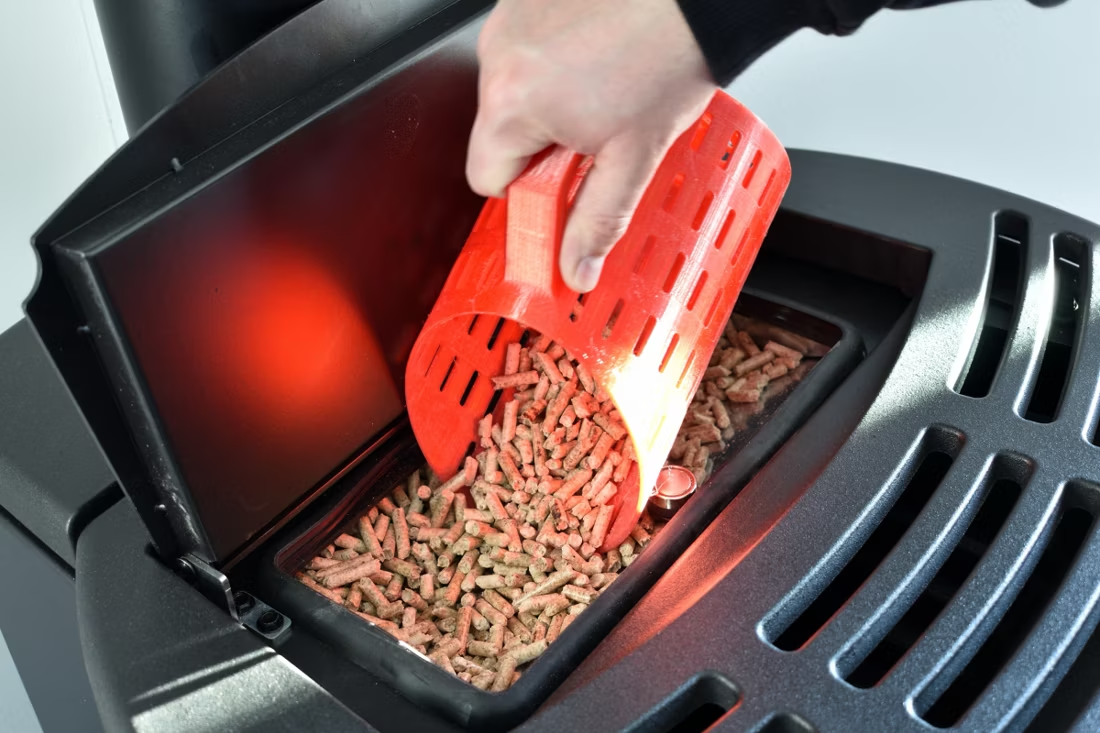
Pellet heat fits particularly well here because the fuel itself is local. Granules LG mills its pellets about 30 kilometres away in Saint-Félicien, with Energex and Trebio also supplying the region, so homeowners aren't paying to freight pellets in from southern Quebec or Ontario. Natural gas, by contrast, is a non-starter for most of Chambord—Énergir's network doesn't reach this far into Lac-Saint-Jean, which is part of why wood and pellet appliances, alongside Hydro-Québec's low-cost electricity, do the heavy lifting through the region's long, cold winters.
Three steps. No salesperson until you're ready.
Tell us about your project
Your postal code, your situation, and the fuel you're leaning toward—or let the answers point you to one.
See what's actually available
The brands dealers within 100 miles genuinely carry—real options, never a catalog mirage.
Get your dealer & Project Guide
A trusted local dealer, plus the free Project Guide & Parts List that names every component of the job.
Frequently Asked Questions
How much does a pellet stove installation cost in Chambord?
Most pellet stove and insert installations here run $6,000 to $10,000 CAD, with the low end covering a straightforward insert into an existing masonry firebox and the high end covering a freestanding unit that needs new wall or roof venting from scratch. Chambord's older homes near the village core often already have a chimney chase to reuse, which keeps costs down, while newer builds along the lakeshore sometimes need a full vent run through an exterior wall. Your municipal building department permit and any electrical work for the auger and blower circuit are typically folded into a local dealer's quote.
What size pellet stove do I need for a Chambord home?
With winter lows averaging -21.6°C and stretches that go colder still, this isn't a climate for an undersized unit. A stove rated for 1,200 to 2,000 square feet handles most Chambord homes as a primary or heavy-use secondary heat source, but a local dealer will size against your actual insulation and ceiling height rather than square footage alone. Homes here leaning on pellet heat through the coldest months, similar to what you'd see in Thunder Bay or Sudbury during a deep cold snap, generally do better sizing up than trying to stretch a small unit.
Do I need a permit to install a pellet stove in Chambord?
Yes. New installations go through the municipal building department, and the work must meet the CSA B365 installation code for solid-fuel appliances. Most insurers serving the Saguenay/Lac-Saint-Jean region also ask for a WETT inspection before they'll cover a wood-burning appliance, and many extend that expectation to pellet appliances with a hopper and auger system. A local dealer who installs regularly in the area will usually handle the paperwork and schedule the inspection as part of the job.
Where can I buy pellets near Chambord?
You're closer to pellet production than most of Canada. Granules LG mills its pellets in Saint-Félicien, roughly 30 kilometres from Chambord, and Energex and Trebio both distribute through the region as well. Expect to pay in the $400 to $575 per tonne range depending on brand and whether you buy bagged pellets or a bulk delivery, with local sourcing helping keep freight costs down compared to hauling pellets in from southern Quebec.
What's the difference between a pellet stove and a pellet insert?
A freestanding pellet stove sits on a hearth pad and vents through a wall or the roof with dedicated PL venting, which suits Chambord homes without an existing fireplace. A pellet insert slides into an existing masonry firebox and reuses the chimney chase, which is common in older village homes near the rail crossing where a wood fireplace was standard decades ago. Inserts generally land at the lower end of the $6,000-$10,000 range since less new venting is needed.
Will my pellet stove still work during a Hydro-Québec power outage?
Not without help. Unlike a wood stove, a pellet appliance needs electricity to run the auger and combustion blower, so a standard outage shuts it down. Ice storms and heavy snow loads do knock out power in this region from time to time, and many Chambord households pair their pellet stove with a small battery backup or generator for exactly that reason, or keep a wood stove or fireplace in the house as a no-power fallback.
Is natural gas available for a gas fireplace in Chambord instead?
Realistically, no. Énergir's distribution network reaches parts of greater Montréal, the south shore, and a handful of other urban corridors, but it doesn't extend into the Chambord area, so a natural gas fireplace here would mean running on propane rather than piped gas. That's part of why pellet and wood dominate home heating in Lac-Saint-Jean, and why most local dealers steer homeowners here toward pellet or electric options rather than gas.
How much maintenance does a pellet stove need through a Chambord winter?
Plan on emptying the ash pan every few days during steady winter burning and a deeper clean of the burn pot, exhaust fan, and venting once a season, ideally before the cold sets in around late September or early October. A stove running close to around-the-clock through a Lac-Saint-Jean winter puts more hours on the auger motor and igniter than one used only as backup, so an annual service check from your dealer is worth scheduling before the season's first real cold snap rather than after.
Wood or pellet—which makes more sense for a Chambord home?
Wood has deep roots here, with sugar maple, yellow birch, American beech, and red oak all common on regional woodlots, and an MRNF cutting permit runs about $1.85 per cubic metre plus taxes up to a 22.5 cubic metre maximum, which keeps fuel costs very low if you're willing to cut and split it yourself. Pellet trades that labour for convenience and cleaner, more consistent heat output, with fuel sourced close to home through Granules LG in Saint-Félicien. Many households in the region keep a wood stove or fireplace as backup for outages and run pellet day to day for the lower-maintenance, steadier burn.
Why do fireplace quotes vary so much?
Because a fireplace is an iceberg—there's more behind the wall than in front of it. A low quote often covers only the unit; the full scope includes vent pipe, gas line or electrical, framing, and the tile or stone that has to come off and go back on. Make every bidder price the whole job. If a dealer can't speak to the full scope with confidence, that's your signal to keep looking.
Is it worth replacing an old fireplace that still sort of works?
Ask three questions: Is it ugly? Is it drafty? Does it actually work? Most old fireplaces fail at least two. Beyond looks, an old unit leaks air around the damper year-round and—if it's gas with a standing pilot—quietly burns a couple hundred dollars a year. A modern replacement seals the wall, heats the room, and changes how the whole space gets used.
What's the difference between an insert and a zero-clearance fireplace?
An insert is a fireplace that slides into a pre-existing wood-burning fireplace—if you don't have one, there's nothing to insert it into. A zero-clearance fireplace is built into a framed wall, which makes it the answer for remodels and new construction. Simple test: existing masonry fireplace means insert; blank or framed wall means zero-clearance.
How often does a pellet stove need cleaning?
A clean pellet stove is a happy pellet stove. Plan on cleaning the burn pot about once a week when you're burning regularly—ash and clinkers gum up the air holes just like a pellet barbecue. Most pellet stove problems trace back to skipped cleaning that nobody explained up front. Some designs make it easy with a trapdoor burn pot: pull a lever and the gunk drops into the ash pan.
Nearby Dealers
Hearth shops serving Chambord and the surrounding area. Every listing shows whether it is a WhyFire partner, a dealer we have verified as authorized for the brands we recommend, or a local business carrying hearth products. No manufacturer pays for placement. How we verify dealers →
Bmr Saint-Prime – Nutrinor Quincailleries
Bmr Saint-Bruno – Nutrinor Quincailleries
Bmr Saint-Cœur-de-Marie – Nutrinor Quincailleries
Rénomax Mistassini
Bmr Normandin – Nutrinor Quincailleries
Ventil-Air 2001 Inc
Maçonnex (Saguenay)
Pellet Brands Stocked Around Chambord
Typical price runs $400-$575 per ton—buy early-season for the best rates. Manufacturers will point you to the nearest stocking dealer.
Granules Lg
Trebio
Get your free Project Guide & Parts List for a Chambord pellet project.
Tell me about your home and I'll match you with a trusted local dealer serving Lac-Saint-Jean, then send a free Project Guide & Parts List sized for -21.6°C winter lows, with the vent kit and parts specified.
Find Your Fireplace →