
Real heat for pennies on Hydro-Québec power.
Chambord sits in climate zone 7A on the shore of Lac Saint-Jean, where winter lows average -21.6°C. At $0.078 per kWh, Hydro-Québec electricity is among the cheapest in the country, which makes an electric insert or fireplace a genuinely practical heat source here, not just a glow in the corner. I'll match you with a local dealer who can size one for your home.
Every Project Starts From One of These Five Situations
Cheap power changes the math on electric heat.
Chambord is a small lakeside community in Saguenay/Lac-Saint-Jean, and its winters are no joke: climate zone 7A puts it in the same severe-cold territory as Fort McMurray, with an average winter low of -21.6°C and a heating season that runs six months or more. Most homes here already lean on electric baseboard as their primary system, plus wood stoves burning the region's abundant sugar maple, yellow birch, American beech, and red oak. Natural gas barely factors in—Énergir's distribution network is partial across Quebec and doesn't extend meaningfully into small Lac-Saint-Jean communities like Chambord, so gas fireplaces are a rare and often impractical request out here.
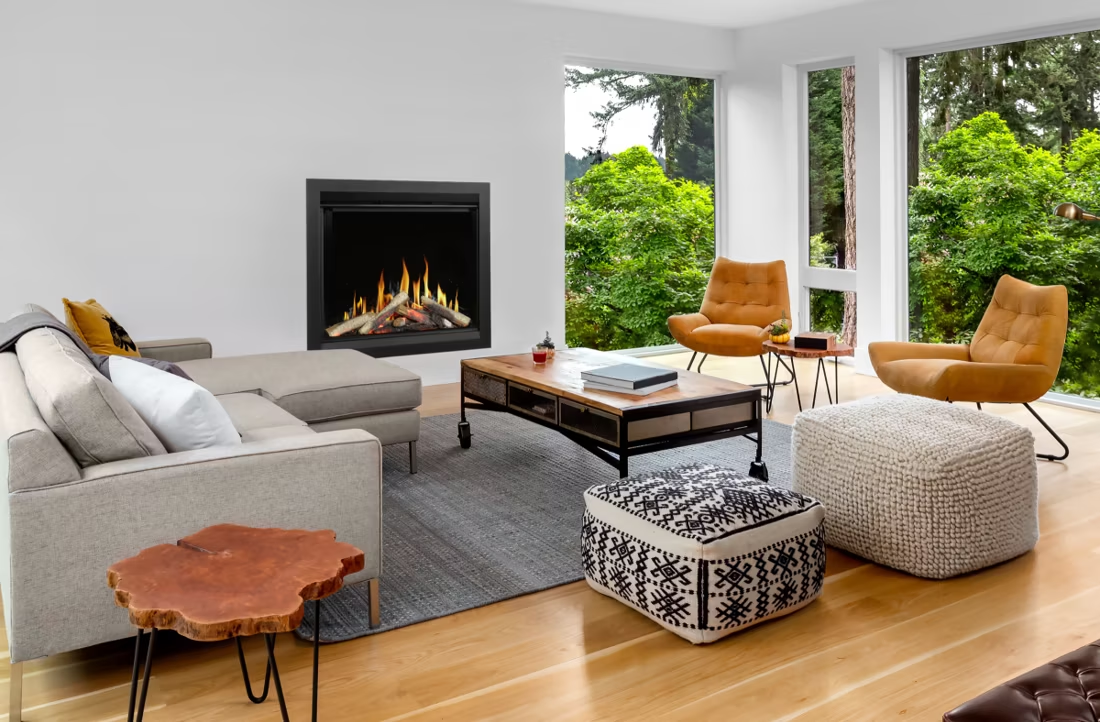
That's exactly where electric fireplaces earn their keep. Because Hydro-Québec residential rates sit around $0.078 per kWh—a fraction of what electricity costs in most other provinces—running an electric insert as zone heat in a bedroom, basement, or rec room isn't the budget compromise it is elsewhere in Canada. It won't replace a wood stove or your baseboard system on the coldest nights, but as supplemental heat with no chimney, no wood to split, and a simple electrical hookup, it's a genuinely sensible fit for a Chambord household looking to add warmth to one room without touching the furnace.
Three steps. No salesperson until you're ready.
Tell us about your project
Your postal code, your situation, and the fuel you're leaning toward—or let the answers point you to one.
See what's actually available
The brands dealers within 100 miles genuinely carry—real options, never a catalog mirage.
Get your dealer & Project Guide
A trusted local dealer, plus the free Project Guide & Parts List that names every component of the job.
Frequently Asked Questions
How much does it cost to install an electric fireplace in Chambord?
Most installs run $500 to $1,600 CAD. A plug-in insert or wall-mount unit on a standard 120-volt outlet sits at the low end—often a same-day job. Larger built-in units that need a dedicated 240-volt circuit run higher, mainly for the electrician's time running new wire from the panel. Because there's no chimney, no gas line, and no combustion venting to plan around, electric is consistently the least expensive fireplace project a Chambord homeowner can take on, and it's a fraction of the $6,000-$12,000 a wood install typically runs.
With Hydro-Québec rates this low, does an electric fireplace actually help with heating, or is it just ambiance?
It can genuinely help. At roughly $0.078 per kWh, running a 1,500-watt electric insert for several hours a day costs a fraction of what the same unit would cost in Ontario or Alberta. It won't out-heat a wood stove burning seasoned sugar maple on a -21.6°C night, but as targeted heat for a bedroom over the garage, a finished basement, or a room your baseboards struggle to keep warm, it's cheap enough to run daily rather than just for looks. Most local dealers will walk you through the wattage-to-room-size math so you know what to expect before you buy.
Do I need a permit for an electric fireplace insert in Chambord?
For a plug-in unit on an existing outlet, generally no. If your installer is running a new dedicated circuit or upgrading your panel for a larger built-in unit, that electrical work typically needs to meet code and pass inspection through your municipal building department, and a licensed electrician handles that as part of the job. It's a much simpler process than the WETT inspection and CSA B365 requirements that apply to wood-burning installs—one of the practical reasons electric appeals to homeowners who want to avoid extra paperwork.
Is natural gas a realistic alternative to electric in Chambord?
Not really. Énergir's gas network covers only parts of Quebec, concentrated around Montréal, the south shore, and a handful of urban corridors—it doesn't reach a small Lac-Saint-Jean community like Chambord. A gas fireplace here would mean a propane conversion with its own tank and delivery logistics, which is a bigger commitment than most homeowners want for a secondary heat source. Between the region's cheap Hydro-Québec power and the local wood supply, electric and wood cover the vast majority of Chambord installs, and gas stays a rare, special-case request.
How does an electric fireplace compare to a wood stove for Chambord's winters?
Wood remains the backbone of home heating for a lot of Chambord households, and for good reason: sugar maple, yellow birch, and red oak are all locally available hardwoods that burn hot and long, which matters through a winter averaging -21.6°C. A wood stove or insert typically runs $6,000-$12,000 installed and can serve as primary heat. An electric fireplace, by contrast, costs a fraction of that, needs no wood stacked and no chimney swept, and works well as secondary heat in a room away from the main wood stove or furnace. Many homes here end up with both—wood for the bulk of the season, electric for convenience in a room that doesn't get its share of the wood heat.
What happens to an electric fireplace if the power goes out?
It stops working, full stop—no flame, no heat, since it's entirely dependent on Hydro-Québec's grid. Ice storms and heavy snow loads do knock out power in Lac-Saint-Jean from time to time, so an electric fireplace should never be your only backup heat plan. Most Chambord homeowners who install one keep a wood stove or insert elsewhere in the house as the fallback for extended outages, and rely on the electric unit for everyday convenience the rest of the time.
What size electric insert makes sense for a Lac-Saint-Jean cottage or rec room?
For a finished basement rec room or a lakeside cottage bedroom in the 150-300 square foot range, a standard 1,400 to 1,500-watt insert or wall-mount unit is usually plenty, especially paired with existing baseboard heat for backup. Larger open-concept spaces, or a cottage you're trying to keep comfortable through a full Chambord winter rather than just weekend use, may call for a bigger built-in unit on its own circuit. A local dealer can size it against your actual square footage and insulation rather than guessing off a box label.
How long does an electric fireplace last, and what maintenance does it need?
A well-built electric insert typically lasts 10 to 15 years with essentially no maintenance—no chimney to sweep, no gaskets to replace, no annual burner service like a gas unit needs. The main wear items are the heating element and the LED flame effect, both of which are straightforward for a dealer to replace if they eventually fail. Dusting the vents and keeping it free of debris is about the extent of the upkeep most Chambord owners ever do.
Can an electric fireplace be installed before winter sets in?
Yes, and it's one of the easier fireplace projects to schedule quickly. Unlike a wood or gas install, there's no chimney construction, no venting run, and often no permit wait—a plug-in or simple hardwired unit can typically go in within a week or two of ordering, even late in the fall when other Chambord installers are backed up with wood stove and chimney work ahead of the cold.
How much does an electric fireplace cost to run?
With the heater on, a typical unit draws about 1,500 watts—at average electric rates that's roughly 20 cents an hour. Run the flame effect alone and it costs pennies; the flames are LED-driven and use about as much power as a light bulb. There's no pilot light, no fuel delivery, and essentially no maintenance.
What fireplace styles should I know before shopping?
Four cover most of the market: screen-front traditional (mesh front, open feel, fits craftsman homes), traditional door set (the classic look you grew up with), modern linear (wide, low, the statement piece for entertaining), and clean face contemporary (no trim—your tile or stone runs right to the fire's edge). Walk in knowing those four terms and you're ahead of most buyers.
Do electric fireplaces actually produce heat?
Yes—most put out around 4,800–5,000 BTUs from a standard outlet, which comfortably warms a bedroom, office, or den as a comfort-zone heater. What they won't do is carry a whole house the way wood, gas, or pellet can. Think of electric as ambiance-first with honest supplemental heat: flames on with no heat in July, flames plus warmth in January.
Does an electric fireplace need a vent or chimney?
No—that's its superpower. An electric fireplace needs a wall and an outlet, period. No vent pipe, no gas line, no clearances to design around, which is why it works in bedrooms, offices, apartments, and walls where venting a gas or wood unit would be impractical or impossible. Installation is typically the simplest and least expensive of any fireplace type.
Nearby Dealers
Hearth shops serving Chambord and the surrounding area. Every listing shows whether it is a WhyFire partner, a dealer we have verified as authorized for the brands we recommend, or a local business carrying hearth products. No manufacturer pays for placement. How we verify dealers →
Bmr Saint-Prime – Nutrinor Quincailleries
Bmr Saint-Bruno – Nutrinor Quincailleries
Bmr Saint-Cœur-de-Marie – Nutrinor Quincailleries
Rénomax Mistassini
Bmr Normandin – Nutrinor Quincailleries
Ventil-Air 2001 Inc
Maçonnex (Saguenay)
Electric Service in Chambord
An electric fireplace's heater draws about 1,500 watts—pennies per hour at local rates.
Hydro-Québec
Get your free Project Guide & Parts List for a Chambord electric fireplace.
Tell me about your home and where you want the heat, and I'll match you with a local dealer and send a free Project Guide & Parts List—sized for your room and your panel, with the parts your project actually needs.
Find Your Fireplace →