
Steady heat through Saguenay/Lac-Saint-Jean's coldest nights.
With winter lows averaging -21.1°C and a climate zone 7A season that runs from October into April, homes here need heat that keeps working without constant tending. I match homeowners across the region with a local dealer who knows which pellet stove holds a steady burn through that cold and can put together a free Project Guide & Parts List for your project.
Every Project Starts From One of These Five Situations
A forestry region where pellets are made close to home.
Saguenay/Lac-Saint-Jean stretches from the fjord communities around Saguenay up through Alma, Dolbeau-Mistassini, Roberval, and Saint-Félicien, home to roughly 257,000 people across a landscape built on forestry and hydroelectric power. It's one of the colder inhabited regions in southern Canada—climate zone 7A, winter lows that average -21.1°C, and a heating season closer in length and severity to Fort McMurray, AB than to Montréal. Sugar maple, yellow birch, American beech, and red oak all grow in the surrounding forests and support a strong wood-burning tradition, but pellet appliances have taken hold in a lot of homes here for a simple reason: an automated hopper feed and thermostat control mean consistent heat overnight without getting up to reload a firebox at 3 a.m. in January.
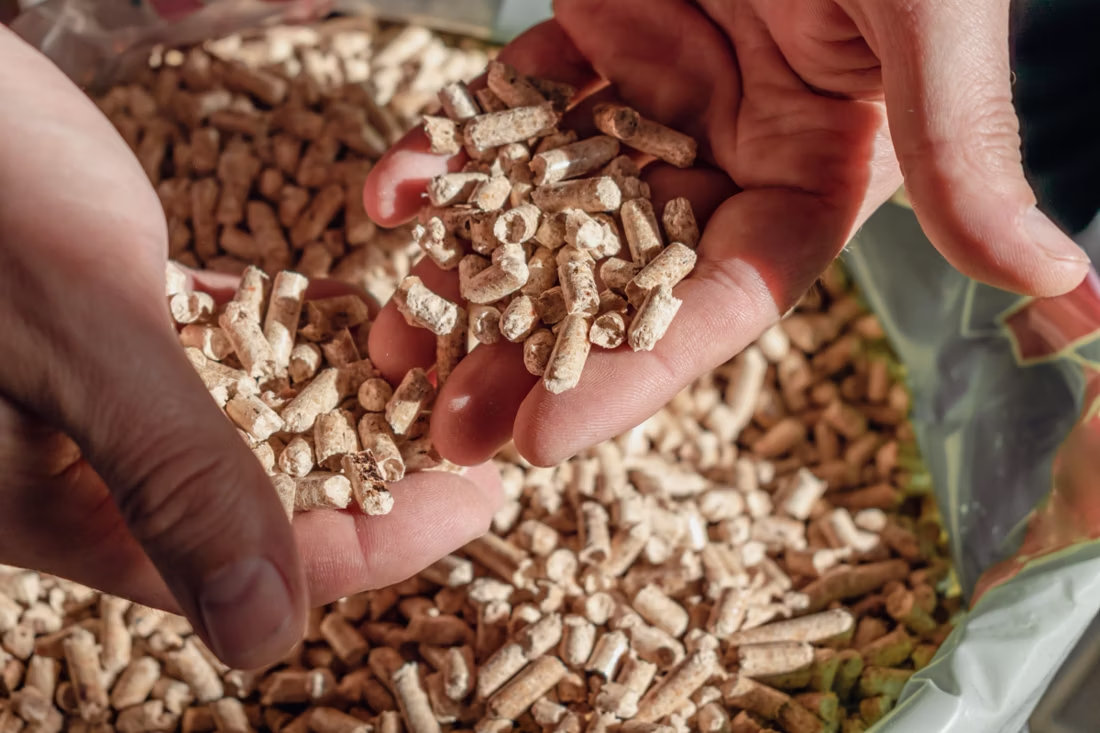
Part of what makes pellet heat practical here is that the fuel is regional, not imported. Granules LG, Energex, and Trebio all mill pellets from Quebec forestry byproduct, and local supply keeps typical pricing in the $400-$575 per ton range without the freight premium some other provinces pay. Natural gas service through Énergir only reaches limited corridors of the region, so gas fireplaces remain a rare fit for most Saguenay/Lac-Saint-Jean addresses—pellet and wood do the heavy lifting instead. Any installation still needs to meet the CSA B365 code and go through the municipal building department, and most insurers will ask for a WETT inspection before they'll cover a new pellet or wood appliance, so it's worth having a local dealer handle that paperwork as part of the job rather than as an afterthought.
Three steps. No salesperson until you're ready.
Tell us about your project
Your postal code, your situation, and the fuel you're leaning toward—or let the answers point you to one.
See what's actually available
The brands dealers within 100 miles genuinely carry—real options, never a catalog mirage.
Get your dealer & Project Guide
A trusted local dealer, plus the free Project Guide & Parts List that names every component of the job.
Frequently Asked Questions
How much does a pellet stove installation cost in Saguenay/Lac-Saint-Jean?
Most installations across the region run $6,000 to $10,000 CAD. A pellet insert going into an existing masonry fireplace, using the chimney as part of the vent run, tends to land on the lower end. A freestanding pellet stove in a home with no existing chimney—common in newer builds around Alma or Saint-Félicien—costs more once you factor in a through-wall vent kit and a proper hearth pad for clearance. Homes farther out toward Dolbeau-Mistassini or the Lac-Saint-Jean shoreline may see a small travel charge added by installers based in Saguenay proper.
What size pellet stove do I need for a home in this climate?
Zone 7A and an average winter low of -21.1°C mean you're sizing for real cold, not just occasional cold snaps. A stove rated for 1,200-2,000 square feet covers most main living areas in a typical Saguenay or Alma home with standard insulation, but a poorly insulated older farmhouse near Roberval or a home exposed to open wind off Lac-Saint-Jean may need to size up. Undersizing means the stove runs at full output all winter and still can't keep pace on the coldest nights; oversizing means it cycles on and off more than it should. A local dealer sizing this in person, room by room, gets it right the first time.
Do I need a permit to install a pellet stove here?
Yes. New installations go through your municipal building department, whether that's Saguenay, Alma, or one of the smaller municipalities around Lac-Saint-Jean, and the work has to meet the CSA B365 installation code. Most local dealers pull this permit as part of the job rather than leaving it to the homeowner. Separately, plan on a WETT inspection once the stove is in—most home insurers in the region require one before they'll add coverage for a new pellet or wood-burning appliance, and it's a quick step a dealer who does this regularly can schedule alongside the install.
Where do I get pellets, and what does a ton cost?
Because Saguenay/Lac-Saint-Jean sits in the heart of Quebec's forestry belt, pellets don't have to travel far. Granules LG, Energex, and Trebio are the regional brands most local dealers and hardware suppliers stock, and typical pricing runs $400 to $575 per ton depending on brand and whether you buy bagged or bulk. A home burning pellets as primary heat through the full season here can go through 3 to 5 tons, so buying early in fall, before the coldest stretch drives up demand, is a common local habit.
Pellet stove or wood stove—which makes more sense for my home?
Both are well suited to this region. Wood is the lower-cost option if you're willing to cut your own—the Ministère des Ressources naturelles et des Forêts issues personal-use cutting permits for about $1.85 per cubic metre plus taxes, up to 22.5 cubic metres, valid April 1 to March 31 with regional harvest windows—and sugar maple, yellow birch, American beech, and red oak all burn well and are common on permit-eligible land. Pellet stoves cost a bit more per season in fuel but deliver steadier, thermostat-controlled heat without splitting or stacking, which is why they've become popular in newer homes and among households who want to leave a stove running unattended overnight. Many households here end up with one of each: wood for the cabin or as backup, pellet for the main living space.
Will a pellet stove still work if the power goes out?
Not on its own. Pellet stoves rely on an electric auger and blower to feed fuel and move heat, so a power outage stops the stove even with a full hopper. Winter storms and ice events do knock out power in parts of the region, particularly in rural stretches around Lac-Saint-Jean, so if outage risk is a real concern for your household, ask your dealer about a battery backup unit sized for a pellet stove, or pair the pellet stove with a wood-burning backup that needs no electricity at all.
Is gas a realistic alternative to pellet heat here?
Not for most homes. Énergir's natural gas network only reaches limited corridors of Saguenay/Lac-Saint-Jean, so gas fireplaces remain a rare fit across the region—typically only an option if your street already happens to be served, or if you're set up for a propane conversion. Pellet and wood remain the practical, widely available choices for most addresses here, which is part of why regional pellet brands like Granules LG and Energex have such a strong local footprint.
How often does a pellet stove need cleaning and maintenance?
Plan on emptying the ash pan every few days during heavy winter use and a full burn-pot and venting cleaning every few weeks, since a long season here means more hours of burn time than milder parts of the province. A professional inspection and deeper clean once a year, ideally before the season starts in October, keeps the auger, hopper, and exhaust fan running properly through the coldest months. Skipping maintenance is the most common reason a pellet stove underperforms exactly when you need it most, in January and February.
Are there rebates available for switching to pellet heat in Quebec?
Provincial programs aimed at more efficient home heating change from year to year, so it's worth checking current offerings through Transition énergétique Québec or your municipality before you buy, rather than assuming a specific rebate applies. A local dealer who installs pellet systems regularly in the region usually knows what's currently available and can tell you whether your planned stove and installation would qualify.
Why do fireplace quotes vary so much?
Because a fireplace is an iceberg—there's more behind the wall than in front of it. A low quote often covers only the unit; the full scope includes vent pipe, gas line or electrical, framing, and the tile or stone that has to come off and go back on. Make every bidder price the whole job. If a dealer can't speak to the full scope with confidence, that's your signal to keep looking.
Is it worth replacing an old fireplace that still sort of works?
Ask three questions: Is it ugly? Is it drafty? Does it actually work? Most old fireplaces fail at least two. Beyond looks, an old unit leaks air around the damper year-round and—if it's gas with a standing pilot—quietly burns a couple hundred dollars a year. A modern replacement seals the wall, heats the room, and changes how the whole space gets used.
Can a pellet stove heat a whole house?
It genuinely can. I burned a pellet stove as my only heat source for years after a furnace died, and it kept the entire house warm. Pellets feed automatically from a hopper, so you get wood-heat economics with thermostat-style control. Two honest caveats: it needs weekly cleaning during the season, and most models need electricity to run—ask about battery backup if outages are a concern.
What does it take to replace an existing fireplace?
Fireplaces are like icebergs—bigger behind the wall than in front of it. Replacement means removing the surrounding tile or stone (the finish material laps onto the fireplace face), pulling the old unit, setting the new one in the same enclosure, and re-finishing the wall. A hearth professional can determine what's behind your wall without demolition during an in-home preview.
Stove and Fireplace Dealers in Saguenay/Lac-Saint-Jean
Listings include WhyFire partner dealers, dealers we have verified as authorized for the brands we recommend, and established local businesses that carry hearth products. Every listing shows which one it is. The ones marked Preferred run on WhyFire's software, so they can show you real pricing and book your appointment right here. No manufacturer pays for placement. How we verify dealers →
Bmr Saint-Cœur-de-Marie – Nutrinor Quincailleries
Bmr Saint-Bruno – Nutrinor Quincailleries
Bmr Saint-Prime – Nutrinor Quincailleries
Rénomax Mistassini
Ventil-Air 2001 Inc
Maçonnex (Saguenay)
Bmr Normandin – Nutrinor Quincailleries
Pellet Brands Stocked Around Saguenay/Lac-Saint-Jean
Typical price runs $400-$575 per ton—buy early-season for the best rates. Manufacturers will point you to the nearest stocking dealer.
Granules Lg
Trebio
Get your free Project Guide & Parts List for a pellet stove in Saguenay/Lac-Saint-Jean.
Tell me about your home and how you plan to use the stove, and I'll match you with a local dealer who works in the region and send a free Project Guide & Parts List—the exact parts, including the vent kit, for your pellet heat project.
Find Your Fireplace →