
Steady heat for winters that hold below minus 15°C.
From Quebec City out to Charlevoix and Portneuf, pellet stoves deliver thermostat-controlled heat sourced from regional mills like Granules LG, Energex, and Trebio. I match homeowners here with a trusted local dealer who knows CSA B365 code and what a WETT inspection actually requires before the first cold snap.
Every Project Starts From One of These Five Situations
Automated fires built for a season that starts early and runs long.
Capitale-Nationale stretches from the urban core of Quebec City out through Portneuf, Charlevoix, and Île d'Orléans, and the climate across all of it sits in Zone 7A—a long, hard winter with lows averaging -16.7°C, roughly on par with Sudbury, Ontario. Hardwood forest covers much of the region: sugar maple, yellow birch, American beech, and red oak stands feed both the area's traditional wood-cutting culture and the regional pellet mills—Granules LG, Energex, and Trebio all draw on that same hardwood base to produce what's sold through local dealers. For a region of nearly 695,000 people split between dense city neighbourhoods and rural municipalities well outside any gas main, pellet stoves have become a practical middle ground: the automated, thermostat-fed heat of a modern appliance without the daily hands-on tending a wood stove demands.
Natural gas reaches only a limited part of Capitale-Nationale—Énergir's network covers a few pockets around Quebec City, but most of the region heats with electricity, wood, or pellet, and Hydro-Québec's low electricity rates keep baseboard heat as the default backup almost everywhere. That means pellet stoves compete mainly with wood and electric resistance heat here, not gas. Installations still fall under CSA B365 code through your municipal building department, and most insurers ask for a WETT inspection once the unit is in place—a routine step, not a red flag, and one a trusted local dealer schedules as part of a normal install rather than leaving for you to chase down.
Three steps. No salesperson until you're ready.
Tell us about your project
Your postal code, your situation, and the fuel you're leaning toward—or let the answers point you to one.
See what's actually available
The brands dealers within 100 miles genuinely carry—real options, never a catalog mirage.
Get your dealer & Project Guide
A trusted local dealer, plus the free Project Guide & Parts List that names every component of the job.
Frequently Asked Questions
How much does a pellet stove installation cost in Capitale-Nationale?
Across the region, from Quebec City out to Charlevoix and Portneuf, a pellet stove or insert installation typically runs $6,000-$10,000 CAD, installed. Where you land in that range depends on whether you're feeding an existing chimney with a liner, running new vent through an exterior wall, and whether the hearth pad needs updating to meet clearance requirements. Older homes in Old Quebec or Limoilou with existing masonry chimneys often sit toward the lower end once a stainless liner goes in; rural properties on Île d'Orléans or further into Charlevoix that need a fresh through-wall vent kit tend toward the upper end. A local dealer will quote a firm number after seeing the space.
What size pellet stove do I need for a home in Capitale-Nationale?
This is Zone 7A territory, with winter lows averaging -16.7°C and a heating season that starts in October and doesn't let go until April. A stove sized for a milder winter will run flat-out here and still lose ground on the coldest nights. Most Quebec City-area homes in the 1,200-2,000 sq ft range do well with a mid-size pellet stove matched to that footprint, but a property on higher ground toward Charlevoix or exposed to river wind along the Saint Lawrence may need to size up. A dealer familiar with local wind exposure and typical insulation levels can size it properly rather than going off a generic chart.
Do I need a permit to install a pellet stove in Capitale-Nationale?
Yes. Installation falls under your municipal building department, whether that's Ville de Québec or one of the smaller municipalities in Charlevoix or Portneuf, and the work has to meet CSA B365 installation code. Most established dealers pull the permit and handle the CSA B365 sign-off as part of the job. If you plan to insure the appliance, expect your insurer to ask for a WETT inspection on the finished install—that's standard practice across Quebec for wood-burning and pellet appliances, and a routine step a good local dealer schedules without you having to chase it down.
Where do pellets come from locally, and what should I expect to pay?
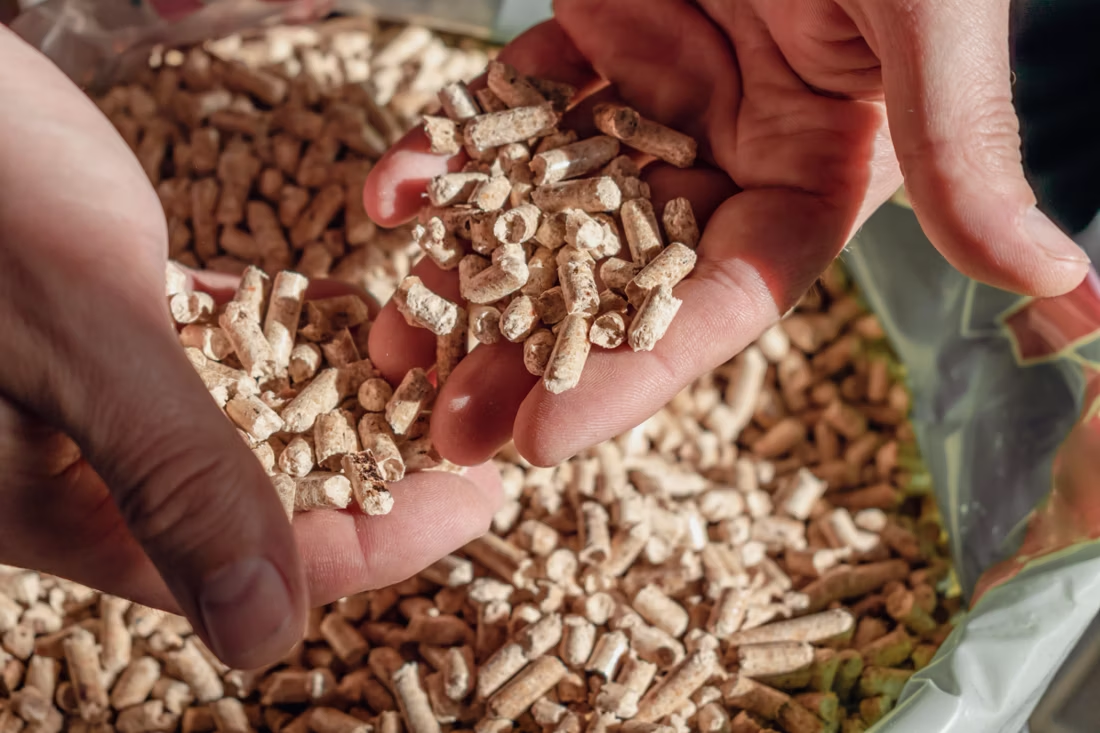
Regional mills including Granules LG, Energex, and Trebio supply most of what's sold through Capitale-Nationale dealers, with premium hardwood pellets currently running $400-$575 CAD per ton depending on brand and whether you're buying by the pallet or by the ton in bulk. A household burning a pellet stove as primary heat through a full Quebec City winter typically goes through 2 to 3 tons; buying early in the fall before demand peaks is a common way local homeowners keep costs down.
Pellet stove vs. wood stove—which fits Capitale-Nationale better?
Wood is deeply rooted here—sugar maple, yellow birch, American beech, and red oak all grow across the region, and the Ministère des Ressources naturelles et des Forêts issues personal cutting permits for about $1.85 per cubic metre plus tax, up to 22.5 cubic metres, valid April through March. That makes wood the cheaper fuel if you're willing to cut, split, and stack it. Pellet stoves trade that labour for convenience: load the hopper, set the thermostat, and the auger feeds itself for a day or more depending on the model, with far less creosote to manage. For a household without the time or land access for cutting, pellet is usually the easier long-term fit; for a rural property near Charlevoix forest with permit access, wood can still make financial sense.
Is natural gas a realistic option here instead of pellet?
Not really, for most of the region. Natural gas service in Capitale-Nationale is limited to a handful of served corridors around Quebec City—Énergir's distribution network doesn't reach most municipalities, and rural areas from Portneuf to Charlevoix generally have no gas main at all. That's a big reason wood, pellet, and electric baseboard heating on Hydro-Québec's low-cost power dominate home heating here rather than gas. If you're set on a gas appliance, check your street's service first—propane conversion is the fallback where mains gas isn't available—but for most homeowners in this region, pellet is the more realistic upgrade path from an old wood stove.
What maintenance does a pellet stove need through a Quebec City winter?
Plan on daily or every-other-day ash removal during heavy-use months, a monthly deep clean of the burn pot and glass, and a full professional service on the auger, exhaust fan, and gaskets at least once a year, ideally in September before the first cold snap. Homes running the stove as a primary heat source through the full -16.7°C stretch of winter put more hours on the auger motor and blower than a supplemental unit, so don't skip the annual service call—it's the difference between a stove that starts reliably in November and one that quits mid-January.
Do municipal bylaws in this region regulate pellet stoves the way Montreal regulates wood stoves?
Montreal's rule requiring registered, certified wood-burning appliances under 2.5 grams per hour of fine particulate emissions doesn't apply here, but several municipalities across Quebec, including some in the Capitale-Nationale region, have adopted similar registration requirements for wood-burning appliances as awareness of winter air quality has grown. Pellet stoves are effectively a non-issue on the emissions side—they typically burn well under that kind of threshold by design—but registration paperwork, if your municipality requires it, is something a local dealer handles routinely as part of the CSA B365 installation, not an extra hurdle you have to sort out yourself.
Will my pellet stove still work if the power goes out?
Not without help. Pellet stoves need electricity to run the auger and combustion blower, so a standard outage shuts the stove down even with a full hopper. Quebec has real experience with extended winter outages—the 1998 ice storm hit this part of the province hard—so it's worth asking your dealer about a battery backup or small inverter setup if outage risk concerns you. Households that want heat guaranteed through a multi-day outage often keep a wood stove or fireplace as backup alongside the pellet appliance, since wood needs no power at all to run.
Why do fireplace quotes vary so much?
Because a fireplace is an iceberg—there's more behind the wall than in front of it. A low quote often covers only the unit; the full scope includes vent pipe, gas line or electrical, framing, and the tile or stone that has to come off and go back on. Make every bidder price the whole job. If a dealer can't speak to the full scope with confidence, that's your signal to keep looking.
Is it worth replacing an old fireplace that still sort of works?
Ask three questions: Is it ugly? Is it drafty? Does it actually work? Most old fireplaces fail at least two. Beyond looks, an old unit leaks air around the damper year-round and—if it's gas with a standing pilot—quietly burns a couple hundred dollars a year. A modern replacement seals the wall, heats the room, and changes how the whole space gets used.
How often does a pellet stove need cleaning?
A clean pellet stove is a happy pellet stove. Plan on cleaning the burn pot about once a week when you're burning regularly—ash and clinkers gum up the air holes just like a pellet barbecue. Most pellet stove problems trace back to skipped cleaning that nobody explained up front. Some designs make it easy with a trapdoor burn pot: pull a lever and the gunk drops into the ash pan.
Why is a fireplace insert so efficient?
An insert does two things: it seals the chimney completely, so you stop losing air you already paid to heat, and it radiates warmth into the room through the firebox and glass. Most add a heat-exchange fan that pulls cool room air underneath, wraps it around the hot firebox, and pushes it back out warm. Your home is more efficient before you've even lit the first fire.
Stove and Fireplace Dealers in Capitale-Nationale
Listings include WhyFire partner dealers, dealers we have verified as authorized for the brands we recommend, and established local businesses that carry hearth products. Every listing shows which one it is. The ones marked Preferred run on WhyFire's software, so they can show you real pricing and book your appointment right here. No manufacturer pays for placement. How we verify dealers →
Gespro Poêles Et Foyers
Maçonnex (Québec)
Nova Energie Inc
Chemine, Poeles Et Foyer Quebec
Foyer Québec
Hubert's Fireplace Consultation + Design
Les Cheminées Gamelin
Services Propane Inc.
Propane Multi-Service Inc
A. Tremblay Et Frères
Pellet Brands Stocked Around Capitale-Nationale
Typical price runs $400-$575 per ton—buy early-season for the best rates. Manufacturers will point you to the nearest stocking dealer.
Granules Lg
Trebio
Get your free Project Guide & Parts List for a pellet stove in Capitale-Nationale.
Tell me about your home and how you plan to use the stove, and I'll match you with a trusted local Capitale-Nationale dealer and send a free Project Guide & Parts List—the exact parts, including the vent kit, for your pellet heat project.
Find Your Fireplace →