
Electric heat for a region already wired for it.
With winter lows averaging -16.7°C and a heating season that stretches from October into April, Capitale-Nationale already runs largely on electric baseboards fed by Hydro-Québec's inexpensive grid. An electric fireplace or insert fits right into that setup, no chimney, no gas line, no combustion permit. I'll match you with a trusted local dealer who can tell you what actually fits your wall, your panel, and your budget.
Every Project Starts From One of These Five Situations
Where electric heat already runs the show.
Capitale-Nationale runs from Quebec City along the St. Lawrence up through Charlevoix and into boreal territory near the Saguenay border, home to roughly 695,040 people living through a genuinely long winter. Climate zone 7A and heating stretches comparable to Thunder Bay, Ontario mean sub-freezing nights from October through April, with lows near -17°C on the coldest stretches. Most homes here already heat with electric baseboards or plinth heaters, a legacy of Hydro-Québec's cheap hydroelectric power, which makes an electric fireplace less of a novelty and more of a natural extension of how the region already heats. There is no gas line to run, no wood to split and stack, and no venting to plan for, which matters in older Quebec City buildings where chimney access is limited or restricted by heritage rules.
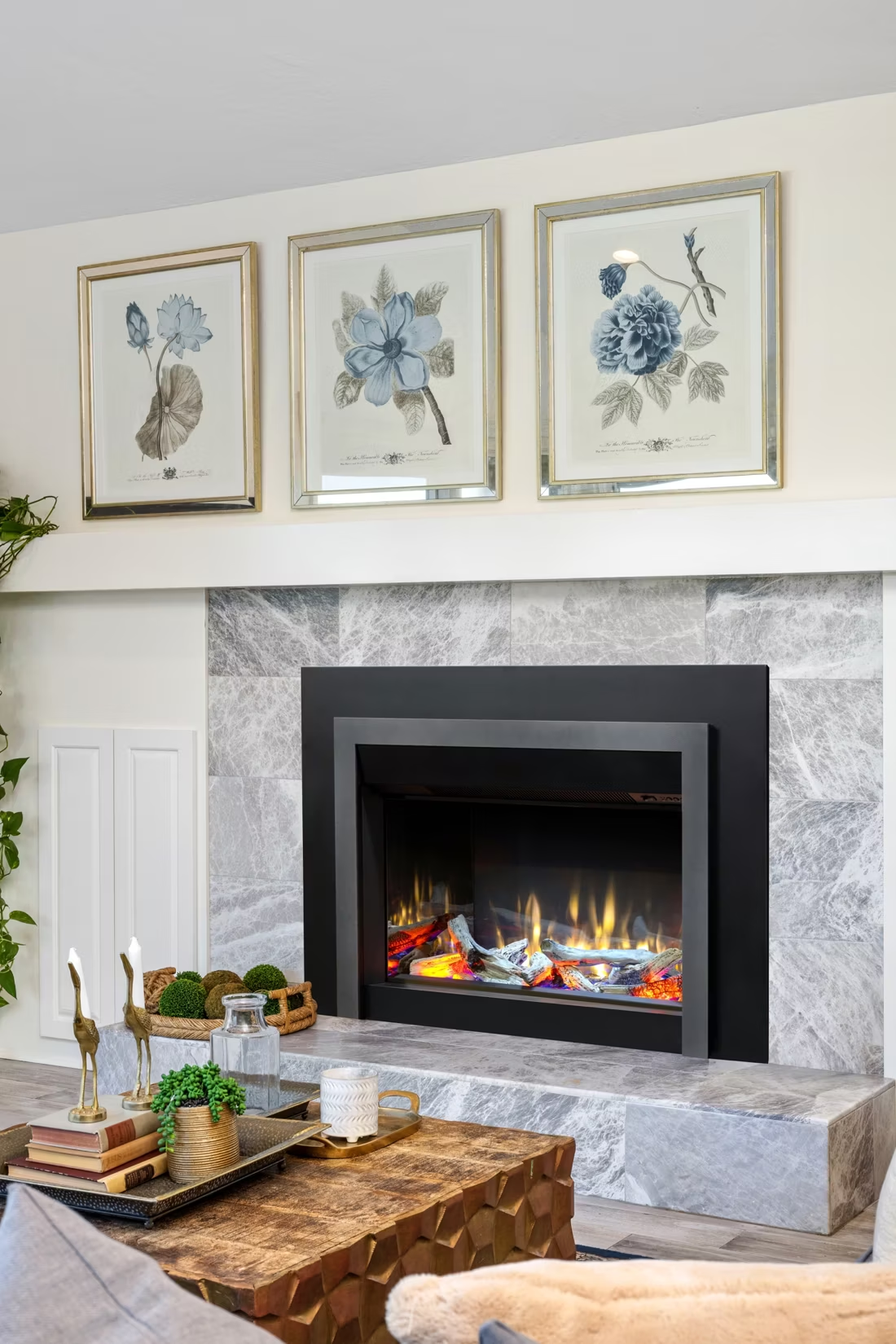
That is not to say wood and pellet don't have a place here. Wood remains standard across Capitale-Nationale, with sugar maple, yellow birch, American beech, and red oak cut under Ministère des Ressources naturelles et des Forêts permits at roughly $1.85 per cubic metre, and pellet stoves running Granules LG, Energex, and Trebio at $400-$575 a ton are common in rural stretches. Natural gas, by contrast, is genuinely rare here, since Énergir's distribution lines reach only limited corridors near Lévis and greater Québec, so most homeowners never see it as an option at all. Electric sidesteps that whole question. A properly matched electric insert or built-in unit gives you real, visible flame ambiance and supplemental heat for $500-$1,600 CAD installed, without touching your roofline or your insurance policy.
Three steps. No salesperson until you're ready.
Tell us about your project
Your postal code, your situation, and the fuel you're leaning toward—or let the answers point you to one.
See what's actually available
The brands dealers within 100 miles genuinely carry—real options, never a catalog mirage.
Get your dealer & Project Guide
A trusted local dealer, plus the free Project Guide & Parts List that names every component of the job.
Frequently Asked Questions
How much does an electric fireplace installation cost in Capitale-Nationale?
Most installations across Capitale-Nationale run $500 to $1,600 CAD. A plug-in freestanding or wall-mount unit sits at the low end since it needs only a standard outlet. A built-in insert or a unit requiring a dedicated 240V circuit costs more once a licensed electrician runs new wiring, especially in older Vieux-Québec buildings where panel capacity is limited. Sliding an insert into an existing masonry opening, common in Charlevoix cottages with an old wood fireplace, is usually cheaper than framing a new built-in surround from scratch, which pushes toward the top of the range once millwork is added.
Will an electric fireplace actually heat my home, or is it just for looks?
Most electric fireplaces put out somewhere between 5,000 and 10,000 BTU, roughly what a good space heater delivers, so they work well as supplemental heat for the room they're in rather than a replacement for your main heating system. In a Capitale-Nationale winter with lows near -16.7°C, that's exactly how most households use them: paired with the electric baseboards already running the rest of the house, taking the edge off the living room or a finished basement so the baseboards can idle. It's a legitimate way to lower your Hydro-Québec bill on shoulder-season evenings, not a way to skip whole-home heating entirely.
Do I need a permit to install an electric fireplace here?
Usually not for the fireplace itself, since there's no venting or combustion involved. Where a permit does come up is the electrical work: if your unit needs a dedicated circuit, that typically requires an electrical permit through your municipal building department and should be pulled by a licensed electrician. That's a much lighter process than what wood appliances go through in this region, where CSA B365 installation code applies and insurers commonly require a WETT inspection. Electric skips both of those requirements entirely, which is part of why it's popular in condos and secondary residences around Quebec City and Charlevoix.
What's the difference between an electric insert, a wall-mount unit, and a mantel package?
An electric insert slides into an existing masonry firebox opening, a common upgrade in older Capitale-Nationale homes with a dormant wood fireplace, and it plugs in or ties into a nearby circuit without touching the chimney above it. A wall-mount unit hangs flush on any wall like a large television, popular in condos and newer builds around Lévis and Sainte-Foy where there's no existing opening to work with. A mantel package pairs a freestanding or built-in electric unit with a surround and mantel shelf, giving you the visual weight of a traditional fireplace in a room that never had one. A local dealer can tell you which configuration actually suits your wall and your wiring.
Will my electric fireplace work during a power outage?
No, and that's worth planning around. Electric fireplaces need grid power to run the heating element and flame effect, so if a Charlevoix ice storm or a St. Lawrence nor'easter takes down Hydro-Québec lines, the unit goes dark along with everything else. That's why many households in outlying parts of the region pair an electric fireplace in the main living space with a wood stove burning local sugar maple or yellow birch as genuine storm backup, particularly in rural areas along Highway 138 and up toward Baie-Saint-Paul where outages can stretch longer than in central Quebec City.
What does it cost to run an electric fireplace with Hydro-Québec rates?
Less than almost anywhere else in the country. Hydro-Québec's residential rates are among the lowest in Canada, so running a typical electric fireplace a few hours an evening usually costs only cents to a couple of dollars, not the noticeable line-item you'd see with propane in areas without gas mains. That low running cost is a big part of why electric heat, fireplaces included, is already the default across so much of Capitale-Nationale rather than a fallback option.
What size electric fireplace do I need for my room?
For a typical living room in the 200-350 square foot range, a mid-size insert or wall-mount unit rated around 5,000-7,000 BTU covers the space comfortably as supplemental heat. Larger open-concept areas, common in newer builds around Lévis and Sainte-Foy, may call for a wider unit or two smaller units rather than one oversized fireplace, since electric heat output doesn't scale the same way a wood stove's firebox does. A local dealer will walk the room and factor in ceiling height and window exposure before recommending a model, rather than sizing off square footage alone.
How does electric compare to wood, pellet, and gas in Capitale-Nationale?
Wood is genuinely standard here, with sugar maple, yellow birch, American beech, and red oak available under Ministère des Ressources naturelles et des Forêts permits at roughly $1.85 per cubic metre, capped around 22.5 cubic metres per permit. Pellet is also standard, with Granules LG, Energex, and Trebio running $400-$575 a ton, a good fit for households wanting automated heat without splitting wood. Gas is the outlier: it's genuinely rare across this region, since Énergir's mains only reach limited corridors near Lévis and greater Québec, so most homeowners here never have the option at all. Electric wins on simplicity, no chimney, no fuel storage, no gas line, and lands as the easiest retrofit for condos, rentals, and secondary residences that were never built for combustion appliances.
How much maintenance does an electric fireplace need?
Very little. There's no chimney to sweep, no ash to remove, and no annual WETT inspection required the way there is for wood appliances under CSA B365. Occasional dusting of the vents and, eventually, replacing an LED ember bed or heating element are about the extent of it. That low-maintenance profile is a big reason electric appliances are popular in Vieux-Québec condos and heritage buildings, where strict rules around venting and masonry changes make wood or gas installations difficult or off the table entirely.
How much does an electric fireplace cost to run?
With the heater on, a typical unit draws about 1,500 watts—at average electric rates that's roughly 20 cents an hour. Run the flame effect alone and it costs pennies; the flames are LED-driven and use about as much power as a light bulb. There's no pilot light, no fuel delivery, and essentially no maintenance.
What fireplace styles should I know before shopping?
Four cover most of the market: screen-front traditional (mesh front, open feel, fits craftsman homes), traditional door set (the classic look you grew up with), modern linear (wide, low, the statement piece for entertaining), and clean face contemporary (no trim—your tile or stone runs right to the fire's edge). Walk in knowing those four terms and you're ahead of most buyers.
Does an electric fireplace need a vent or chimney?
No—that's its superpower. An electric fireplace needs a wall and an outlet, period. No vent pipe, no gas line, no clearances to design around, which is why it works in bedrooms, offices, apartments, and walls where venting a gas or wood unit would be impractical or impossible. Installation is typically the simplest and least expensive of any fireplace type.
Can I put a TV above my fireplace?
Yes—with an asterisk. Fireplaces are hot and TVs don't like heat. Either put a mantel between them to deflect rising warmth, or choose a fireplace with heat-management technology that creates a cool zone on the wall above—the wall stays around 125 degrees, barely warm, while the room still gets full heat. If you like clean lines and don't want a mantel, heat management is the answer.
Stove and Fireplace Dealers in Capitale-Nationale
Listings include WhyFire partner dealers, dealers we have verified as authorized for the brands we recommend, and established local businesses that carry hearth products. Every listing shows which one it is. The ones marked Preferred run on WhyFire's software, so they can show you real pricing and book your appointment right here. No manufacturer pays for placement. How we verify dealers →
Gespro Poêles Et Foyers
Maçonnex (Québec)
Nova Energie Inc
Chemine, Poeles Et Foyer Quebec
Foyer Québec
Hubert's Fireplace Consultation + Design
Les Cheminées Gamelin
Services Propane Inc.
Propane Multi-Service Inc
A. Tremblay Et Frères
Electric Service in Capitale-Nationale
An electric fireplace's heater draws about 1,500 watts—pennies per hour at local rates.
Hydro-Québec
Get your free Project Guide & Parts List for an electric fireplace in Capitale-Nationale.
Tell me about your home, your panel, and how you want to use the fireplace, and I'll match you with a trusted local Capitale-Nationale dealer who can advise on the right unit and coordinate the electrical work. You'll get a free Project Guide & Parts List with the exact equipment for your project, no big-box guesswork.
Find Your Fireplace →