
Steady, low-maintenance heat for -17°C winters on the St. Lawrence.
Cap-Santé sits on the north shore of the St. Lawrence in the Capitale-Nationale region, where zone 6A winters push the low well below freezing for months. I'll match you with a trusted local dealer who can size a pellet stove or insert for your home and send a free planning packet before you buy.
Every Project Starts From One of These Five Situations
A cleaner alternative to cordwood, a warmer one than baseboards alone.
Cap-Santé is a small riverside town about 30 kilometres east of Québec City, and its winters carry the same weight as the rest of the Capitale-Nationale region: zone 6A conditions, an average winter low of -17°C, and a heating season that runs from October well into April. Like much of rural Quebec, a large share of homes here heat with Hydro-Québec electric baseboards, drawn by a residential rate of just 7.8 cents per kWh—among the cheapest in the country. But baseboard heat alone struggles to keep a living room comfortable on the coldest nights, and it offers nothing when an ice storm takes the grid down, something this region has lived through before.
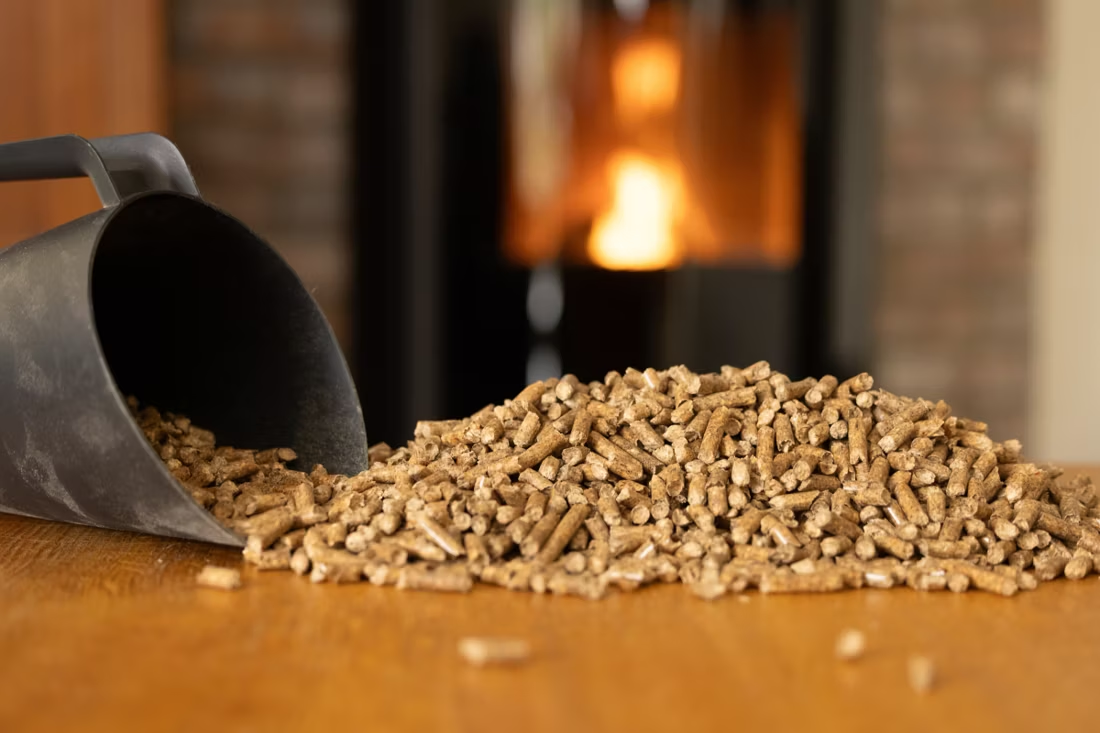
Pellet stoves and inserts fill that gap without asking anyone to split, stack, and season cordwood the way earlier generations here did with sugar maple, yellow birch, American beech, and red oak. Regional pellet brands like Granules LG, Energex, and Trebio are sold within a short drive of Cap-Santé, typically $400 to $575 a tonne, and a season's supply stores flat in a garage or basement bay rather than a woodshed. Installed cost for a pellet stove or insert here usually lands between $6,000 and $10,000 CAD, with the municipal building department requiring a permit and sign-off under the CSA B365 installation code—most insurers will also want a WETT inspection on file before they'll cover the appliance.
Three steps. No salesperson until you're ready.
Tell us about your project
Your postal code, your situation, and the fuel you're leaning toward—or let the answers point you to one.
See what's actually available
The brands dealers within 100 miles genuinely carry—real options, never a catalog mirage.
Get your dealer & Project Guide
A trusted local dealer, plus the free Project Guide & Parts List that names every component of the job.
Frequently Asked Questions
How much does a pellet stove installation cost in Cap-Santé?
Most pellet installations here run $6,000 to $10,000 CAD, with the range driven mostly by venting. A pellet insert going into an existing masonry firebox with a straightforward horizontal vent through an exterior wall sits toward the low end. A freestanding stove in a room without any existing chimney or hearth pad, which needs more framing and a longer vent run, pushes toward the top. Cap-Santé's municipal building department requires a permit for either setup, and installers who work this region typically fold that into their quote.
Do I need a permit to install a pellet stove in Cap-Santé?
Yes. The municipal building department handles the permit, and the installation itself has to meet the CSA B365 code that governs solid-fuel appliances in Quebec. Even though a pellet appliance isn't the same fire risk as an open wood fireplace, most home insurers still ask for a WETT inspection report before they'll add it to your policy, so it's worth booking that inspection as soon as the install is finished rather than waiting for a renewal to bring it up.
Pellet stove or wood stove—which makes more sense for a Cap-Santé home?
Wood is still the traditional choice in this part of the Capitale-Nationale region, and sugar maple, yellow birch, American beech, and red oak all season well if you've got a couple of years' lead time and somewhere dry to stack it. A pellet stove trades that legwork for automated feed and a more even burn, at a fuel cost of roughly $400-$575 a tonne through regional suppliers like Granules LG or Energex. The tradeoff is that a pellet stove needs electricity to run its auger and blower, so it won't keep the house warm during a Hydro-Québec outage the way a wood stove will—something to weigh given this region's history with ice storms.
Will a pellet stove still work if the power goes out?
Not on its own. Pellet stoves rely on an electric auger to feed fuel and a blower to push heat into the room, so a standard unit stops working the moment the grid does. Given that Cap-Santé and the rest of the Capitale-Nationale region have seen multi-day outages during past ice storms, some homeowners here pair a pellet stove with a small battery backup or an inverter generator sized to keep the auger and igniter running, and others keep a wood stove or fireplace elsewhere in the house as a true grid-independent backup.
Where do I buy pellets near Cap-Santé, and how much do they cost?
Granules LG, Energex, and Trebio are the three brands most commonly stocked by hearth dealers and suppliers serving this stretch of the Capitale-Nationale region, generally running $400 to $575 a tonne depending on the season and how early you buy. Buying your full winter supply in late summer, before the fall price bump and before stock gets thin, is standard practice here. Pellets need to stay bone-dry, so a garage bay or basement corner off the concrete floor works better than an unheated shed.
What size pellet stove do I need for a Cap-Santé home?
With an average winter low of -17°C and stretches that go colder, a pellet stove meant to carry real heating load rather than just supplement Hydro-Québec baseboards should be sized for the room it's actually heating, not just the square footage of the house. A mid-size unit rated for 1,200 to 2,000 square feet suits most Cap-Santé living rooms and open-concept main floors, while a smaller unit is fine if you're running it purely as backup for a home that's otherwise on electric heat. A local dealer will factor in ceiling height and how open your floor plan is before recommending a model.
Is natural gas available in Cap-Santé for a gas fireplace instead?
Not really. Énergir's distribution network reaches parts of greater Montréal and a handful of urban corridors, but it doesn't extend out to Cap-Santé, so a gas fireplace here would mean a propane tank and conversion rather than a mains hookup. That's part of why pellet and wood stay the more practical combustion options for most homes in this part of the Capitale-Nationale region—gas is available in a much narrower sense here than in cities further downriver.
Does a pellet stove make sense if I already heat with Hydro-Québec baseboards?
It's one of the most common setups I see in this region. At 7.8 cents per kWh, Hydro-Québec electricity is inexpensive, but baseboards heat a room slowly and don't recover fast after a door's been open in a -17°C wind. A pellet stove in the main living space lets you turn the baseboards down in the rooms you use most, adds real ambiance that baseboards can't, and gives you a fuel source that isn't tied to the same grid during a storm-related brownout—even if you still need a small battery or generator to keep the auger fed.
How often does a pellet stove need to be serviced in Cap-Santé?
Plan on a full cleaning and inspection once a year, ideally in September before the heating season really starts. That means clearing the burn pot and ash pan, vacuuming the hopper and auger channel, and checking the exhaust venting for any blockage—pellet exhaust runs cooler than wood smoke but still needs a clear path. Given how many households here run a pellet stove daily from October into April, a mid-season ash and glass cleaning is also worth doing, and it's a good time to confirm your WETT documentation is current for insurance purposes.
Why do fireplace quotes vary so much?
Because a fireplace is an iceberg—there's more behind the wall than in front of it. A low quote often covers only the unit; the full scope includes vent pipe, gas line or electrical, framing, and the tile or stone that has to come off and go back on. Make every bidder price the whole job. If a dealer can't speak to the full scope with confidence, that's your signal to keep looking.
Is it worth replacing an old fireplace that still sort of works?
Ask three questions: Is it ugly? Is it drafty? Does it actually work? Most old fireplaces fail at least two. Beyond looks, an old unit leaks air around the damper year-round and—if it's gas with a standing pilot—quietly burns a couple hundred dollars a year. A modern replacement seals the wall, heats the room, and changes how the whole space gets used.
Are pellet stoves loud?
They make some noise—there are two fans running plus an auger motor that turns as it feeds pellets. But there's a real range: premium models are engineered quiet, and the best offer a whisper-quiet mode you can comfortably watch TV next to. If noise matters in your room, ask to hear a stove running before you buy—it's a five-minute test that saves years of annoyance.
Can a pellet stove heat a whole house?
It genuinely can. I burned a pellet stove as my only heat source for years after a furnace died, and it kept the entire house warm. Pellets feed automatically from a hopper, so you get wood-heat economics with thermostat-style control. Two honest caveats: it needs weekly cleaning during the season, and most models need electricity to run—ask about battery backup if outages are a concern.
Nearby Dealers
Hearth shops serving Cap-Santé and the surrounding area. Every listing shows whether it is a WhyFire partner, a dealer we have verified as authorized for the brands we recommend, or a local business carrying hearth products. No manufacturer pays for placement. How we verify dealers →
Services Propane Inc.
Chemine, Poeles Et Foyer Quebec
Foyer Québec
Maçonnex (Québec)
Les Cheminées Gamelin
Nova Energie Inc
Hubert's Fireplace Consultation + Design
Gespro Poêles Et Foyers
A. Tremblay Et Frères
Pellet Brands Stocked Around Cap-Santé
Typical price runs $400-$575 per ton—buy early-season for the best rates. Manufacturers will point you to the nearest stocking dealer.
Granules Lg
Trebio
Get your free Project Guide & Parts List for a Cap-Santé pellet project.
Tell me about your home and how you currently heat it, and I'll match you with a trusted local dealer and send a free Project Guide & Parts List—sized for zone 6A winters, with the vent kit and parts specified, and the municipal permit steps laid out.
Find Your Fireplace →