
Steady heat for a windswept stretch of the Gaspé coast.
Cap-Chat sits right on the St. Lawrence with winter lows averaging -19.9°C and some of the strongest coastal wind in the region—it's why the Le Nordais turbines went up here. I'll match you with a local dealer who can size a pellet stove for that exposure and hand you a free plan for the parts.
Every Project Starts From One of These Five Situations
A clean, steady burn built for a long Gaspésie winter.
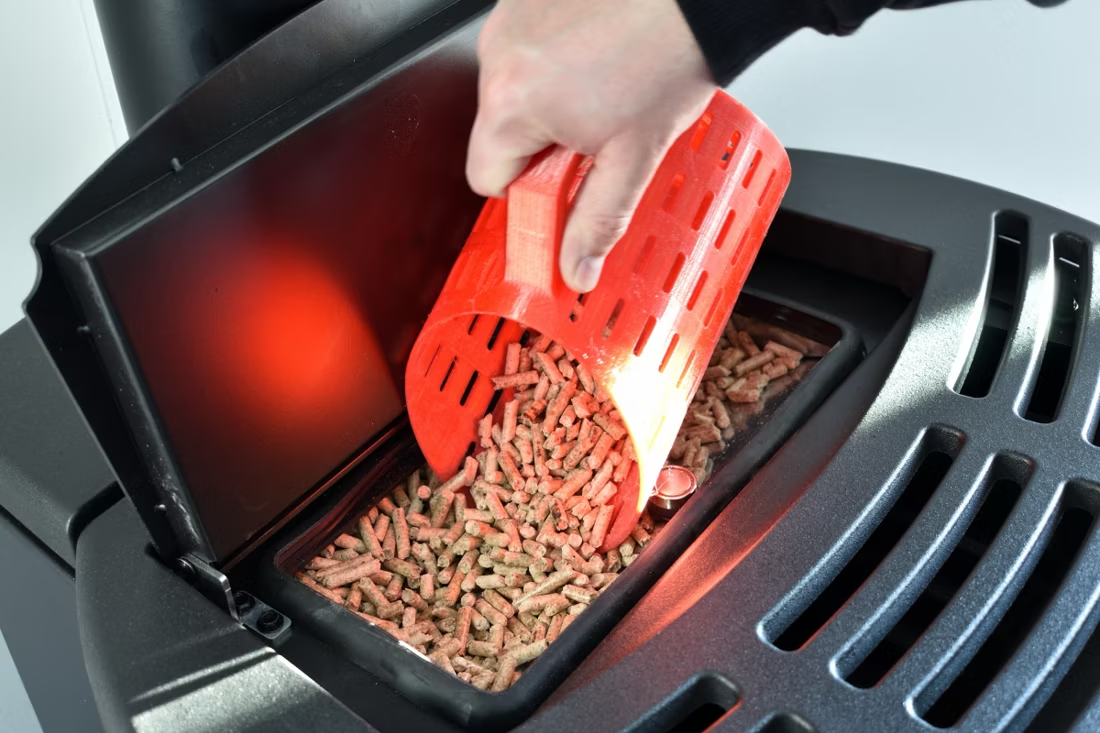
Cap-Chat is a small coastal town at the edge of climate zone 7A, and the numbers match the reputation: winter lows averaging -19.9°C, a long cold season, and wind off the St. Lawrence strong enough to have made the town home to one of the province's earliest wind farms. Most houses here already lean on Hydro-Québec's low-cost electricity for baseboard heat, and a pellet stove or insert slots in naturally as a supplemental or zone-heating unit—it holds a longer, steadier burn than a space heater and needs far less daily tending than a wood stove, without the splitting and stacking that wood demands on a property this exposed.
Granules LG, Energex, and Trebio are the pellet brands most Gaspésie households burn, generally running $400 to $575 CAD a tonne, and in a town as remote as Cap-Chat it's worth ordering ahead of the first storms that can slow deliveries along Route 132. Installation still runs through the municipal building department under the CSA B365 code, and many insurers ask for a WETT inspection on solid-fuel appliances even when the fuel is pellets rather than cordwood—a local dealer who installs here regularly handles that paperwork as a matter of course.
Three steps. No salesperson until you're ready.
Tell us about your project
Your postal code, your situation, and the fuel you're leaning toward—or let the answers point you to one.
See what's actually available
The brands dealers within 100 miles genuinely carry—real options, never a catalog mirage.
Get your dealer & Project Guide
A trusted local dealer, plus the free Project Guide & Parts List that names every component of the job.
Frequently Asked Questions
How much does a pellet stove or insert cost to install in Cap-Chat?
Most installations run $6,000 to $10,000 CAD. An insert dropping into an existing masonry firebox is usually toward the lower end, since the chimney chase is already there. A freestanding stove in a home without a chimney—not unusual in Cap-Chat's smaller, newer builds—needs a full through-wall or through-roof vent kit, which pushes the cost toward the top of that range. Either way you'll need a permit through the municipal building department before work starts.
What pellet brands can I actually get delivered in Cap-Chat?
Granules LG, Energex, and Trebio are the three brands most commonly stocked and delivered across Gaspésie, typically $400 to $575 CAD a tonne. Because Cap-Chat sits at the far end of the peninsula along Route 132, it's worth placing your season's order early rather than waiting for a cold snap—winter storms off the St. Lawrence can slow delivery trucks, and running out mid-January is the scenario a good local dealer will help you plan around from the start.
Do I need a permit to install a pellet stove in Cap-Chat?
Yes. The municipal building department issues the permit, and the installation itself has to meet the CSA B365 code that governs solid-fuel appliances in Quebec. Many home insurers in this region also want a WETT inspection on file before they'll cover a pellet or wood appliance, even though pellets burn cleaner than cordwood. A dealer who regularly installs in the Gaspésie region will typically fold both the permit and the inspection into the project rather than leaving you to chase them down separately.
Pellet stove or wood stove—which makes more sense for a Cap-Chat home?
Wood is genuinely abundant here—sugar maple, yellow birch, American beech, and red oak are all common regional species, and the Ministère des Ressources naturelles et des Forêts issues cutting permits for about $1.85 per cubic metre up to a 22.5 cubic metre maximum. Wood also keeps burning without electricity, which matters on a coast that sees real wind events. Pellets trade that outage resilience for convenience: no splitting or stacking, a longer and steadier burn, and less daily attention, but the auger and blower both need power to run. A number of households in the region keep a wood stove for backup and add a pellet unit for everyday, lower-effort heat.
Will my pellet stove keep working if the power goes out?
Not on its own. Pellet stoves rely on an electric auger to feed fuel and a blower to move heat into the room, so a Hydro-Québec outage stops the stove even with a full hopper. That's a real consideration on a coast where wind off the St. Lawrence has caused outages before—the same wind that powers the Le Nordais turbines can knock lines down in a bad storm. Battery backup units exist and are worth asking your dealer about, but if outage-proof heat is the priority, a wood stove or insert is the more dependable backstop.
What size pellet stove do I need for a Cap-Chat home?
With winter lows averaging -19.9°C and steady coastal wind adding to a home's heat loss through infiltration, it's worth sizing a notch above what square footage alone suggests, especially in older homes with less modern air sealing. A stove rated for 1,200 to 1,800 square feet suits a typical main living area here, while smaller supplemental units work fine if you're pairing the stove with Hydro-Québec electric baseboards rather than relying on it as the sole heat source. A local dealer will factor in your home's actual construction and exposure before recommending a model.
Is natural gas a realistic option instead of pellet in Cap-Chat?
Not really. Énergir's distribution network reaches parts of greater Montréal and a few urban corridors in the province, but it doesn't extend out to the Gaspé Peninsula, so a gas fireplace here would mean a full propane setup rather than a mains hookup. That's a workable path for some homeowners, but it's a different project with different costs than a natural gas install. For most Cap-Chat homes, pellet and electric are the two heating options that are actually straightforward to source and install locally.
How much maintenance does a pellet stove need in Cap-Chat's climate?
Plan on cleaning the burn pot and hopper weekly during heavy use, and a full professional service once a year, ideally before the season starts rather than mid-winter when installers are busiest. Coastal humidity and salt-laden air off the St. Lawrence can be harder on exterior vent components than an inland location, so it's worth having your dealer check the vent termination and gaskets annually rather than stretching that inspection out. A well-maintained unit here typically runs $150 to $250 CAD for that yearly visit.
Pellet stove or electric heat—do I need both?
Many homes in this region already run on Hydro-Québec electric baseboards, and at roughly $0.078 per kWh that's genuinely inexpensive heat, which is part of why electric install costs here are low, around $500 to $1,600 CAD for supplemental units. A pellet stove doesn't usually replace that system outright—it gives you a real flame, a warmer focal point in the main living space, and heat that doesn't rely on every baseboard cycling on at once. Most Cap-Chat households that add one keep the electric system as the baseline and let the pellet stove carry the coldest stretches or the room where the family actually spends its evenings.
Why do fireplace quotes vary so much?
Because a fireplace is an iceberg—there's more behind the wall than in front of it. A low quote often covers only the unit; the full scope includes vent pipe, gas line or electrical, framing, and the tile or stone that has to come off and go back on. Make every bidder price the whole job. If a dealer can't speak to the full scope with confidence, that's your signal to keep looking.
Is it worth replacing an old fireplace that still sort of works?
Ask three questions: Is it ugly? Is it drafty? Does it actually work? Most old fireplaces fail at least two. Beyond looks, an old unit leaks air around the damper year-round and—if it's gas with a standing pilot—quietly burns a couple hundred dollars a year. A modern replacement seals the wall, heats the room, and changes how the whole space gets used.
Can a pellet stove heat a whole house?
It genuinely can. I burned a pellet stove as my only heat source for years after a furnace died, and it kept the entire house warm. Pellets feed automatically from a hopper, so you get wood-heat economics with thermostat-style control. Two honest caveats: it needs weekly cleaning during the season, and most models need electricity to run—ask about battery backup if outages are a concern.
What does it take to replace an existing fireplace?
Fireplaces are like icebergs—bigger behind the wall than in front of it. Replacement means removing the surrounding tile or stone (the finish material laps onto the fireplace face), pulling the old unit, setting the new one in the same enclosure, and re-finishing the wall. A hearth professional can determine what's behind your wall without demolition during an in-home preview.
Nearby Dealers
Hearth shops serving Cap-Chat and the surrounding area. Every listing shows whether it is a WhyFire partner, a dealer we have verified as authorized for the brands we recommend, or a local business carrying hearth products. No manufacturer pays for placement. How we verify dealers →
Plomberie G.d. Gauthier - Chauffage C.g.
Lamarre Gaz Industriel Inc
Propane Lavoie Inc
Propane Nord Cotier
Propane M.c.a Inc
Pellet Brands Stocked Around Cap-Chat
Typical price runs $400-$575 per ton—buy early-season for the best rates. Manufacturers will point you to the nearest stocking dealer.
Granules Lg
Trebio
Get your free Project Guide & Parts List for a Cap-Chat pellet project.
Tell me about your home and how you currently heat it, and I'll match you with a local dealer familiar with Gaspésie's winters and send a free Project Guide & Parts List—sized right for this coast, with the vent kit and parts specified.
Find Your Fireplace →