
Find your fireplace across Gaspésie-Îles-de-la-Madeleine.
Wood, pellet, electric, and gas fireplace resources for the whole peninsula and the Islands—from Sainte-Anne-des-Monts around the coast to Gaspé, Percé, and Cap-aux-Meules. Pick a fuel and get matched with a local dealer who actually works in this climate.
Every Project Starts From One of These Five Situations
Exposed coastlines, long saltwater winters, and a region still built around wood heat.
Gaspésie-Îles-de-la-Madeleine runs from the Chic-Choc Mountains along the St. Lawrence estuary out to the sandbars and dunes of the Islands themselves, a geography exposed to Atlantic and Gulf winds most inland Quebec towns never feel. Average winter lows near -17.3°C put towns like Gaspé, Percé, and Sainte-Anne-des-Monts in the same heating-load range as Sudbury, Ontario—five-plus months where a wood stove or insert isn't decorative, it's the plan. Sugar maple, yellow birch, American beech, and red oak are the species most households here split and season themselves, often cut under a permit from the Ministère des Ressources naturelles et des Forêts on public forest land, which keeps wood heat both affordable and deeply local along the peninsula.
Natural gas service here is only partial, and in practice that means most of what people call a gas fireplace on the peninsula or the Islands runs on delivered propane rather than piped mains gas—if you're not sure your street is served, that's the first thing to check before shopping units. Every new wood-burning appliance installed in the region needs to meet CSA B365 installation code, and insurers commonly require a WETT inspection before they'll write a policy on it, whether you're in Chandler, New Richmond, or Cap-aux-Meules. Quebec's largest municipalities, including Montréal, now require wood stoves to be registered and certified below 2.5 g/h of fine particles—Gaspésie-Îles-de-la-Madeleine towns haven't adopted that exact bylaw, but it's worth confirming your municipal building department's current rules before you install, since more communities are moving toward similar low-emission standards. This hub rolls up hearth retailers, service technicians, and fuel suppliers across the whole region, from the north shore towns to Bonaventure and the Islands. Pick your fuel below for dealer matches, cost ranges, and unit recommendations specific to your town.
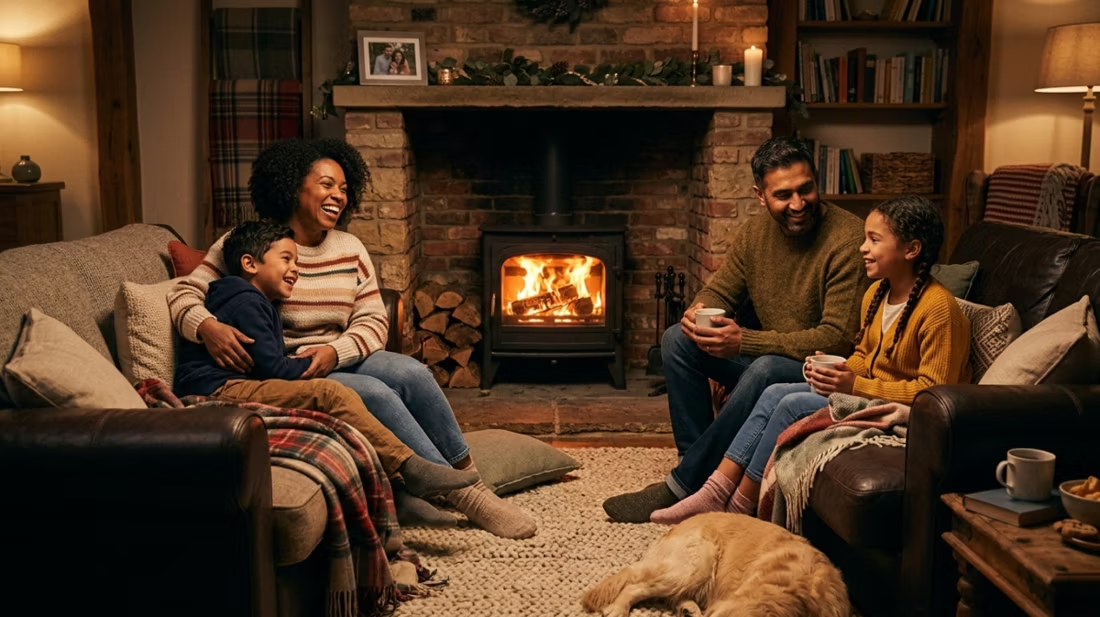
Four fuels. One honest answer for Gaspésie-Îles-de-la-Madeleine.
Wood
69 models available near Gaspésie-Îles-de-la-Madeleine.
Find your wood stove →Gas
104 models available near Gaspésie-Îles-de-la-Madeleine.
Find your gas fireplace →Pellet
See what's available near Gaspésie-Îles-de-la-Madeleine.
Find your pellet stove →Electric
See what's available near Gaspésie-Îles-de-la-Madeleine.
Find your electric fireplace →Three steps. No salesperson until you're ready.
Tell us about your project
Your postal code, your situation, and the fuel you're leaning toward—or let the answers point you to one.
See what's actually available
The brands dealers within 100 miles genuinely carry—real options, never a catalog mirage.
Get your dealer & Project Guide
A trusted local dealer, plus the free Project Guide & Parts List that names every component of the job.
Frequently Asked Questions
Which fireplace fuel makes the most sense in Gaspésie-Îles-de-la-Madeleine?
Wood is still the backbone fuel across the peninsula and the Islands, and for good reason—sugar maple, yellow birch, American beech, and red oak are all locally split, and a cutting permit from the Ministère des Ressources naturelles et des Forêts keeps the cost low if you're willing to season your own supply. Pellet stoves have a solid following too, with Granules LG, Energex, and Trebio all distributed into the region by truck, which matters if you'd rather not stack cords every fall. Gas is genuinely rare here—natural gas service only reaches part of the region, so a gas fireplace usually means running on delivered propane rather than piped mains gas, and it's worth confirming availability before you fall in love with a unit. Electric fireplaces work well as a supplemental heat source in bedrooms or additions, but with lows averaging -17.3°C they're not built to carry a whole home through the season on their own.
Do I need a permit or inspection to install a wood stove here?
Yes. New wood-burning appliances need a permit from your municipal building department and must meet CSA B365 installation code, whether you're in Gaspé, Chandler, or on the Islands in Cap-aux-Meules. Beyond the permit, most insurers in this region will ask for a WETT inspection before they'll cover the appliance, especially in older homes where the chimney or hearth clearances haven't been documented. Gas installations, where propane service is available, need a licensed gas fitter for the connection. A local dealer who's done the work here before typically walks the paperwork through with you rather than leaving you to sort it out solo.
Where does firewood come from, and do I need a permit to cut my own?
Most households burning sugar maple, yellow birch, American beech, or red oak either buy from a local supplier or cut their own under a permit issued by the Ministère des Ressources naturelles et des Forêts for public forest land in the Chic-Chocs and along the peninsula. One thing that catches newcomers off guard is drying time—the damp, salt-air climate out here slows seasoning compared to inland Quebec, so wood cut this spring may need a full extra season stacked and covered before it's ready to burn clean next winter. Buying pre-seasoned cord wood is the shortcut if your stove install can't wait that long.
Are there restrictions on wood stoves because of air quality rules?
Not the same strict bylaw you'd find on the island of Montréal, where wood-burning appliances must be registered and certified at or below 2.5 g/h of fine particles, but it's a trend worth watching. Gaspésie-Îles-de-la-Madeleine municipalities haven't adopted an identical rule, so check with your municipal building department before installing, since requirements can shift town to town. In practice this rarely changes what a good local dealer recommends anyway—modern CSA-certified stoves and inserts already burn clean enough to meet Montréal's standard, so buying certified equipment now keeps you ahead of any local rule that follows.
Is natural gas actually available for a gas fireplace out here?
Only in parts of the region, which is why gas is the least common fuel choice across Gaspésie-Îles-de-la-Madeleine. Where mains service doesn't reach—most of the peninsula and all of the Islands—a gas fireplace runs on delivered propane instead, with its own tank and refill schedule to plan around. If gas ambiance is what you're after, it's worth checking with your municipality or a local dealer on what's actually served on your street before you shop units, rather than assuming a gas line is an option.
What does a fireplace installation typically cost in this region?
Wood stove or insert installs generally run $4,000-$9,000 CAD, including a WETT inspection and any chimney work the CSA B365 code requires. Pellet stove installs tend to land around $3,500-$7,000 CAD, with delivered fuel from brands like Granules LG or Energex an ongoing cost to factor in. Propane-fed gas fireplaces typically run $4,000-$10,000 CAD depending on tank setup and venting. Electric units are the low end at roughly $300-$3,000 CAD for the unit itself, plus modest labor for anything beyond a plug-in placement. Add a bit extra if you're on the Islands, since parts and larger equipment often travel by ferry.
How many BTUs do I need in a fireplace?
Wrong question—and the industry's favorite way to confuse you. More BTUs isn't better if the fireplace cooks you out of the room you spent thousands to enjoy. Think in terms you can verify: how many square feet the unit heats, whether it's primary or backup heat, and whether you want it running overnight. Those three answers size a fireplace correctly every time.
Will we actually use a fireplace once we have one?
In my own home, the room with the fireplace has never been the same—it became the social hub. Game nights, holidays, date nights after the kids are down: the fire is where the house gathers. There's a reason people in this industry joke that we're really in the romance and entertainment business. You won't wonder whether you'll use it; you'll wonder how the room worked before.
Wood, gas, pellet, or electric—how do I choose?
Match the fuel to your life, not the other way around. Wood: lowest fuel cost and total power-outage independence, but you're hauling and stacking. Gas: press a button, set a thermostat, no maintenance to speak of. Pellet: wood economics with automatic feeding, in exchange for weekly cleaning and a need for electricity. Electric: plugs in anywhere with honest supplemental heat. Nobody regrets the fuel that fits how they actually live.
What is an in-home preview and do I need one?
It's a visit where a hearth professional measures your space, confirms the model you picked actually works in your home, and walks the specs—framing, gas line, venting, finish work—before anything is ordered. Some details you just can't know until you see the house. Never make a down payment without one; it's the single most-skipped step that burns buyers.
Stove and Fireplace Dealers in Gaspésie-Îles-de-la-Madeleine
Listings include WhyFire partner dealers, dealers we have verified as authorized for the brands we recommend, and established local businesses that carry hearth products. Every listing shows which one it is. The ones marked Preferred run on WhyFire's software, so they can show you real pricing and book your appointment right here. No manufacturer pays for placement. How we verify dealers →
Propane M.c.a Inc
Caraquet Home Hardware
Get matched with a local dealer in Gaspésie-Îles-de-la-Madeleine.
Pick your fuel below and we'll build a free Project Guide & Parts List—the right unit, the vent kit it needs, and the local dealer we recommend for your project.
Find Your Fireplace →