
Automated warmth for Cacouna's long, cold estuary winters.
Cacouna sits on the St. Lawrence estuary in Bas-Saint-Laurent, where winter lows average -16.7°C and the cold holds on for months. I'll match you with a trusted local dealer who can size a pellet stove or insert to your home and tell you honestly what's actually installable on your street.
Every Project Starts From One of These Five Situations
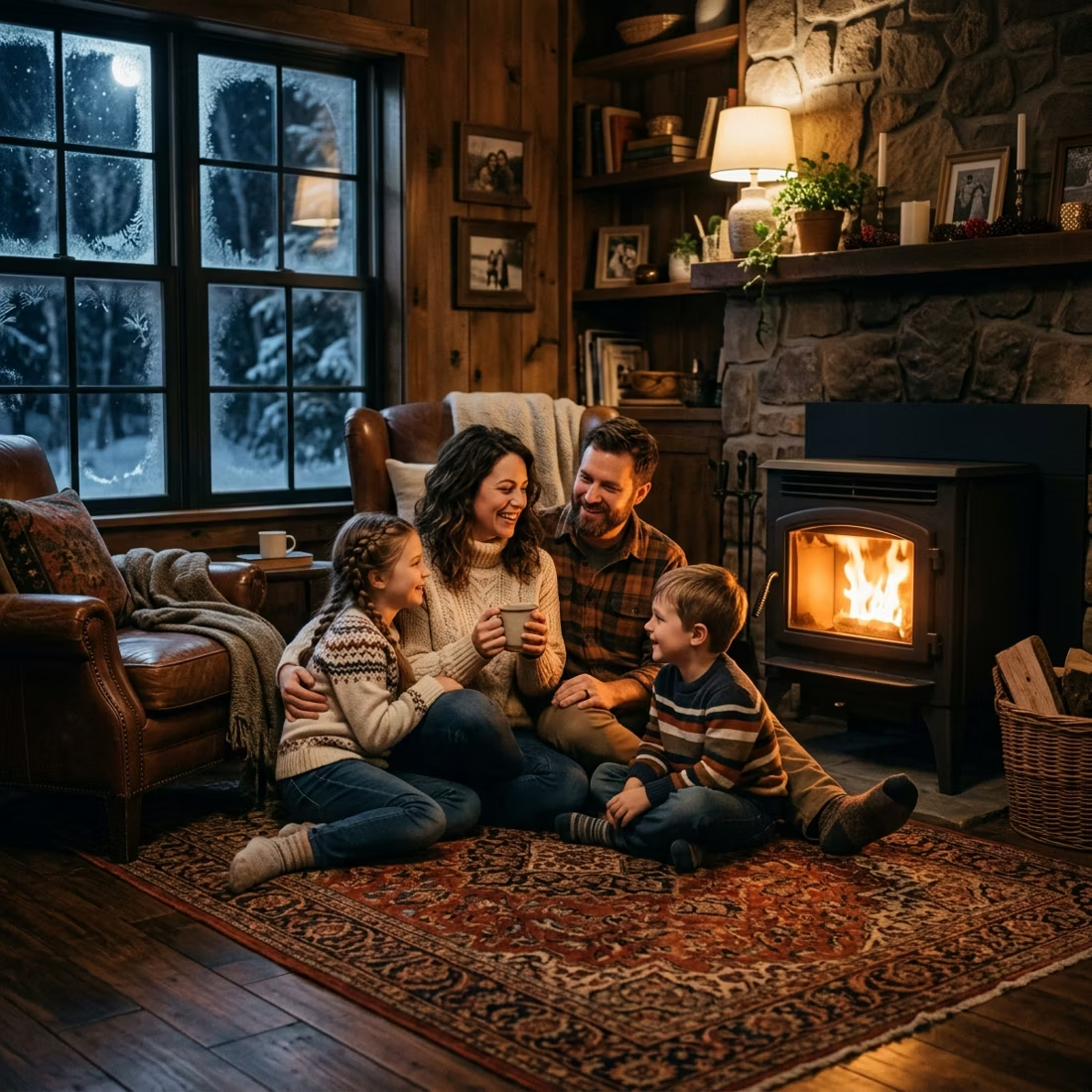
Steady heat without the wood-splitting labour.
Cacouna sits on the south shore of the St. Lawrence estuary in Bas-Saint-Laurent, at 47 metres above sea level in climate zone 7A. Winters average a low of -16.7°C, and the cold settles in for the better part of five months here—comparable to what Québec City sees a few hours upriver. For a village of under 2,000 people spread along Route 132, a heat source that runs steadily overnight without anyone splitting or stacking wood in the yard carries real appeal.
Sugar maple, yellow birch, American beech, and red oak are the species most Bas-Saint-Laurent households still associate with a wood fire, but pellet appliances sidestep the felling, splitting, and seasoning altogether. Bags from Granules LG, Energex, and Trebio—all milled from Quebec forest byproduct—run $400 to $575 CAD a tonne and stack neatly in a garage or basement corner rather than a cordwood pile. The tradeoff is electricity: the auger and blower that make a pellet stove self-feeding draw power from Hydro-Québec's grid, and at Quebec's low residential rate of about 7.8 cents per kWh that's a minor running cost—though it does mean a pellet stove goes quiet in a prolonged outage unless it's paired with a battery backup or a wood appliance elsewhere in the house.
Three steps. No salesperson until you're ready.
Tell us about your project
Your postal code, your situation, and the fuel you're leaning toward—or let the answers point you to one.
See what's actually available
The brands dealers within 100 miles genuinely carry—real options, never a catalog mirage.
Get your dealer & Project Guide
A trusted local dealer, plus the free Project Guide & Parts List that names every component of the job.
Frequently Asked Questions
How much does a pellet stove installation cost in Cacouna?
Typical pellet stove and insert installs in Cacouna run $6,000 to $10,000 CAD, with the lower end covering a freestanding stove venting through an existing wall with a short PL-vent run, and the upper end covering a full insert retrofit into an older masonry fireplace plus a rebuilt hearth pad. Homes along Route 132 without an existing chimney chase generally land in the middle of that range once a dealer prices the wall-thimble venting and any electrical work for the auger circuit.
Do I need a permit to install a pellet stove in Cacouna?
Yes. The municipal building department reviews new pellet appliance installs, and the work has to follow the CSA B365 installation code whether you're fitting it into a new build or retrofitting an older home near the village core. Most insurers in the region also ask for a WETT inspection on solid-fuel appliances—pellet included—before they'll add one to your policy, so it's worth booking that alongside the final building inspection rather than as a separate step later.
Pellet stove or wood stove—which makes more sense for a Bas-Saint-Laurent home?
Both work here, but they suit different households. A wood stove burning local sugar maple, yellow birch, or beech costs less to fuel if you're willing to cut your own—MRNF cutting permits run about $1.85 per cubic metre plus tax, capped at 22.5 cubic metres per season—but it means splitting, stacking, and tending the fire by hand through a long winter. A pellet stove trades that labour for an electric auger and a bag of Granules LG or Energex pellets, holding a steady, programmable temperature overnight, which a lot of Cacouna's households prefer once the novelty of wood-cutting wears off.
Where can I buy pellets near Cacouna?
Granules LG, Energex, and Trebio are the three brands most commonly stocked at hardware stores and heating dealers across Bas-Saint-Laurent, typically running $400 to $575 CAD a tonne depending on the season and how early you order. Buying a season's supply in late summer, before the first cold snap sends demand up along the lower St. Lawrence, is the standard local strategy for locking in the lower end of that range instead of chasing pellets in December.
What happens to a pellet stove during a power outage?
It stops. The auger that feeds pellets into the burn pot and the blower that pushes heat into the room both run on electricity from Hydro-Québec's grid, so a pellet stove goes cold within minutes of an outage unless it's on a battery backup rated for the stove's draw. Given that Cacouna sees its share of winter storms off the estuary, some households here keep a small wood stove or an electric baseboard circuit as a fallback specifically for outage scenarios, rather than relying on pellet heat alone through the coldest months.
What size pellet stove do I need for a Cacouna home?
With winter lows averaging -16.7°C and cold settling in for roughly five months, most main living areas in the village—typically 1,200 to 2,000 square feet in the older homes along Rue Principale and Route 132—are well served by a mid-size pellet stove or insert rated in the 40,000 to 55,000 BTU range. Larger, less-insulated century homes near the shore sometimes need the top of that range to hold a comfortable temperature through a hard January cold snap; a local dealer will size it against your actual floor plan and insulation rather than square footage alone.
How is a pellet stove vented compared to a wood stove?
Pellet stoves use a smaller-diameter PL-vent pipe that can often run horizontally through an exterior wall, rather than the full-height Class A chimney a wood stove needs. That makes a pellet install noticeably less invasive in an older Cacouna home where adding a full masonry-height chimney isn't practical, though the vent still has to meet CSA B365 clearance and termination rules, and your municipal building department will want that confirmed at inspection.
Is natural gas an option for a fireplace in Cacouna instead of pellet?
Not really. Énergir's distribution network reaches only parts of greater Montréal, the south shore, and a handful of other urban corridors—it doesn't extend out to Bas-Saint-Laurent, so mains natural gas isn't something most Cacouna homes can tie into. Propane is the workaround if you specifically want a gas-look fireplace, but it's a separate tank-and-delivery setup rather than a utility hookup, which is one reason pellet and wood remain the default heating choices in the village.
Are there rebates available for installing a pellet stove in Cacouna?
Quebec's Chauffez vert program has offered incentives for households switching from oil heating to lower-emission options including biomass and electric systems, and a pellet stove installed as a primary or secondary heat source can sometimes qualify depending on what it's replacing. Program terms shift from year to year, so it's worth asking your local dealer what's currently funded before you finalize a quote—they generally know which rebate paperwork is live in a given season.
Why do fireplace quotes vary so much?
Because a fireplace is an iceberg—there's more behind the wall than in front of it. A low quote often covers only the unit; the full scope includes vent pipe, gas line or electrical, framing, and the tile or stone that has to come off and go back on. Make every bidder price the whole job. If a dealer can't speak to the full scope with confidence, that's your signal to keep looking.
Is it worth replacing an old fireplace that still sort of works?
Ask three questions: Is it ugly? Is it drafty? Does it actually work? Most old fireplaces fail at least two. Beyond looks, an old unit leaks air around the damper year-round and—if it's gas with a standing pilot—quietly burns a couple hundred dollars a year. A modern replacement seals the wall, heats the room, and changes how the whole space gets used.
What does it take to replace an existing fireplace?
Fireplaces are like icebergs—bigger behind the wall than in front of it. Replacement means removing the surrounding tile or stone (the finish material laps onto the fireplace face), pulling the old unit, setting the new one in the same enclosure, and re-finishing the wall. A hearth professional can determine what's behind your wall without demolition during an in-home preview.
Why is my open fireplace making my house colder?
Open fireplaces suck—literally. As the fire burns, it consumes air your furnace already paid to heat and pulls it out through the chimney, so the house is actually colder after the fire goes out than before you lit it. An insert fixes this: it seals the chimney, puts fixed glass across the front, and turns that hole in your house into a real heat source.
Nearby Dealers
Hearth shops serving Cacouna and the surrounding area. Every listing shows whether it is a WhyFire partner, a dealer we have verified as authorized for the brands we recommend, or a local business carrying hearth products. No manufacturer pays for placement. How we verify dealers →
Grossiste Mr Boucher Inc
Lamarre Gaz Industriel Inc
Plomberie G.d. Gauthier - Chauffage C.g.
Pellet Brands Stocked Around Cacouna
Typical price runs $400-$575 per ton—buy early-season for the best rates. Manufacturers will point you to the nearest stocking dealer.
Granules Lg
Trebio
Get your free Project Guide & Parts List for a Cacouna pellet stove.
Tell me about your home along the estuary and I'll match you with a trusted local dealer, then send a free Project Guide & Parts List sized to Bas-Saint-Laurent winters—with the vent kit and parts specified so there's no guesswork when the quote comes in.
Find Your Fireplace →