
Steady heat for Bas-Saint-Laurent winters, without splitting a single log.
With winter lows averaging -15.4°C and a heating season that stretches from the first frost off the St. Lawrence estuary well into spring, pellet heat gives homes here thermostat-controlled warmth without the wood pile. I match you with a local dealer who knows the region's supply chain, the permit process, and what actually holds up through a long Bas-Saint-Laurent winter.
Every Project Starts From One of These Five Situations
Heat sourced from the same forests that built this region.
Bas-Saint-Laurent runs along the south shore of the St. Lawrence estuary from La Pocatière to Matane, home to roughly 115,774 people spread across small municipalities built on forestry, agriculture, and fishing. In climate zone 7A, winters here run about as long and hard as Québec City's, just with more wind off the water—sugar maple, yellow birch, American beech, and red oak stands cover the region's uplands and have supplied local mills and woodlots for generations. That forestry base is exactly why pellet heat has taken hold here: the fuel is a regional by-product, not something trucked in from elsewhere.
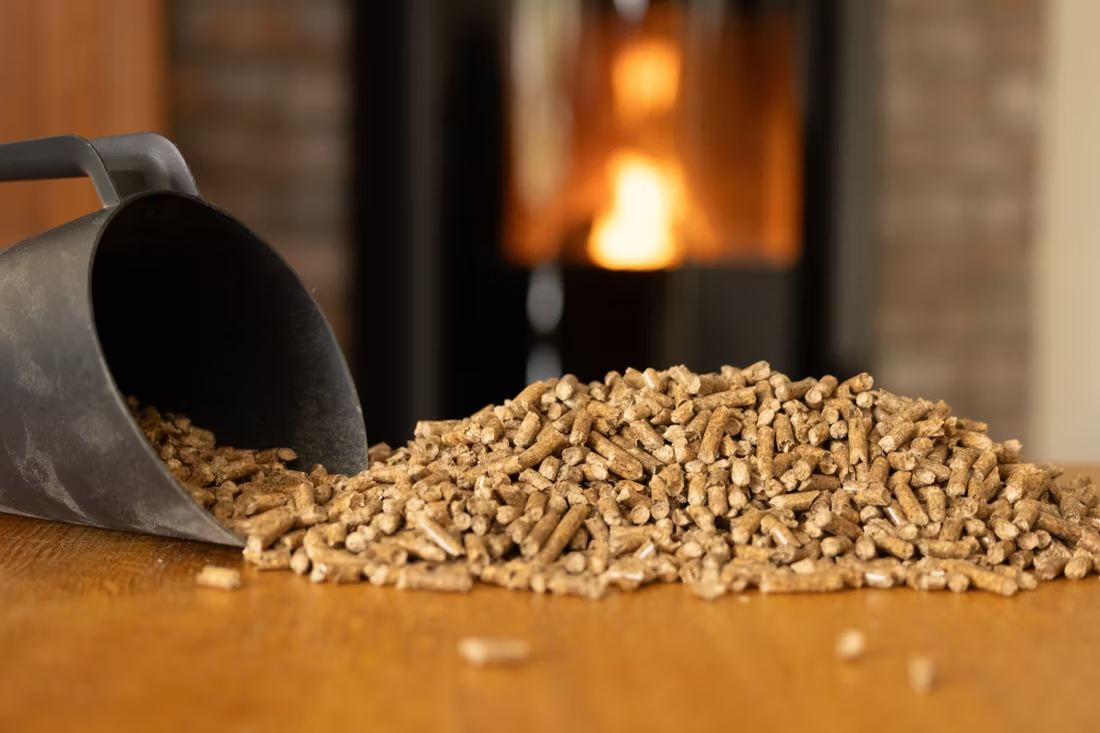
Trebio pellets are actually manufactured in L'Isle-Verte, right inside Bas-Saint-Laurent, alongside Granules LG and Energex supply that circulates through the broader region at roughly $400 to $575 CAD per ton. For homeowners who like the idea of wood heat but don't want to cut, split, and stack cordwood every fall, a pellet stove or insert delivers similar comfort with a thermostat and a hopper you fill every day or two instead. Note that Montréal's stricter fine-particle bylaw for wood-burning appliances doesn't apply out here—your municipal building department will still want a permit and a code-compliant install, but the added particulate cap tied to the island isn't part of the picture in Bas-Saint-Laurent.
Three steps. No salesperson until you're ready.
Tell us about your project
Your postal code, your situation, and the fuel you're leaning toward—or let the answers point you to one.
See what's actually available
The brands dealers within 100 miles genuinely carry—real options, never a catalog mirage.
Get your dealer & Project Guide
A trusted local dealer, plus the free Project Guide & Parts List that names every component of the job.
Frequently Asked Questions
How much does a pellet stove installation cost in Bas-Saint-Laurent?
Installed pellet stoves and inserts across the region typically run $6,000 to $10,000 CAD. A pellet insert dropped into an existing masonry fireplace, with a straightforward vent path and no new gas or hearth work, sits toward the lower end. A freestanding stove in a new location—needing a hearth pad, wall penetration, and exterior vent termination—runs higher. Homes in outlying municipalities like Trois-Pistoles or Matane may see a modest travel charge added by installers based closer to Rimouski or Rivière-du-Loup.
What size pellet stove do I need for my home?
Sizing depends on square footage, insulation, and how exposed your home is to wind off the estuary. With winter lows averaging -15.4°C and a cold season comparable in length to Québec City's, a mid-size unit rated for 1,200 to 2,000 square feet covers most main living areas in typical Bas-Saint-Laurent homes. Older farmhouses or homes with less insulation often need the next size up to keep the hopper from running near-constant on the coldest nights. A local dealer will do a proper heat-loss estimate during a home visit rather than sizing off a generic chart.
Do I need a permit to install a pellet stove in Bas-Saint-Laurent?
Yes. Your municipal building department issues the permit, and the installation has to meet the CSA B365 code, same as any solid-fuel appliance in Quebec. Most insurers also want a WETT inspection on file before they'll cover a new pellet appliance, even though pellet units burn cleaner and are lower-risk than an open wood stove. A manufacturer-authorized local dealer handles the permit application and schedules the inspection as part of the job, so you're not chasing paperwork separately.
Where do the pellets come from, and what do they cost?
Bas-Saint-Laurent sits close to some of the province's own pellet supply—Trebio is produced right in L'Isle-Verte, inside the region, and Granules LG and Energex both circulate widely through south-shore hardware stores and fuel depots. Expect to pay roughly $400 to $575 CAD per ton depending on the brand and whether you buy by the pallet or truckload. Most households order their season's supply in late summer or early fall before demand and delivery schedules tighten up, and you'll want dry, covered storage for the bags since pellets swell and jam an auger if they pick up moisture.
How much maintenance does a pellet stove actually need?
Plan on emptying the ash pan every few days during steady winter use and a full burn-pot and glass cleaning weekly. Beyond that, schedule one professional service a year—ideally before the region's heating season starts in earnest—to clean the auger, exhaust fan, and venting. Pellet appliances need far less attention than a wood stove burning maple or oak, which is one of the main reasons homeowners in Bas-Saint-Laurent choose pellet for a primary living space even when they still keep wood on hand elsewhere.
Will my pellet stove keep working during a winter power outage?
Not on its own. Pellet stoves rely on an electric auger and blower to feed fuel and move heat, so a power outage shuts the unit down unless you've added battery backup or a small generator. That matters here—nor'easters and ice storms off the St. Lawrence estuary have knocked out power in parts of the region for a day or more in past winters. Many households that lean on pellet as their main heat source keep a wood stove or fireplace as a no-electricity backup, or invest in a UPS battery pack sized for the stove's control board and fans.
Pellet vs. wood stove—which makes more sense for a Bas-Saint-Laurent home?
Wood has deep roots here: sugar maple, yellow birch, American beech, and red oak are all common on regional woodlots, and a Ministère des Ressources naturelles et des Forêts (MRNF) cutting permit runs about $1.85 per cubic metre plus taxes, up to a 22.5 cubic metre maximum, which keeps fuel costs very low if you're willing to cut, split, and season your own wood. Pellet trades that self-sufficiency for convenience—load the hopper, set the thermostat, and walk away—at a higher per-season fuel cost of roughly $400 to $575 CAD per ton. Many homes in the region run both: wood in a shop or secondary space, pellet in the main living area where daily convenience matters more.
What pellet stove and insert brands are available through local dealers?
Local dealers typically carry manufacturer-authorized pellet stove and insert lines built to run cleanly on the pellets actually sold in the region—Granules LG, Energex, and Trebio being the three you'll see most often on shelves from Rivière-du-Loup to Matane. Ask your dealer which models they've tested specifically against Québec-made pellets, since pellet density and ash content vary by brand and can affect auger feed and burn-pot buildup over a season.
Is natural gas or propane a realistic alternative to pellet heat in Bas-Saint-Laurent?
Not really, for most of the region. Natural gas service is limited to a few pockets near larger centres like Rivière-du-Loup, and most of Bas-Saint-Laurent's smaller municipalities have no gas main at all. Propane is available everywhere by tank delivery, but it runs considerably more expensive per unit of heat than pellet, especially over a cold season this long. That gap is a big part of why pellet and wood remain the default heating fuels across the region, with electric baseboard commonly used as a supplemental or backup source rather than a primary one.
Why do fireplace quotes vary so much?
Because a fireplace is an iceberg—there's more behind the wall than in front of it. A low quote often covers only the unit; the full scope includes vent pipe, gas line or electrical, framing, and the tile or stone that has to come off and go back on. Make every bidder price the whole job. If a dealer can't speak to the full scope with confidence, that's your signal to keep looking.
Is it worth replacing an old fireplace that still sort of works?
Ask three questions: Is it ugly? Is it drafty? Does it actually work? Most old fireplaces fail at least two. Beyond looks, an old unit leaks air around the damper year-round and—if it's gas with a standing pilot—quietly burns a couple hundred dollars a year. A modern replacement seals the wall, heats the room, and changes how the whole space gets used.
What's the difference between an insert and a zero-clearance fireplace?
An insert is a fireplace that slides into a pre-existing wood-burning fireplace—if you don't have one, there's nothing to insert it into. A zero-clearance fireplace is built into a framed wall, which makes it the answer for remodels and new construction. Simple test: existing masonry fireplace means insert; blank or framed wall means zero-clearance.
How often does a pellet stove need cleaning?
A clean pellet stove is a happy pellet stove. Plan on cleaning the burn pot about once a week when you're burning regularly—ash and clinkers gum up the air holes just like a pellet barbecue. Most pellet stove problems trace back to skipped cleaning that nobody explained up front. Some designs make it easy with a trapdoor burn pot: pull a lever and the gunk drops into the ash pan.
Stove and Fireplace Dealers in Bas-Saint-Laurent
Listings include WhyFire partner dealers, dealers we have verified as authorized for the brands we recommend, and established local businesses that carry hearth products. Every listing shows which one it is. The ones marked Preferred run on WhyFire's software, so they can show you real pricing and book your appointment right here. No manufacturer pays for placement. How we verify dealers →
Grossiste Mr Boucher Inc
Central Building Supply
Bob's Neighborhood Store
Lamarre Gaz Industriel Inc
Plomberie G.d. Gauthier - Chauffage C.g.
Pellet Brands Stocked Around Bas-Saint-Laurent
Typical price runs $400-$575 per ton—buy early-season for the best rates. Manufacturers will point you to the nearest stocking dealer.
Granules Lg
Trebio
Get your free Project Guide & Parts List for pellet heat in Bas-Saint-Laurent.
Tell me about your home and how you plan to use the stove, and I'll match you with a local Bas-Saint-Laurent dealer and send a free Project Guide & Parts List—the exact equipment, vent kit, and recommended installer for your pellet project, no big-box guesswork.
Find Your Fireplace →