
Find your fireplace across Bas-Saint-Laurent.
From Rivière-du-Loup down to Rimouski and the villages along the St. Lawrence, get matched with a local dealer who knows what actually works in this climate—wood, pellet, electric, or gas—and can walk you through what's realistic for your address.
Every Project Starts From One of These Five Situations
Winters near -15°C and a region that still heats with sugar maple and yellow birch.
Bas-Saint-Laurent runs along the south shore of the St. Lawrence from the edge of the Québec City region out through Rivière-du-Loup, Trois-Pistoles, Rimouski, and the Matapédia valley toward Matane. Average winter lows near -15.4°C put this region in territory comparable to Sudbury, Ontario—long, dry cold that settles in by November and doesn't fully let go until April. It's sugarbush country: sugar maple, yellow birch, American beech, and red oak are the species most local households burn, much of it cut from private woodlots or under Ministère des Ressources naturelles et des Forêts (MRNF) permits on public land, which keeps wood heat both affordable and deeply rooted in how families here get through winter.
Natural gas service reaches only a handful of corridors in this region, so gas fireplaces are genuinely uncommon here—most gas-style installs end up running on propane instead, which is worth confirming with a dealer before you fall in love with a specific unit. Pellet stoves are a solid, standard option, with Granules LG, Energex, and Trebio all distributed regionally. Electric fireplaces cover everything from supplemental bedroom heat to primary ambiance in newer builds and condos. Whatever you burn, a municipal building department permit and CSA B365 installation code apply, and insurers commonly ask for a WETT inspection on wood appliances before writing or renewing a policy. This hub rolls up retailers, technicians, and suppliers across the whole region—pick your fuel below for local dealers and costs specific to your town.
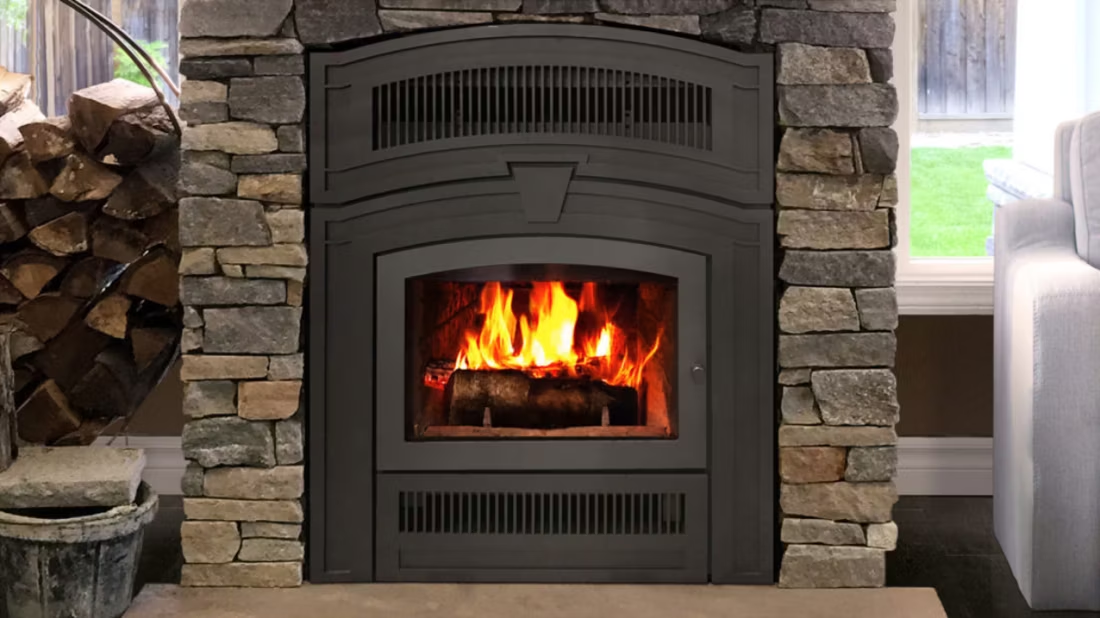
Four fuels. One honest answer for Bas-Saint-Laurent.
Wood
69 models available near Bas-Saint-Laurent.
Find your wood stove →Gas
104 models available near Bas-Saint-Laurent.
Find your gas fireplace →Pellet
See what's available near Bas-Saint-Laurent.
Find your pellet stove →Electric
See what's available near Bas-Saint-Laurent.
Find your electric fireplace →Three steps. No salesperson until you're ready.
Tell us about your project
Your postal code, your situation, and the fuel you're leaning toward—or let the answers point you to one.
See what's actually available
The brands dealers within 100 miles genuinely carry—real options, never a catalog mirage.
Get your dealer & Project Guide
A trusted local dealer, plus the free Project Guide & Parts List that names every component of the job.
Frequently Asked Questions
Which fireplace fuel makes the most sense in Bas-Saint-Laurent?
Wood is the backbone fuel across most of this region, and for good reason—sugar maple, yellow birch, and American beech are all locally abundant, many households cut their own under MRNF permits, and a good catalytic stove will hold overnight through a -15°C night without much trouble. Pellet stoves are a genuine standard alternative, especially in town lots where storing a full winter's cordwood isn't practical; Granules LG, Energex, and Trebio all sell into this market. Gas is the outlier here—natural gas mains barely touch this region, so a 'gas fireplace' almost always means a propane unit, and that's a detail worth confirming with a dealer before you commit to a look or a model. Electric fireplaces work well as a supplement in an already-heated home, or as the primary heat source in a small, well-insulated space like a condo or a garden-level unit.
Do I need a permit to install a wood stove in Bas-Saint-Laurent?
Yes. Installation permits go through your municipal building department, and the work has to meet the CSA B365 installation code regardless of whether you're putting in a freestanding stove or a fireplace insert. On top of the building permit, most insurers in this region ask for a WETT inspection before they'll cover a wood-burning appliance, particularly on older stoves or homes changing hands. None of this is unusual or a red flag—it's the normal process a good local dealer handles as part of your project every week, and most retailers we match homeowners with will walk you through both the permit and the WETT paperwork rather than leaving you to sort it out alone.
Is natural gas actually available in Bas-Saint-Laurent?
In most of this region, no—mains natural gas service is limited to a few isolated corridors, and a large share of homes here heat with wood or electricity instead. If you're set on a gas-style fireplace, the realistic path for most addresses is a propane unit, either tank-fed or on a bottled exchange system, rather than a true natural gas connection. This isn't a reason to skip gas as an option, but it is a reason to have a local dealer confirm what's actually feasible at your address before you start comparing specific fireplace models—availability, not preference, tends to be the deciding factor out here.
Where does firewood come from, and what species should I expect to burn?
Sugar maple, yellow birch, American beech, and red oak are the species most commonly cut and burned across Bas-Saint-Laurent, and a meaningful share of households source their own wood under a permit from the Ministère des Ressources naturelles et des Forêts (MRNF) rather than buying it delivered. That's a real cultural and economic anchor here, in a region where sugarbush and maple syrup production already shape the rural landscape. If you'd rather buy than cut, local firewood dealers and woodlot owners sell seasoned cords by the fall, and a good stove sized for hardwood like maple and oak will burn cleaner and longer than one sized for softwood.
What's a WETT inspection, and why do I need one?
A WETT inspection is a technical review of a wood-burning appliance and its installation, and insurers across Quebec commonly require one before they'll write or renew a homeowner's policy on a house with a wood stove, insert, or fireplace—especially if the unit is older or the home is changing ownership. It's not a sign anything is wrong; it's standard due diligence given how much this region genuinely heats with wood. Any dealer installing a new stove to CSA B365 code should be able to arrange the inspection or point you to a certified inspector, and getting it done at install time saves you a scramble later when your insurer asks for documentation.
What does a fireplace or stove installation typically cost in Bas-Saint-Laurent?
Costs depend on fuel and on how much venting or chimney work is involved. A wood stove or insert typically runs $3,500–$8,000 CAD installed, with full new chimney construction pushing higher. Pellet stoves generally land around $3,500–$6,500 CAD, including venting. Propane fireplaces or inserts—the realistic gas option for most of this region—usually run $4,000–$9,000 CAD depending on tank setup and whether an existing hearth is being converted. Electric fireplaces are the most affordable entry point, from $300 for a plug-and-play unit up to $2,500 or more for a built-in, plus a few hundred dollars in labour if a new circuit is needed. A local dealer can give you a firmer number once they know your home and your wood supply.
How many BTUs do I need in a fireplace?
Wrong question—and the industry's favorite way to confuse you. More BTUs isn't better if the fireplace cooks you out of the room you spent thousands to enjoy. Think in terms you can verify: how many square feet the unit heats, whether it's primary or backup heat, and whether you want it running overnight. Those three answers size a fireplace correctly every time.
Will we actually use a fireplace once we have one?
In my own home, the room with the fireplace has never been the same—it became the social hub. Game nights, holidays, date nights after the kids are down: the fire is where the house gathers. There's a reason people in this industry joke that we're really in the romance and entertainment business. You won't wonder whether you'll use it; you'll wonder how the room worked before.
What's the best fireplace for power outages?
Wood wins outright—no electricity, no moving parts, just fuel and a match, and a radiant stove keeps heating with the grid down for weeks. Gas is a close second: battery-backup ignition runs the fireplace fine without power (the blower stops, but radiant heat keeps coming). Pellet is the one to check carefully—most models need electricity for the auger and fans, so ask about battery backup.
What does it take to replace an existing fireplace?
Fireplaces are like icebergs—bigger behind the wall than in front of it. Replacement means removing the surrounding tile or stone (the finish material laps onto the fireplace face), pulling the old unit, setting the new one in the same enclosure, and re-finishing the wall. A hearth professional can determine what's behind your wall without demolition during an in-home preview.
Stove and Fireplace Dealers in Bas-Saint-Laurent
Listings include WhyFire partner dealers, dealers we have verified as authorized for the brands we recommend, and established local businesses that carry hearth products. Every listing shows which one it is. The ones marked Preferred run on WhyFire's software, so they can show you real pricing and book your appointment right here. No manufacturer pays for placement. How we verify dealers →
Grossiste Mr Boucher Inc
Central Building Supply
Bob's Neighborhood Store
Lamarre Gaz Industriel Inc
Plomberie G.d. Gauthier - Chauffage C.g.
Get matched with a local Bas-Saint-Laurent dealer.
Pick your fuel below and we'll put together a free Project Guide & Parts List—the right unit for your home, the vent kit it needs, and the local dealer we recommend to help with your project.
Find Your Fireplace →