
Find your pellet stove for Abitibi-Témiscamingue winters that hit -24°C.
Rouyn-Noranda, Val-d'Or, Amos, La Sarre, and Ville-Marie all sit deep in northwestern Quebec's boreal forest, where average winter lows run to -24.3°C and the heating season stretches from October well into April. Pellet stoves and inserts from regional Quebec manufacturers like Granules LG, Energex, and Trebio give you thermostat-controlled heat without splitting or hauling wood. I match homeowners here with a trusted local dealer who knows the venting, the permits, and what actually holds heat through a Témiscamingue winter, then sends a free planning packet.
Every Project Starts From One of These Five Situations
A forestry economy that feeds its own pellet supply.
Abitibi-Témiscamingue covers a vast stretch of northwestern Quebec, from Rouyn-Noranda and Val-d'Or in the mining belt to Amos, La Sarre, and Ville-Marie further north and west. It's climate zone 7A territory, with an average winter low of -24.3°C and a heating season that runs longer and harder than in most of the province—cold comparable to Fort McMurray, Alberta, another resource-economy region where the furnace, stove, or pellet hopper simply cannot fail. The surrounding boreal forest of sugar maple, yellow birch, American beech, and red oak has supported both a wood-cutting tradition and, more recently, a strong regional pellet manufacturing base.
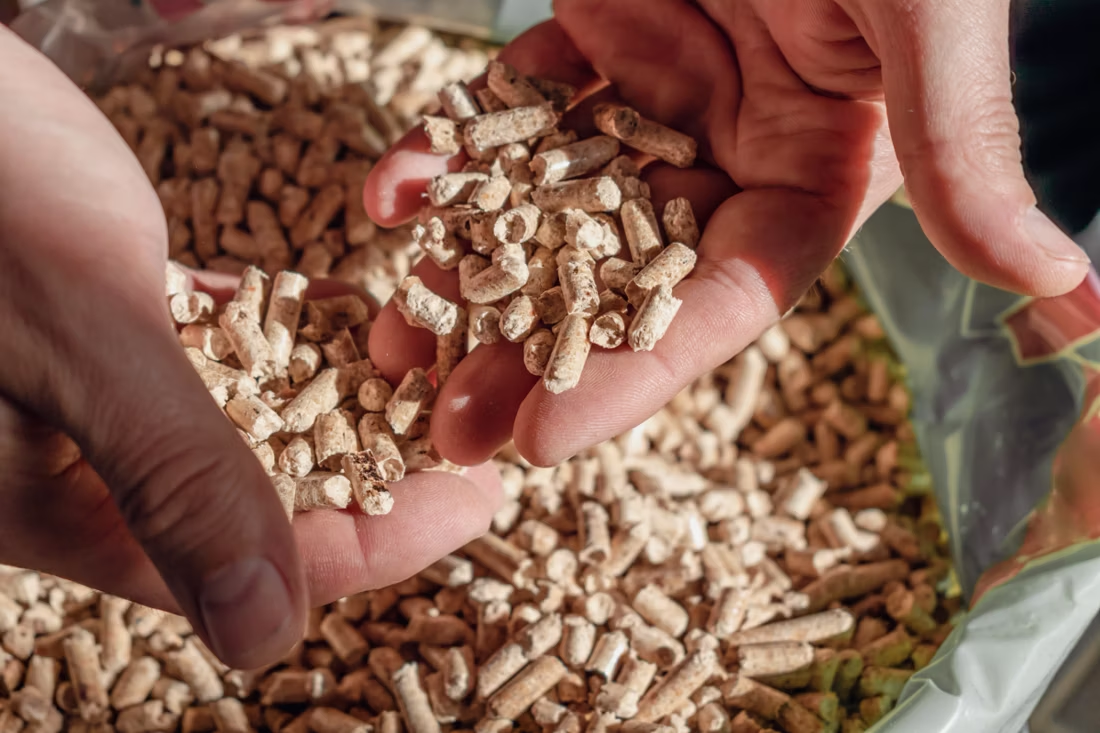
That local manufacturing base matters for supply. Granules LG, Energex, and Trebio are all Quebec-produced pellet brands sold through hearth dealers across the region, and pellets here typically run $400 to $575 per tonne—a shorter supply chain than regions that truck pellets in from out of province. Natural gas service is only partially available and, region-wide, gas fireplace relevance is genuinely rare here—most homes run on wood, pellet, or electric heat instead. Any pellet appliance still falls under the CSA B365 installation code through your municipal building department, and most home insurers will ask for a WETT inspection before they'll cover a new solid-fuel appliance, pellet units included.
Three steps. No salesperson until you're ready.
Tell us about your project
Your postal code, your situation, and the fuel you're leaning toward—or let the answers point you to one.
See what's actually available
The brands dealers within 100 miles genuinely carry—real options, never a catalog mirage.
Get your dealer & Project Guide
A trusted local dealer, plus the free Project Guide & Parts List that names every component of the job.
Frequently Asked Questions
How much does a pellet stove installation cost in Abitibi-Témiscamingue?
A typical pellet stove or insert project across the region runs $6,000 to $10,000 CAD. A pellet insert dropped into an existing masonry fireplace in a Rouyn-Noranda or Val-d'Or home, with a straightforward vent run through the existing chimney, tends to land toward the lower end. A freestanding stove in a new location—La Sarre or Amos homes without an existing chimney are common examples—costs more once you add wall thimble venting, a hearth pad, and any electrical work for the hopper and blower. Your local dealer will confirm the number after seeing the space and the vent path.
What size pellet stove do I need for a home in this climate?
With average winter lows of -24.3°C and long, hard winters typical of climate zone 7A, sizing needs to lean toward the upper end of a stove's rated range rather than the middle. A stove sized for a milder Quebec winter will run at full output constantly here and still struggle on the coldest nights, burning through hopper loads faster than expected. A local dealer will size the unit to your actual square footage, insulation level, and whether the stove needs to carry the whole home or supplement an existing furnace, rather than going off a generic chart.
Do I need a permit to install a pellet stove here?
Yes. New installations go through your municipal building department, and the work has to meet the CSA B365 code regardless of which municipality you're in, from Rouyn-Noranda to Ville-Marie. Most local dealers pull the permit and handle the CSA B365 details as part of the project. Separately, plan on a WETT inspection once the stove is in—most home insurers in the region require one before they'll add a solid-fuel appliance, pellet stoves included, to your policy.
Where do I buy pellets in Abitibi-Témiscamingue, and which brands are available?
Granules LG, Energex, and Trebio are the three brands you'll see most often at hearth and hardware dealers across the region, and all three are manufactured in Quebec, which keeps supply relatively stable compared with areas that rely on trucked-in pellets from further afield. Expect to pay roughly $400 to $575 per tonne depending on brand and season. Buying your winter's supply in late summer or early fall, before demand peaks with the first cold snap, is the standard local strategy for avoiding shortages in January and February.
What happens to my pellet stove during a power outage?
Pellet stoves need electricity to run the auger, igniter, and blower, so a standard unit goes cold the moment the power drops—something worth planning for in a region where winter storms can knock out lines for hours at a time. A battery backup system or small inverter generator sized for the stove's draw will keep it running through most outages. If losing heat during an outage is a real concern for your household, ask your local dealer about backup options at the time of installation, or consider keeping a wood stove or fireplace as a no-power fallback.
Should I burn pellets or cut my own firewood instead?
Both are legitimate options here. The Ministère des Ressources naturelles et des Forêts issues personal-use cutting permits valid April 1 to March 31 for about $1.85 per cubic metre plus taxes, up to a maximum of 22.5 cubic metres, and the surrounding forest of sugar maple, yellow birch, American beech, and red oak gives you good dense hardwood to work with. Cutting your own is cheaper but means splitting, seasoning, and hauling wood every year. A pellet stove trades that labour for a predictable $400 to $575 per tonne fuel cost, automatic feed, and thermostat control—a trade many households in Val-d'Or and Amos make once time becomes tighter than money.
Why isn't gas a bigger option in this region?
Natural gas service only reaches part of Abitibi-Témiscamingue, and outside those limited served streets there's no gas main to connect to at all. That makes gas fireplace relevance genuinely rare here compared with wood, pellet, and electric heat, which dominate the region. Where gas is technically available, it's usually propane by delivery rather than piped natural gas, and the economics rarely beat a pellet stove once you compare it against $400 to $575 per tonne pellet pricing. If gas heat is important to you, check availability at your specific address before planning around it.
How often does a pellet stove need maintenance?
Plan on daily ash removal from the burn pot, a weekly cleaning of the glass and hopper area, and a full professional service once a year, ideally in late summer before the heating season starts in earnest. Homes running a pellet stove as a primary heat source through a full Abitibi-Témiscamingue winter—often five to six months of near-continuous burning—put more hours on the exhaust fan and auger motor than a stove used only for supplemental heat, so don't skip the annual check just because the unit seems to be running fine.
Are there rebates or programs that help offset pellet stove costs here?
Programs and incentives change from year to year, so it's worth asking your local dealer what's currently available through provincial efficiency programs or your municipality—some periods have included support for switching from oil or older wood heat to a certified pellet appliance. What doesn't change is the CSA B365 and WETT inspection requirement, which your dealer will build into the project regardless of whether a rebate applies. Ask early, since some programs require pre-approval before the work is done.
Why do fireplace quotes vary so much?
Because a fireplace is an iceberg—there's more behind the wall than in front of it. A low quote often covers only the unit; the full scope includes vent pipe, gas line or electrical, framing, and the tile or stone that has to come off and go back on. Make every bidder price the whole job. If a dealer can't speak to the full scope with confidence, that's your signal to keep looking.
Is it worth replacing an old fireplace that still sort of works?
Ask three questions: Is it ugly? Is it drafty? Does it actually work? Most old fireplaces fail at least two. Beyond looks, an old unit leaks air around the damper year-round and—if it's gas with a standing pilot—quietly burns a couple hundred dollars a year. A modern replacement seals the wall, heats the room, and changes how the whole space gets used.
Do I need a permit to install a fireplace?
In most jurisdictions, yes—fireplace and stove installations involve venting, clearances, and often gas or electrical work that gets permitted and inspected. That's a feature, not a hassle: the inspection protects your family and your homeowner's insurance. A professional installer pulls the permit, installs to code, and stands behind the inspection. If someone suggests skipping it, keep looking.
What do I measure to size a fireplace insert?
Four numbers tell you what fits: the front width, the front height, the back width, and the overall depth of your existing fireplace opening. Grab a tape measure, jot those down, and snap a photo of the wall—those two things do more to move your project forward than anything else you can do today.
Stove and Fireplace Dealers in Abitibi-Témiscamingue
Listings include WhyFire partner dealers, dealers we have verified as authorized for the brands we recommend, and established local businesses that carry hearth products. Every listing shows which one it is. The ones marked Preferred run on WhyFire's software, so they can show you real pricing and book your appointment right here. No manufacturer pays for placement. How we verify dealers →
Breton Thibault Ltee Home Hardware
Materiaux Paradis Et Fils Inc.
Centre De Rénovation Senneterre
Pellet Brands Stocked Around Abitibi-Témiscamingue
Typical price runs $400-$575 per ton—buy early-season for the best rates. Manufacturers will point you to the nearest stocking dealer.
Granules Lg
Trebio
Get your free Project Guide & Parts List for a pellet stove in Abitibi-Témiscamingue.
Tell me about your home and how you plan to use the stove, and I'll match you with a trusted local dealer and send a free Project Guide & Parts List—the exact parts, including the vent kit, for your pellet project in Abitibi-Témiscamingue.
Find Your Fireplace →