
Real Fireplace Ambiance for Westmoreland County Homes—No Venting Required.
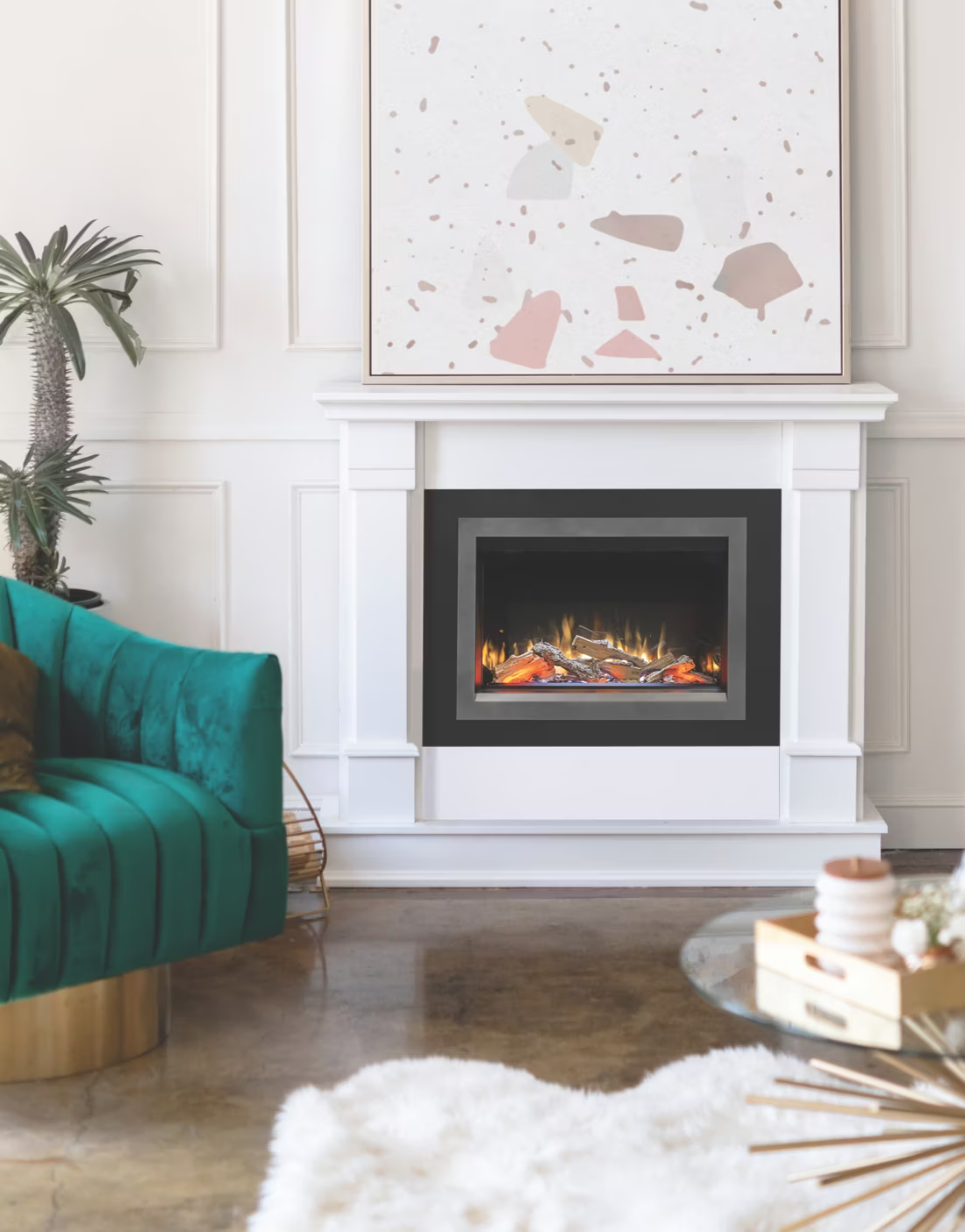
From the Greensburg rowhomes to the ridgetop additions around Ligonier and Donegal, electric fireplaces give Westmoreland County homeowners real heat and a real flame look without a chimney, a gas line, or a permit headache. Find the right unit and connect with a trusted local dealer.
Every Project Starts From One of These Five Situations
The easiest fireplace upgrade in a county full of older housing stock.
Westmoreland County stretches from the Pittsburgh suburbs around Murrysville and Trafford to the Laurel Highlands communities of Ligonier and Donegal, where elevation climbs toward Chestnut Ridge. Climate zone 5A here means real winters—average lows around 22°F and roughly 5,490 heating degree days a year, a heating season that typically runs from October through April. That's meaningfully colder than a mild winter but nowhere near the extremes of a place like International Falls, MN—it's the kind of cold where a good supplemental heat source in the family room genuinely lowers the furnace's workload.
A lot of the county's housing stock—the coal-and-steel-era rowhomes in Jeannette and Monessen, older farmhouses outside Latrobe, split-levels from the 1960s and '70s in Hempfield Township—either never had a masonry chimney suited for a real fire or has one that's been decommissioned for decades. Running new gas line or rebuilding a flue to code isn't always practical or affordable. That's exactly where electric fireplaces earn their keep: no venting, no gas line, no combustion byproducts, and in most cases no building permit at all—just a standard outlet or a simple dedicated circuit run by a licensed electrician. West Penn Power serves most of the county, and a typical electric fireplace running a few hours a night adds a modest, predictable line to the bill rather than the swings you'd see running a furnace harder.
Three steps. No salesperson until you're ready.
Tell us about your project
Your zip code, your situation, and the fuel you're leaning toward—or let the answers point you to one.
See what's actually available
The brands dealers within 100 miles genuinely carry—real options, never a catalog mirage.
Get your dealer & Project Guide
A trusted local dealer, plus the free Project Guide & Parts List that names every component of the job.
Frequently Asked Questions
How much does an electric fireplace installation cost in Westmoreland County?
Plug-in electric fireplace inserts and stoves start around $300 to $700 for the unit itself, with no professional installation required beyond plugging it in. Built-in wall units and mantel packages typically run $1,200 to $3,500 installed, including any carpentry for a surround and, if needed, an electrician running a dedicated 20-amp circuit (usually $150 to $400 on top of the unit cost). Dropping an insert into an existing masonry firebox—common in older Jeannette and Monessen rowhomes—usually lands in the middle of that range since there's no framing work involved. Local dealers will quote a firm number after seeing the space.
Do I need a permit to install an electric fireplace in Westmoreland County?
Usually no. Because electric fireplaces don't involve combustion, venting, or gas lines, most municipalities in Westmoreland County—which follow the Pennsylvania Uniform Construction Code—don't require a building permit for the fireplace itself. If your installation calls for a new dedicated electrical circuit, the electrician handling that work may need to pull an electrical permit through your local municipality (Greensburg, Hempfield Township, and Unity Township each administer their own UCC permitting). A reputable local dealer or electrician will tell you upfront whether your specific job needs one.
Can an electric fireplace actually heat a room in Westmoreland County's climate, or is it mostly for looks?
Most electric fireplace inserts put out around 5,000 to 9,000 BTU (roughly 1,500 watts), which is enough to meaningfully warm a single room in the 300- to 400-square-foot range—a family room, a finished basement, a sunroom addition. With average winter lows around 22°F and a heating season that runs from October through April, that's real, useful supplemental heat, especially in a room you use often and would otherwise be relying on the central furnace to cover. It's not a substitute for whole-house heat, though—homes on higher ground toward Ligonier and Donegal where temperatures run a few degrees colder should still treat electric fireplaces as zone heat, not a primary system.
What's the difference between an electric fireplace, an electric insert, and an electric log set?
An electric fireplace is typically a self-contained unit—freestanding, wall-mount, or built into a mantel surround—with its own frame and finish. An electric insert is sized to slide into an existing fireplace opening, which makes it the natural fit for Westmoreland County's older masonry fireboxes that were originally built for wood but haven't been used safely in years. An electric log set is the simplest option: a set of realistic logs with a heater built in that drops into an existing firebox with minimal fitting. For homes with an existing chimney opening they want to reuse without any chimney or venting work, an insert or log set is usually the most cost-effective path.
Will an electric fireplace work during a power outage?
No—electric fireplaces need power to run the heater, blower, and flame effect, so they go dark along with everything else in an outage. That matters in Westmoreland County, where ice storms on the higher ground around Ligonier and Donegal have knocked out West Penn Power service for days at a stretch in past winters. If backup heat during an outage is a priority for your household, an electric fireplace should be a supplement to—not a replacement for—a wood stove, wood insert, or battery-backed gas unit somewhere in the house.
What's the best electric fireplace for a Westmoreland County home?
For older rowhomes in Jeannette or Monessen with an existing but unused masonry firebox, an insert-style electric unit is usually the cleanest option—it drops into the opening you already have without any chimney work. For newer additions and finished basements in townships like Hempfield or Penn, a linear wall-mount unit gives a modern look and can run as either supplemental heat or ambiance-only. Look for models with realistic LED flame technology and a thermostat-controlled heater rather than a fixed-output resistance heater—the thermostat models are far more efficient to run day to day. A local dealer can match a specific model to your room size and the look you're going for.
How much does it cost to run an electric fireplace in Westmoreland County?
A typical electric fireplace draws around 1,500 watts on the heater setting. At West Penn Power's residential rates—roughly 14 to 16 cents per kilowatt-hour including distribution—running one for four hours an evening costs somewhere around $2.50 to $3.50 a week, or roughly $10 to $15 a month during the heating season. Running the flame effect alone without the heater draws a fraction of that, often under 100 watts. That's a predictable, modest add to the electric bill compared to the cost swings of running a furnace harder on the coldest nights.
Can I convert my existing wood-burning fireplace to electric?
Yes, and it's one of the more common projects in Westmoreland County's older housing stock. Many rowhomes and farmhouses built before the 1960s have a masonry firebox that hasn't been used in decades—sometimes because the flue was never relined, sometimes because a chimney inspection turned up damage that made wood-burning unsafe. An electric insert or log set drops into that existing opening without touching the chimney at all, since there's no venting requirement. It's often the fastest way to get a working fireplace back in a home where rebuilding the chimney to current code would cost thousands more.
Electric vs. gas vs. wood—which is right for my home in Westmoreland County?
Wood makes sense if you want the lowest operating cost and a heat source that works without power—oak, hickory, maple, and cherry are all common firewood species cut locally in the Laurel Highlands. Gas makes sense if your home already has a natural gas line—Columbia Gas and Peoples serve much of the county along the Route 30 and Turnpike corridors—and you want instant heat without wood handling. Electric makes the most sense when you don't have a gas line nearby, don't want chimney or venting work, or are finishing a basement or addition where running either isn't practical. A lot of Westmoreland County homeowners land on electric specifically because it's the option that doesn't require touching the structure of the house at all.
Can I put a TV above my fireplace?
Yes—with an asterisk. Fireplaces are hot and TVs don't like heat. Either put a mantel between them to deflect rising warmth, or choose a fireplace with heat-management technology that creates a cool zone on the wall above—the wall stays around 125 degrees, barely warm, while the room still gets full heat. If you like clean lines and don't want a mantel, heat management is the answer.
Does an electric fireplace need a vent or chimney?
No—that's its superpower. An electric fireplace needs a wall and an outlet, period. No vent pipe, no gas line, no clearances to design around, which is why it works in bedrooms, offices, apartments, and walls where venting a gas or wood unit would be impractical or impossible. Installation is typically the simplest and least expensive of any fireplace type.
What is an in-home preview and do I need one?
It's a visit where a hearth professional measures your space, confirms the model you picked actually works in your home, and walks the specs—framing, gas line, venting, finish work—before anything is ordered. Some details you just can't know until you see the house. Never make a down payment without one; it's the single most-skipped step that burns buyers.
Should the dealer who sells my fireplace also install it?
Ideally, yes. A fireplace project involves vent pipe, gas line, electrical, and often tile or stone. Hire three or four separate trades and you own the liability and the game of telephone between them. One company selling and installing means one accountable party, start to finish—ask about factory training, on-time completion records, and what happens if an inspection fails.
Stove and Fireplace Dealers in Westmoreland County
Listings include WhyFire partner dealers, dealers we have verified as authorized for the brands we recommend, and established local businesses that carry hearth products. Every listing shows which one it is. The ones marked Preferred run on WhyFire's software, so they can show you real pricing and book your appointment right here. No manufacturer pays for placement. How we verify dealers →
A Capital Roofing
Fireplace And Patio Place
Howell Craft Inc.
Tomayko Construction & Alternative Heating Llc.
Clear Water Pools LLC
Halls Pools & Fireplaces
All Seasons Fireplace & Home
Fireplace & Patioplace
Find your electric fireplace in Westmoreland County.
Tell us about your home and room, and we'll match you with a trusted local Westmoreland County dealer and send over a free Project Guide & Parts List—the exact parts for your electric fireplace project, matched to a dealer who can install it right.
Find Your Fireplace →