
The simplest heat upgrade for Monessen's older homes.
No chimney, no gas line, no permit hassle—just a fireplace that plugs in and works. Find the right unit for your home and get matched with a trusted local dealer.
Every Project Starts From One of These Five Situations
Zone heat that fits rowhouses and century-old floor plans.
Monessen sits along the Monongahela River in Westmoreland County, a former steel town built up mostly in the early 1900s with rowhouses, narrow lots, and modest single-family homes on tight in-town parcels. Winters here are genuinely cold—climate zone 5A, average winter lows around 21°F, and a long, demanding heating season, similar in severity to Buffalo, NY, if not quite as snow-heavy. But the housing stock doesn't lend itself to the wood or pellet setups you'd see in a more rural part of Westmoreland County. There's no nearby national forest cutting-permit office to make firewood cheap and easy, and pellet retail in this corner of the county is thin, so most homeowners here aren't set up for solid-fuel appliances at all.
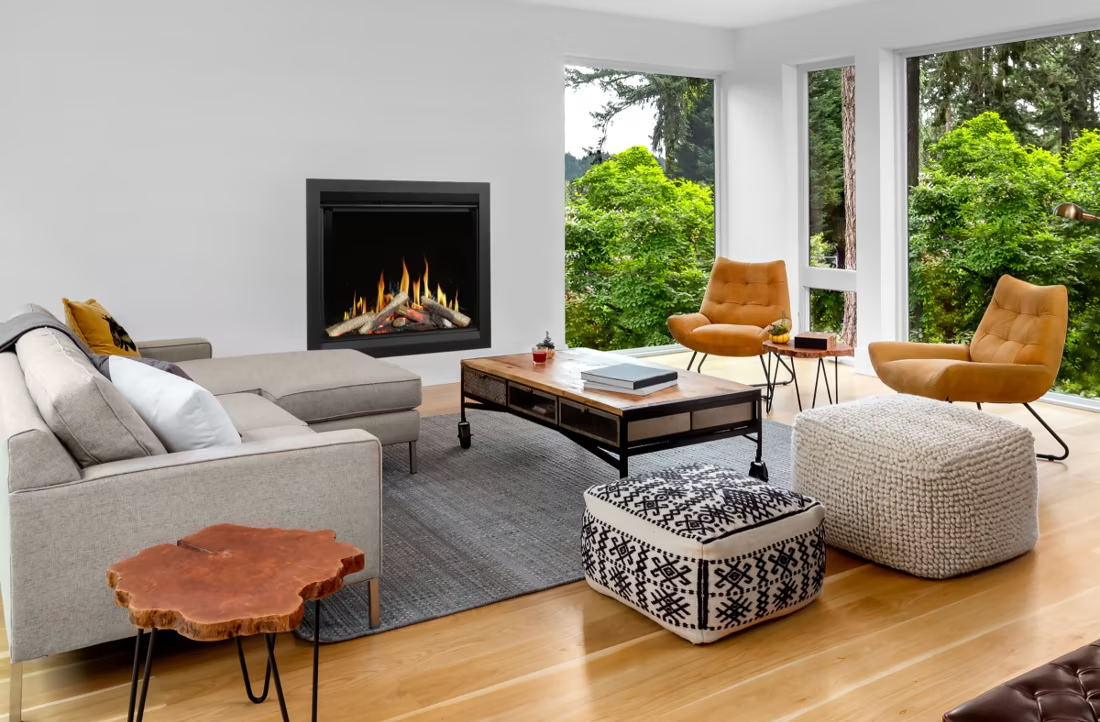
That's where electric fireplaces earn their place. An insert or wall unit needs no chimney, no gas line, and often no new venting of any kind—it drops into an existing masonry fireplace opening or mounts into a wall, plugs into a standard or dedicated circuit, and runs off West Penn Power service at a predictable $0.1545 per kWh. For Monessen's older homes—many with a bricked-up or capped chimney already—an electric insert is frequently the fastest, least invasive way to bring real ambiance and supplemental zone heat back into a room without touching the masonry or the roofline.
Three steps. No salesperson until you're ready.
Tell us about your project
Your zip code, your situation, and the fuel you're leaning toward—or let the answers point you to one.
See what's actually available
The brands dealers within 100 miles genuinely carry—real options, never a catalog mirage.
Get your dealer & Project Guide
A trusted local dealer, plus the free Project Guide & Parts List that names every component of the job.
Frequently Asked Questions
How much does it cost to install an electric fireplace in Monessen?
Because there's no venting or gas line involved, electric is usually the least expensive fireplace category to install. A plug-in insert or mantel package that slides into an existing masonry opening typically runs $300 to $1,500 installed, including any minor surround or trim work. A larger built-in wall unit, especially one requiring a licensed electrician to run a new dedicated 120V or 240V circuit, generally lands in the $1,500 to $3,000 range. Either way, you're skipping the chimney liner, Class A pipe, and gas-fitter costs that come with wood or gas projects.
Will an electric fireplace actually keep a room warm through a Monessen winter?
It will handle a room, not a house. Most residential electric fireplaces run on a standard 1,500-watt heater element, putting out roughly 5,000 BTU of supplemental heat—enough to noticeably warm a bedroom, den, or living room in an older Monessen home with single-pane windows and limited insulation, but not enough to replace a furnace when winter lows average around 21°F. Think of it as targeted comfort for the room you're actually sitting in, paired with your existing central heat.
What will an electric fireplace cost to run on my West Penn Power bill?
At West Penn Power's residential rate of $0.1545 per kWh, a typical 1,500-watt unit costs about 23 cents an hour to run on the heater setting, or roughly $1.15 for a five-hour evening. Left on flame-only mode without the heater engaged, the draw drops to a few watts—pennies a day—since it's just LED lighting. Compared to running a whole-house furnace, using an electric fireplace to zone-heat one occupied room is usually the cheaper option for evening and weekend use.
Do I need a permit to install an electric fireplace in Monessen?
For a plug-in insert or freestanding unit, no permit is typically required—it's treated like any other appliance. If your installer is adding a new dedicated electrical circuit for a larger built-in unit, that electrical work itself may need a permit pulled by the licensed electrician through Monessen's code enforcement office. Most local dealers and electricians handle that paperwork as part of the job, so it's rarely something you manage yourself.
What's the difference between an electric insert, a mantel package, and a wall-mounted unit?
An electric insert is built to slide into an existing fireplace opening—the go-to choice for Monessen's older homes with a masonry fireplace already in place. A mantel package pairs an electric firebox with a surrounding cabinet or mantel shelf and can go anywhere along a wall, no existing opening required. A wall-mounted or built-in unit is recessed into a wall cavity or hung flush against it, giving a more modern, linear look but usually calling for some carpentry or drywall work. Which one fits depends mostly on whether you're working with an existing hearth or starting from a blank wall.
Can I put an electric insert into my old masonry fireplace?
Yes, and it's one of the most common projects for Monessen's older housing stock. Many homes here still have a original brick fireplace from their early-1900s construction, often unused for years. An electric insert sets into that opening without touching the chimney—the flue can stay capped and sealed, since there's no combustion and nothing to vent. It's a straightforward way to bring a fireplace back to life cosmetically and functionally without any masonry repair or chimney inspection.
Electric vs. gas—which makes more sense for my Monessen home?
Gas gives you a real flame and higher heat output, and it's a standard, well-supported option in Monessen for homes already on natural gas service—but it requires a gas line, venting, and typically a larger installation budget. Electric skips all of that: no gas line, no venting, lower upfront cost, and it works in rental units, apartments above storefronts, or older homes where running new gas isn't practical. If you want genuine supplemental heat output and already have gas at the house, gas is worth a look. If you want the simplest, least invasive upgrade with a realistic ambiance-plus-zone-heat result, electric is usually the better fit.
Why don't more people in Monessen use wood or pellet stoves?
Monessen's housing stock is mostly dense rowhouses and modest lots from the early 1900s, with little room for cordwood storage and no nearby national forest permit office to make self-cut firewood cheap the way it is in more rural parts of Westmoreland County. Pellet stoves see similarly limited local demand—regional brands like Energex, Hamer, and Greene Team are more commonly stocked by dealers further out from town. Between the housing layout and the thin local supply chain, electric and gas have become the practical defaults for Monessen homeowners rather than wood or pellet.
How much maintenance does an electric fireplace actually need?
Very little compared to wood or gas. There's no annual chimney sweep and no gas technician visit required—the main components are an LED light array (often rated for 20,000+ hours of use) and a simple resistive heater element with a blower fan. Occasional dusting of the vents and blower intake is about all it takes. If the heater stops working but the flame effect still runs, it's usually a blown thermal fuse or a tripped breaker rather than anything requiring a service call.
Can I put a TV above my fireplace?
Yes—with an asterisk. Fireplaces are hot and TVs don't like heat. Either put a mantel between them to deflect rising warmth, or choose a fireplace with heat-management technology that creates a cool zone on the wall above—the wall stays around 125 degrees, barely warm, while the room still gets full heat. If you like clean lines and don't want a mantel, heat management is the answer.
Do electric fireplaces actually produce heat?
Yes—most put out around 4,800–5,000 BTUs from a standard outlet, which comfortably warms a bedroom, office, or den as a comfort-zone heater. What they won't do is carry a whole house the way wood, gas, or pellet can. Think of electric as ambiance-first with honest supplemental heat: flames on with no heat in July, flames plus warmth in January.
Does a fireplace add value to my home?
On average, a fireplace adds back to the home about the same amount you spent installing it. Add the monthly savings from heating the rooms you actually use instead of the whole house—often hundreds of dollars a year—and the value case is strong before you even count what a fire does for how your family uses the room.
Can a fireplace actually lower my heating bill?
Yes—by creating a comfort zone. A furnace heats every square foot of the house just to warm the one room you're in; a gas fireplace on low burns roughly a sixth of the gas a typical furnace does. Set the furnace around 55–60 degrees as a baseline, then heat the rooms your family actually uses. Families who heat this way commonly save $20–$60 a month.
Nearby Dealers
Hearth shops serving Monessen and the surrounding area. Every listing shows whether it is a WhyFire partner, a dealer we have verified as authorized for the brands we recommend, or a local business carrying hearth products. No manufacturer pays for placement. How we verify dealers →
Clear Water Pools LLC
Tomayko Construction & Alternative Heating Llc.
Howell Craft Inc.
Scenery Hill Hardware
Samson Glass And Mirror
A Capital Roofing
Tri-State Stoves
All Seasons Fireplace & Home
Fireplace & Patioplace
Koval Building Supply-Uniontown
Bottled Gas Service
Bill's Wood Stoves
Fireplace And Patio Place
The Chimney Guy LLC
Halls Pools & Fireplaces
Electric Service in Monessen
An electric fireplace's heater draws about 1,500 watts—pennies per hour at local rates.
West Penn Power Company
Find your electric fireplace in Monessen.
Tell us a bit about your home and we'll put together a free Project Guide & Parts List—the right insert or wall unit for your space, the electrical requirements, and a trusted local dealer who can install it.
Find Your Fireplace →