
Instant Heat for Bucks County Winters.
With roughly 5,000 heating degree days a year and winter lows near 24°F, Warminster Heights homes need dependable heat. Find the right gas fireplace or insert and get matched with a trusted local dealer.
Every Project Starts From One of These Five Situations
Reliable heat that fits suburban Bucks County life.
Warminster Heights sits at just under 300 feet of elevation in the Philadelphia suburbs, in a climate zone (4A) that sees roughly 5,000 heating degree days a year and winter lows averaging around 24°F. It's a real winter, but not an extreme one—the kind where a well-placed gas fireplace does most of the work without anyone splitting or stacking a single log.
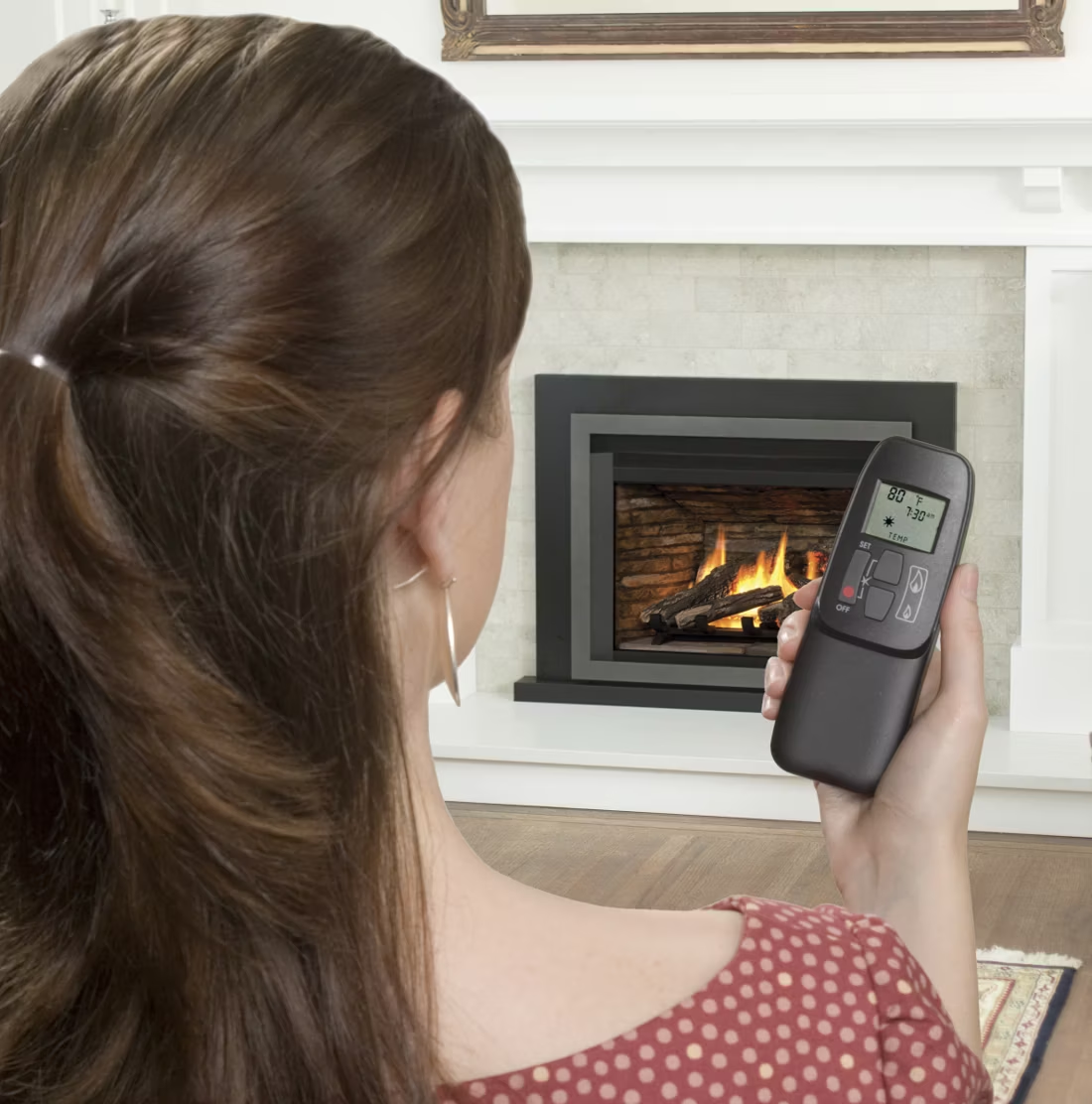
PECO Energy Co. serves most homes here for both electricity and natural gas, which means a direct-vent gas fireplace or insert is usually a straightforward install if your home already has gas service for the furnace or water heater. With the tight lot sizes and attached or closely-spaced housing common in this part of Bucks County, wood storage and cutting permits aren't practical for most residents—gas fills that role instead, delivering real heat at the flip of a switch or a wall switch remote.
Three steps. No salesperson until you're ready.
Tell us about your project
Your zip code, your situation, and the fuel you're leaning toward—or let the answers point you to one.
See what's actually available
The brands dealers within 100 miles genuinely carry—real options, never a catalog mirage.
Get your dealer & Project Guide
A trusted local dealer, plus the free Project Guide & Parts List that names every component of the job.
Frequently Asked Questions
How much does a gas fireplace installation cost in Warminster Heights?
Most gas fireplace and insert installations in this part of Bucks County run somewhere between $3,500 and $9,500, depending on the unit and how much venting and gas line work is involved. A direct-vent insert going into an existing masonry fireplace with gas already run nearby sits on the lower end. New construction, a fresh gas line extension from the meter, or a built-in unit in a remodeled room pushes toward the higher end. A local dealer will give you a firm number after seeing your home, since venting path length and gas line distance move the price more than the fireplace itself.
Can I convert my existing wood-burning fireplace to gas?
Yes, and it's one of the most common projects for homes in Warminster Heights and the surrounding Bucks County suburbs, many of which were built with a masonry fireplace as a standard feature in the mid-20th century. A gas insert slides into that existing firebox, uses a stainless liner run up the current chimney for venting, and typically costs $3,500 to $8,000 depending on whether new gas piping is needed. Since PECO already serves natural gas to most of this area, the gas line work is often simpler than in places without existing infrastructure.
Do I need natural gas, or should I use propane?
If your home already has PECO natural gas service—which covers the great majority of Warminster Heights—sticking with natural gas is almost always the simpler and cheaper path, since your installer just taps into existing pipe. Propane is really only a consideration for the small number of homes in more rural pockets of Bucks County outside PECO's natural gas footprint. Most gas fireplace models on the market can be set up for either fuel; your installer swaps the orifice and regulator to match.
Will my gas fireplace still work if the power goes out?
Most direct-vent gas fireplaces will, as long as they use intermittent pilot ignition (IPI) with a battery backup—the fireplace lights on demand off the batteries even with the electricity out. That matters here: Bucks County gets its share of ice storms and downed lines in winter, and a gas fireplace with battery backup is one of the few heat sources that keeps working when PECO service drops. Fireplaces from Valor go a step further, generating their own power through the pilot's thermocouple with no batteries required at all. Ask your local dealer which ignition system a given unit uses before you buy.
What's the difference between a gas fireplace, gas insert, and gas stove?
A gas fireplace is a fully built-in unit, framed into a wall—the right choice for new construction or a remodel where there's no existing masonry opening. A gas insert is built to drop into an existing masonry firebox, which is the more common project in Warminster Heights given how many homes already have a fireplace from the original build. A gas stove is a freestanding cabinet unit, similar in footprint to a wood stove, and works well in a room without any existing fireplace opening. Most homeowners here with an existing fireplace end up choosing an insert.
Do I need a permit to install a gas fireplace in Warminster Heights?
Yes—installations require both a building permit and a gas line permit through the local township building and codes office, and the gas piping portion must be done by a licensed gas-fitter. Most established hearth dealers in Bucks County handle this paperwork as part of the installation, coordinating the gas line, venting, and final inspection so you're not managing separate trades yourself. Skipping the permit isn't just a compliance issue—it can also affect your homeowner's insurance if there's ever a fire.
Should I get a vented or vent-free gas fireplace?
Vented, direct-vent units draw combustion air from outside and exhaust it back outside through sealed pipe—they're the standard recommendation and what most Bucks County installers will steer you toward. Vent-free (ventless) units burn without any outside venting and are legal in Pennsylvania under specific room-size and oxygen-sensor rules, but they release some combustion byproducts into the living space. For a primary heat source in a Warminster Heights home, a direct-vent unit is almost always the better call—it delivers more consistent heat and doesn't require any tradeoffs on indoor air quality.
How often does a gas fireplace need to be serviced?
Plan on an annual inspection, typically before the heating season starts. A technician checks the burner, pilot assembly, gas connections, and venting, and cleans the glass and interior—usually $150 to $250 for a standard visit. It's a much lighter lift than chimney sweeping on a wood system, but it matters just as much: a fireplace that sits unused most of the year can develop pilot or ignition issues that only show up the first cold night you try to light it.
Should I consider wood or pellet instead of gas?
For most homes in Warminster Heights, no—and that's a fair thing to say plainly. While oak, hickory, maple, and cherry are the common firewood species across this part of Bucks County, the tight lots and attached housing typical here leave little room for wood storage, and there isn't much of a local wood-burning culture to draw on. Pellet stoves face a similar space and practicality gap. Gas, backed by PECO's existing natural gas infrastructure through most of the area, is simply the more workable fit—instant heat with no fuel storage, no ash, and no cutting or stacking required.
Why is my open fireplace making my house colder?
Open fireplaces suck—literally. As the fire burns, it consumes air your furnace already paid to heat and pulls it out through the chimney, so the house is actually colder after the fire goes out than before you lit it. An insert fixes this: it seals the chimney, puts fixed glass across the front, and turns that hole in your house into a real heat source.
What's the difference between an insert and a zero-clearance fireplace?
An insert is a fireplace that slides into a pre-existing wood-burning fireplace—if you don't have one, there's nothing to insert it into. A zero-clearance fireplace is built into a framed wall, which makes it the answer for remodels and new construction. Simple test: existing masonry fireplace means insert; blank or framed wall means zero-clearance.
Can I install a fireplace myself?
If you're putting a fire in your house on purpose, it's best to work with an expert. Unless you're genuinely experienced in framing, gas line, vent pipe, and the national code on clearances to combustibles, have a professional do it—and ideally the same company that sells you the fireplace, so warranty, service, and liability all live under one roof.
Does a fireplace add value to my home?
On average, a fireplace adds back to the home about the same amount you spent installing it. Add the monthly savings from heating the rooms you actually use instead of the whole house—often hundreds of dollars a year—and the value case is strong before you even count what a fire does for how your family uses the room.
Nearby Dealers
Hearth shops serving Warminster Heights and the surrounding area. Every listing shows whether it is a WhyFire partner, a dealer we have verified as authorized for the brands we recommend, or a local business carrying hearth products. No manufacturer pays for placement. How we verify dealers →
Kester Fireplace
Maple Glen Mechanical
Estates Chimney & Fireplace
Hearth & Stove LLC
Ambler Fireplace And Patio
Estates Chimney Sweep
Plumbarama Co. Inc.
Ambler Fireplace & Patio - Chalfont
E & E Stoves & Fireplaces
Tor Chimney & Fireplace
Tri County Hearth & Awning
Better Homes Hearth & Patio
Norristown Chimney
Sequoia Supply Hatfield Showroom
Rattan Patio & Fireplace Shoppe
Find your gas fireplace in Warminster Heights.
Tell us a bit about your home and we'll match you with a trusted local dealer and send over a free Project Guide & Parts List—the exact parts, including the vent kit, for your Warminster Heights gas fireplace project.
Find Your Fireplace →