
Gas heat that fits Bucks County's historic homes.
Instant, clean heat for everything from a Doylestown colonial to a new build off Route 1—natural gas through PECO or UGI in the more developed areas, propane in rural upper Bucks. Find the right unit and connect with a trusted local dealer.
Every Project Starts From One of These Five Situations
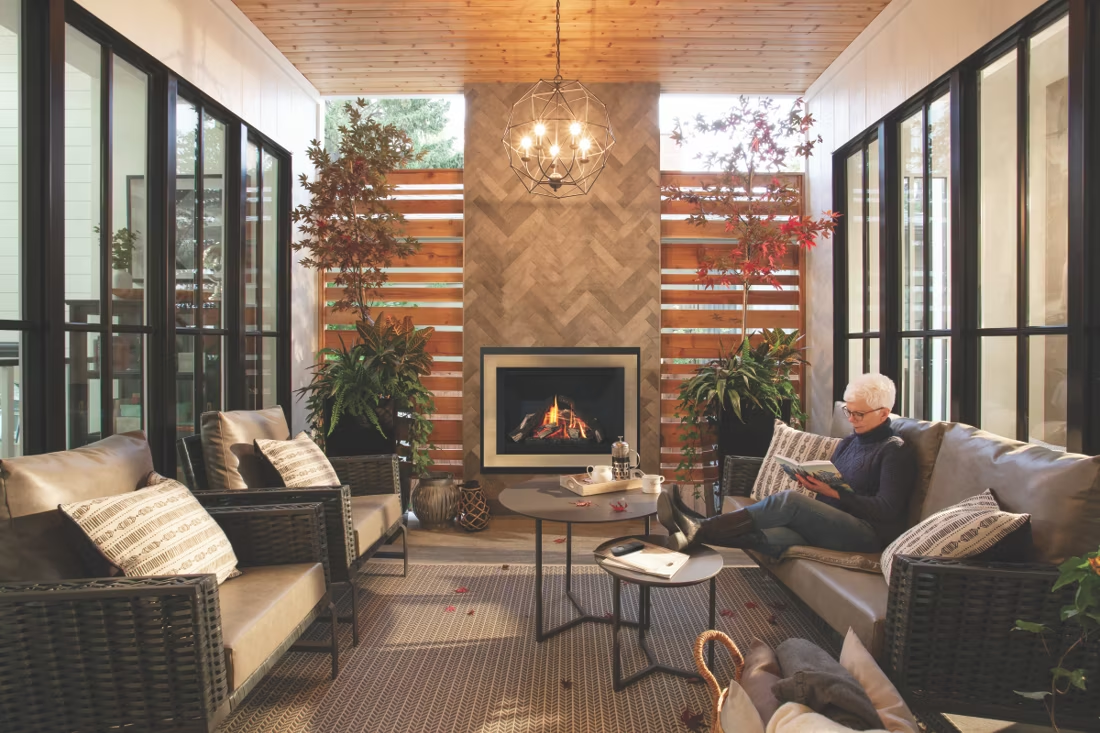
Clean, instant heat without splitting a log.
Bucks County stretches across roughly 625 square miles of southeastern Pennsylvania, from the Delaware River towns of New Hope and Bristol to the farm townships of Nockamixon and Springfield up north. Winters here average lows around 22°F with about 5,340 heating degree days—a real heating season, but nothing like the deep freezes of Burlington, VT. Plenty of the county's colonial-era stone farmhouses still have their original masonry fireplaces, built generations ago for burning the oak, hickory, and cherry cut from local woodlots. A growing number of homeowners are converting those old fireboxes to gas rather than keeping up with wood.
Natural gas service reaches much of lower and central Bucks County through PECO and UGI Utilities—Doylestown, Warminster, Warrington, and the Route 1 corridor are well covered. Head further up into rural upper Bucks townships and propane becomes the more common fuel, delivered and tanked by regional suppliers. Either way, a gas fireplace or insert gives you heat at the flip of a switch, the ability to run during a winter power outage with the right ignition system, and a way to keep an old stone hearth as the centerpiece of the room without the wood handling.
Three steps. No salesperson until you're ready.
Tell us about your project
Your zip code, your situation, and the fuel you're leaning toward—or let the answers point you to one.
See what's actually available
The brands dealers within 100 miles genuinely carry—real options, never a catalog mirage.
Get your dealer & Project Guide
A trusted local dealer, plus the free Project Guide & Parts List that names every component of the job.
Frequently Asked Questions
How much does a gas fireplace installation cost in Bucks County?
Costs vary by project scope. A direct-vent gas insert dropped into an existing stone or brick fireplace—common in Bucks County's older farmhouses and colonials—tends to run on the lower end, since the chimney is already there for a liner. A new built-in gas fireplace for a remodel or addition, with fresh framing and venting, sits in the middle of the range. Jobs that require a new propane tank, a long gas line run, or significant venting work land at the higher end. Local retailers will walk your home and give you a firm number after an in-home consultation.
Can I convert my existing wood-burning fireplace to gas?
Yes, and it's one of the most requested projects among Bucks County hearth dealers, especially in the county's older stone and brick farmhouses. A gas insert typically slides into the existing masonry opening with a stainless liner run up your current chimney, so you keep the original fieldstone surround or mantel while gaining real heat output and losing the ash and creosote upkeep. The scope depends on whether the home already has a gas line nearby or needs one extended from the meter, and whether you're on natural gas or propane.
Do I need natural gas, or can I use propane?
Either works, and which one applies to your home mostly comes down to where you sit in the county. Natural gas from PECO or UGI Utilities reaches much of lower and central Bucks—Doylestown, Warminster, Newtown, and the denser Route 1 corridor. Move out toward Nockamixon, Springfield, or Durham in upper Bucks and you're more likely on propane, either from an existing tank or a new one set by a local supplier. Most gas fireplace models can be configured for either fuel with the right orifice and regulator, so your dealer will match the unit to whichever service you have.
Will my gas fireplace work during a power outage?
Most modern gas fireplaces are built to run without utility power. Units with IPI (intermittent pilot ignition) carry a battery backup—usually AA batteries in the unit—that takes over automatically if the power drops, so the fireplace still lights on demand. Valor fireplaces skip batteries entirely: their pilot's thermocouple generates the small amount of electricity the valve needs, so the unit works whether or not you remember to check a battery drawer. For Bucks County homes that lose power during a winter ice storm along the Delaware or a downed line out in upper Bucks, that's a meaningful difference—ask your local retailer about the ignition system on any model you're considering.
What's the difference between a gas fireplace, gas insert, and gas stove?
A gas fireplace is a fully built-in unit framed into a wall—the right call for new construction or a room without an existing hearth. A gas insert is sized to slide into an existing masonry firebox, which is common in Bucks County's older stone farmhouses and colonials with large original fireplaces. A gas stove is a freestanding cast-iron or steel unit that sits on its own hearth pad, similar in footprint to a wood stove but running on gas. For most Bucks County homeowners working with an existing fireplace, an insert is the straightforward upgrade; new builds and additions typically call for a built-in unit.
Do I need a permit to install a gas fireplace in Bucks County?
Yes—Bucks County is made up of more than 50 individual boroughs and townships, each with its own building department, so permitting runs through your local municipality rather than a single county office. Doylestown Borough, Warrington Township, and Newtown Township each issue their own permits and inspections, and the gas line work itself needs to be pulled by a licensed gas fitter. Most established hearth dealers coordinate the building permit, the gas line, and the final inspection as part of the install, so you're not left juggling separate trades.
What's the difference between vented and vent-free gas fireplaces?
Vented gas fireplaces—direct-vent or B-vent—pull combustion air from outside and exhaust the byproducts back outside through sealed venting. Vent-free units burn without any outside venting at all, releasing some water vapor and trace combustion gases into the room, and they're legal in Pennsylvania under specific room-sizing and ventilation rules. For Bucks County's older stone farmhouses with existing masonry chimneys, direct-vent inserts are the more common and more universally recommended choice—you get full heat output and don't have to weigh indoor air quality tradeoffs. Ask your local dealer to walk through both options for your specific fireplace opening.
How often should my gas fireplace be serviced?
Plan on an annual inspection, the same as any gas appliance. A technician checks the burner, pilot assembly, venting, and gas connections, and cleans the glass and interior—a much lighter lift than a wood chimney sweep, but not one to skip. Local gas appliance service providers in Bucks County typically charge $150 to $250 for a standard annual visit, usually scheduled before the fireplace sees regular fall and winter use.
Gas vs. wood—which is right for my Bucks County home?
Wood delivers higher radiant heat output, the authentic look and smell of a real fire, and the ability to run with no electricity at all—appealing if you've got a woodlot of oak, hickory, or cherry and don't mind splitting and stacking. Gas gives you instant on-off heat, no ash or creosote, and a consistent flame with none of the chimney maintenance. In a county full of century-old stone farmhouses with existing fireplaces built for wood, converting to a gas insert is a popular middle ground—you keep the original hearth and mantel but get the convenience. Newer construction without an existing chimney usually leans gas from the start.
Is my gas fireplace wasting gas?
If it was installed more than 15 years ago, probably. Older gas fireplaces keep a standing pilot light burning all the time, and that little flame can cost a couple hundred dollars a year. Newer models use pilot-on-demand ignition—the pilot lights only when you use the fireplace and goes out when you turn it off.
What's the difference between an insert and a zero-clearance fireplace?
An insert is a fireplace that slides into a pre-existing wood-burning fireplace—if you don't have one, there's nothing to insert it into. A zero-clearance fireplace is built into a framed wall, which makes it the answer for remodels and new construction. Simple test: existing masonry fireplace means insert; blank or framed wall means zero-clearance.
Can I install a fireplace myself?
If you're putting a fire in your house on purpose, it's best to work with an expert. Unless you're genuinely experienced in framing, gas line, vent pipe, and the national code on clearances to combustibles, have a professional do it—and ideally the same company that sells you the fireplace, so warranty, service, and liability all live under one roof.
What is an in-home preview and do I need one?
It's a visit where a hearth professional measures your space, confirms the model you picked actually works in your home, and walks the specs—framing, gas line, venting, finish work—before anything is ordered. Some details you just can't know until you see the house. Never make a down payment without one; it's the single most-skipped step that burns buyers.
Stove and Fireplace Dealers in Bucks County
Listings include WhyFire partner dealers, dealers we have verified as authorized for the brands we recommend, and established local businesses that carry hearth products. Every listing shows which one it is. The ones marked Preferred run on WhyFire's software, so they can show you real pricing and book your appointment right here. No manufacturer pays for placement. How we verify dealers →
Hearth & Stove LLC
Estates Chimney & Fireplace
Kester Fireplace
Tri County Hearth & Awning
Maple Glen Mechanical
E & E Stoves & Fireplaces
Tor Chimney & Fireplace
Better Homes Hearth & Patio
Estates Chimney Sweep
Ambler Fireplace And Patio
Plumbarama Co. Inc.
Ambler Fireplace & Patio - Chalfont
Sequoia Supply Hatfield Showroom
Norristown Chimney
Rattan Patio & Fireplace Shoppe
Flemington Supply Co. Inc
Find your gas fireplace in Bucks County.
Tell us about your home and current fireplace, and we'll match you with a trusted local Bucks County dealer—plus a free Project Guide & Parts List spelling out the exact components, including the vent kit, for your gas fireplace project.
Find Your Fireplace →