
Keep Your Family Warm and Safe—No Matter What
Wood heat is a niche choice in Villanova—most homes run on gas or electric—but for a preserved stone fireplace or a genuine backup fire, we'll connect you with a dealer who installs it correctly.
Every Project Starts From One of These Five Situations
A fireplace for character, not a furnace replacement.
Villanova sits in a moderate Mid-Atlantic climate zone (4A), with a winter heating season on the milder side of average and typical winter lows near 23°F—cold enough for a real heating season, but nowhere near the extremes of places like Burlington VT or Duluth MN, where wood heat is a genuine necessity. Natural gas service reaches most of the Main Line, and the great majority of Villanova homes are heated by gas or oil furnaces and boilers rather than a wood stove in the living room.
That's why wood-burning appliances are flagged as a niche fit here rather than a standard recommendation. Where they do show up, it's almost always tied to Villanova's housing stock: older stone Colonial-revival and Tudor-style homes on the Main Line often have an original masonry fireplace worth preserving, and some homeowners add a cast-iron insert for real backup heat during a winter power outage. Oak, hickory, maple, and cherry are the hardwoods most commonly burned locally, though nearly all of it comes from area firewood suppliers rather than self-cut permits, since there's no adjacent national forest land the way there is in more rural parts of Pennsylvania.
Three steps. No salesperson until you're ready.
Tell us about your project
Your zip code, your situation, and the fuel you're leaning toward—or let the answers point you to one.
See what's actually available
The brands dealers within 100 miles genuinely carry—real options, never a catalog mirage.
Get your dealer & Project Guide
A trusted local dealer, plus the free Project Guide & Parts List that names every component of the job.
Frequently Asked Questions
How much does it cost to install a wood stove or insert in Villanova?
Wood-burning installations are uncommon enough in Villanova that pricing here tracks general Southeastern Pennsylvania hearth-industry rates rather than a large local market. A wood insert into an existing masonry fireplace typically runs $4,000 to $8,000 depending on the liner length and insert model, while a freestanding stove requiring new Class A chimney can reach $9,000 to $12,000 in an older stone Main Line home where the masonry chase wasn't built for modern venting. Because so few installers here specialize in wood, expect to work with a hearth dealer serving the greater Philadelphia region rather than a Villanova-based specialist.
Is wood heat common in Villanova?
Not really—wood is flagged as a niche fuel choice for this area, and for good reason. Villanova's winters are moderate by Northeast standards (a fairly average-length heating season, average winter low near 23°F), natural gas service is widely available on the Main Line, and most homes rely on gas or oil furnaces and boilers as primary heat. Where wood shows up, it's almost always a secondary, ambiance-driven choice—a working fireplace in an older stone home, or a wood insert added for backup heat during a winter outage—not a primary heating strategy.
I have an old stone fireplace in my Main Line home—can I still use it, or should I get an insert?
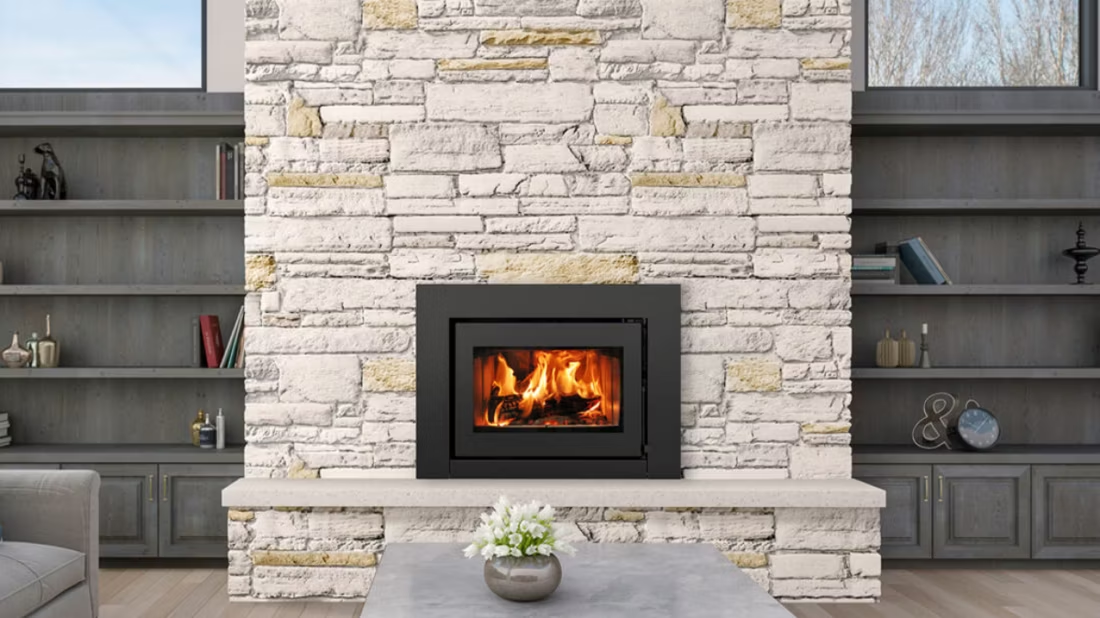
Many of Villanova's older stone and Colonial-revival homes have wood-burning fireplaces original to the house. These can usually still be used, but a masonry chimney inspection is essential before lighting the first fire, especially in homes that haven't burned wood in years. A cast-iron or steel wood insert is the most common upgrade here—it uses the existing chimney with a stainless liner, cuts heat loss dramatically compared to an open hearth, and turns a decorative feature into something that can genuinely help during a February cold snap.
Do I need a permit for a wood stove in Villanova?
Yes. Villanova sits within Lower Merion Township on the Montgomery County side of the Main Line, and any new wood-burning appliance installation requires a building permit through the township's Building & Planning Department along with a UCC-compliant inspection. The stove or insert itself needs to meet current EPA 2020 NSPS emissions standards. If your property falls under a historic district designation or an HOA covenant—not unusual for Villanova's older estates—check those requirements too, since some restrict new chimneys or exterior vent terminations.
Where do Villanova homeowners get firewood?
There's no nearby national forest land or public cutting permit program the way there might be in more rural parts of Pennsylvania, so almost nobody self-cuts firewood in Villanova. Homeowners buy seasoned cordwood from local tree services and firewood suppliers around Montgomery and Delaware counties. Oak, hickory, maple, and cherry are the common regional hardwoods, and cherry in particular shows up often here given how many mature cherry trees on Main Line properties end up milled into firewood after storm damage or removal.
How often should a wood-burning fireplace be inspected in Villanova?
Annually, per CSIA guidelines—and it matters more here than in newer construction, because a lot of Villanova's stone homes have chimneys that are 60, 80, even 100-plus years old. A full Level 1 sweep and inspection before burning season catches deteriorated mortar, cracked flue tiles, and animal nests that are common in older, less-frequently-used chimneys. If the fireplace hasn't been used in several seasons, a Level 2 inspection with a camera scan is worth the extra cost before lighting the first fire.
Wood vs. gas—which makes more sense for a Villanova home?
Gas is the practical default here—PECO's natural gas service covers most of the Main Line, and a direct-vent gas fireplace or insert gives instant, thermostat-controlled heat without ash, smoke, or wood storage. Wood makes sense in a narrower set of cases: homes with an existing masonry fireplace worth preserving, or homeowners who want a real fire that keeps working through a winter power outage. Most Villanova homeowners we hear from end up choosing gas for daily use and, at most, keeping an existing wood fireplace as an occasional-use feature rather than adding new wood-burning equipment.
Are there restrictions on wood-burning fireplaces in Villanova's historic homes or HOA communities?
Possibly, and it's worth checking before committing to a project. A number of Villanova properties sit within Lower Merion Township's historic overlay areas or are governed by homeowners' association covenants that regulate exterior changes, including new chimneys or through-wall vent terminations. None of this rules out a wood-burning project, but it does mean confirming with the township and, if applicable, your HOA architectural review committee before a dealer finalizes venting plans—particularly for a new freestanding stove that needs a roof or wall penetration.
Since wood isn't common here, should I consider a pellet stove instead?
Pellet stoves are also uncommon in Villanova for similar reasons—a moderate climate by regional standards, universal access to natural gas, and a housing stock better suited to gas or electric solutions. Pellet stoves do offer a middle ground—hopper-fed convenience and a cleaner burn than cordwood—if you want a solid-fuel backup option, but they require electricity to run the auger and blower, which defeats the power-outage advantage that draws some Villanova homeowners to wood in the first place. For most properties here, a gas insert or a preserved existing wood fireplace ends up being the more practical route than adding pellet equipment.
Why is my open fireplace making my house colder?
Open fireplaces suck—literally. As the fire burns, it consumes air your furnace already paid to heat and pulls it out through the chimney, so the house is actually colder after the fire goes out than before you lit it. An insert fixes this: it seals the chimney, puts fixed glass across the front, and turns that hole in your house into a real heat source.
What's the difference between an insert and a zero-clearance fireplace?
An insert is a fireplace that slides into a pre-existing wood-burning fireplace—if you don't have one, there's nothing to insert it into. A zero-clearance fireplace is built into a framed wall, which makes it the answer for remodels and new construction. Simple test: existing masonry fireplace means insert; blank or framed wall means zero-clearance.
Does a fireplace add value to my home?
On average, a fireplace adds back to the home about the same amount you spent installing it. Add the monthly savings from heating the rooms you actually use instead of the whole house—often hundreds of dollars a year—and the value case is strong before you even count what a fire does for how your family uses the room.
Can a fireplace actually lower my heating bill?
Yes—by creating a comfort zone. A furnace heats every square foot of the house just to warm the one room you're in; a gas fireplace on low burns roughly a sixth of the gas a typical furnace does. Set the furnace around 55–60 degrees as a baseline, then heat the rooms your family actually uses. Families who heat this way commonly save $20–$60 a month.
Nearby Dealers
Hearth shops serving Villanova and the surrounding area. Every listing shows whether it is a WhyFire partner, a dealer we have verified as authorized for the brands we recommend, or a local business carrying hearth products. No manufacturer pays for placement. How we verify dealers →
Norristown Chimney
Ambler Fireplace And Patio
Halligan's Hearth And Home
Maple Glen Mechanical
Halco Grills And Fireplaces
Kester Fireplace
Comfort Home & Hearth
Ambler Fireplace & Patio - Chalfont
Sequoia Supply Hatfield Showroom
Find your wood fireplace in Villanova.
Tell us about your home—including any existing masonry fireplace—and we'll put together a free Project Guide & Parts List with the right equipment and a trusted local dealer who can install it correctly.
Find Your Fireplace →