
Instant Heat for Uniontown's Long Appalachian Winters.
With a long, cold heating season and winter lows averaging 21°F in the Laurel Highlands foothills, Uniontown homes need heat that turns on the moment you need it. Find the right gas fireplace or insert and get matched with a trusted local dealer.
Every Project Starts From One of These Five Situations
Reliable warmth without tending a fire.
Uniontown sits at just under 1,000 feet in the foothills of Chestnut Ridge, a coal-and-coke town whose heating season stretches from October well into April. With a winter heating load comparable to many stretches of upstate New York, the climate here isn't as extreme as Buffalo, NY, but it's cold and damp enough for long enough that homeowners want heat sources they can count on through nor'easters and lake-effect snow bands that occasionally spill over the ridge.
Fayette County's long history of natural gas and coal-bed methane development means most homes in and around Uniontown borough already have gas service or are within easy reach of a line, often through Columbia Gas of Pennsylvania. Outside town limits, where lots get larger and utility lines thinner, propane tanks are common instead. Either way, a modern gas fireplace or insert delivers heat at the flip of a switch, works during winter power outages with the right ignition system, and turns an old coal-era masonry fireplace into a real heating appliance instead of a decorative hole in the wall.
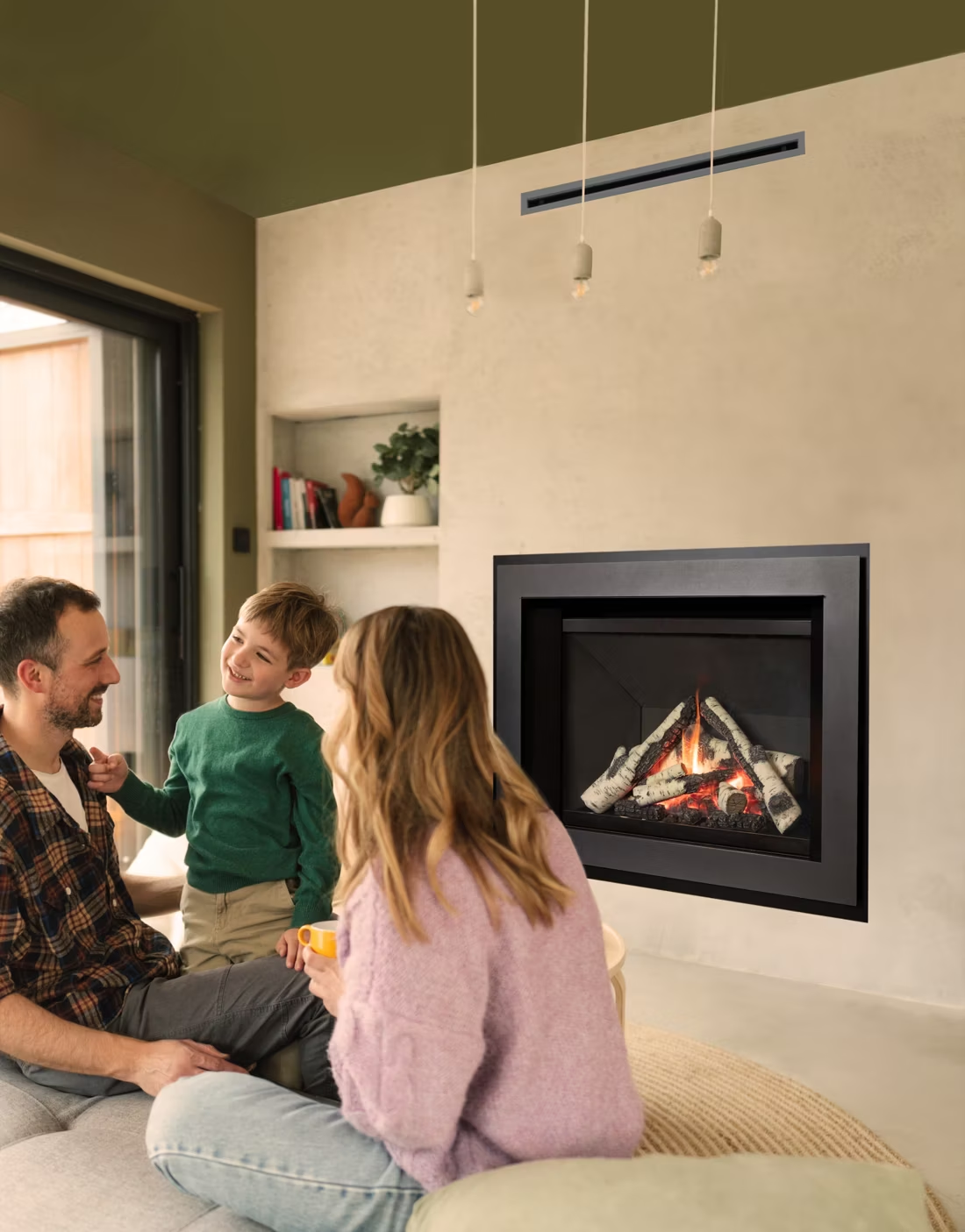
Three steps. No salesperson until you're ready.
Tell us about your project
Your zip code, your situation, and the fuel you're leaning toward—or let the answers point you to one.
See what's actually available
The brands dealers within 100 miles genuinely carry—real options, never a catalog mirage.
Get your dealer & Project Guide
A trusted local dealer, plus the free Project Guide & Parts List that names every component of the job.
Frequently Asked Questions
How much does a gas fireplace installation cost in Uniontown?
Most gas fireplace or insert installations in Uniontown run between $4,000 and $9,500. A direct-vent insert dropped into an existing masonry fireplace with a gas line already nearby sits on the lower end. A new built-in gas fireplace for a remodel or addition—with framing, venting, and a fresh gas line run from the meter—lands in the middle to upper range. Homes that need a propane tank set instead of a natural gas tie-in, or a longer line run through an older coal-era foundation, can push toward the top of that range. A local dealer will give you a firm number after seeing your home.
Can I convert my existing wood-burning fireplace to gas?
Yes, and it's a common project in Uniontown's older neighborhoods, many of which were built during the coal and coke boom of the early 1900s and still have their original masonry fireboxes. A gas insert with a stainless steel liner run up your existing flue typically costs $4,000 to $8,000, depending on the insert and whether new gas piping is needed. It keeps the original brick surround and mantel while replacing the smoky, inefficient open hearth with real, controllable heat output.
Do I need natural gas, or is propane more common around Fayette County?
Within Uniontown borough, natural gas service is generally available, with Columbia Gas of Pennsylvania as the main provider in this part of southwestern PA—a legacy of Fayette County's long natural gas and coal-bed methane development. Outside the borough, in the more rural stretches of the county, propane is often the more practical option, supplied through a leased or owned tank. Most gas fireplace models can be set up for either fuel; your installer just adjusts the orifice and regulator to match. If you're not sure which is available at your address, that's one of the first things a local dealer will check before quoting a job.
Will my gas fireplace still work if the power goes out?
Most direct-vent gas fireplaces with intermittent pilot ignition (IPI) include a battery backup that keeps the unit operable when the power drops—which matters in Uniontown, where heavy snow and ice on Chestnut Ridge can knock out power for a day or more at a time. The fireplace lights and runs on batteries just as it would normally; you just need to remember to keep fresh ones on hand. A few brands, including Valor, use a self-powered pilot system that generates its own electricity from the thermocouple, so there's no battery to forget at all. Ask your local dealer which ignition system a given model uses.
What's the difference between a gas fireplace, gas insert, and gas stove?
A gas fireplace is a fully built-in unit framed into a wall—the right call for new construction or a remodel without an existing chimney. A gas insert is built to slide into an existing masonry firebox, which fits a lot of Uniontown's older housing stock. A gas stove is a freestanding cast-iron or steel unit that sits on the floor like a wood stove but runs on gas, which works well in a smaller home or a room without any existing fireplace opening. Most Uniontown homeowners with an old coal-era firebox end up choosing an insert.
Do I need a permit to install a gas fireplace in Uniontown?
Yes. New gas fireplace or insert installations require a building permit through the City of Uniontown's code enforcement office (or Fayette County's building department if you're outside borough limits), plus a gas line permit if new piping is involved. The gas line work has to be done by a licensed gas fitter. Most established local hearth dealers coordinate the permitting, gas work, and venting inspection together, so you're not left juggling separate trades and inspections yourself.
What's the difference between vented and vent-free gas fireplaces?
Vented (direct-vent) gas fireplaces pull combustion air from outside and exhaust the byproducts back outside through a sealed pipe—they're the cleanest, safest option and the one most contractors default to. Vent-free units burn gas directly into the room without any outside venting; Pennsylvania permits them, but they come with strict room-size and ventilation requirements, and they release some water vapor and combustion byproducts into your living space. Given how many Uniontown homes are older and tightly built row houses and bungalows from the coal era, most local dealers steer homeowners toward direct-vent units, which don't force any tradeoffs on indoor air quality.
How often does a gas fireplace need to be serviced?
Plan on an annual inspection, ideally before the heating season ramps up in October. A technician checks the burner, pilot assembly, gas connections, and venting, and cleans the glass and interior. It's a lighter job than a wood chimney sweep but still important—most gas service providers in the Uniontown area charge somewhere between $150 and $225 for a standard annual visit.
Gas vs. wood—which makes more sense for a Uniontown home?
Within Uniontown borough itself, gas is by far the more practical choice—tighter lots, older row-house construction, and easy access to gas lines make wood-burning less common inside town limits. That said, Fayette County's surrounding hills are thick with oak, hickory, maple, and cherry, and cutting permits through the Monongahela National Forest run about $20 per cord during the May-to-October season for homeowners further out in the county who still want wood heat. For most in-town homeowners, though, a gas insert or fireplace delivers the convenience and consistent heat that fits a smaller in-town lot without the wood storage and ash cleanup.
What's the difference between an insert and a zero-clearance fireplace?
An insert is a fireplace that slides into a pre-existing wood-burning fireplace—if you don't have one, there's nothing to insert it into. A zero-clearance fireplace is built into a framed wall, which makes it the answer for remodels and new construction. Simple test: existing masonry fireplace means insert; blank or framed wall means zero-clearance.
Can I put a TV above my fireplace?
Yes—with an asterisk. Fireplaces are hot and TVs don't like heat. Either put a mantel between them to deflect rising warmth, or choose a fireplace with heat-management technology that creates a cool zone on the wall above—the wall stays around 125 degrees, barely warm, while the room still gets full heat. If you like clean lines and don't want a mantel, heat management is the answer.
Can a fireplace actually lower my heating bill?
Yes—by creating a comfort zone. A furnace heats every square foot of the house just to warm the one room you're in; a gas fireplace on low burns roughly a sixth of the gas a typical furnace does. Set the furnace around 55–60 degrees as a baseline, then heat the rooms your family actually uses. Families who heat this way commonly save $20–$60 a month.
What is an in-home preview and do I need one?
It's a visit where a hearth professional measures your space, confirms the model you picked actually works in your home, and walks the specs—framing, gas line, venting, finish work—before anything is ordered. Some details you just can't know until you see the house. Never make a down payment without one; it's the single most-skipped step that burns buyers.
Nearby Dealers
Hearth shops serving Uniontown and the surrounding area. Every listing shows whether it is a WhyFire partner, a dealer we have verified as authorized for the brands we recommend, or a local business carrying hearth products. No manufacturer pays for placement. How we verify dealers →
Koval Building Supply-Uniontown
Bill's Wood Stoves
The Chimney Guy LLC
Bottled Gas Service
Tomayko Construction & Alternative Heating Llc.
Clear Water Pools LLC
Laurel Mtn Chimney Sweeps & Hearth Service
Tristate Fireplace LLC
Cam-Rock
Scenery Hill Hardware
Streets Hardware Store
Let's plan your gas fireplace project in Uniontown.
Tell us about your home and we'll match you with a trusted local dealer, plus send you a free Project Guide & Parts List—the exact parts, vent kit, and recommended installer for your gas fireplace project in Uniontown.
Find Your Fireplace →