
Reliable heat for Fayette County's long Laurel Highlands winters.
Wood, gas, pellet, and electric fireplace resources for every city and rural community in Fayette County—from Uniontown to Ohiopyle. Find the right unit and get matched with a trusted local hearth retailer.
Every Project Starts From One of These Five Situations
Heating through the Laurel Highlands, one cord and one BTU at a time.
Fayette County sits in the Laurel Highlands of southwestern Pennsylvania, where the terrain climbs from the Monongahela River valley up into ridge country bordering the Monongahela National Forest to the south. Climate zone 5A and about 5,450 heating degree days put winters here on par with Madison, Wisconsin—long heating seasons that stretch from October into April, with average lows around 21°F and colder snaps along the higher ridges near Chalk Hill and Farmington. Hardwood heat has deep roots in this county: oak, hickory, maple, and cherry are all common on local wood lots, and a lot of Fayette County households still process their own firewood or buy it from a neighbor down the road.
What you'll find on this hub: hearth retailers, service technicians, and fuel suppliers covering every community in the county—from Uniontown and Connellsville down to Brownsville and Perryopolis, east through the Route 40 corridor toward Farmington and the Chalk Hill area. Pick your fuel below to get into the specifics—local dealers, installation costs, recommended units, and resources matched to your project. Whether you're heating a farmhouse outside Dunbar or a cabin near Ohiopyle, this is the starting point.
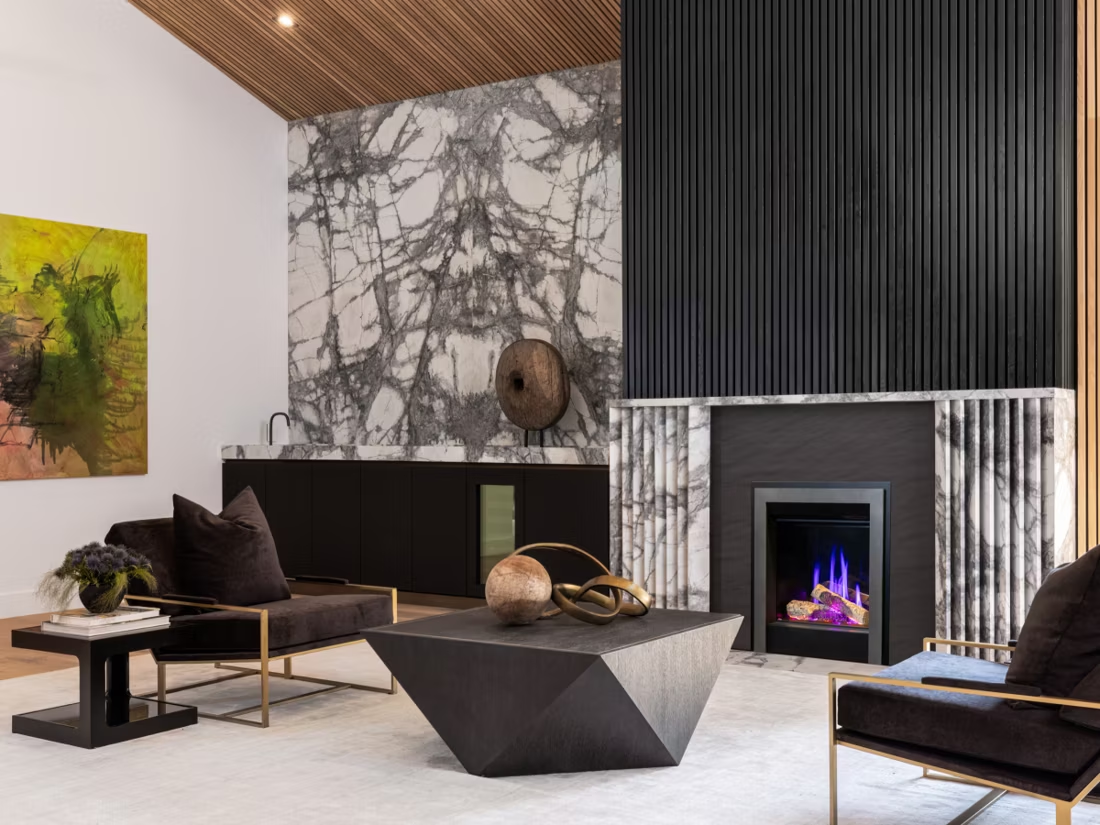
Four fuels. One honest answer for Fayette County.
Three steps. No salesperson until you're ready.
Tell us about your project
Your zip code, your situation, and the fuel you're leaning toward—or let the answers point you to one.
See what's actually available
The brands dealers within 100 miles genuinely carry—real options, never a catalog mirage.
Get your dealer & Project Guide
A trusted local dealer, plus the free Project Guide & Parts List that names every component of the job.
Frequently Asked Questions
Which fuel works best in Fayette County?
It depends on your home and priorities, but all four fuels have a real place here. Wood is the traditional heater in Fayette County's rural areas—oak, hickory, and maple wood lots are common, and a modern EPA-certified wood stove or insert holds heat well through the long 5A heating season, including as backup during winter power outages. Gas is the convenience pick in and around Uniontown and Connellsville where natural gas service reaches, and propane fills that role farther out in the county—no wood handling, consistent heat, quick installs. Pellet stoves are a strong middle option here given the local pellet supply from Energex and Hamer Pellet Fuel plants nearby—wood-look heat without splitting and stacking. Electric fireplaces work well as supplemental heat for bedrooms, additions, or apartments in Uniontown and Connellsville, but they're not typically relied on as a home's primary heat source through a Fayette County winter. Many households here pair a wood or pellet stove for primary heat with gas or electric in secondary rooms.
Do I need a permit to install a fireplace in Fayette County?
Generally yes. New wood stoves, wood inserts, gas fireplaces, gas inserts, gas stoves, and pellet stoves typically require a building permit through the local municipal building department—Uniontown, Connellsville, and each of the county's boroughs and townships handle their own permitting, so the office you'll deal with depends on where the home sits. Gas installations also need a separate gas line permit and licensed gas-fitter for the connection work. Wood stoves and inserts installed new should meet current EPA emissions standards. Electric fireplaces usually skip the permit process unless the installation involves hardwiring a built-in unit into a new electrical circuit. Most local hearth retailers in Fayette County handle the permitting paperwork as part of the installation, so it's rarely something homeowners have to sort out on their own.
Are there air quality restrictions on wood burning in Fayette County?
No—Fayette County doesn't have the winter inversion or non-attainment issues that trigger burn advisories in some western regions. The Laurel Highlands' hillier terrain and lower population density mean wood smoke doesn't concentrate the way it can in a basin or valley bowl. That said, a modern EPA-certified wood stove burning seasoned oak, hickory, maple, or cherry still burns cleaner and more efficiently than an older pre-1990s stove, which matters for chimney creosote buildup and neighbor courtesy even without formal restrictions. If you're replacing an older stove, ask your local retailer about current EPA-certified models—they'll burn less wood for the same heat output.
Can one local hearth retailer handle all four fuel types?
Many Fayette County hearth retailers carry three or four fuel types, which is useful if you're still comparing wood, gas, pellet, and electric before committing. Dealers based in Uniontown and Connellsville tend to stock the broadest range, with working showroom displays of wood inserts, gas units, and pellet stoves side by side. Retailers farther out toward Brownsville or Perryopolis may lean more heavily toward wood and pellet, given the rural customer base and heavier reliance on wood lots and pellet mills like Energex. If electric is a priority—say, for a bedroom or apartment install—confirm the dealer stocks electric units specifically, since some hearth shops treat electric fireplaces as a smaller side line compared to their wood and gas business.
How does service work in the more rural parts of Fayette County?
Service technicians covering Fayette County are generally based around Uniontown or Connellsville and travel out to the more spread-out parts of the county—toward Farmington and Chalk Hill in the east, Perryopolis and the river towns to the west, and the Route 51 corridor south toward the Monongahela National Forest boundary. Expect a modest travel fee for calls farther from the county seat. Scheduling annual chimney sweeps or gas inspections in late summer or early fall—before the heating season starts—is easier than trying to book a technician during a January cold snap. If you're in an outlying area and rely on wood or pellet heat, keeping a small backup supply of dry hardwood on hand is a reasonable hedge against a delayed service call mid-winter.
What's the typical cost range for fireplace installation across all fuel types in Fayette County?
Costs vary by fuel and by how much existing infrastructure—chimney, gas line, electrical—is already in place. Wood stove or insert installation: roughly $4,000–$8,500 for a typical retrofit into an existing chimney, more for new construction requiring a full masonry or class-A chimney system. Gas fireplace, insert, or stove: roughly $4,000–$10,000, with cost driven mainly by how far the unit is from an existing gas line and the venting configuration required. Pellet stove or insert: roughly $4,000–$7,000 for most installs. Electric fireplace: $200–$2,800 for the unit itself, plus $300–$1,000 in labor for anything beyond a simple plug-in placement, such as a built-in wall unit. For details tied to specific local retailer pricing, see the county + fuel pages above.
Does a fireplace add value to my home?
On average, a fireplace adds back to the home about the same amount you spent installing it. Add the monthly savings from heating the rooms you actually use instead of the whole house—often hundreds of dollars a year—and the value case is strong before you even count what a fire does for how your family uses the room.
How much should I budget for a fireplace?
For an average home—covering the fireplace, the vent pipe, and basic installation—a budget between $3,900 and $5,500 gives you a lot of options across wood, gas, and pellet. By the time you add finish work, gas line, and electrical, the average complete installation lands between $5,000 and $12,000 all-in. In a remodel or new build, a good rule is to put about 2.5% of the total project cost toward the fireplace.
Can a fireplace actually lower my heating bill?
Yes—by creating a comfort zone. A furnace heats every square foot of the house just to warm the one room you're in; a gas fireplace on low burns roughly a sixth of the gas a typical furnace does. Set the furnace around 55–60 degrees as a baseline, then heat the rooms your family actually uses. Families who heat this way commonly save $20–$60 a month.
What are the biggest mistakes people make buying a fireplace?
Five come up constantly: budgeting for the unit but not the full job (vent, gas line, electrical, finish work); drowning in options instead of starting from style and fuel; buying without an in-home preview; handing installation to a handyman instead of a pro; and giving up out of sheer indecision. Every one is avoidable with a clear plan—step one, step two, step three.
Stove and Fireplace Dealers in Fayette County
Listings include WhyFire partner dealers, dealers we have verified as authorized for the brands we recommend, and established local businesses that carry hearth products. Every listing shows which one it is. The ones marked Preferred run on WhyFire's software, so they can show you real pricing and book your appointment right here. No manufacturer pays for placement. How we verify dealers →
Koval Building Supply-Uniontown
Bill's Wood Stoves
The Chimney Guy LLC
Tomayko Construction & Alternative Heating Llc.
Bottled Gas Service
Clear Water Pools LLC
Laurel Mtn Chimney Sweeps & Hearth Service
Scenery Hill Hardware
Howell Craft Inc.
Tristate Fireplace LLC
Cam-Rock
Get matched with a Fayette County hearth dealer.
Tell us your fuel and your project, and we'll match you with a trusted local dealer and send over a free Project Guide & Parts List—the parts, the vent kit, and the recommended installer for your home.
Find Your Fireplace →