
Instant Heat, No Venting, No Waiting in Throop.
Electric fireplaces built for Throop's tightly spaced rowhomes and PPL-powered grid—plug one in today, or have a local pro wire in a built-in unit that looks like it was always there.
Every Project Starts From One of These Five Situations
Small lots, tight budgets, and a straightforward electric grid.
Throop is a borough of about 4,000 people in Lackawanna County's old anthracite coal region, tucked between Scranton and the Moosic Mountains at just over 1,000 feet of elevation. Winters here average lows near 20°F and the area racks up roughly 5,740 heating degree days a season—cold enough to matter, though nowhere near what a place like Buffalo, NY sees a few hundred miles north. Most of Throop's housing stock dates to the borough's coal-mining boom in the early 1900s: narrow lots, shared walls, and rowhomes and duplexes with little room to spare. That housing pattern shapes which fireplace options actually make sense here.
Wood and pellet stoves are technically available in the wider region—species like oak, hickory, maple, and cherry grow throughout the surrounding Endless Mountains, and regional pellet brands like Energex and Hamer Pellet Fuel are sold nearby—but neither fits Throop's housing stock well. Many of the borough's rowhomes and duplexes lack the chimney clearance, exterior wall access, or storage space a wood or pellet setup needs. Electric fireplaces sidestep all of that: no venting, no chimney work, and a simple connection to a home served by PPL Electric Utilities. At Throop's residential rate of roughly $0.1234 per kWh, running one costs a fraction of firing up an older oil furnace or electric baseboard heat for the same room.
Three steps. No salesperson until you're ready.
Tell us about your project
Your zip code, your situation, and the fuel you're leaning toward—or let the answers point you to one.
See what's actually available
The brands dealers within 100 miles genuinely carry—real options, never a catalog mirage.
Get your dealer & Project Guide
A trusted local dealer, plus the free Project Guide & Parts List that names every component of the job.
Frequently Asked Questions
How much does it cost to install an electric fireplace in Throop?
A plug-in electric insert or wall-mount unit typically runs $300 to $1,500 installed, since most models just need a standard 120V outlet and some trim work around an existing opening—a common route for Throop's older rowhome fireplaces that already have a firebox opening but no working chimney. A fully built-in electric fireplace with a dedicated circuit, framing, and a custom mantel surround runs closer to $2,500 to $5,000, since it involves an electrician and finish carpentry. Local dealers will size the right option to your opening and your electrical panel during an in-home visit.
Do I need a permit for an electric fireplace in Throop?
A plug-in unit that uses an existing outlet typically doesn't require a permit. If you're having a built-in unit hardwired on a dedicated circuit, that electrical work needs to be pulled through Throop Borough's code enforcement office, since it's new circuit work rather than a simple appliance swap. Most local electricians and hearth dealers handle that paperwork as part of the installation, so it's rarely something homeowners have to manage themselves.
How much does it cost to run an electric fireplace on PPL's rates?
At Throop's residential rate of about $0.1234 per kWh through PPL Electric Utilities, a typical 1,500-watt electric fireplace costs roughly 18–19 cents an hour to run on high heat. Used for a few hours most evenings through a Northeast Pennsylvania winter, that adds up to somewhere around $20 to $35 a month—considerably less than heating the same room with an older oil furnace or electric baseboard, and most units let you run the flame effect alone, with the heater off, for essentially no cost.
What's the best electric fireplace for Throop's rowhomes and duplexes?
For Throop's older attached housing, a zero-clearance electric insert that drops into an existing (often non-functional) fireplace opening is usually the cleanest fit—it reuses the opening you already have without any masonry or venting work. Where there's no existing firebox, a slim wall-mount linear unit works well in narrow living rooms typical of the borough's early-1900s construction, since it doesn't eat into floor space. Either way, a local dealer can measure your opening or wall and match it to a unit that fits without custom framing.
Electric vs. gas—which is right for my Throop home?
Gas fireplaces are also a solid option in Throop for homes with natural gas service already run to the house—they put out real heat and can run during a power outage with the right ignition system. Electric fireplaces skip the gas line and venting entirely, cost far less to install, and are the simpler choice if your home isn't already plumbed for gas or if you want supplemental ambiance without the expense of new gas work. For a lot of Throop's smaller rowhomes, where a whole-house furnace already handles the heavy lifting, electric is often chosen purely for zone heat and atmosphere in one room rather than as a primary heat source.
Why aren't wood or pellet stoves more common in Throop?
Local wood species like oak, hickory, maple, and cherry are plentiful in the hills around Lackawanna County, and pellet brands such as Energex, Hamer Pellet Fuel, and Greene Team are sold throughout the region—so the fuel itself isn't the obstacle. The issue is the housing: Throop's rowhomes and duplexes were built close together on narrow lots during the coal-mining era, often without the chimney clearances, exterior venting access, or storage space that wood and pellet appliances need. A small number of detached homes on larger lots in the borough can still make wood work, but for most Throop addresses, electric or gas is the more realistic path.
Can an electric fireplace actually heat a room, or is it just for looks?
A standard 1,500-watt electric fireplace puts out about 5,000 BTUs—enough to noticeably warm a room in the 300 to 400 square foot range, which covers most individual living rooms in Throop's rowhome-style housing. It won't replace a furnace on a 10°F night, but as supplemental heat for a family room while the thermostat stays lower elsewhere in the house, it does real work—not just visual effect. Every unit also lets you run the flame with the heater switched off, which is common in shoulder-season months when Throop doesn't need extra heat but still wants the ambiance.
What types of electric fireplaces are available for a Throop home?
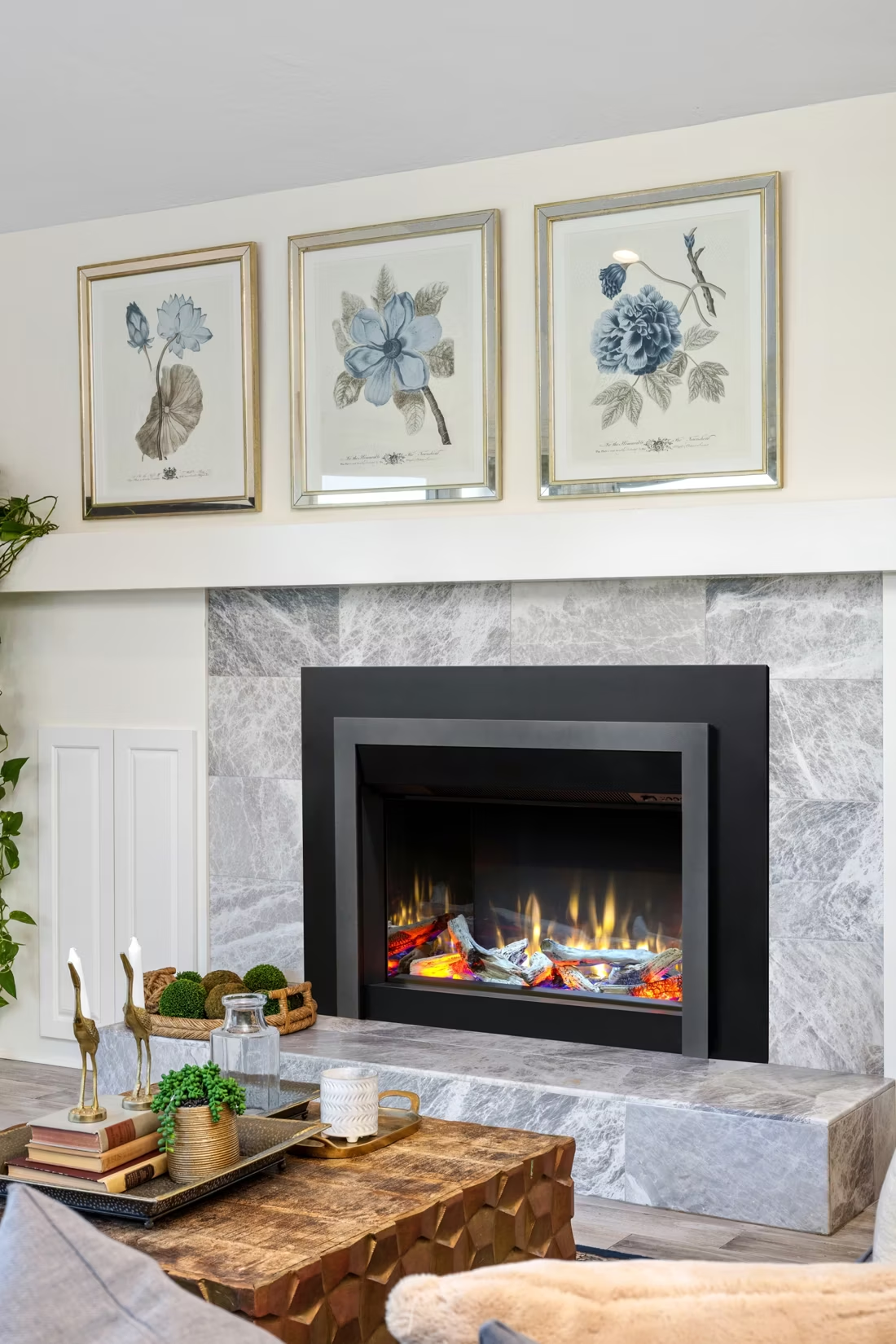
The three most common types are inserts, wall-mounts, and built-ins. Inserts drop into an existing fireplace opening—the go-to choice for Throop's older homes with a firebox that no longer has a working chimney. Wall-mount units hang like a flat-screen TV and work well in newer construction or rooms without any existing fireplace. Built-in linear units are framed into a wall during a remodel for a more custom, seamless look, often with a mantel or stone surround. A local dealer can walk through which fits your specific room and budget.
Will an electric fireplace work during a power outage?
No—because electric fireplaces run entirely on household current, they shut off along with everything else when the power goes out. That's worth factoring in if you're in Throop and thinking about backup heat during a winter storm, since neither electric fireplaces nor most modern gas units without battery-backed ignition will run without power. If outage resilience matters to you, ask a local dealer about gas units with standing pilot or self-powered ignition systems as a companion to an electric fireplace used for everyday convenience.
Can I put a TV above my fireplace?
Yes—with an asterisk. Fireplaces are hot and TVs don't like heat. Either put a mantel between them to deflect rising warmth, or choose a fireplace with heat-management technology that creates a cool zone on the wall above—the wall stays around 125 degrees, barely warm, while the room still gets full heat. If you like clean lines and don't want a mantel, heat management is the answer.
Do electric fireplaces actually produce heat?
Yes—most put out around 4,800–5,000 BTUs from a standard outlet, which comfortably warms a bedroom, office, or den as a comfort-zone heater. What they won't do is carry a whole house the way wood, gas, or pellet can. Think of electric as ambiance-first with honest supplemental heat: flames on with no heat in July, flames plus warmth in January.
How much should I budget for a fireplace?
For an average home—covering the fireplace, the vent pipe, and basic installation—a budget between $3,900 and $5,500 gives you a lot of options across wood, gas, and pellet. By the time you add finish work, gas line, and electrical, the average complete installation lands between $5,000 and $12,000 all-in. In a remodel or new build, a good rule is to put about 2.5% of the total project cost toward the fireplace.
Can I install a fireplace myself?
If you're putting a fire in your house on purpose, it's best to work with an expert. Unless you're genuinely experienced in framing, gas line, vent pipe, and the national code on clearances to combustibles, have a professional do it—and ideally the same company that sells you the fireplace, so warranty, service, and liability all live under one roof.
Nearby Dealers
Hearth shops serving Throop and the surrounding area. Every listing shows whether it is a WhyFire partner, a dealer we have verified as authorized for the brands we recommend, or a local business carrying hearth products. No manufacturer pays for placement. How we verify dealers →
Integrity Chimney Service
Glowing Embers
Spring Hill Services
S & T Coombe
Electric Service in Throop
An electric fireplace's heater draws about 1,500 watts—pennies per hour at local rates.
Ppl Electric Utilities Corp
Find your electric fireplace in Throop.
Tell us about your home and we'll match you with a trusted local dealer and a free Project Guide & Parts List—sized to fit Throop's rowhomes, PPL's rates, and your room.
Find Your Fireplace →