
Warm up a room in the Endless Mountains, without a chimney.
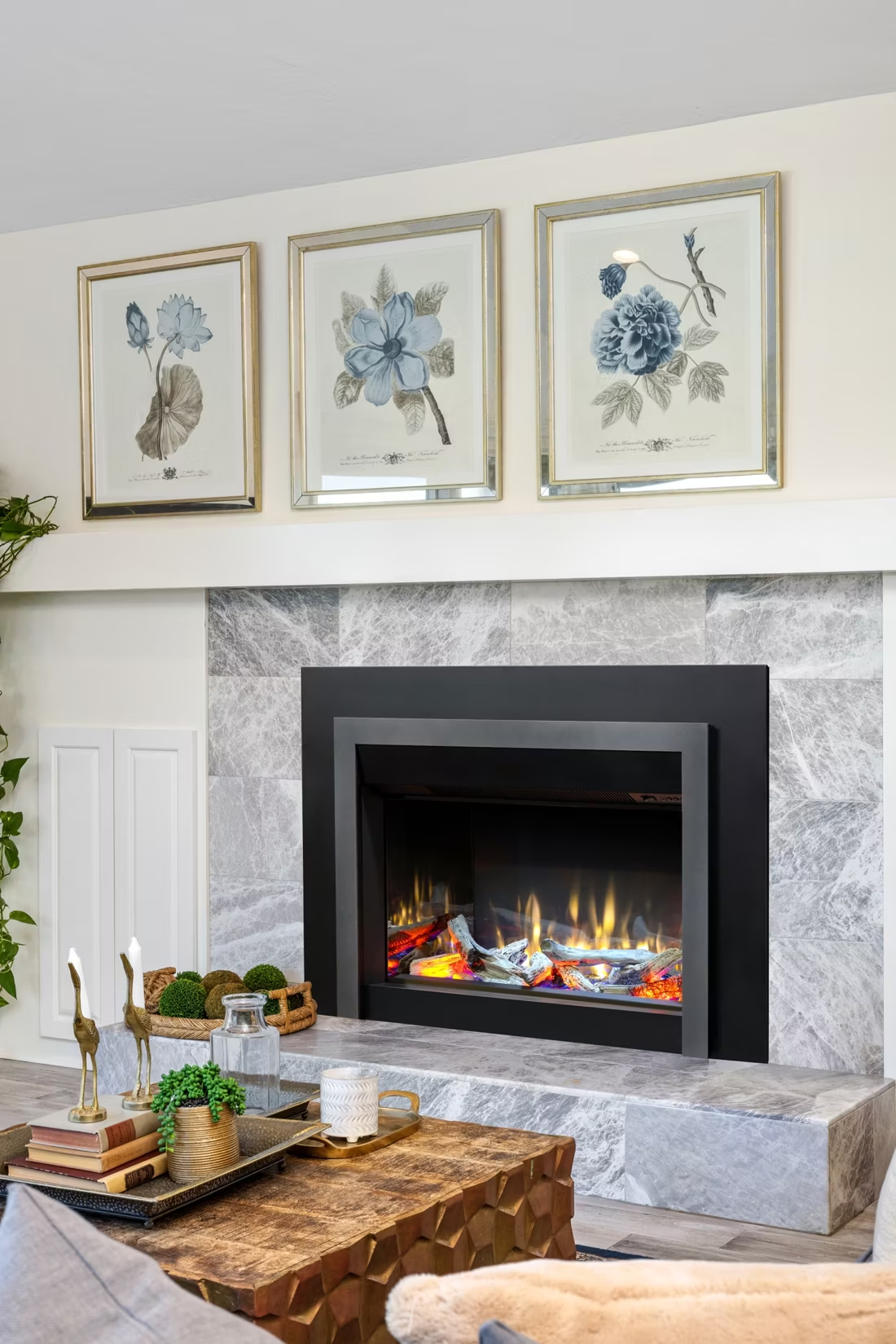
With a long winter heating season comparable to Burlington, Vermont and winter lows that sit around 12°F, Susquehanna County homes need more than a decorative fireplace—but a properly sized electric unit adds real, thermostat-controlled zone heat to a bedroom, sunroom, or finished basement with no venting and no chimney. Find the right unit and connect with a trusted local dealer.
Every Project Starts From One of These Five Situations
Supplemental warmth for a snowbelt county.
Susquehanna County sits up on the Appalachian Plateau in the Endless Mountains of northeastern Pennsylvania, and its winters run long—comparable in heating load to Burlington, Vermont. With just under 6,600 residents spread across small boroughs like Montrose, New Milford, Susquehanna Depot, Hallstead, and Great Bend, most homes here rely on oil, propane, or wood as their primary heat, and plenty of local woodlots supply oak, hickory, maple, and cherry for stoves and inserts. Electric fireplaces don't compete with that—they fill a different role, adding controllable warmth to a specific room without running new ductwork or opening a wall for venting.
Power in most of the county comes through Claverack Rural Electric Cooperative, and the same hilly, tree-lined terrain that makes the Endless Mountains scenic also makes them prone to ice-storm outages in a hard winter. That's worth knowing before you lean on an electric unit as anything more than supplemental heat—it goes dark exactly when a wood or pellet stove would keep working. Where an electric fireplace shines in Susquehanna County is the addition that doesn't justify a full HVAC extension: a converted attic bedroom, a three-season porch, or a finished basement that only needs a boost on the coldest nights.
Three steps. No salesperson until you're ready.
Tell us about your project
Your zip code, your situation, and the fuel you're leaning toward—or let the answers point you to one.
See what's actually available
The brands dealers within 100 miles genuinely carry—real options, never a catalog mirage.
Get your dealer & Project Guide
A trusted local dealer, plus the free Project Guide & Parts List that names every component of the job.
Frequently Asked Questions
How much does an electric fireplace installation cost in Susquehanna County?
A freestanding or wall-mounted plug-in electric fireplace typically runs $200 to $900 for the unit itself, with no real installation cost beyond mounting hardware—it plugs into a standard outlet. A built-in electric insert or a wall unit that needs a dedicated 20-amp circuit runs closer to $1,200 to $3,000 installed, once you factor in an electrician's time to run new wiring through a plaster-and-lath older farmhouse or a finished basement wall. Because Susquehanna County is rural, expect some installers to add a modest travel charge for jobs out toward Forest City-area townships or the far corners of the county away from Montrose and New Milford.
What size electric fireplace or insert do I need for my room?
Electric units are rated by BTU output for a single zone, not a whole house—most residential models put out 4,000 to 10,000 BTU, enough to noticeably warm a 400 to 600 square foot room with average insulation. In an older Susquehanna County farmhouse with drafty windows and high ceilings, size toward the upper end of that range or plan to run it alongside your existing oil or propane heat rather than expecting it to carry the room alone on a 12°F night. A local dealer can walk through your room dimensions and insulation before you buy.
Do I need a permit to install an electric fireplace in Susquehanna County?
A plug-in freestanding or mantel-mounted unit generally doesn't require a permit—it's treated like any other appliance. A built-in insert or wall unit that needs a new dedicated circuit is electrical work, and most townships and boroughs in the county require an electrical permit for that, pulled by a licensed electrician. Requirements vary slightly by municipality—check with your local township or borough office (Bridgewater Township covers Montrose, for example) before work starts. Most installers who handle built-in units in this county are used to coordinating that permit as part of the job.
What's the difference between a plug-in electric fireplace, an electric insert, and a built-in wall unit?
A plug-in freestanding electric fireplace is portable, needs no wiring changes, and can be moved from room to room—the simplest option for renters or anyone testing out zone heat before committing further. An electric insert is built to slide into an existing masonry fireplace opening, giving a wood-burning fireplace a second life as a clean, no-maintenance heat source without touching the chimney. A built-in wall unit is recessed into new framing, usually during a remodel or an addition, and typically needs its own circuit. For a lot of older Susquehanna County homes with an unused masonry fireplace, an insert is the straightforward upgrade—no chimney sweep, no wood, no ash.
Will an electric fireplace still work if the power goes out?
No—and that matters more here than in a lot of places. Claverack Rural Electric Cooperative lines run through wooded, hilly terrain that's exposed to ice loading in a bad winter storm, and outages in the Endless Mountains can stretch for hours or, in a severe event, days. An electric fireplace is dead the moment the power drops, same as your furnace fan. If you're in a rural stretch of the county without a backup generator, it's worth keeping a wood or pellet stove somewhere in the house as your actual storm-heat plan, and treating the electric unit purely as everyday convenience heat.
What's the best electric fireplace for Susquehanna County's climate?
Look for a model with a real electric heater rated at 5,000 BTU or higher and a thermostat, not just the flame-effect visual—in a county averaging 12°F winter lows, you want the heat to actually be usable, not decorative. For a finished basement or a converted upstairs bedroom that doesn't get much reach from the main furnace, a wall-recessed insert with a strong fan-forced heater tends to outperform a small mantel unit. Local dealers can also point you toward models built for taller New England-style winters rather than units marketed mainly on ambiance.
Electric vs. wood—which is right for my home?
Wood, split from local oak, hickory, maple, or cherry, keeps working through a power outage, produces real radiant heat, and can genuinely offset a heating oil or propane bill through a long Susquehanna County winter. Electric fireplaces offer none of that resilience—no power, no heat—but they also require no wood handling, no chimney, and no ash, and they turn on and off instantly with a remote. For a primary heat source in this climate, wood or pellet still wins for most rural households here. For a specific room that needs a clean, low-maintenance boost—a nursery, a home office, a sunroom addition—electric is the better fit.
Electric vs. pellet stove—which makes more sense here?
Pellet stoves, running on bagged fuel from regional suppliers like Energex, Hamer Pellet Fuel, or Greene Team Pellet Fuel, can genuinely heat a large portion of a Susquehanna County home and keep going through most of a hard winter, though they still need electricity to run the auger and blower. Electric fireplaces skip the fuel bags and the hopper entirely, but they only heat the room they're in and do nothing during an outage, just like the pellet stove's electronics. If you want single-room convenience with zero fuel logistics, electric is simpler. If you want meaningful whole-area heat with a strong regional fuel supply chain already in place, pellet is the better match for this county.
How much does it cost to run an electric fireplace day to day in Susquehanna County?
Most electric fireplace heaters draw around 1,500 watts on the heat setting. At typical Claverack Rural Electric Cooperative residential rates, that works out to roughly 15 to 20 cents an hour of heater runtime—noticeable if you run it as a primary heat source all winter, but modest if you're using it a few hours an evening to take the chill off one room while your furnace handles the rest of the house. That cost profile is exactly why most Susquehanna County households treat electric units as a supplemental layer rather than a replacement for oil, propane, or wood heat during a long, Vermont-caliber winter.
Can I put a TV above my fireplace?
Yes—with an asterisk. Fireplaces are hot and TVs don't like heat. Either put a mantel between them to deflect rising warmth, or choose a fireplace with heat-management technology that creates a cool zone on the wall above—the wall stays around 125 degrees, barely warm, while the room still gets full heat. If you like clean lines and don't want a mantel, heat management is the answer.
Do electric fireplaces actually produce heat?
Yes—most put out around 4,800–5,000 BTUs from a standard outlet, which comfortably warms a bedroom, office, or den as a comfort-zone heater. What they won't do is carry a whole house the way wood, gas, or pellet can. Think of electric as ambiance-first with honest supplemental heat: flames on with no heat in July, flames plus warmth in January.
Does a fireplace add value to my home?
On average, a fireplace adds back to the home about the same amount you spent installing it. Add the monthly savings from heating the rooms you actually use instead of the whole house—often hundreds of dollars a year—and the value case is strong before you even count what a fire does for how your family uses the room.
How much should I budget for a fireplace?
For an average home—covering the fireplace, the vent pipe, and basic installation—a budget between $3,900 and $5,500 gives you a lot of options across wood, gas, and pellet. By the time you add finish work, gas line, and electrical, the average complete installation lands between $5,000 and $12,000 all-in. In a remodel or new build, a good rule is to put about 2.5% of the total project cost toward the fireplace.
Stove and Fireplace Dealers in Susquehanna County
Listings include WhyFire partner dealers, dealers we have verified as authorized for the brands we recommend, and established local businesses that carry hearth products. Every listing shows which one it is. The ones marked Preferred run on WhyFire's software, so they can show you real pricing and book your appointment right here. No manufacturer pays for placement. How we verify dealers →
TAll Pines Farm Store & Fireplaces
Glowing Embers
Integrity Chimney Service
Johnson's Pools & Spas, LLC
Countryside Stove & Chimney
Find your electric fireplace in Susquehanna County.
Tell us a bit about your home and we'll match you with the right electric fireplace, insert, or built-in unit—and connect you with a trusted local dealer who can size the circuit correctly. You'll get a free Project Guide & Parts List with the exact parts for your project and your recommended local dealer.
Find Your Fireplace →