
Pellet heat is rare in Spring House—but not impossible.
Most homes here run on natural gas or electric heat, so pellet stoves are a specialty choice. If one is right for your setup, we'll match you with a local dealer who actually carries and installs them.
Every Project Starts From One of These Five Situations
Gas service makes pellet stoves the exception, not the rule.
Spring House sits in Montgomery County at about 300 feet elevation, in climate zone 4A with roughly 5,008 heating degree days and an average winter low near 24°F—a moderate winter by national standards, closer to a typical Philadelphia-suburb heating season than the extreme cold of somewhere like Duluth or Fargo. With natural gas broadly available through the local distribution network and PECO Energy serving electric at a residential rate around 14.7 cents per kWh, most Spring House homeowners default to a direct-vent gas fireplace or an electric insert rather than a pellet appliance. Pellet stoves simply haven't taken hold here the way they have in rural parts of Pennsylvania without easy gas access.
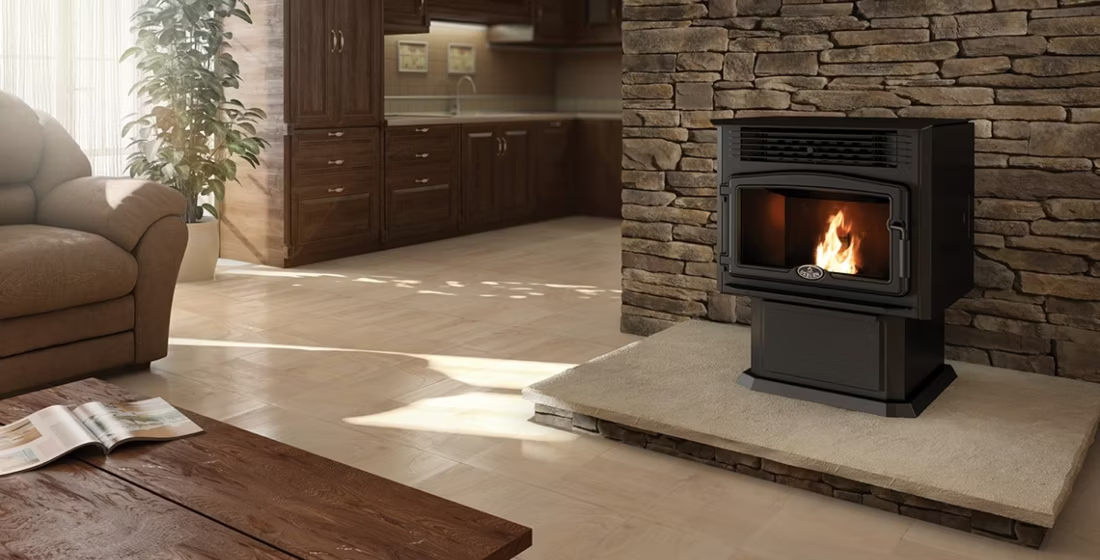
That said, a pellet stove isn't off the table. Some Spring House homeowners choose one for supplemental zone heat in a family room or finished basement, for the look of a real flame without cordwood storage or chimney sweeping, or because they already have a source for bagged hardwood pellets from regional producers like Energex, Hamer Pellet Fuel, or Greene Team Pellet Fuel. It's a smaller, more deliberate decision here than in colder or gas-scarce regions—which is exactly why matching with a dealer who stocks pellet appliances (rather than one who mostly moves gas units) matters.
Three steps. No salesperson until you're ready.
Tell us about your project
Your zip code, your situation, and the fuel you're leaning toward—or let the answers point you to one.
See what's actually available
The brands dealers within 100 miles genuinely carry—real options, never a catalog mirage.
Get your dealer & Project Guide
A trusted local dealer, plus the free Project Guide & Parts List that names every component of the job.
Frequently Asked Questions
Are pellet stoves actually common in Spring House?
Not really, and we'd rather tell you that upfront than oversell it. Spring House is a gas-served Montgomery County suburb with mild-to-moderate winters (about 5,008 heating degree days, average lows near 24°F), so the large majority of local hearth installations are direct-vent gas fireplaces or electric inserts—gas and electric are both considered standard fuel choices here, while pellet is a niche pick. Homeowners who do go pellet usually have a specific reason: a finished basement without an easy gas line run, a preference for a visible flame with hopper-fed convenience, or an existing relationship with a regional pellet supplier.
How much does a pellet stove installation cost in Spring House?
Expect a typical freestanding pellet stove installation to run roughly $3,500 to $6,500, depending on the unit and whether a new sidewall vent needs to be cut through an exterior wall. That's generally less invasive than a masonry chimney project since pellet stoves vent horizontally through a small-diameter pipe rather than needing a full Class A chimney. A pellet insert into an existing wood-burning fireplace tends to land in a similar range, with cost driven mostly by whether the existing flue needs a liner. Because so few Spring House dealers stock pellet units regularly, get a quote from a dealer who actually carries them rather than one primarily set up for gas installs.
Where can I buy pellet fuel near Spring House?
Bagged hardwood pellets from regional producers—Energex, Hamer Pellet Fuel, and Greene Team Pellet Fuel are all common in the mid-Atlantic—show up at farm and hearth supply stores throughout southeastern Pennsylvania, along with seasonal stock at home centers and feed/farm stores. Because pellet stoves are uncommon in Spring House itself, you may find better selection and pricing by checking with hearth shops slightly further out in the Lehigh Valley or south-central PA, where pellet heating has a stronger foothold. Buying a full ton (or several) at the start of the season, rather than by the bag as needed, is usually the better value.
Will a pellet stove work if the power goes out?
Not on its own, and this is worth knowing before you commit. Pellet stoves rely on an electric auger to feed fuel and a blower to circulate heat, so a power outage stops the stove entirely—unlike a wood stove, which keeps burning with no electricity at all. If backup heat during outages is your main concern in Spring House, a battery backup or small generator (pellet stoves typically draw only 100-400 watts) can keep it running, or you may want to weigh a wood-burning or vent-free option instead. Ask your local dealer about UPS or generator compatibility for whichever model you're considering.
Why choose pellet over gas when natural gas is already available in Spring House?
Gas wins on convenience—instant on/off, no fuel storage, no ash—which is exactly why it dominates here. Pellet stoves win in a few specific situations: homeowners who want a real, visible flame with actual combustion (something vent-free and some gas units can't fully replicate), households without an easy gas line run to a particular room, or anyone who prefers not to add another appliance to a gas or electric bill and already has a pellet fuel source lined up. For most Spring House homes, though, a direct-vent gas fireplace or gas insert remains the simpler, lower-maintenance path, and that's the honest answer.
What size pellet stove do I need for a Spring House home?
Given the area's moderate winter profile—average lows around 24°F and roughly 5,008 heating degree days, well short of the harsh cold that drives whole-home pellet heating in places like Bozeman or Burlington—most Spring House installs are sized for supplemental or zone heat rather than whole-house output. A small to mid-size unit (rated for 1,000-1,800 sq ft) is usually plenty for a family room, basement, or open living area. Going larger than that is rarely necessary here and just means more frequent cycling on mild days. A local dealer can size it properly based on your room's insulation and layout during a walkthrough.
Do I need a permit to install a pellet stove in Spring House?
Yes—solid-fuel and pellet-burning appliance installations in Pennsylvania fall under the Uniform Construction Code, enforced locally through your municipality's building department (Lower Gwynedd Township for most Spring House addresses). A permit typically covers the appliance installation, the sidewall vent penetration, and clearance-to-combustibles verification. Most established hearth dealers handle the permit filing and inspection scheduling as part of the installation, so you're not coordinating it yourself.
Pellet stove vs. electric fireplace—which makes more sense in Spring House?
Electric fireplaces and inserts are simpler: no venting, no fuel to store, plug-and-play installation often under $1,000-$1,200, and they work through any power outage that doesn't take out your whole panel. Pellet stoves cost more upfront, need a hopper refilled with bagged fuel, and still depend on electricity to run—so they don't offer true outage backup either. Where pellet pulls ahead is heat output and the look of an actual fire; electric units supplement room ambiance and light heat but won't carry a cold room the way a pellet stove can. Given how accessible electric service is through PECO in Spring House, many homeowners choose electric for simplicity and reserve pellet for households that specifically want real combustion heat.
How much maintenance does a pellet stove need?
Less than a wood stove, but not nothing. Plan on emptying and cleaning the ash pot every few days of regular use, cleaning the burn pot and glass weekly, and having the venting and internals professionally serviced once a year—typically before the season starts. Because pellet appliances aren't common in Spring House, finding a technician who services them regularly may mean going slightly outside town; ask whichever dealer sells you the unit whether they also handle annual service calls, since that's usually simpler than sourcing a separate technician later.
Why is a fireplace insert so efficient?
An insert does two things: it seals the chimney completely, so you stop losing air you already paid to heat, and it radiates warmth into the room through the firebox and glass. Most add a heat-exchange fan that pulls cool room air underneath, wraps it around the hot firebox, and pushes it back out warm. Your home is more efficient before you've even lit the first fire.
Are pellet stoves loud?
They make some noise—there are two fans running plus an auger motor that turns as it feeds pellets. But there's a real range: premium models are engineered quiet, and the best offer a whisper-quiet mode you can comfortably watch TV next to. If noise matters in your room, ask to hear a stove running before you buy—it's a five-minute test that saves years of annoyance.
Can a fireplace actually lower my heating bill?
Yes—by creating a comfort zone. A furnace heats every square foot of the house just to warm the one room you're in; a gas fireplace on low burns roughly a sixth of the gas a typical furnace does. Set the furnace around 55–60 degrees as a baseline, then heat the rooms your family actually uses. Families who heat this way commonly save $20–$60 a month.
Can I install a fireplace myself?
If you're putting a fire in your house on purpose, it's best to work with an expert. Unless you're genuinely experienced in framing, gas line, vent pipe, and the national code on clearances to combustibles, have a professional do it—and ideally the same company that sells you the fireplace, so warranty, service, and liability all live under one roof.
Nearby Dealers
Hearth shops serving Spring House and the surrounding area. Every listing shows whether it is a WhyFire partner, a dealer we have verified as authorized for the brands we recommend, or a local business carrying hearth products. No manufacturer pays for placement. How we verify dealers →
Ambler Fireplace And Patio
Maple Glen Mechanical
Norristown Chimney
Kester Fireplace
Ambler Fireplace & Patio - Chalfont
Estates Chimney Sweep
Sequoia Supply Hatfield Showroom
Hearth & Stove LLC
Tor Chimney & Fireplace
Estates Chimney & Fireplace
Independence Propane
Tri County Hearth & Awning
Plumbarama Co. Inc.
E & E Stoves & Fireplaces
Pellet Brands Stocked Around Spring House
Manufacturers will point you to the nearest stocking dealer.
Find your pellet stove option in Spring House.
Tell us about your space and we'll confirm whether pellet is the right fit, then match you with a local dealer who actually stocks and installs them—plus a free Project Guide & Parts List with the vent kit and everything else your install needs.
Find Your Fireplace →