
Consistent Warmth Without the Wood Pile.
Automated, hardwood-pellet heat for Dauphin County winters—find the right stove or insert and connect with a trusted local dealer.
Every Project Starts From One of These Five Situations
A cleaner-burning alternative to hardwood in the Susquehanna Valley.
Skyline View sits in Dauphin County just northeast of Harrisburg, at roughly 500 feet elevation in USDA climate zone 5A. Winters here average a low around 22°F with a moderate, months-long heating season—cold enough to matter, but nowhere near the sustained deep-freeze of places like Duluth, MN or Burlington, VT. That's exactly the kind of climate where pellet stoves tend to shine: enough cold to justify a dedicated heat source, but a maintenance-light one that doesn't require the same wood-supply commitment as a full cordwood operation.
The surrounding Susquehanna Valley is thick with oak, hickory, maple, and cherry, and plenty of local households still burn cordwood—but a growing number are switching to pellet stoves and inserts for the trade-off: comparable radiant heat with a hopper you fill every day or two instead of splitting and stacking wood. Pennsylvania is also one of the country's larger hardwood-pellet-producing states, and bags from Hamer Pellet Fuel and Greene Team Pellet Fuel (both Pennsylvania mills) along with Energex are readily available at hearth shops and farm-supply stores throughout the region.
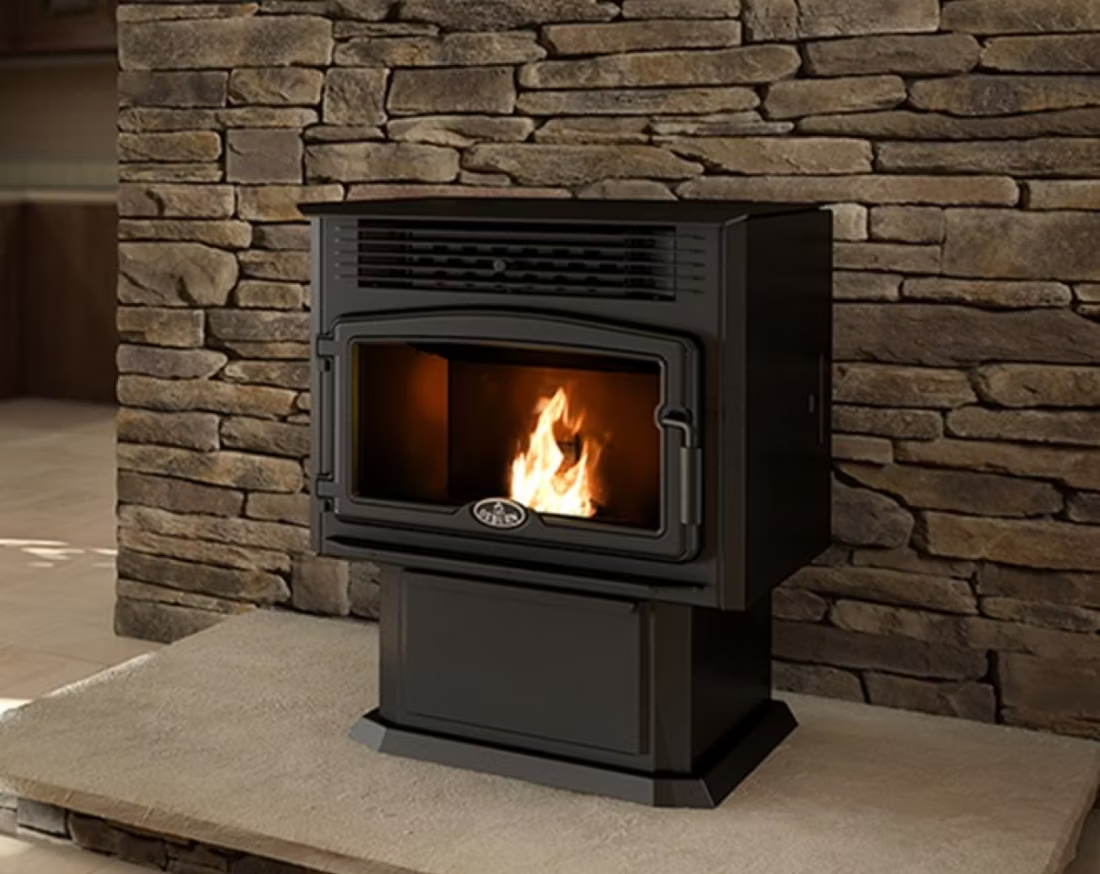
Three steps. No salesperson until you're ready.
Tell us about your project
Your zip code, your situation, and the fuel you're leaning toward—or let the answers point you to one.
See what's actually available
The brands dealers within 100 miles genuinely carry—real options, never a catalog mirage.
Get your dealer & Project Guide
A trusted local dealer, plus the free Project Guide & Parts List that names every component of the job.
Frequently Asked Questions
How much does a pellet stove installation cost in Skyline View?
Most pellet stove and insert installations in the Skyline View area run $3,000 to $6,500, depending on whether you're installing a freestanding stove or converting an existing masonry fireplace to a pellet insert, and whether you need a dedicated electrical outlet run to the unit. Because pellet stoves vent through a smaller-diameter pipe than wood stoves—often straight through an exterior wall rather than up a full chimney—venting work is typically less expensive than a wood stove installation. A local hearth dealer can give you a firm number after seeing your hearth and wall configuration.
What size pellet stove do I need for a Skyline View home?
With Dauphin County's moderate, months-long heating season, most homes in Skyline View do well with a mid-size pellet stove in the 40,000–60,000 BTU range for a single main living area, or a larger unit if you're using it as primary heat for an open floor plan. That's a notably milder heating load than a place like Fargo, ND, so you generally don't need the largest hopper capacity on the market—a standard 40-to-60-pound hopper that runs 24 to 30 hours between refills is plenty for most nights here.
Where can I buy pellet fuel near Skyline View?
Regional brands like Hamer Pellet Fuel and Greene Team Pellet Fuel—both milled in Pennsylvania—along with Energex are carried by hearth retailers and farm-supply stores throughout the Harrisburg area. Pricing tends to track the rest of the state, typically in the $250–$300 per ton range, with the best pricing usually available if you buy a season's supply (roughly 2–3 tons for an average home) in late summer before demand picks up.
Do pellet stoves need electricity, and what happens during a power outage?
Yes—pellet stoves rely on an electric auger to feed fuel and a blower to circulate heat, typically drawing 100 to 400 watts. At PPL Electric Utilities' residential rate of about 12.3 cents per kWh, that's only a few cents an hour to run. The catch is that a standard pellet stove won't operate at all without power, which matters if you're counting on it during a winter storm outage. Homeowners who want backup-heat capability in Skyline View often pair their pellet stove with a small battery backup unit or a portable generator sized to handle the auger and blower load.
Do I need a permit to install a pellet stove in Skyline View?
Most addresses in the 17112 zip code fall under Lower Paxton Township's building code, and a permit is typically required for new venting and any change to an existing hearth or fireplace, even for pellet appliances. The good news is that pellet stove permitting is usually simpler than wood stove permitting—the vent pipe is smaller, and many models can vent horizontally through an exterior wall rather than requiring a full chimney. Confirm current requirements with Lower Paxton Township or Dauphin County's building department before you buy; most local hearth dealers handle the permit paperwork as part of the installation.
What's the difference between a pellet stove and a pellet insert?
A pellet stove is a freestanding unit that can go almost anywhere in a room with the right floor protection and wall clearance, then vents through a small pipe run to the outside. A pellet insert is built to slide into an existing masonry fireplace opening, using a liner run up your existing chimney (or a shorter vent run through the damper) to exhaust combustion gases. For Skyline View homes with an existing wood-burning fireplace that doesn't get much use, an insert is often the more cost-effective upgrade since it reuses the opening and chimney chase you already have.
How much maintenance does a pellet stove need?
Pellet stoves need more frequent, lighter maintenance than wood stoves rather than one big annual sweep. Plan to empty and vacuum the ash pan and clean the burn pot every few days during regular winter use, and have a certified technician do a full inspection and deep clean of the venting, hopper, and auger system once a year—typically before the season starts in the fall. Because pellet fuel burns cleaner than cordwood, there's less creosote buildup than a wood chimney, but the mechanical components—auger motor, blower, igniter—are what tend to need service over time.
Pellet vs. wood—which is right for my home in Skyline View?
With oak, hickory, maple, and cherry all common in the surrounding Susquehanna Valley woodlots, plenty of local homes still burn cordwood, and wood remains the better choice if you want a heat source that works without electricity or you have access to cheap or free split wood. Pellet stoves trade that off for convenience: no splitting, stacking, or seasoning wood, a thermostatically controlled burn, and a cleaner-looking glass front with less ash. Dauphin County has no current air-quality burn restrictions on either fuel, so the choice here really comes down to how much manual fuel handling you want to take on.
Pellet stove vs. electric heat—which costs less to run?
At PPL Electric's residential rate of roughly 12.3 cents per kWh, running electric resistance heat—space heaters or electric baseboard—to cover a Skyline View winter can get expensive fast, since electricity is a relatively costly way to generate heat directly. A pellet stove burning fuel in the $250–$300-per-ton range typically produces heat at a lower cost per BTU, and it's often used to zone-heat the main living area while central heat or electric backup covers the rest of the house. The stove itself still needs a small amount of electricity to run the auger and blower, but that draw is minor compared to whole-room electric resistance heating.
What's the difference between an insert and a zero-clearance fireplace?
An insert is a fireplace that slides into a pre-existing wood-burning fireplace—if you don't have one, there's nothing to insert it into. A zero-clearance fireplace is built into a framed wall, which makes it the answer for remodels and new construction. Simple test: existing masonry fireplace means insert; blank or framed wall means zero-clearance.
Why is a fireplace insert so efficient?
An insert does two things: it seals the chimney completely, so you stop losing air you already paid to heat, and it radiates warmth into the room through the firebox and glass. Most add a heat-exchange fan that pulls cool room air underneath, wraps it around the hot firebox, and pushes it back out warm. Your home is more efficient before you've even lit the first fire.
Does a fireplace add value to my home?
On average, a fireplace adds back to the home about the same amount you spent installing it. Add the monthly savings from heating the rooms you actually use instead of the whole house—often hundreds of dollars a year—and the value case is strong before you even count what a fire does for how your family uses the room.
Can I install a fireplace myself?
If you're putting a fire in your house on purpose, it's best to work with an expert. Unless you're genuinely experienced in framing, gas line, vent pipe, and the national code on clearances to combustibles, have a professional do it—and ideally the same company that sells you the fireplace, so warranty, service, and liability all live under one roof.
Nearby Dealers
Hearth shops serving Skyline View and the surrounding area. Every listing shows whether it is a WhyFire partner, a dealer we have verified as authorized for the brands we recommend, or a local business carrying hearth products. No manufacturer pays for placement. How we verify dealers →
North Forge Home Heating
Aes Hearth & Patio - Camp Hill
Aes Hearthplace, Inc.
Hoffman's Outdoor Power & Repair
Todays Home And Leisure
Firestarters Custom Fireplace & Stove
Pellet Brands Stocked Around Skyline View
Manufacturers will point you to the nearest stocking dealer.
Find your pellet stove in Skyline View.
Tell us about your home and heating goals, and we'll match you with a trusted local dealer and send over a free Project Guide & Parts List—the exact parts, vent kit, and recommended installer for your pellet project in Skyline View.
Find Your Fireplace →