
Consistent Heat, Minimal Hassle, in Quakertown.
Thermostat-controlled warmth for Bucks County winters, without splitting or stacking cordwood. Find the right pellet stove or insert, and connect with a trusted local dealer.
Every Project Starts From One of These Five Situations
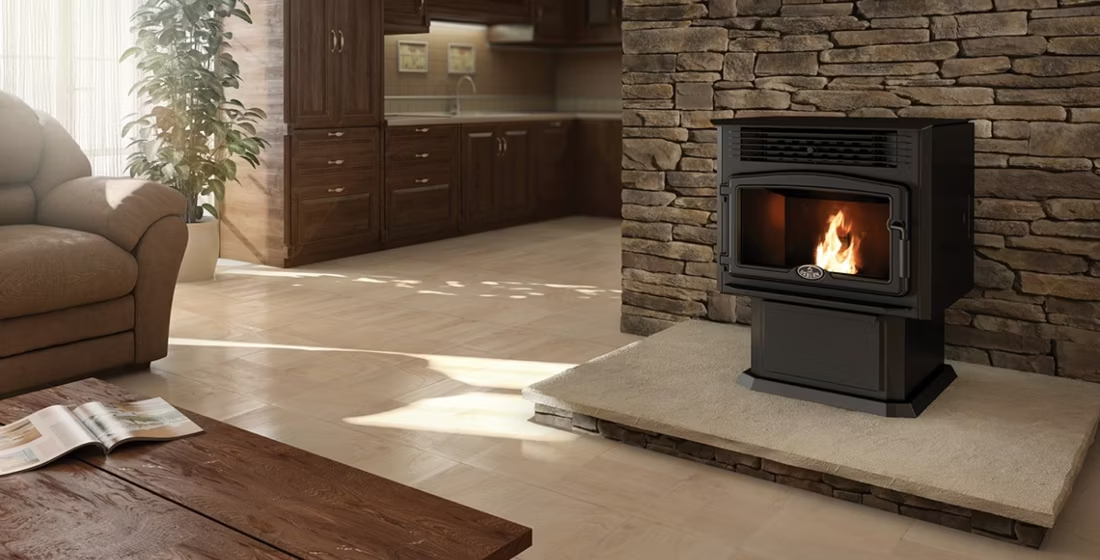
A practical middle ground between wood and gas.
Quakertown sits in Bucks County at about 500 feet elevation, in climate zone 4A with a fairly demanding winter heating season. That's cold enough that most homes here run supplemental heat from November through March, though nowhere near the sustained deep cold of a place like Burlington, VT. Winter lows average around 19°F, and pellet stoves have caught on with homeowners who want real, steady heat output without the labor of sourcing and stacking cordwood every fall.
Fuel supply is a real advantage in this part of Pennsylvania. Regional brands like Energex, Hamer Pellet Fuel, and Greene Team Pellet Fuel are produced within a few hours of Quakertown and stock reliably at hearth shops and farm supply stores through the season. The trade-off is that pellet stoves depend on electricity for the auger and blower—PPL Electric Utilities serves the surrounding township while the Borough of Quakertown runs its own municipal electric utility for in-town customers, at a residential rate around 12.3 cents per kWh. That's pennies per hour to operate, but it's worth knowing a standard pellet stove won't run during a power outage the way a wood stove does.
Three steps. No salesperson until you're ready.
Tell us about your project
Your zip code, your situation, and the fuel you're leaning toward—or let the answers point you to one.
See what's actually available
The brands dealers within 100 miles genuinely carry—real options, never a catalog mirage.
Get your dealer & Project Guide
A trusted local dealer, plus the free Project Guide & Parts List that names every component of the job.
Frequently Asked Questions
How much does a pellet stove installation cost in Quakertown?
Across Bucks County, a freestanding pellet stove installation typically runs $3,000 to $6,000, while a pellet insert into an existing masonry fireplace usually lands between $3,500 and $6,500 once venting, any hearth pad work, and the dedicated electrical outlet are factored in. Homes without an existing fireplace or chimney chase tend to land on the higher end since the installer has to run new through-wall vent pipe from scratch. A trusted local dealer will give you a firm number after seeing your home, but these ranges hold for most Quakertown-area installs.
What size pellet stove do I need for my home?
Most pellet stoves are rated to heat somewhere between 1,000 and 2,500 square feet, and the right size depends on your home's insulation, ceiling height, and whether the stove is primary heat or a supplement to central HVAC. Given Quakertown's fairly demanding winter heating season, a mid-size unit is usually plenty for an open living area or a smaller whole home, while older, leakier homes may need more hopper capacity to keep up on the coldest nights when lows dip into the high teens. A local dealer will size it to your actual floor plan rather than a generic chart.
Where can I buy pellets in the Quakertown area, and what do they cost?
Wood pellets are easy to find in this part of Pennsylvania. Regional brands like Energex, Hamer Pellet Fuel, and Greene Team Pellet Fuel are milled within a few hours of Quakertown and are stocked seasonally at hearth shops, hardware stores, and farm supply retailers throughout Bucks County. Expect to pay somewhere around $250 to $320 per ton, with premium hardwood blends at the higher end. A typical home burns 2 to 3 tons over a winter season when running the stove as a primary heat source.
Will my pellet stove work during a power outage?
Pellet stoves rely on an electric auger to feed fuel and a blower to push heat into the room, so unlike a wood stove, a standard pellet stove stops running when the power goes out. PPL Electric Utilities serves most of the surrounding township, while the Borough of Quakertown operates its own municipal electric utility for in-town customers. Outages here tend to be short, but if backup heat during storms matters to you, ask your dealer about models with battery backup kits, or plan to pair the stove with a small generator—at Quakertown's residential rate of about 12.3 cents per kWh, running the stove's electrical components costs only pennies an hour once you have power.
What's the difference between a pellet stove and a pellet insert?
A pellet stove is a freestanding unit that vents through a wall or existing chimney chase and can be placed almost anywhere in a room. A pellet insert is built to slide into an existing masonry fireplace opening, which is common in Quakertown's older homes near the historic borough center. If you already have a fireplace, an insert usually makes more sense—it uses the opening you already have and finishes with a flush, built-in look. Newer construction without an existing fireplace typically calls for a freestanding stove instead.
Do I need a permit to install a pellet stove in Quakertown?
Yes. Pennsylvania's Uniform Construction Code applies statewide, and within the borough it's enforced by the Borough of Quakertown's code enforcement office—homes just outside the borough limits go through their township's building department instead. The permit covers the installation and inspection of vent termination and clearances. Most hearth dealers who install pellet stoves in the area pull the permit as part of the job, so you generally don't have to navigate it yourself.
How often does a pellet stove need cleaning and maintenance?
Pellet stoves need more frequent light maintenance than wood stoves but far less heavy cleaning overall. Plan to empty and vacuum the ash pot every few days during regular use, clean the burn pot and glass weekly, and have the venting and internal components professionally serviced once a year, ideally before the heating season ramps up in November. Skipping that annual service is the most common reason pellet stoves start jamming, throwing error codes, or losing efficiency partway through a Bucks County winter.
Pellet stove vs. wood stove—which is right for a Quakertown home?
Bucks County has plenty of oak, hickory, maple, and cherry available for wood burning, and there are no local air quality restrictions here that would steer you away from a wood stove. So the choice mostly comes down to lifestyle. Wood stoves cost less to feed if you're willing to source, split, and stack cordwood, and they keep working without electricity. Pellet stoves are far less labor-intensive—you're loading a hopper with bagged fuel instead of hauling logs—and they hold a steady, thermostat-controlled temperature that wood can't match. For homeowners here without easy access to a woodlot, pellet often ends up being the more practical everyday choice.
Pellet stove vs. gas fireplace—which should I choose?
Gas fireplaces offer instant on-off convenience and don't require any fuel storage, which matters if you don't have room for pellet bags. Pellet stoves generally cost less to run per BTU, produce a more visible, active flame than many gas units, and don't depend on a natural gas line or propane tank. If your Quakertown home already has gas service, that convenience is hard to beat for daily use; if you'd rather have a self-contained heat source that isn't tied to a utility gas line, pellet is worth a serious look.
Why is a fireplace insert so efficient?
An insert does two things: it seals the chimney completely, so you stop losing air you already paid to heat, and it radiates warmth into the room through the firebox and glass. Most add a heat-exchange fan that pulls cool room air underneath, wraps it around the hot firebox, and pushes it back out warm. Your home is more efficient before you've even lit the first fire.
What's the difference between an insert and a zero-clearance fireplace?
An insert is a fireplace that slides into a pre-existing wood-burning fireplace—if you don't have one, there's nothing to insert it into. A zero-clearance fireplace is built into a framed wall, which makes it the answer for remodels and new construction. Simple test: existing masonry fireplace means insert; blank or framed wall means zero-clearance.
How much should I budget for a fireplace?
For an average home—covering the fireplace, the vent pipe, and basic installation—a budget between $3,900 and $5,500 gives you a lot of options across wood, gas, and pellet. By the time you add finish work, gas line, and electrical, the average complete installation lands between $5,000 and $12,000 all-in. In a remodel or new build, a good rule is to put about 2.5% of the total project cost toward the fireplace.
Can I install a fireplace myself?
If you're putting a fire in your house on purpose, it's best to work with an expert. Unless you're genuinely experienced in framing, gas line, vent pipe, and the national code on clearances to combustibles, have a professional do it—and ideally the same company that sells you the fireplace, so warranty, service, and liability all live under one roof.
Nearby Dealers
Hearth shops serving Quakertown and the surrounding area. Every listing shows whether it is a WhyFire partner, a dealer we have verified as authorized for the brands we recommend, or a local business carrying hearth products. No manufacturer pays for placement. How we verify dealers →
Atlantic Building Prodcuts Inc
Progressive Propane
Pennsburg Ace Hardware
Independence Propane
Sequoia Supply Hatfield Showroom
Stoves N Stuff Ltd
Ambler Fireplace & Patio - Chalfont
Tor Chimney & Fireplace
Estates Chimney Sweep
Glen-Gery Brick
Krings Hearth & Home - Bechtelsville
Abe Fence / Landscape Supply
Keller Enterprises
Tri County Hearth & Awning
Penn Hearth Llc.
Norristown Chimney
Ambler Fireplace And Patio
Hearth & Stove LLC
East Lawn Supply Co., Inc.
Pellet Brands Stocked Around Quakertown
Manufacturers will point you to the nearest stocking dealer.
Find your pellet stove in Quakertown.
Tell us about your home and heating goals, and we'll match you with a trusted local Quakertown-area dealer and send over your free Project Guide & Parts List—the exact stove or insert, vent kit, and parts your installer will need.
Find Your Fireplace →